
Why winter wiper blades differ and how to choose them
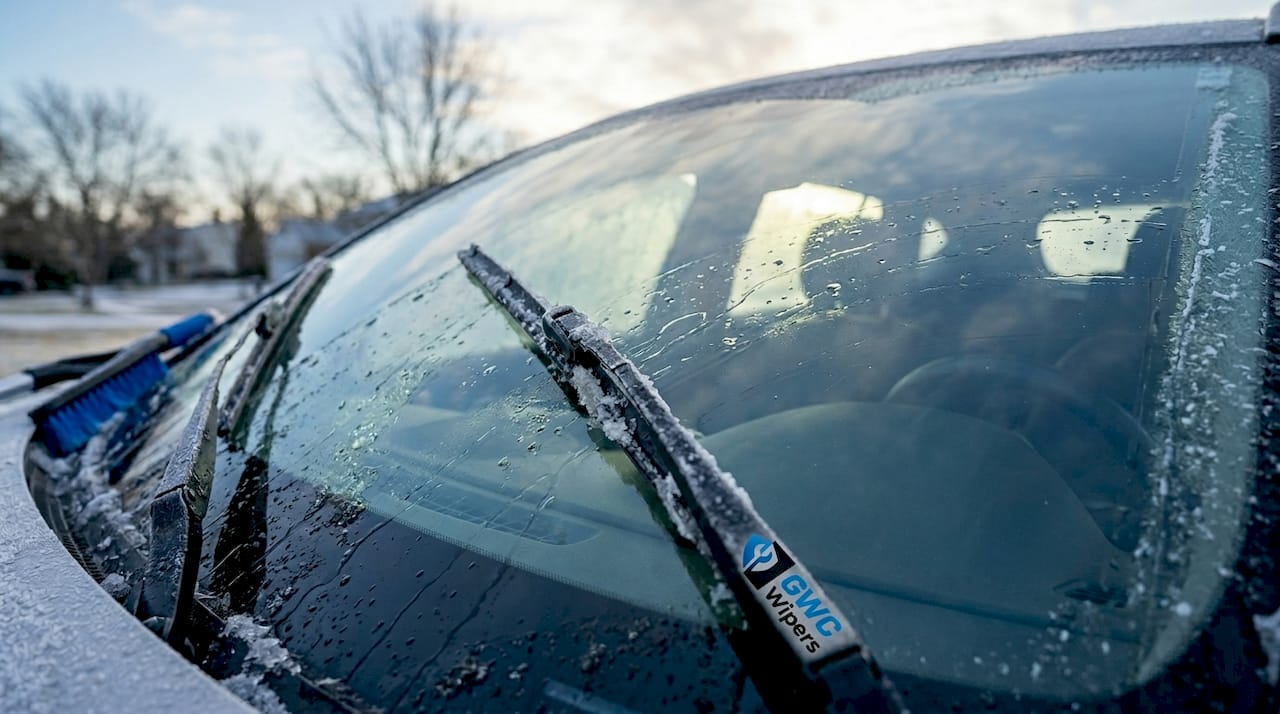
Driving through winter mornings with wipers that smear ice across your windscreen is more than frustrating, it’s dangerous. Most Australian drivers stick with the same wiper blades year round, unaware that winter conditions demand specialised equipment. Winter wiper blades aren’t just marketing hype, they’re engineered with unique materials and designs that handle cold, ice, and road salt far better than standard blades. Whether you’re navigating frosty Canberra mornings or icy alpine roads, understanding what makes winter blades different helps you choose the right ones for your vehicle and local weather conditions, keeping your visibility clear when it matters most.
Table of Contents
- Key takeaways
- How winter wiper blades differ from standard blades
- Design types of winter wiper blades and their advantages
- Choosing the right winter wiper blades for your vehicle and weather
- Explore winter wiper blades for your vehicle at GWC Wipers
- Frequently asked questions
Key Takeaways
| Point | Details |
|---|---|
| Winter blade design | Winter wiper blades use thicker wiping edges and cold resistant materials to stay flexible below zero and clear ice more effectively. |
| Corrosion protection | Protective coatings on metal parts resist road salt and chemicals, extending blade life in winter. |
| Hydrophobic coatings | Some premium winter blades feature water repelling coatings that reduce ice adhesion and keep the blade cleaner between wipes. |
| Seasonal use advised | Using winter blades only during cold months optimises safety and blade life, as their tougher compounds can cause streaking when temperatures rise. |
How winter wiper blades differ from standard blades
Standard wiper blades work brilliantly in mild conditions but fail when temperatures drop and ice forms. Winter wiper blades tackle these challenges through fundamental material and design changes that keep them functioning when regular blades freeze solid or skip across your windscreen.
The rubber compound makes the biggest difference. Winter blades feature thicker wiping edges, cold-resistant compounds, corrosion-resistant coatings for salt and chemicals, and sometimes hydrophobic coatings reducing ice adhesion, unlike standard blades that harden and crack in freezing temperatures. These specialised rubbers stay pliable down to well below zero degrees, maintaining consistent contact with your windscreen even when frost covers every surface. Standard blade rubber loses flexibility around five degrees Celsius, leading to poor wiping and potential windscreen scratching from rigid edges.
Thicker wiping edges distinguish winter blades immediately. While standard blades use thin, flexible edges designed for light rain, winter blades employ reinforced edges that push through accumulated snow and scrape away ice without bending or lifting. This extra thickness means each wipe clears substantially more frozen precipitation, reducing the number of passes needed and improving visibility faster during critical driving moments.
Corrosion protection extends blade life significantly in winter conditions. Australian roads receive salt and chemical treatments during cold snaps, particularly in alpine regions and areas prone to black ice. Standard blades deteriorate rapidly when exposed to these corrosive substances, with metal components rusting and rubber degrading within weeks. Winter blades incorporate protective coatings on all metal parts and use rubber formulations that resist chemical breakdown, maintaining performance throughout the entire cold season.
Some premium winter blades add hydrophobic coatings that repel water and reduce ice adhesion. These coatings create a slippery surface that prevents ice crystals from bonding strongly to the blade, making each wipe more effective and reducing the force needed to clear frozen buildup. Water beads off treated blades rather than freezing in place, keeping the rubber edge cleaner between wipes.
Key material differences:
- Cold-resistant rubber compounds maintain flexibility below freezing
- Reinforced wiping edges withstand ice scraping without damage
- Corrosion-resistant metal frames and fittings resist road salt
- Specialised rubber formulations resist chemical degradation
- Optional hydrophobic treatments reduce ice and water adhesion
| Feature | Standard blades | Winter blades |
|---|---|---|
| Rubber compound | General purpose, hardens below 5°C | Cold-resistant, flexible to -40°C |
| Wiping edge | Thin, flexible for light rain | Thick, reinforced for ice/snow |
| Corrosion protection | Basic or none | Enhanced coatings on all metal parts |
| Chemical resistance | Standard rubber degrades quickly | Formulated to resist road treatment chemicals |
| Ice adhesion | High, ice builds up easily | Reduced through hydrophobic treatments |
Pro Tip: Replace your standard blades with winter-specific ones before the first frost arrives, not after you’ve already struggled through icy mornings. Installing winter blades proactively ensures optimal visibility from day one of cold weather, rather than discovering your regular blades have failed during a dangerous driving situation. Many Nissan Leaf wiper blades and other vehicle-specific options come in winter variants designed for Australian conditions.
Design types of winter wiper blades and their advantages
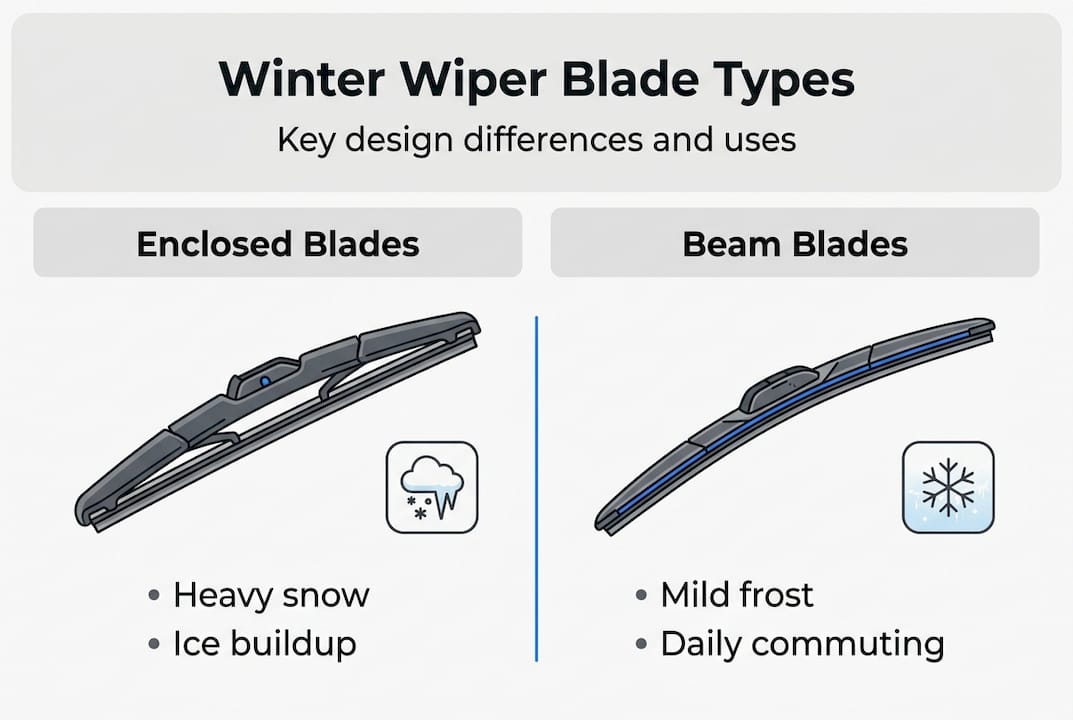
Winter wiper blades come in two primary design categories, each engineered to handle specific cold weather challenges. Understanding these design differences helps you match blade type to your local climate and driving conditions, maximising both performance and value.
Enclosed winter blades feature rubber or synthetic covers that completely encase the blade’s metal framework and articulation points. This protective shell prevents snow and ice from infiltrating the blade mechanism, a common failure point for standard blades in heavy winter weather. When snow packs into exposed joints and hinges, standard blades lose their ability to flex and conform to windscreen curvature, leaving streaks and unwiped areas. The enclosed design keeps all moving parts free from ice buildup, maintaining consistent pressure distribution across the entire blade length even in blizzard conditions.
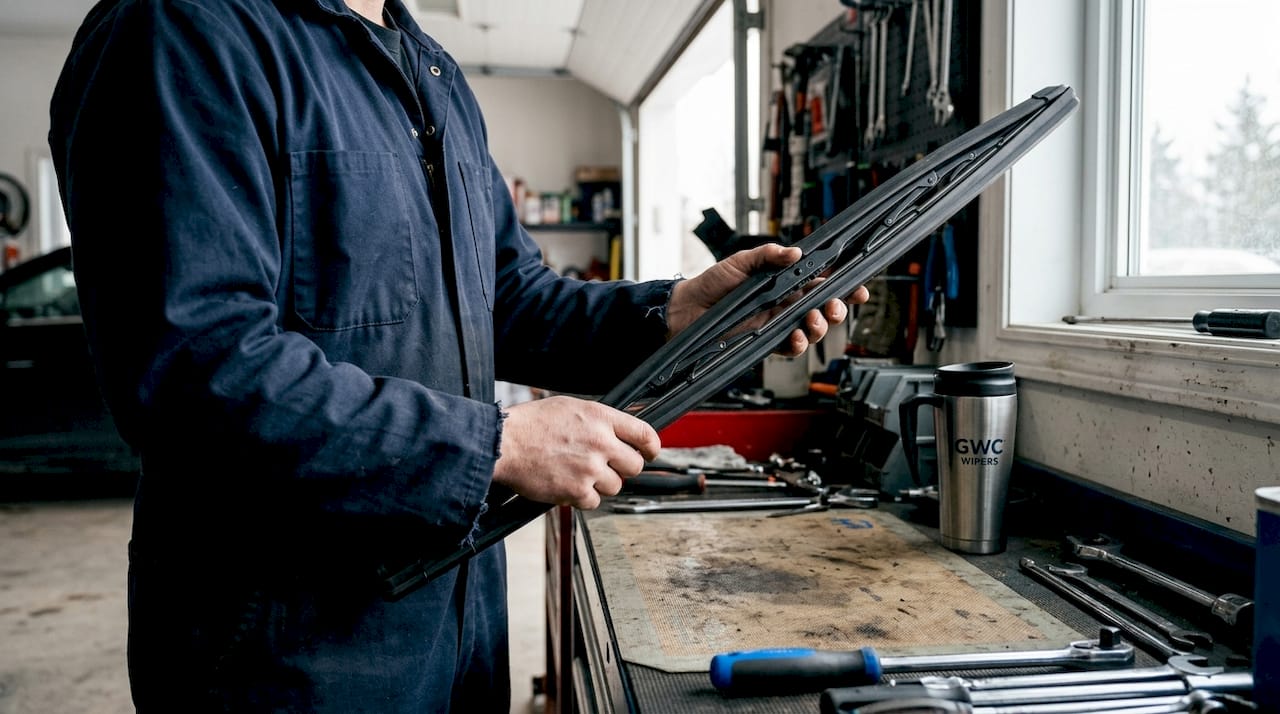
Silicone beam winter blades take a different approach, using a single piece of spring steel covered in silicone rubber rather than multiple articulation points. This frameless design eliminates the hinges where ice typically accumulates, solving the problem through absence rather than protection. Silicone offers superior cold weather properties compared to natural rubber, staying flexible at lower temperatures while providing natural hydrophobic characteristics that cause water to bead and roll off. Ice struggles to bond with silicone surfaces, reducing buildup between wipes and maintaining clearer sight lines.
Enclosed blade advantages:
- Complete protection for all mechanical components from snow and ice
- Maintains full flexibility in heavy accumulation conditions
- Proven performance in extreme winter weather and deep snow
- Generally lower cost than premium silicone alternatives
Silicone beam blade advantages:
- No hinges means no ice accumulation points
- Natural hydrophobic properties repel water and resist ice bonding
- Consistent pressure distribution without articulation points
- Longer service life due to silicone’s superior durability
| Design type | Best for | Pros | Cons |
|---|---|---|---|
| Enclosed blades | Heavy snow, frequent icing, alpine conditions | Complete mechanism protection, proven extreme weather performance, cost-effective | Rubber cover can wear, slightly heavier than standard |
| Silicone beam blades | Moderate winter weather, occasional frost, coastal cold | No ice buildup points, hydrophobic surface, longer lifespan | Higher initial cost, less protection in extreme accumulation |
Choosing between these designs depends on your specific winter conditions. In heavy snow and ice, enclosed winter blades are superior, but silicone beam blades are better for preventing ice in hinges and providing hydrophobic effects. Drivers in alpine regions or areas with frequent heavy snowfall benefit most from enclosed designs that handle accumulation without performance loss. Those in milder winter climates with occasional frost and light snow find silicone beam blades provide adequate protection with added durability benefits.
One critical consideration applies to both designs: avoid year-round use of winter wiper blades. The same tough compounds and thick edges that excel in cold weather create problems when temperatures rise. Avoid year-round winter blade use as they streak in heat and may reduce wiping quality during Australia’s hot summers. The thicker rubber that pushes through ice becomes too rigid in warm conditions, causing chattering and leaving streaks that obscure vision. Switch back to standard blades once winter passes to maintain optimal year-round visibility.
Pro Tip: Match blade design to your coldest typical conditions, not the occasional extreme weather event. If you experience heavy snow only once or twice per winter, silicone beam blades likely provide better value through extended service life. Save enclosed blades for locations where snow and ice are regular occurrences throughout the cold season. For vehicles like the Suzuki Vitara, both designs are available in correct fitments for optimal performance.
Choosing the right winter wiper blades for your vehicle and weather
Selecting appropriate winter wiper blades requires matching blade specifications to both your vehicle’s requirements and your local weather patterns. This process ensures you invest in blades that actually improve winter driving safety rather than wasting money on unnecessary features or incorrect fitments.
Start by honestly assessing your local winter weather conditions. How often does frost form on your windscreen? Do you drive through snow, or just encounter occasional icy mornings? Does your region use road salt and chemical treatments? Coastal areas experience different winter challenges than inland or alpine regions, and your blade choice should reflect these differences. Drivers in Canberra or the Snowy Mountains need more robust winter protection than those in coastal Sydney or Brisbane, where winter means cooler temperatures but rarely ice or snow.
Next, verify your vehicle’s blade size and fitting requirements. Incorrect blade length leaves portions of your windscreen unwiped, while wrong fittings prevent secure attachment and cause blade chatter or complete detachment during use. Your vehicle manual lists the correct blade sizes, or you can measure your existing blades from end to end. Most modern vehicles use hook, pin, or bayonet style fittings, and quality winter blades include multiple adapters to fit various attachment types.
Steps for choosing winter wiper blades:
- Identify your vehicle’s required blade lengths for driver and passenger sides
- Select design type based on your typical winter weather severity
- Prioritise features matching your conditions: corrosion resistance for salted roads, hydrophobic coatings for frequent ice
- Verify the blade package includes correct fitting adapters for your vehicle
- Consider purchasing from retailers offering vehicle-specific fitment guarantees
Winter blades feature thicker edges and cold-resistant compounds to perform better in icy conditions, but only if properly installed. DIY installation is straightforward for most vehicles. Lift the wiper arm away from the windscreen until it locks in the vertical position, press the release tab on the old blade, and slide it off the arm. Attach the appropriate adapter to your new winter blade if not pre-installed, align the blade with the wiper arm hook or pin, and slide it into place until you hear a click. Gently lower the arm back to the windscreen, ensuring the blade sits flush against the glass.
Common installation pitfalls to avoid:
- Forcing incorrect adapters onto wiper arms, damaging both blade and arm
- Failing to fully seat the blade, causing detachment during high-speed driving
- Installing blades at incorrect angles, resulting in poor wiping performance
- Mixing winter and standard blades, creating uneven clearing patterns
- Neglecting to test blades immediately after installation
Vehicle-specific options simplify the selection process. Popular Australian vehicles like the Holden Trailblaze and Toyota RAV4 have dedicated winter blade options designed to fit perfectly without adapter confusion. These vehicle-specific blades eliminate guesswork and ensure optimal performance from installation.
Pro Tip: Inspect your winter wiper blades monthly during cold weather for ice damage or rubber deterioration. Small tears or chunks missing from the wiping edge dramatically reduce performance and can scratch your windscreen. Replace damaged blades immediately rather than waiting until they fail completely during a critical driving moment. Keeping a spare set in your garage means you can swap them out the moment you notice problems, maintaining safety throughout the entire winter season.
Explore winter wiper blades for your vehicle at GWC Wipers
Finding the right winter wiper blades for your specific vehicle just got easier. GWC Wipers stocks an extensive range of winter-ready wiper blades engineered for Australian conditions, from coastal frost to alpine snow.
Browse vehicle-specific options for popular models including Holden Trailblaze and Toyota RAV4 to find blades that fit perfectly without adapters or guesswork. Each product page provides detailed specifications, installation guidance, and fitment guarantees so you can order with confidence. Expert support is available to help match blade features to your local weather patterns and driving needs. Visit the GWC Wipers homepage to explore the complete range of winter wiper solutions and take advantage of free shipping across Australia, plus a 30-day money-back guarantee if the blades don’t meet your expectations.
Frequently asked questions
What makes winter wiper blades more effective in icy conditions?
Winter blades have cold-resistant compounds and hydrophobic coatings that reduce ice buildup and maintain flexibility. Special rubber formulations stay pliable well below freezing, while standard blade rubber hardens and loses contact with the windscreen. Thicker wiping edges push through ice accumulation that would stop regular blades, and protective coatings prevent ice from bonding strongly to the blade surface. These combined features maintain clear visibility when standard blades fail completely.
Can I use winter wiper blades all year round?
Winter blades perform poorly in warm weather despite their cold weather advantages. Avoid year-round winter blade use as they streak in heat and may reduce wiping quality during hot months. The tough rubber compounds that resist freezing become too rigid in warm temperatures, causing blade chatter and leaving streaks across your windscreen. Switch back to standard blades after winter ends to maintain optimal visibility and blade performance throughout the year.
How do I know which size winter wiper blades fit my car?
Check your vehicle manual for manufacturer-specified blade lengths, or measure your existing blades from end to end. Most vehicles require different lengths for driver and passenger sides. Look for size markings stamped on the blade spine or printed on the original packaging. Vehicle-specific product pages like those for Suzuki Vitara list exact sizes and include fitment guarantees, eliminating measurement errors and ensuring you receive blades engineered specifically for your vehicle’s windscreen curvature.
Do winter wiper blades work in heavy rain as well as ice?
Winter wiper blades handle rain effectively but aren’t optimised for it. Their thicker edges and stiffer compounds clear water adequately, though standard blades typically provide smoother, quieter performance in pure rain conditions. The real advantage appears when rain mixes with freezing temperatures, creating conditions where standard blades fail but winter blades continue functioning. For Australian drivers who experience both heavy rain and occasional frost, switching to winter blades during cold months provides adequate rain performance while ensuring safety when temperatures drop.
When should I install winter wiper blades each year?
Install winter wiper blades before the first frost arrives in your region, typically late autumn for most Australian locations. Proactive installation ensures your blades are ready when conditions turn cold, rather than discovering blade failure during dangerous driving situations. Monitor local weather forecasts for predicted frost dates and install winter blades at least a week beforehand. Remove and store winter blades once consistent warm weather returns in spring, switching back to standard blades for optimal warm weather performance. Proper seasonal switching maximises both safety and blade lifespan.
Recommended
- Nissan Leaf 2010-2017 Mk1 (ZE0E) Wiper Blades | GWC Wipers
- Volvo V60 2019-2025 (Mark III) (Spray) Wiper Blades | GWC Wipers
- Suzuki Vitara 2015-2023 (LY) Wiper Blades | GWC Wipers
- Skoda Yeti 2011-2017 (5L) Wiper Blades | GWC Wipers
- Pick Right Wheels and Tires for Ice — GOLFCARTSTUFF.COM™
- Wanli Winter-Challenger - Rengasvertailu.fi