
Understanding wiper blade performance testing for safer driving in 2026
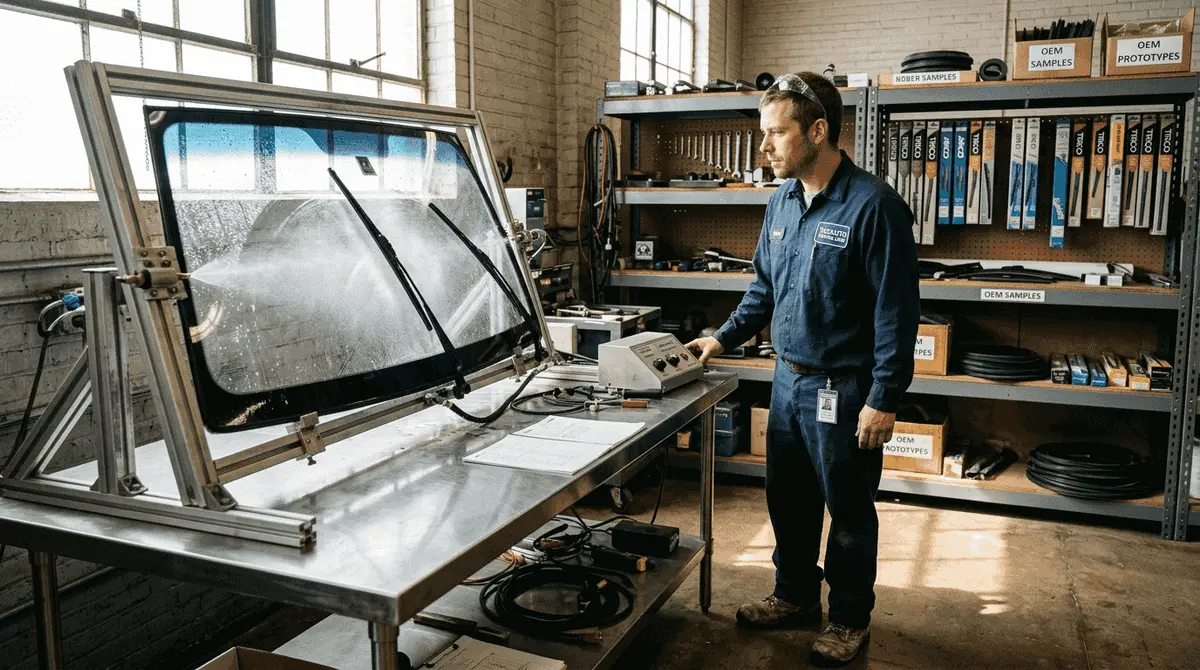
Most car owners assume wiper blades fail randomly, chalking up streaky windshields to bad luck or cheap products. The reality is far more scientific. Wiper blade performance testing exists to evaluate how blades handle real-world conditions, from torrential rain to harsh UV exposure across Australia’s diverse climates. Understanding these tests helps you choose blades that deliver reliable visibility and safety, no matter where you drive. This article breaks down what performance testing involves, the standards manufacturers follow, and how you can apply this knowledge to maintain optimal windshield clarity year-round.
Table of Contents
Beam Vs Conventional Blades: Performance Testing In Australian Conditions
How To Interpret Wiper Blade Performance Tests And Maintain Safety
Key takeaways
PointDetailsPerformance testing evaluates effectivenessTests measure cleaning ability, durability, and compliance with safety standards through lab and field simulations.SAE J903 sets minimum criteriaThis standard defines wiped area, effective patterns, and environmental resistance requirements for passenger car wipers.Australian conditions demand specific testingUV exposure, dust, and temperature extremes influence blade material choices and longevity in local climates.Beam blades outperform in harsh environmentsTesting shows superior pressure distribution and UV resistance compared to conventional frame designs.Regular replacement ensures safetyReplace blades every 6 to 12 months based on test results and visible wear indicators like streaking or chattering.
What is wiper blade performance testing?
Wiper blade performance testing evaluates the ability of blades to clear windshields effectively, their durability, and compliance with safety standards through lab and simulated field tests. This systematic evaluation goes far beyond simply checking if a blade moves across glass. Manufacturers subject blades to rigorous assessments that measure physical properties, environmental resistance, and long-term wear patterns.
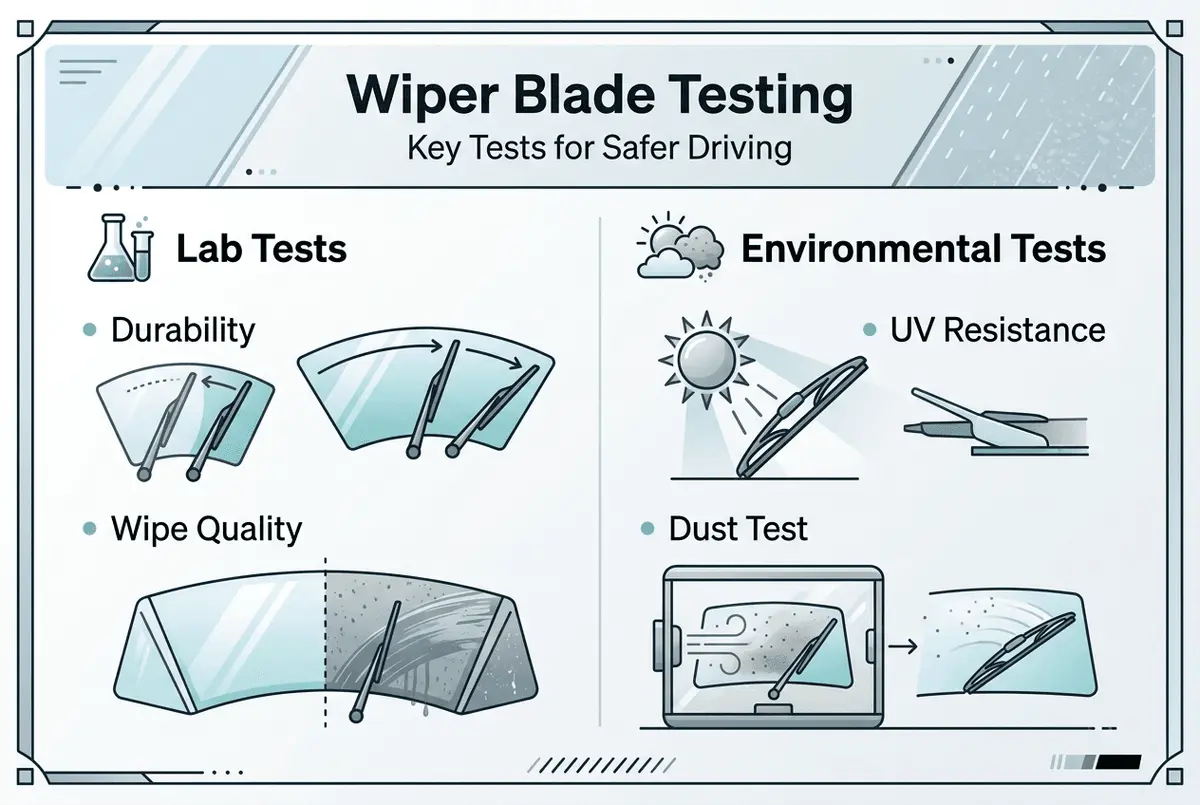
Lab-based testing forms the foundation of performance evaluation. Technicians measure rubber hardness, tensile strength, and flexibility to ensure materials can withstand repeated flexing without cracking or losing contact pressure. Environmental chambers expose blades to extreme temperatures, UV radiation, and ozone to simulate years of outdoor exposure in compressed timeframes. These accelerated aging tests reveal how materials degrade under conditions typical of Australian summers, where dashboard temperatures can exceed 70°C and UV intensity ranks among the world’s highest.
Repeated wipe cycle testing simulates long-term use by running blades through hundreds of thousands of passes across glass surfaces. Engineers monitor for streaking, chattering, and uneven contact that indicate premature wear. Most testing facilities use standardized measurement scales, typically rating wiping quality and durability on scales from 1 to 10, with higher scores indicating superior performance. This quantitative approach allows direct comparisons between different blade designs and materials.
The testing process ensures blades meet minimum safety performance standards before reaching consumers. Blades that fail to maintain consistent contact, leave excessive water streaks, or show rapid deterioration get rejected or sent back for design improvements. For Australian drivers, this means products reaching store shelves have survived conditions mimicking outback heat, coastal salt spray, and sudden temperature swings common across the continent.
Key testing components include:
Physical property measurements: hardness, tensile strength, flexibility
Environmental exposure: UV radiation, ozone, temperature extremes
Wipe cycle endurance: hundreds of thousands of passes to assess wear
Contact pressure distribution: ensuring even force across the blade length
Streak and chatter evaluation: measuring cleaning effectiveness and noise
Understanding what goes into performance testing helps you appreciate why quality blades cost more and why wiper blade testing matters for your safety. The next section explores the specific standards that define acceptable performance levels.
Understanding standards: SAE J903 and Australian relevance
SAE J903 standard sets minimum performance for passenger car wiper systems including wiped area, effective wipe pattern on wet glass at highest frequency, durability, and environmental resistance. This internationally recognized benchmark provides manufacturers with clear targets and gives consumers confidence that certified products meet baseline safety requirements.
The standard defines specific metrics for wiped area, requiring blades to clear a minimum percentage of the windshield within the driver’s primary field of view. At peak operating speed, blades must maintain an effective wipe pattern that removes water without leaving dangerous blind spots. These requirements directly impact visibility during heavy rain, the most common weather condition requiring wiper use across Australia’s eastern seaboard and tropical north.
Environmental resistance testing under SAE J903 subjects blades to temperature cycling between extreme cold and heat, ozone exposure equivalent to years of atmospheric contact, and chemical resistance against washer fluids and road contaminants. Australian Design Rules (ADR) for passenger vehicles align closely with SAE standards, ensuring products sold locally meet these internationally validated benchmarks. This alignment means blades certified to SAE J903 perform reliably under Australian conditions without requiring separate local certification in most cases.
The table below compares key SAE J903 performance criteria:
Test ParameterRequirementPurposeWiped area coverageMinimum 80% of driver view zoneEnsures adequate visibility during operationWipe pattern effectivenessNo streaks/skips at max speedValidates cleaning performance in heavy rainTemperature resistanceFunction from -40°C to 80°CConfirms operation across climate extremesOzone exposure100 hours at 100 pphmSimulates years of atmospheric degradationDurability cycles500,000+ wipes minimumTests long-term wear and material fatigue
These standardized tests create a level playing field for manufacturers while protecting consumers from substandard products. When shopping for replacement blades, look for explicit SAE J903 compliance or certification marks indicating the product has passed these rigorous evaluations. Australian wiper blade standards ensure local products meet these global benchmarks while accounting for unique regional stressors.
Pro Tip: Check product packaging or specifications for SAE J903 certification before purchasing. This single indicator confirms the blade has survived comprehensive testing rather than relying solely on marketing claims about performance.
Understanding these standards provides context for evaluating different blade technologies. The next section examines how beam and conventional blade designs perform differently under these standardized tests, particularly in Australian conditions.
Beam vs conventional blades: performance testing in Australian conditions
Beam blades use flexible, frameless structures that distribute pressure evenly across the entire blade length, while conventional blades rely on metal frames with multiple pressure points. This fundamental design difference produces measurably different results when subjected to performance testing protocols, especially under conditions common across Australia’s varied climate zones.
Performance testing shows superior UV and dust resistance for beam and silicone blades in Australian outback conditions compared to conventional frame designs. The frameless construction eliminates metal components that expand and contract with temperature swings, reducing the mechanical stress that causes premature failure. In UV exposure tests, beam blade rubber compounds maintain flexibility longer because the entire blade surface receives protective coatings, unlike conventional designs where frame shadows create uneven degradation patterns.
Dust and debris accumulation testing reveals another significant advantage. Conventional blade frames create pockets where fine particles collect, acting like sandpaper against the windshield and accelerating wear. Beam blades present smooth, aerodynamic profiles that shed dust more effectively during operation. This matters enormously for drivers in regional and outback areas where red dust coats vehicles within hours of washing.
The comparison table below highlights key performance differences:
FeatureBeam BladesConventional BladesPressure distributionEven across entire lengthConcentrated at frame pointsUV resistanceExcellent, uniform coatingModerate, uneven exposureDust/debris handlingSuperior shedding, smooth profileAccumulation in frame pocketsTemperature performanceStable across extremesFrame expansion/contraction issuesTypical lifespan (Australian conditions)12 to 18 months6 to 12 monthsCostHigher initial investmentLower upfront cost
Real-world field testing conducted across Australian climate zones consistently shows beam and silicone blades outperforming conventional designs in streaking and chattering evaluations after 6 months of use. The even pressure distribution prevents the edge lifting and skipping common with worn conventional blades, maintaining consistent contact even as rubber naturally hardens with age.
You can conduct your own simple performance test at home. Spray your windshield thoroughly with water or washer fluid, run your wipers through several cycles, and observe the results. Streaking indicates uneven pressure or worn rubber edges. Chattering suggests the blade is skipping across the glass rather than maintaining smooth contact. Skipping often appears as untouched patches of water, revealing pressure distribution failures.
Pro Tip: Test your blades immediately after installation to establish a performance baseline. Repeat monthly to catch degradation early, before visibility becomes dangerously compromised during sudden storms.
For drivers in coastal areas, salt spray adds another performance variable. Testing shows silicone-based beam blades resist salt corrosion better than conventional rubber compounds, maintaining flexibility longer in marine environments from Sydney to Cairns. This translates to fewer replacements and more consistent performance between service intervals.
Choosing between beam and conventional designs depends on your specific driving environment and budget. Performance testing data clearly favors beam technology for Australian conditions, but understanding how to interpret and apply these test results matters equally. The next section explains how to use performance testing insights for practical maintenance decisions.
How to interpret wiper blade performance tests and maintain safety
Performance test results provide valuable guidance for selecting and maintaining wiper blades, but only if you know how to translate technical data into practical decisions. The gap between laboratory findings and real-world application trips up many car owners who assume any blade meeting minimum standards will perform identically.
Start with the simple spray test recommended by field testing protocols. This practical evaluation takes less than two minutes and reveals performance issues invisible during dry conditions:
Park your vehicle in a safe location with good lighting
Spray the windshield thoroughly with water or washer fluid until completely wet
Activate wipers at normal speed and observe the wipe pattern
Look for streaking, which appears as thin lines of water left behind
Listen for chattering or squeaking noises indicating poor contact
Check for skipped areas where water remains untouched
Repeat at high speed to assess performance under heavy rain conditions
If you notice any of these warning signs, replacement is overdue regardless of how long the blades have been installed. Performance testing in controlled environments establishes baseline expectations, but your specific usage patterns and local conditions accelerate or slow degradation.
When reviewing manufacturer specifications or product comparisons, focus on test results relevant to your driving environment. UV resistance ratings matter more for Queensland drivers than those in Tasmania. Ozone resistance becomes critical in urban areas with higher air pollution. Temperature range specifications should match your regional extremes, remembering that parked vehicles experience far greater temperature swings than ambient air measurements suggest.
Replacement intervals recommended by performance testing typically range from 6 to 12 months, but Australian conditions often compress this timeline. Vehicles parked outdoors in direct sunlight experience accelerated UV degradation. Coastal drivers face salt spray corrosion. Outback travel introduces abrasive dust that wears rubber edges faster than city driving. Adjust replacement schedules based on these environmental multipliers rather than blindly following generic timeframes.
Pro Tip: Mark your calendar or set a phone reminder for 6 months after installing new blades. Perform the spray test at this interval even if blades appear fine, catching degradation before it compromises safety during unexpected storms.
Interpreting lab test data requires understanding what the numbers actually measure. A durability rating of 500,000 cycles sounds impressive until you calculate that represents roughly 12 months of typical use at 2 wipes per minute during a 30-minute daily commute. Wiping area percentages matter most for larger vehicles with expansive windshields, where inadequate coverage creates dangerous blind spots.
Selecting blades based on performance characteristics means matching test results to your priorities. Drivers prioritizing longevity should choose blades with high UV and ozone resistance scores. Those facing frequent heavy rain need superior wiping effectiveness ratings at high speeds. Budget-conscious buyers can opt for conventional blades with acceptable performance in mild climates, saving premium beam blade investments for vehicles driven in harsh conditions.
After installation, monitor performance during the first week to confirm proper fit and function. Even blades passing rigorous factory testing can perform poorly if incorrectly sized or installed. The spray test validates that laboratory performance translates to your specific vehicle and windshield curvature. This verification step takes minutes but prevents discovering problems during dangerous driving conditions.
Understanding performance testing transforms wiper blade selection from guesswork into informed decision-making. You gain the knowledge to evaluate marketing claims against objective data, choose products matched to your actual needs, and maintain optimal visibility throughout the year.
Discover premium wiper blades tested for Australian roads
Now that you understand how performance testing works and why it matters for safety, finding blades that meet these rigorous standards becomes the logical next step. Quality wiper blades designed specifically for Australian weather conditions combine advanced materials with proven designs that survive the testing protocols discussed throughout this article.
Our premium wiper blade technology incorporates features validated through extensive performance testing, from UV-resistant rubber compounds to aerodynamic beam designs that maintain even pressure across diverse windshield curvatures. Every blade comes with a perfect fit guarantee, eliminating the guesswork from selecting the right size for your specific vehicle make, model, and year. Whether you drive a Holden Trailblaze through outback conditions or a Suzuki Alto in urban environments, you’ll find blades engineered to deliver the performance testing results translate into real-world visibility and safety.
FAQ
What is the lifespan of a wiper blade based on performance testing?
Performance testing suggests blades typically last 6 to 12 months under normal usage conditions, though Australian environmental factors often compress this timeline. UV exposure, temperature extremes, and dust accumulation accelerate wear beyond laboratory predictions. Regular spray tests help detect degradation earlier than maximum lifespan estimates, allowing replacement before safety becomes compromised.
How do environmental factors in Australia affect wiper blade performance?
High UV exposure and dusty conditions across Australia accelerate rubber degradation and cause premature streaking if blade materials lack UV resistance. Coastal salt spray corrodes conventional blade frames while temperature swings between extreme heat and cold stress rubber compounds. Performance tests simulate these conditions to identify superior materials like silicone or beam blade designs that maintain flexibility and effectiveness longer in harsh Australian climates.
How can I test my wiper blades’ performance at home?
Spray your windshield completely with water or washer fluid, run wipers through several cycles, and check for streaking, skipping, or chattering as signs of wear. This practical field test complements laboratory findings by revealing how blades perform on your specific windshield curvature and under actual operating conditions. Perform this test monthly to catch degradation early, before visibility becomes dangerously compromised during sudden storms.
What do SAE J903 test results mean for choosing wiper blades?
SAE J903 results indicate minimum wiping area coverage, effective wipe patterns, and durability thresholds that blades must meet for safety certification. Choosing blades explicitly certified to these standards ensures reliable performance validated through standardized testing rather than relying solely on marketing claims. This certification becomes especially important in Australian conditions where environmental stresses test blade materials beyond typical usage scenarios, making verified performance standards essential for maintaining visibility and safety.