
Why regular wiper blade replacement matters for drivers

Most Australian drivers don’t realize that wiper blades have a limited lifespan and need regular replacement. Many assume blades last until they completely fail, putting visibility and safety at risk during unexpected weather changes. Australia’s unique climate conditions, from scorching heat in the outback to torrential coastal storms and dusty inland roads, accelerate blade deterioration faster than in many other countries. Understanding when and why to replace your wiper blades can prevent dangerous driving situations and maintain optimal windshield clarity year round. This guide explains how Australian weather impacts blade wear, identifies warning signs, compares blade types, and provides practical maintenance schedules to keep you safe on the road.
Table of Contents
Comparing wiper blade types: Which suits Australian conditions best?
Best practices for wiper blade maintenance and replacement schedule
Key Takeaways
PointDetailsVisibility protectionRegular replacement keeps windshield clear during rain and sudden weather changes common in Australia.Faster wear in AustraliaUV exposure, heat, salt air and dust shorten blade life much quicker than in other climates.Replacement interval 6 to 12Replace blades every six to twelve months to maintain optimal visibility.Signs of wearStreaking and chattering indicate blades no longer clear effectively and require replacement.Park in shadeParking in covered areas reduces UV damage to blades by up to sixty percent.
How weather affects wiper blade wear in Australia
Australia’s diverse climate zones create unique challenges for wiper blade longevity. The intense UV radiation across most of the continent breaks down rubber compounds faster than in countries with less sun exposure. UV exposure in Australia can degrade rubber quickly, causing blades to crack, harden, and lose flexibility within months rather than years. This deterioration happens even when blades aren’t actively used, making regular replacement essential regardless of how often you drive in rain.
Temperature extremes compound the problem. Summer heat in inland areas regularly exceeds 40°C, causing rubber to expand and contract repeatedly. Winter temperatures in southern regions and elevated areas drop low enough to stiffen blades temporarily. This constant cycling weakens the molecular structure of blade rubber, leading to premature failure. Coastal drivers face additional challenges from salt air, which corrodes metal components and accelerates rubber breakdown.
Dust and airborne debris act as abrasives that wear down blade edges. Outback and rural drivers encounter fine red dust that embeds in rubber, creating microscopic scratches that worsen with each wipe. Even urban drivers deal with pollution particles, pollen, and construction dust that gradually erode blade surfaces. Over time, these tiny particles transform smooth rubber into rough, ineffective wiping edges that streak rather than clear.
Heavy rainfall events test blade efficiency at the worst possible moments. When worn blades encounter sudden downpours, they fail to maintain consistent windshield contact, leaving water sheets that obscure vision. Monsoon conditions in northern regions and severe storm cells across eastern states demand blades in peak condition. Drivers who delay replacement often discover blade failure during emergencies when clear visibility matters most.
Pro Tip: Park in covered areas whenever possible to shield blades from direct sunlight and reduce UV damage by up to 60%.
Consider upgrading to Suzuki Vitara wiper blades designed specifically for harsh Australian conditions if you frequently drive in extreme weather zones.
Signs your wiper blades need immediate replacement
Streaking is the most obvious indicator that blades have worn beyond effectiveness. When rubber edges develop uneven surfaces or lose flexibility, they leave water trails across the windshield instead of clearing it completely. These streaks scatter light from oncoming headlights at night, creating dangerous glare that reduces visibility even further. If you notice consistent streaking patterns after cleaning both windshield and blades, replacement is overdue.
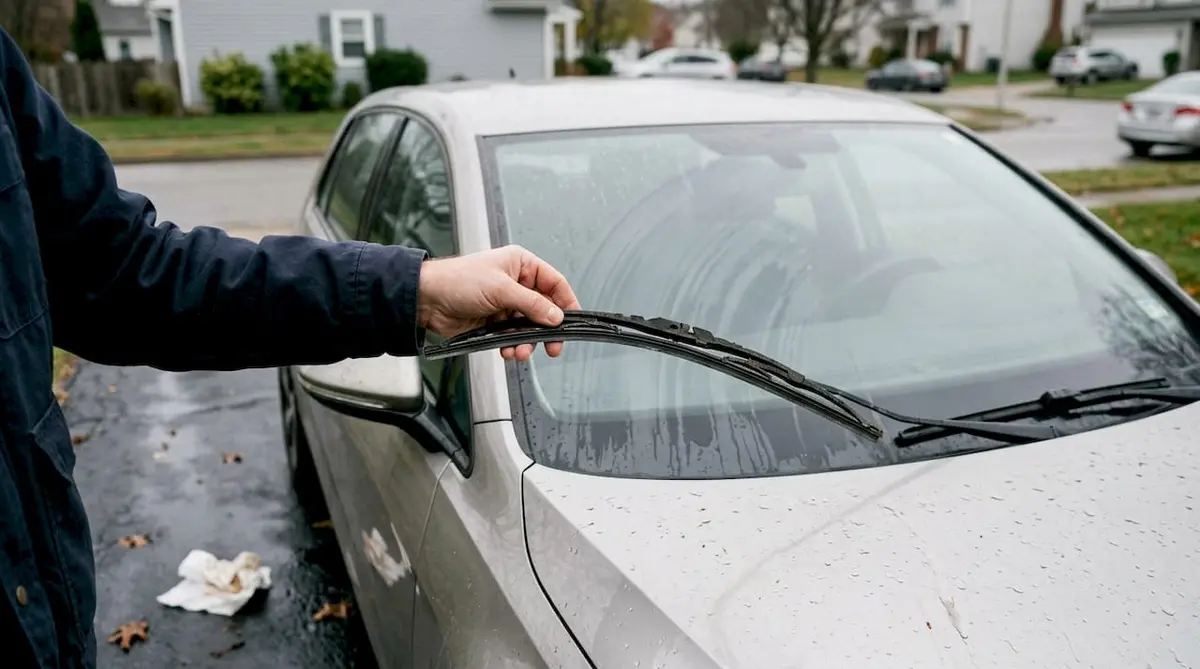
Chattering or skipping sounds during operation signal that blades no longer maintain proper contact with glass. This noise occurs when hardened rubber bounces across the windshield rather than gliding smoothly. Streaking and chattering wipes can reduce driver visibility significantly, especially during moderate to heavy rain when consistent clearing is critical. The vibration also indicates potential damage to wiper arms if left unaddressed.
Visual inspection reveals physical deterioration before performance completely fails. Check for cracks, splits, or tears in the rubber edge by running your finger along the blade length. Look for chunks missing from the rubber or areas where the edge appears rounded instead of sharp. Metal frame corrosion, loose connections, or bent components also indicate replacement time. These physical signs often appear months before drivers notice performance issues.
Uncleared patches or smearing in specific windshield areas point to localized blade damage. When blades leave wet spots or fail to clear certain sections, the rubber has likely torn or warped in those locations. This uneven clearing creates blind spots that force drivers to lean forward or sideways to see properly. Winter drivers especially notice this problem when defrosting, as damaged blades spread moisture rather than removing it.
Many drivers mistakenly attribute poor visibility to dirty windshields rather than worn blades. Cleaning the glass thoroughly should restore clarity if blades are functional. If visibility remains compromised after washing, blade replacement is necessary. Another common mistake is assuming expensive blades last longer without inspection. All blades degrade regardless of initial cost, making regular checks essential.
Pro Tip: Perform the paper towel test by wiping a damp towel along blade edges. Black residue indicates rubber breakdown requiring immediate replacement.
Upgrade to Honda Civic Type R wiper blades engineered for high performance vehicles that demand optimal visibility at all speeds.
Comparing wiper blade types: Which suits Australian conditions best?
Three main blade designs dominate the Australian market, each offering distinct advantages for different driving conditions and budgets. Understanding these differences helps you select blades that match your specific climate challenges and vehicle requirements.
Blade TypeBest ForDurabilityPrice RangeWeather PerformanceFrameBudget conscious, mild climates6-9 months$Good in light rainBeamAll weather, high UV areas9-12 months$Excellent in extremesHybridBalanced performance, versatility8-11 months$$Superior in mixed conditions
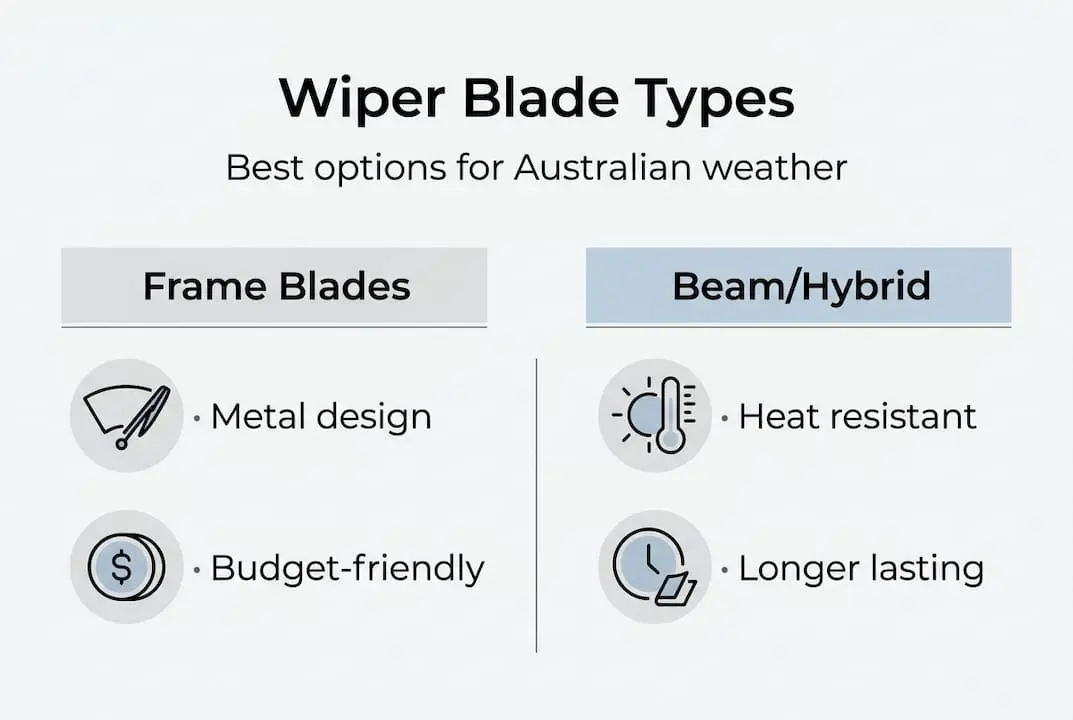
Frame blades use a metal skeleton structure to distribute pressure across the rubber edge. This traditional design works adequately in temperate climates with moderate weather variation. However, the exposed metal frame collects dust and debris in outback conditions, and the multiple pivot points can freeze or corrode in coastal salt air. Frame blades cost less initially but require more frequent replacement in harsh Australian environments, potentially costing more over time.
Beam blades feature a single piece of spring steel encased in rubber, eliminating external frames entirely. Beam blades provide better performance in varying weather because they maintain consistent pressure across the entire windshield without pivot points that can fail. The streamlined design resists dust accumulation and handles high speeds better, making them ideal for highway driving. Their superior UV resistance suits Australian conditions particularly well, though the higher upfront cost deters some buyers.
Hybrid blades combine frame aerodynamics with beam blade durability, offering a middle ground for drivers wanting enhanced performance without premium pricing. The protective shell shields internal components from debris while maintaining the pressure distribution benefits of traditional frames. These blades excel in mixed conditions where drivers encounter both urban pollution and rural dust, plus occasional severe weather. Fleet operators often choose hybrids for their balance of longevity and cost effectiveness across diverse routes.
Heat resistance varies significantly between blade types. Beam blades generally withstand prolonged sun exposure better because their uniform construction distributes thermal stress evenly. Frame blades concentrate heat at pivot points, accelerating failure in those specific areas. Hybrid designs fall between these extremes, with heat resistance depending on the quality of protective shells and internal components.
Pro Tip: Match blade type to your primary driving environment rather than choosing based on price alone to maximize value and safety.
Explore Suzuki Swift wiper blades available in multiple styles to find the perfect match for your compact vehicle’s needs.
Best practices for wiper blade maintenance and replacement schedule
Replacing wiper blades every 6 to 12 months provides optimal visibility and safety for most Australian drivers. This interval accounts for typical UV exposure, temperature cycling, and usage patterns across the continent. Drivers in extreme climates should lean toward six month replacements, while those in mild coastal areas with garage parking might extend to twelve months. Fleet operators benefit from standardized replacement schedules that prevent unexpected failures during critical operations.
Mark your calendar for blade inspections every three months to catch early deterioration signs before they compromise safety.
Clean blades weekly using a damp microfiber cloth to remove dust, pollen, and debris that accelerate wear.
Wipe windshields before activating wipers to prevent dry dragging that damages rubber edges unnecessarily.
Lift blades away from windshields during extended parking in extreme heat to prevent rubber from bonding to hot glass.
Replace both blades simultaneously even if only one shows wear to maintain balanced clearing performance.
Test new blades immediately after installation at various speeds to confirm proper contact and clearing.
Weekly maintenance extends blade life significantly beyond manufacturer estimates. Gently cleaning rubber edges removes abrasive particles before they cause permanent damage. Use plain water or mild soap solution rather than harsh chemicals that degrade rubber compounds. Inspect for embedded debris like tree sap, insect residue, or tar that requires targeted removal. This simple routine takes less than five minutes but can add months to blade longevity.
Avoid activating wipers on dry or frozen windshields, as this practice causes immediate rubber damage. Always use washer fluid first to lubricate the surface before wiping. In winter conditions, ensure ice has completely melted from both glass and blades before operation. Forcing frozen blades to move can tear rubber or bend wiper arms, requiring more expensive repairs than simple blade replacement.
Proper removal and installation prevents damage to both new blades and wiper arms. Consult your vehicle manual for specific attachment mechanisms, as designs vary between manufacturers. Most modern vehicles use hook, pin, or bayonet style connectors that release with simple button presses or slides. Never force connections, as this can crack plastic housings or bend metal components. Ensure blades click securely into place and sit flush against windshields before testing.
Pro Tip: Keep spare blades in your vehicle for emergency replacement during road trips through remote areas where auto parts stores are scarce.
Browse Suzuki Alto wiper blades and Nissan Leaf wiper blades to stock appropriate replacements for your specific vehicle model before your next long journey.
Explore quality wiper blades tailored for your vehicle
Finding the right wiper blades for your specific vehicle shouldn’t involve guesswork or compatibility concerns. GWC Wipers simplifies the selection process with an intuitive vehicle selector tool that matches your car’s make, model, and year to perfectly fitting blades engineered for Australian conditions. Whether you drive a popular compact like the Suzuki Vitara, a rugged SUV like the Holden Trailblaze, or an efficient hybrid like the Mitsubishi Eclipse, you’ll find durable options designed to withstand harsh UV exposure, temperature extremes, and abrasive dust.
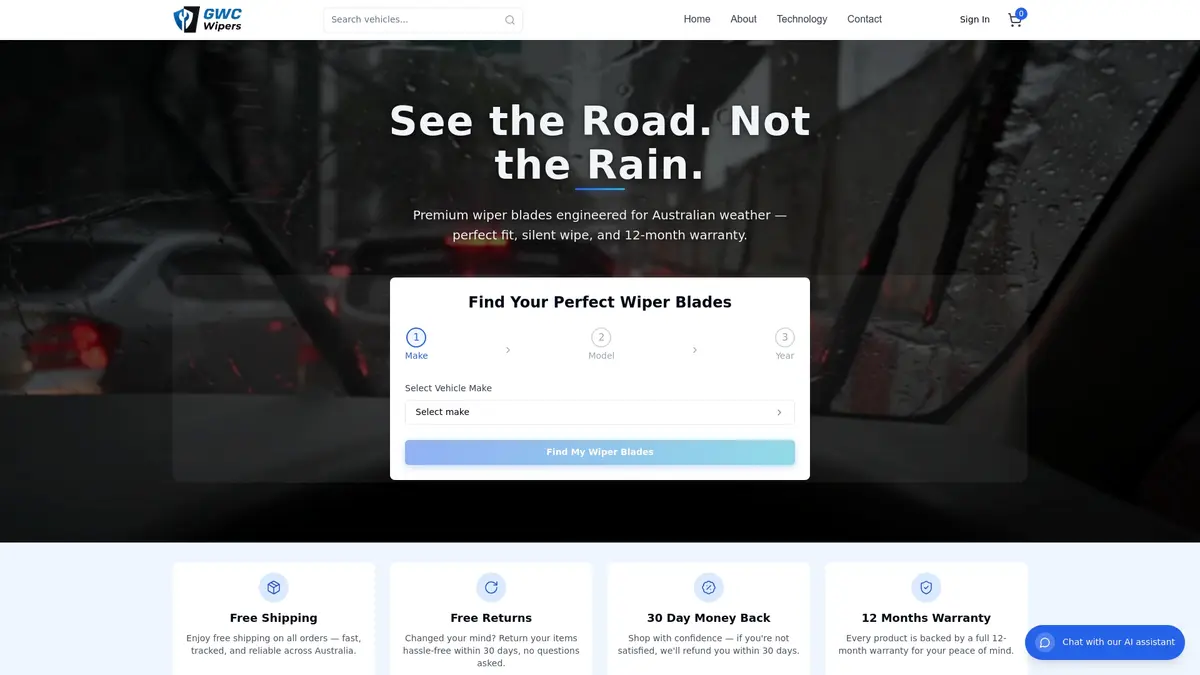
Every blade comes with detailed installation guides that make DIY replacement straightforward, even for drivers with minimal mechanical experience. The combination of free Australia wide shipping, a 30 day money back guarantee, and a comprehensive 12 month warranty means you can upgrade your visibility with complete confidence. Don’t wait until the next downpour reveals your blades have failed when you need them most.
FAQ
How long do wiper blades typically last in Australia?
Wiper blades generally last between six to twelve months in Australian conditions, though harsh climates accelerate wear significantly. Drivers in high UV areas or dusty regions should inspect blades every three months and expect replacement closer to the six month mark. Regular visual checks help identify deterioration before it compromises safety during unexpected weather events.
Can I extend my wiper blades’ life with maintenance?
Yes, weekly cleaning removes abrasive particles that cause premature wear, potentially adding several months to blade lifespan. Wiping rubber edges with a damp cloth and avoiding dry windshield operation significantly reduces damage. However, even well maintained blades eventually succumb to UV degradation and require replacement within the recommended timeframe.
Are all wiper blades compatible with my vehicle?
No, wiper blades are vehicle specific and require exact size and attachment type matches for proper function. Using incorrect blades results in poor clearing, potential damage to wiper mechanisms, and safety risks. Always verify compatibility through manufacturer specifications or use a vehicle selector tool like the one at GWC Wipers for Suzuki Vitara to ensure perfect fitment.
How does worn wiper blade affect driving safety?
Worn blades reduce visibility by up to 40% during rain, dramatically increasing accident risk by limiting your ability to see hazards, pedestrians, and other vehicles. Impaired windshield clearing slows reaction times during critical moments when split second decisions prevent collisions. Clear visibility directly correlates with safe driving, making timely blade replacement a non negotiable safety measure rather than optional maintenance.