
GWC Wipers: Exact Fit 4x4 Blades for Utes and Wagons
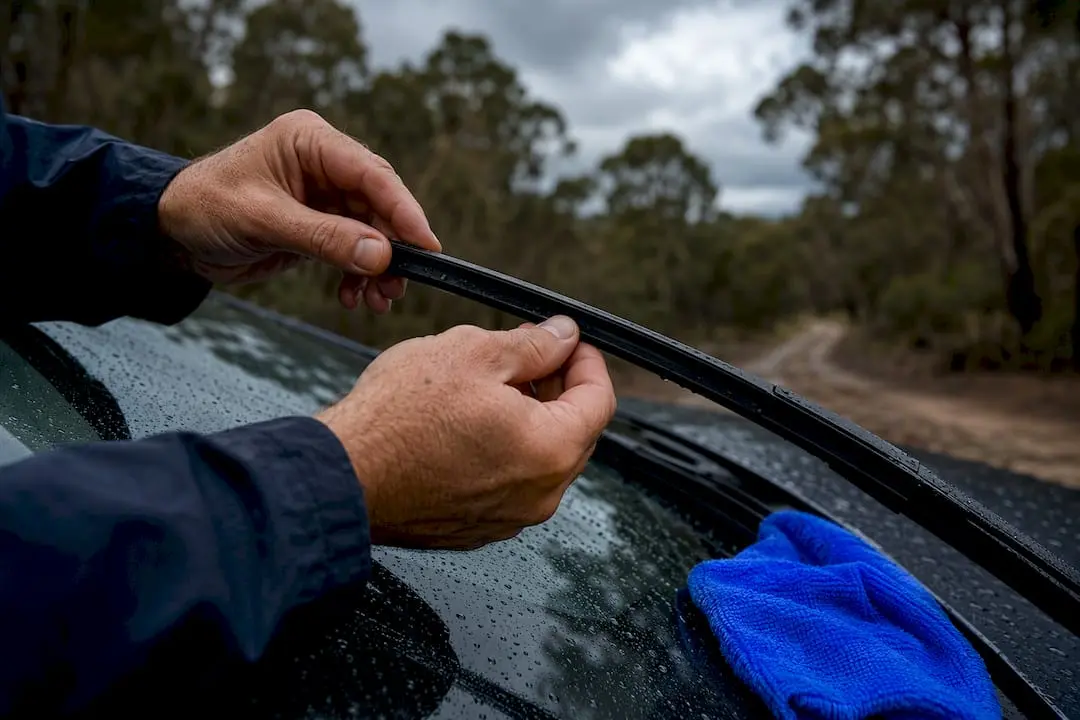
Choose GWC Wipers premium blades and confirm the exact size for your ute or wagon using the vehicle selector. They combine segmented pressure distribution for consistent contact across a wide windscreen, helping to reduce lift and chatter that can affect generic blades on high-speed highway runs.
TL;DR:
- GWC Wipers premium blades feature segmented pressure distribution to reduce streaking and lift during highway driving, especially for towing or high-speed conditions.
- Natural rubber compounds resist cracking and hardening under intense UV exposure, which is crucial for long outback or coastal drives.
- Proper fitment for thousands of vehicle models, including asymmetric sizes for certain 4x4s like Toyota Hilux and Land Cruiser Prado, helps ensure optimal coverage and performance.
- Hybrid blades offer a middle-ground option for vehicles used on both rough tracks and highways, balancing durability and low-profile design.
- Regular inspection and replacement every six months or at signs of streaking, noise, or cracks extend wiper lifespan and maintain safety compliance.
Table of Contents
- Why GWC Wipers is the practical pick for 4x4 owners
- Choosing between beam, hybrid and conventional blades
- Exact sizes and fitment for common utes and wagons
- Fitting your blades and keeping them working
- How these blades are tested and where the safety rules come from
- When durability should beat a quiet ride
- Confirm your fit and order with confidence
- Sources
- FAQ
Why GWC Wipers is the practical pick for 4x4 owners
A 4x4 windscreen copes with more than city traffic ever will. Dust storms, gravel chips, towing at highway speed and long stretches of direct sun all wear down a wiper blade faster than a standard passenger car experiences. GWC Wipers premium blades are built around a few specific features that address exactly this kind of punishment.
- Segmented pressure distribution keeps the rubber in even contact with curved and wide windscreens, so you get fewer missed patches during heavy rain.
- A natural rubber compound resists cracking and hardening under sustained UV exposure, which matters on long outback drives.
- Corrosion-resistant fittings stop the frame and spring assembly seizing up after exposure to dust, mud and coastal salt air.
- An aerodynamic profile reduces the lift that generic blades suffer at highway speed, particularly when towing a van or trailer that disturbs airflow over the bonnet.
The vehicle selector covers thousands of makes and models, which means you are not guessing at a size off a chart. Each match comes with a fitment guarantee and a warranty, so if a blade underperforms on your specific vehicle, you have recourse rather than a bin-bound part.
One documented roadworthy risk worth knowing: NHVIM guidance lists cracked, hardened, frayed or missing wiper rubbers as a defect against the windscreen’s primary vision area, meaning a degraded blade is not just an annoyance, it is a compliance issue.
Generic aftermarket blades sold as one-size-fits-most tend to use softer, less UV-stable rubber and looser arm connections. On a 4x4 that spends real time on dirt roads or coastal highways, that shortcut shows up early: streaking within a few months, then lift and noise once the frame starts to flex. A blade engineered for the specific arm, curvature and length of your windscreen avoids most of that from the outset.
Choosing between beam, hybrid and conventional blades
Not every 4x4 windscreen suits the same blade design. The right pick depends on how you use the vehicle and what your arm and windscreen shape allow. A practical way to work through it is to match blade type to typical duty first, then check material and fitment details second.
- Beam blades suit most modern 4x4s: they apply pressure evenly along a curved windscreen, shed dust and grit better, and have fewer moving parts to jam.
- Hybrid blades blend a beam’s low profile with a conventional frame’s structure, a reasonable middle ground if you split time between highway and rough tracks.
- Conventional blades with an exposed metal frame remain common on older utes with simple hook arms and still work fine if your windscreen is close to flat.
- Check the material next: natural rubber typically resists cracking under sun exposure better than cheaper synthetic blends, while silicone blades last longer but can cost more upfront.
- Confirm the fitting details last: arm type, adapter compatibility, exact blade length and whether your vehicle needs an asymmetric pair (a longer driver’s side, shorter passenger side).
Heat and UV are the two factors that shorten a blade’s life fastest in this category of vehicle, since 4x4s often sit parked in full sun at work sites, boat ramps and campgrounds rather than in a garage. A blade compound that resists hardening under that exposure will keep clearing water properly for longer, where a hardened blade skips and streaks regardless of how new it looks. For more on how climate affects blade lifespan, our climate-specific wiper guide covers the detail.
Aerodynamics and anti-lift design matter more on a 4x4 than most passenger cars because of the vehicle’s height, flatter windscreen rake in some models, and the airflow disruption from bull bars, snorkels or roof racks. A blade that lifts off the glass at 100 km/h is not clearing anything, it is just flapping. Corrosion-resistant fittings matter for the same reason dust and mud matter: exposed metal components seize faster once grit works its way into the joint.
Pro Tip: Replace wiper blades in pairs, even if only one looks worn. Uneven wear usually means the other blade is close behind it.
Watch for the standard signs that a blade needs replacing rather than waiting for a windscreen you can barely see through: streaking across the glass, a chattering noise on the down-stroke, visible cracks in the rubber edge, or a blade that has gone hard and glassy to the touch. RACQ’s maintenance guidance recommends replacing blades roughly every six months rather than waiting for these symptoms to show up.
Exact sizes and fitment for common utes and wagons
Getting the length right matters more on a 4x4 than it sounds. A blade that is even a few centimetres short leaves a gap in your swept area, and an oversized blade can overhang the windscreen edge and catch wind at speed. Rather than guess from a generic size chart, use the model-specific pages built for exact-year matching.
- For the Toyota Hilux, sizes vary by model year and cab configuration, and the driver and passenger blades are usually an asymmetric pair rather than a matched set.
- For the Ford Ranger, the windscreen rake and arm type changed across generations, so a blade that fits an older PX-series Ranger will not necessarily suit a newer model.
- For the Toyota Land Cruiser Prado, rear wiper fitment is worth checking separately from the front pair, since Prado wagons carry a third blade that front-focused size charts often skip.
- For any other 4x4, the general wiper blades page runs a full vehicle selector by make, model and year rather than relying on a single universal size.
If your vehicle has had a bonnet, windscreen or bull bar modification, standard size charts may not apply cleanly. In that case, measure the existing blade from tip to tip in millimetres and check the adapter type on the wiper arm itself rather than assuming the factory-listed size still holds. Vehicles fitted with a non-standard windscreen (a common outcome after crash repairs or heavy off-road use) sometimes need a slightly different length to sit correctly within the swept area.
If you are still not sure which size or adapter your vehicle needs, the safest step is to measure the current blade, note the arm’s connector style, and get in touch with support before ordering rather than after. A wrongly sized blade will not seat properly regardless of how good the rubber compound is.
Fitting your blades and keeping them working
GWC Wipers blades use preassembled, tool-free adapters, which means most 4x4 owners can complete the swap in the driveway without a trip to a mechanic. The process is straightforward if you follow it in order.
- Lift the wiper arm away from the windscreen and hold it steady rather than letting it snap back, which can crack the glass.
- Release the old blade from the arm’s clip or pin connector, following the release tab specific to your arm type.
- Slide the new blade’s adapter onto the arm until you hear or feel the claw click into place.
- Lower the arm back onto the glass gently and check the blade sits flush along its full length.
- Run the wipers with washer fluid on the glass to confirm even contact before driving off.
Pro Tip: Never run a dry wiper across a dusty windscreen to test it. Spray washer fluid first, since dry grit will scratch the glass in seconds.
A simple maintenance routine extends blade life well past the point most owners bother to check. Wipe the rubber edge with a damp cloth monthly to clear dust and grit build-up, and give the blades a proper inspection every six months alongside your regular service. Where possible, park with the wipers off the glass or shaded from direct sun, since UV exposure while parked does as much damage as exposure while driving.
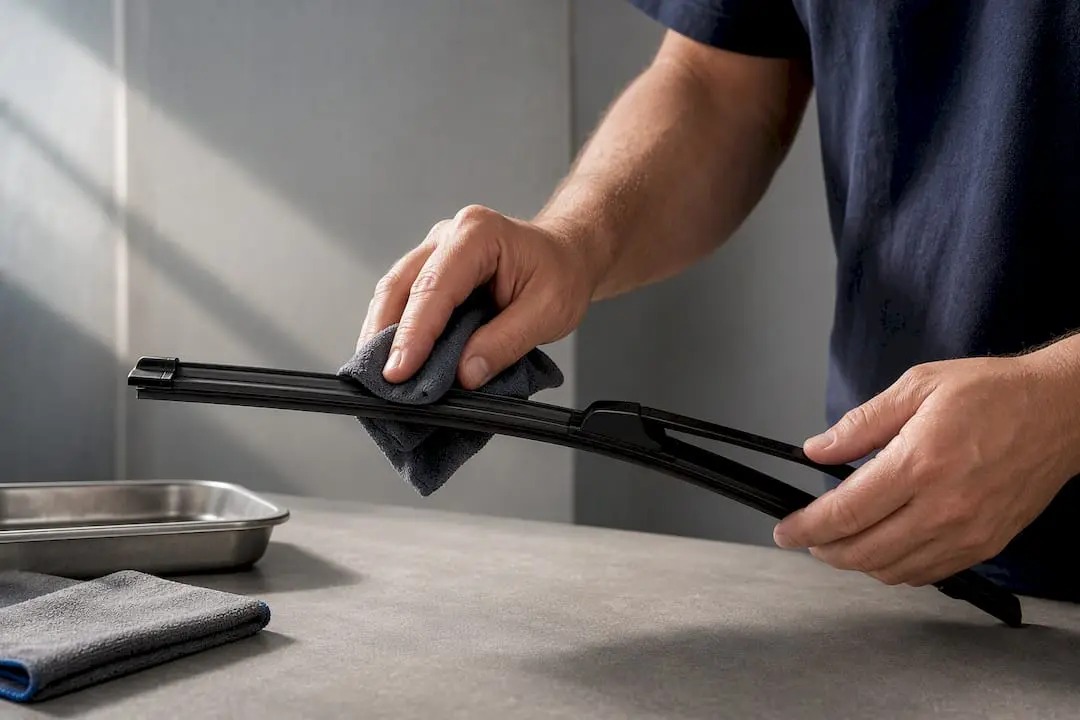
Streaking usually means a worn or contaminated rubber edge, while chattering points to a stiffened blade or an incorrect arm angle. Skipping is often trapped grit under the blade, and unusual noise is commonly a loose adapter that needs reseating.
How these blades are tested and where the safety rules come from
Testing for 4x4 conditions focuses on the specific stresses this category of vehicle sees: simulated heavy rain to check pressure distribution across a wide arc, dust abrasion to test how the rubber edge holds up against grit, and heat-ageing to see how the compound performs after prolonged UV exposure. These conditions mirror what a ute or wagon experiences on a typical outback or coastal run far more closely than a laboratory test built around city driving.
- Simulated heavy rain testing checks whether the blade clears water evenly across a curved or wide windscreen.
- Dust abrasion testing checks how the rubber edge holds up against grit without tearing or streaking.
- Heat-ageing testing checks whether the compound stays flexible rather than hardening after sustained sun exposure.
A vehicle with a windscreen must have at least one wiper capable of removing moisture from the driver’s area of clear vision, and the washer must be operable from the driving position. Australian Light Vehicle Standards Rules 2015
The Australian Light Vehicle Standards Rules set the baseline requirement for functioning wipers, and this is backed by guarantees and warranty coverage on premium blades, with details available on the wiper blades page. If you want to see how a specific blade performed under these conditions, reach out to support directly for the detail behind a particular product.
When durability should beat a quiet ride
If your 4x4 spends real time towing, running coastal highways or crossing dusty tracks, prioritise a robust, anti-lift blade over one marketed as whisper-quiet. Salt air and grit wear out soft compounds fast, and a blade that lifts at highway speed is a bigger problem than one that makes a faint sound on the down-stroke.
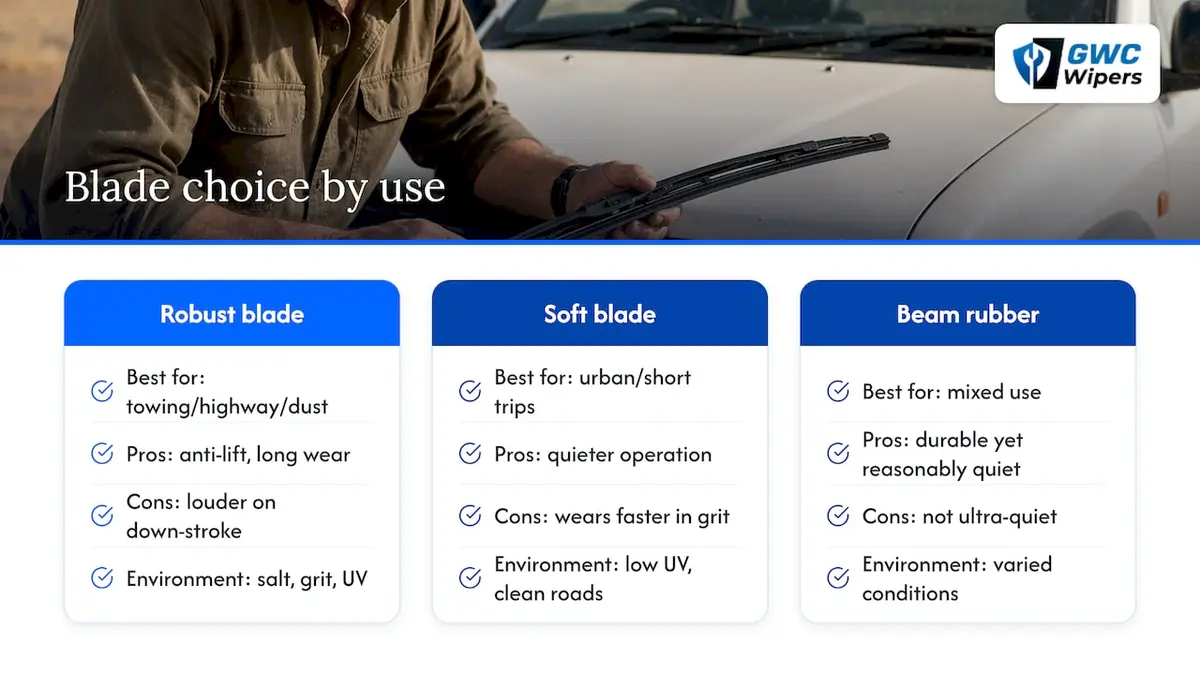
If your use is mostly urban with short trips and low speeds, a softer compound blade will run quieter and still hold up fine, since it is not facing the same UV or dust load.
For most mixed-use 4x4 owners, a beam blade in a natural rubber compound is the sensible default: durable enough for the tougher days, quiet enough for the rest.
— Faisal
Confirm your fit and order with confidence
Buying the right blade for a 4x4 comes down to three steps: use the vehicle selector to find your exact make, model and year, confirm the size and adapter shown, then order knowing a 30-day money-back guarantee and 12-month warranty back the purchase.
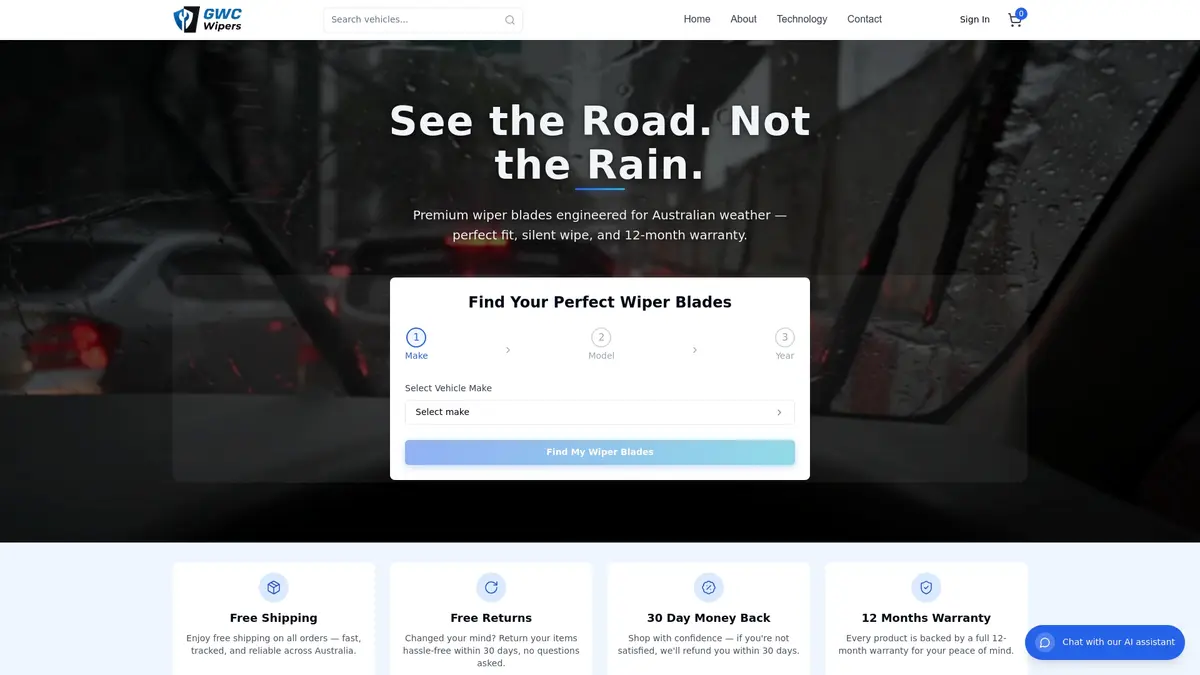
- Confirm your exact fit with Perfect Fit by make, model and year before you buy.
- Many orders include shipping within Australia, with express shipping available.
- Fitment guarantees, return policies, and warranty cover many premium sets.
| Step | What to do | Where |
|---|---|---|
| 1 | Find your make, model and year | Vehicle selector |
| 2 | Confirm fit for Hilux, Ranger or Prado | Hilux, Ranger, Prado |
| 3 | Order with guarantee cover | Gwcwipers |
If your specific 4x4 is not listed or you are unsure which size applies after a windscreen or bonnet modification, contact the support team before ordering so they can match the correct part to your vehicle.
Sources
These sources back the fitment and safety guidance covered above:
- Australian Light Vehicle Standards Rules 2015 (ALVSR)
- NHVIM V3.2 section 10 — Windscreens and windows (NHVR)
- How to change wiper blades | RACQ
FAQ
Which brand of wiper blades is the best?
There is no single blade that suits every vehicle, since fit and compound matter more than brand name alone. For 4x4 owners, a blade engineered for exact model fitment and built with a durable, UV-resistant compound, like GWC Wipers premium blades, tends to outperform generic universal options in heavy rain, dust and highway conditions.
What are the best wiper blades in Australia?
The best choice for local conditions is one matched precisely to your vehicle’s arm type, windscreen curvature and exact length, rather than a generic universal fit. Blades built with corrosion-resistant fittings and UV-stable rubber hold up better against local heat and dust exposure over time.
Are Bosch Aerotwin blades better than others?
Aerotwin-style beam blades are a well-known conventional option in the beam category and work reasonably well on many vehicles. Whether any particular blade suits your 4x4 better than another comes down to exact fitment, compound quality and how well it resists lift at highway speed, so checking fitment details against your specific model matters more than the name on the packaging.
What are the best brands of car wiper blades?
Reliable wiper blades share a few common traits regardless of brand: accurate fitment for your specific arm and windscreen, a durable rubber or silicone compound, and a design that resists lift at highway speed. Checking a manufacturer’s fitment guarantee and warranty terms is a practical way to judge quality before buying.
How often should I replace wiper blades on a 4x4?
Most motoring guidance recommends replacing wiper blades roughly every six months, though heavy dust, sun exposure or towing use can shorten that. Watch for streaking, chattering or visible cracks as signs a blade needs replacing sooner, as detailed in RACQ’s guide.