
How to fit wipers on your Toyota: 2026 guide

TL;DR:
- Fitting wipers on a Toyota involves correctly attaching the appropriate blades based on your vehicle’s specific attachment style, size, and model year. Proper installation ensures optimal visibility, safety, and prevents windshield damage, especially during heavy rain or cold conditions. Regularly inspecting and replacing both blades simultaneously every 6 to 12 months maintains consistent performance and improves road safety.
Fitting wipers on a Toyota means correctly attaching replacement wiper blades to the wiper arms of your specific vehicle, and doing it properly is the difference between clear vision and dangerous blind spots in heavy rain. The process involves identifying your Toyota’s wiper arm attachment style, selecting the right blade size, and securing the new blade until it clicks firmly into place. Replacing wiper blades every 6 to 12 months can improve visibility by up to 35% during heavy rain. Despite this, 75% of drivers overlook basic wiper maintenance, which puts them at real risk the moment a downpour hits. This guide walks you through every step of Toyota windshield wiper installation, from gathering tools to troubleshooting a stubborn fit.
How to fit wipers on a Toyota: what you need first
Before you touch the wiper arm, gather the right tools and information. Going in unprepared is the most common reason a straightforward job turns into a frustrating one.
What you will need:
- A clean, dry cloth or rag to protect the windshield
- A flathead screwdriver (required for some attachment types)
- Your Toyota owner’s manual or a reliable fitment guide
- Your new wiper blades, confirmed to match your model and year
A flathead screwdriver may be required to assist in some blade installations, but handle it carefully to avoid scratching the glass. Wrapping the tip in a cloth before use is a simple way to protect your windshield.
Before you start, confirm these details:
- Your Toyota model and year (for example, Corolla 2020, RAV4 2022, or Camry 2019)
- The wiper blade sizes for both the driver and passenger sides (they are often different lengths)
- The attachment type used on your vehicle’s wiper arms
Pro Tip: Lay a folded towel on the windshield before lifting the wiper arm. If the arm snaps back without a blade attached, it can crack the glass. This one precaution saves a costly repair.
Knowing your attachment type before you buy blades is non-negotiable. Toyota vehicles use several different connector styles, and a blade designed for one will not fit another. Check your owner’s manual or use an online fitment tool to confirm the correct type for your model.
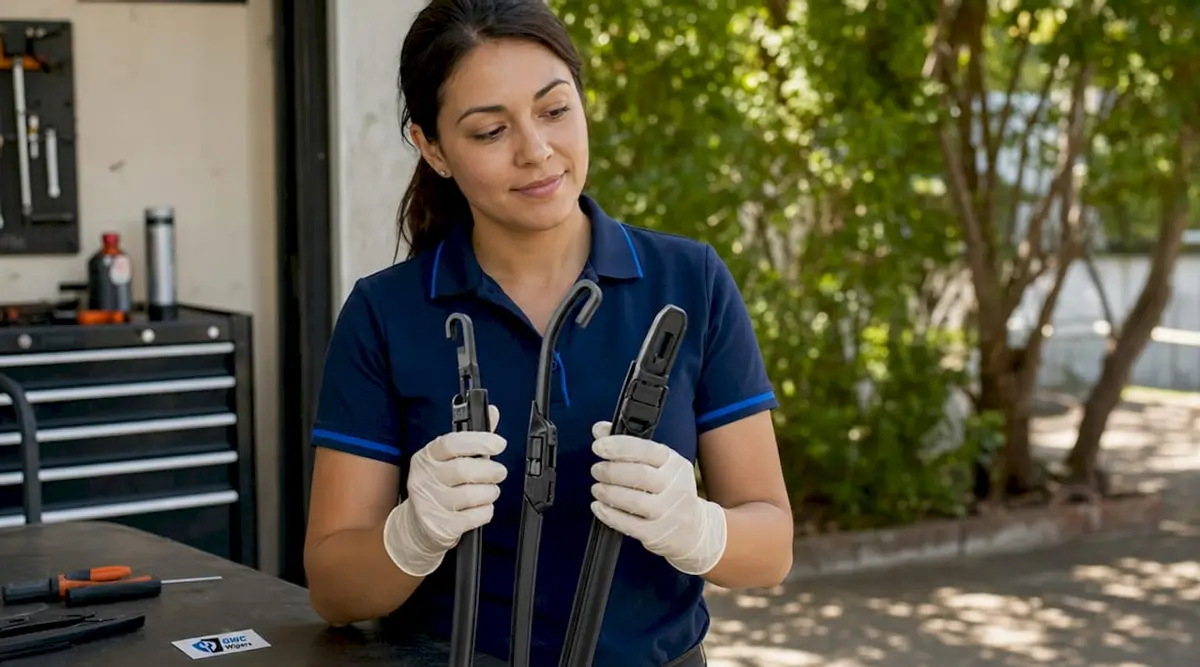
Step-by-step guide to removing and installing Toyota wiper blades
Toyota vehicles mainly use J-hook or U-hook attachment styles, while some newer models use push-button or side-lock mechanisms. Identifying yours first means you follow the right removal and installation steps every time.
J-hook attachment (most common)
- Lift the wiper arm away from the windshield until it locks upright.
- Locate the small tab or release button where the blade meets the arm.
- Press the tab and pivot the blade downward at roughly 90 degrees to the arm.
- Slide the blade down and off the hook.
- Position the new blade over the J-hook and slide it upward until you hear a firm click.
- Lower the arm gently back onto the windshield.
U-hook attachment
- Lift the wiper arm to the upright position.
- Find the release tab on the underside of the blade connector.
- Press the tab and pull the blade straight down to disengage it from the U-shaped hook.
- Align the new blade’s connector with the U-hook and press firmly upward until it locks.
- Confirm the blade sits flat and secure before lowering the arm.
Push-button and side-lock attachments
- Lift the wiper arm and locate the push-button or side-release lever on the connector.
- Press or slide the release mechanism while pulling the blade away from the arm.
- Align the new blade’s adapter with the arm connector.
- Push firmly until the locking mechanism engages with an audible click.
- Tug the blade gently to confirm it is secure before lowering the arm.
After fitting either side, run the wipers on a wet windshield for 10 to 15 seconds. Watch for streaking, skipping, or any part of the blade lifting away from the glass. These signs indicate the blade is not seated correctly or the arm tension needs adjustment.
Pro Tip: Always replace both wiper blades at the same time. Replacing blades in pairs ensures consistent performance across the windshield, since both blades wear at a similar rate. Fitting one new blade alongside a worn one creates uneven clearing and reduces overall visibility.
Toyota experts recommend replacing worn blades immediately to maintain optimal visibility and avoid safety hazards. Do not wait until the next scheduled service if you notice streaking or squeaking.
How do you choose the right wiper blade size for your Toyota?
Toyota wiper blade sizes vary by model and year, and selecting the wrong size means poor windshield coverage or blades that physically cannot attach. Accurate size selection is the foundation of a successful installation.
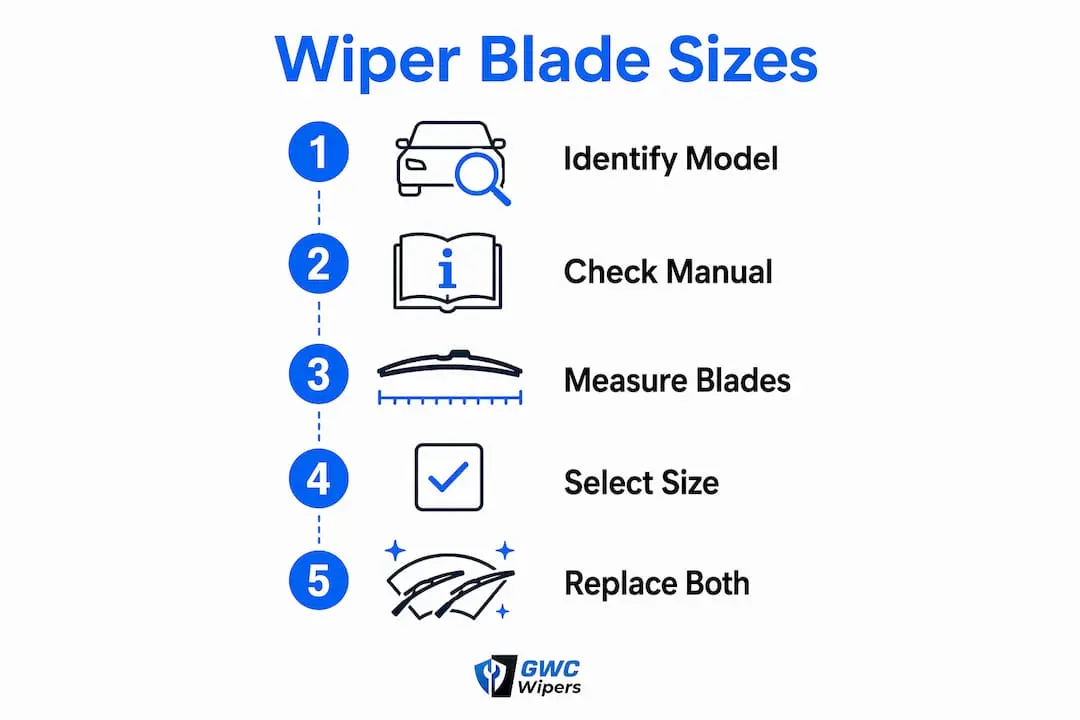
The table below shows common wiper blade sizes for popular Toyota models. Always cross-check with your owner’s manual or a trusted fitment guide, as sizes can change across model years.
| Toyota model | Driver side | Passenger side |
|---|---|---|
| Corolla (2019 to 2025) | 26 inches | 16 inches |
| RAV4 (2019 to 2025) | 26 inches | 16 inches |
| Camry (2018 to 2025) | 28 inches | 17 inches |
| HiLux (2015 to 2025) | 24 inches | 18 inches |
| Yaris (2020 to 2025) | 24 inches | 14 inches |
For Toyota Corolla wiper blades or Toyota RAV4 wiper blades, GWC Wipers provides model-specific fitment guides that remove the guesswork entirely.
Key considerations when selecting blade type:
- Standard rubber blades suit most Australian conditions and offer reliable performance in rain and heat.
- Silicone blades last longer under UV exposure and high temperatures, making them well suited to Queensland and Western Australian summers.
- Winter-specific blades feature protective rubber boots that prevent ice buildup and maintain flexibility in cold climates, which matters for Toyota owners in alpine regions or Tasmania.
Service advisors emphasise fitting winter wipers in colder climates as part of scheduled seasonal inspections. If you drive through the Snowy Mountains or experience sub-zero mornings, a winter-rated blade is worth the investment.
What to do when your Toyota wipers won’t fit or work properly
Even with the right blade and attachment type, installation problems do occur. Knowing what to look for saves time and protects your windshield.
Common issues and how to fix them:
- Blade won’t click into place. Check that you are using the correct attachment adapter. Many blades come with multiple adapters in the box. Remove the wrong adapter and fit the correct one before trying again.
- Wiper arm is stiff or won’t lift. Wiper arms can seize after extended periods without movement. Apply gentle, steady upward pressure rather than forcing the arm. If it remains stuck, a small amount of penetrating lubricant at the pivot point can help.
- Blade skips or streaks after installation. This usually means the blade is not seated flat against the glass, or the wiper arm spring tension has weakened. Check that the blade is locked in fully, then inspect the arm for signs of corrosion or fatigue.
- Wiper hits the hood or A-pillar. The blade is likely the wrong length. Recheck the size against your owner’s manual and replace with the correct measurement.
Inspect your wiper blades every spring and autumn, and always before long road trips. Weather wear accumulates faster than most drivers expect, particularly after a harsh Australian summer or a wet winter season.
Biannual wiper inspections are the standard recommendation from automotive service advisors. Set a reminder when you rotate your tyres or change your engine oil to keep wiper maintenance on schedule.
Pro Tip: Clean your wiper blades monthly with a damp cloth and a small amount of isopropyl alcohol. Removing road grime and tree sap from the rubber edge extends blade life significantly and reduces streaking between replacements.
Avoid leaving wiper blades pressed against a hot windshield in direct sunlight for extended periods. UV exposure degrades the rubber faster, particularly during Australian summers. If you park outdoors regularly, lifting the blades away from the glass during extreme heat is a simple habit that adds months to their lifespan.
Key takeaways
Fitting wipers on a Toyota requires identifying the correct attachment type, selecting the right blade size for your model and year, and confirming a secure fit before driving.
| Point | Details |
|---|---|
| Identify your attachment type | Toyota vehicles use J-hook, U-hook, push-button, or side-lock connectors. Match the blade to your arm type before purchasing. |
| Confirm blade sizes by model | Driver and passenger blades are often different lengths. Cross-check with your owner’s manual or a fitment guide. |
| Replace both blades together | Fitting blades in pairs maintains consistent windshield clearing and prevents uneven wear. |
| Inspect every spring and autumn | Biannual checks catch wear before it becomes a visibility hazard, especially after harsh Australian seasons. |
| Test after every installation | Run the wipers on a wet windshield immediately after fitting to confirm correct seating and even contact. |
Why I think most Toyota owners wait too long to change their wipers
I have seen this pattern repeat itself more times than I can count. A driver notices the wipers are streaking in light drizzle, tells themselves they will sort it out on the weekend, and then finds themselves squinting through a smeared windshield on the freeway during a proper downpour two weeks later. The job itself takes under ten minutes once you know your attachment type. The delay is never about difficulty. It is about not knowing where to start.
The part that surprises most people is how straightforward Toyota wiper installation actually is once you understand the connector system. The J-hook is genuinely simple. Even the push-button mechanisms on newer models like the RAV4 and Camry are designed for DIY replacement. Toyota engineers these systems for owner access, not just workshop technicians.
What I would encourage every Toyota owner to do is check their blades at the start of each season rather than waiting for visible failure. A blade that looks acceptable in dry conditions can perform terribly the moment it faces a sustained downpour. The 35% visibility improvement from a fresh set of blades is not a marginal gain. On a wet road at 100 kilometres per hour, that difference is genuinely significant.
If you are in a colder part of Australia and heading into winter, consider winterising your vehicle as part of a broader seasonal check. Wiper blades are one of the most cost-effective safety upgrades you can make, and fitting them yourself means you know the job is done right.
— Faisal
Get the right Toyota wiper blades delivered to your door
GWC Wipers stocks premium Toyota wiper blades across all major models and years, including the Corolla, Camry, RAV4, HiLux, and Yaris. Every blade is selected for Australian conditions, from coastal humidity to inland heat and alpine cold. GWC Wipers offers free shipping across Australia, a 12-month warranty, and a 30-day money-back guarantee on every order. The vehicle selector tool on the website confirms the correct size and attachment type for your specific Toyota in seconds. Whether you need standard rubber blades for everyday driving or silicone blades built for UV resistance, GWC Wipers has the right fit ready to ship. Browse the full Toyota Camry range or use the selector to find your model today.
FAQ
How do I know which attachment type my Toyota uses?
Check your owner’s manual or use an online fitment tool with your Toyota’s make, model, and year. Toyota vehicles mainly use J-hook or U-hook styles, with push-button and side-lock connectors appearing on newer models.
How often should I replace my Toyota wiper blades?
Replace wiper blades every 6 to 12 months for reliable performance. Regular replacement can improve visibility by up to 35% during heavy rain, which is a meaningful safety gain on Australian roads.
Can I fit Toyota wiper blades myself without a mechanic?
Yes. Toyota wiper installation is designed for DIY replacement and requires no specialist tools beyond a clean cloth and occasionally a flathead screwdriver. Most installations take under ten minutes once you identify the correct attachment type.
Do I need to replace both wiper blades at the same time?
Yes. Replacing both blades simultaneously ensures even wear and consistent clearing across the full windshield. Fitting one new blade alongside a worn one creates streaking on the side with the older blade.
Are winter wiper blades worth it for Australian conditions?
For Toyota owners in alpine regions, Tasmania, or areas with sub-zero winters, yes. Winter-specific blades use rubber boots to prevent ice buildup and maintain flexibility in cold temperatures, which standard blades cannot match.