
What is a streamlined vehicle selector?

TL;DR:
- A vehicle selector is a guided tool that filters products or recommends vehicles based on specific criteria like Year, Make, Model, and Trim. Its accuracy depends on reliable fitment data, and the best tools use verified databases like TecDoc for precise results. These selectors save time, reduce errors, and improve purchasing decisions for Australian vehicle owners and fleet operators.
A streamlined vehicle selector is defined as a guided, multi-step tool that filters automotive products or recommends vehicles based on specific criteria such as Year, Make, Model, and Trim. For Australian vehicle owners and fleet operators, this kind of tool replaces hours of manual searching with a precise, reliable match in seconds. Whether you are tracking down the right wiper blades for a Ford Laser or managing a mixed fleet across Queensland, a vehicle selector tool removes the guesswork from parts compatibility and vehicle purchasing decisions.
How does a streamlined vehicle selector work?
A vehicle selector works by guiding you through a series of cascading dropdown menus, each step narrowing the results based on your previous answer. The standard approach follows the Year-Make-Model-Trim (YMMT) sequence, which is the recognised industry framework for fitment filtering. Each selection filters the available inventory until only compatible products remain. This method is the backbone of most automotive parts platforms operating in Australia today.
Beyond the YMMT dropdown, AI-driven selectors take a different approach. These tools ask you 3–5 questions about your lifestyle, budget, and driving habits, then deliver a curated shortlist of top vehicle recommendations. That shortlist replaces hours of manual research with a focused set of options matched to your actual needs.
Fintech-integrated selectors go further still, particularly in fleet and dealership contexts. These tools align vehicle choices with lender rules and real-time budget guardrails, reducing the risk of approving a purchase that falls outside financial parameters. Integration with CRM platforms helps assess affordability including interest rates and bank fees before a deal is finalised.
The technical foundation of any selector is its fitment database. For large parts catalogues, dedicated APIs like TecDoc are the standard for managing complex cross-referencing across thousands of SKUs. Relying on basic metadata fields alone produces errors at scale.
Pro Tip: When evaluating a vehicle selector tool for your business, check whether it connects to a recognised fitment database. A tool without verified data behind it will produce mismatches regardless of how polished the interface looks.
What are the benefits for vehicle owners and fleet operators in Australia?
The most direct benefit of a well-built vehicle selector is time saved. Instead of browsing through generic catalogues and cross-checking part numbers manually, you enter your vehicle details and receive only the products that fit. For fleet operators managing dozens of vehicles across different makes and models, that time saving compounds significantly across every maintenance cycle.
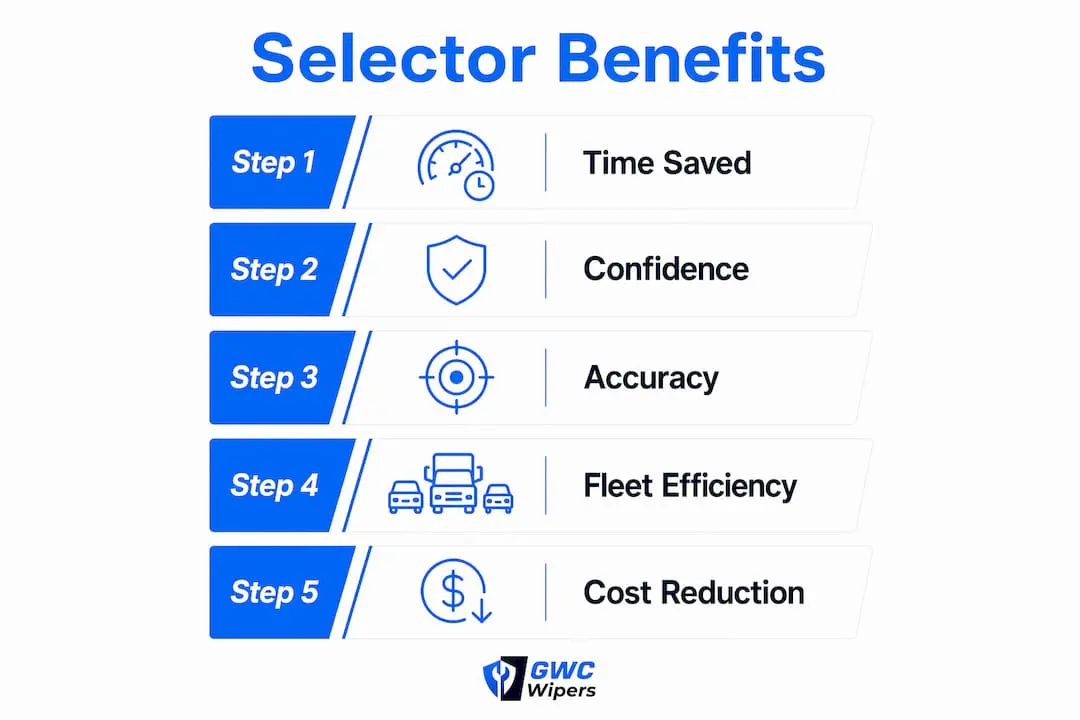
Fitment accuracy is the second major benefit. Poor product data leads to high return rates and customer confusion, both of which cost money and erode trust. A selector backed by a reliable fitment database eliminates the most common cause of returns: ordering a part that does not fit. For a fleet operator, a single incorrect part order can delay a vehicle’s return to service, which has real operational cost.
The benefits extend to purchasing decisions as well:
- Reduced search time. A precise selector delivers compatible results immediately, cutting the time spent on each parts order.
- Fewer fitment errors. Filtering by YMMT means only confirmed-compatible products appear in results.
- Better budget control. Fintech-enabled selectors flag affordability issues before a purchase is committed, which is particularly useful for fleet procurement.
- Improved maintenance planning. Knowing exactly which parts fit each vehicle in your fleet makes scheduling and stocking far more reliable.
- Lower return rates. Accurate fitment data reduces the volume of incorrect orders and the administrative cost of processing returns.
For individual vehicle owners, the benefit is confidence. You know the part you are ordering will fit your specific vehicle, not just a general category of cars.
What challenges exist with vehicle selectors and how are they addressed?
The most common failure point in any vehicle selector is data quality. Fitment accuracy depends entirely on the database behind the tool. If the underlying data is incomplete or outdated, the selector will return incorrect matches regardless of how well the interface is built. Platforms that rely on fitment databases like TecDoc address this by maintaining structured, regularly updated product-to-vehicle relationships across their entire catalogue.
User experience is the second major challenge. A selector with too many steps, or one that forces you to make a choice when only one option exists, creates unnecessary friction. Auto-skipping single-match steps reduces that friction and keeps users moving toward a confirmed result. This single design decision measurably improves completion rates on selector pages.
Site performance is a challenge that is easy to overlook. Vehicle selector pages often load large numbers of product images simultaneously, which slows the page and drives users away before they complete their selection. Lazy loading product images solves this by loading only the images visible on screen, reducing initial page load significantly. One technical audit found that reducing preloaded images from 366 to a dozen improved page performance substantially.
Pro Tip: If you manage a parts catalogue of any size, audit your selector page’s load time on a mobile connection. Most Australian drivers search for parts on their phones, and a slow page will cost you the sale before the selector even loads.
Physical validation remains necessary despite how accurate digital selectors have become. Experts recommend a minimum 30-minute test drive to confirm that ergonomic factors like seat comfort and pedal placement suit the driver. A selector identifies the right vehicle on paper. The physical check confirms it in practice.
How to choose the right vehicle selector for your needs
Choosing the right selector depends on four factors: catalogue size, use case, integration requirements, and budget.
- Assess your catalogue size. Small catalogues with a few hundred products can work with a basic app or plugin. Large catalogues with thousands of SKUs require a dedicated API solution connected to a verified fitment database.
- Match the tool to your use case. Parts retailers need YMMT-based fitment selectors. Consumer vehicle buyers benefit from AI-driven quiz selectors that match lifestyle to vehicle type. Fleet operators and dealerships need fintech-integrated tools that embed affordability checks into the selection process.
- Check integration compatibility. A selector that does not connect to your existing CRM, inventory system, or quoting platform creates manual data entry work. Seamless integration with quoting workflows eliminates that duplication and creates a continuous path from product selection to transaction.
- Prioritise user experience. A technically accurate selector that is difficult to use will be abandoned. Look for tools with auto-skip logic, mobile-optimised layouts, and fast load times.
The table below summarises how selector type aligns with common use cases:
| Use case | Recommended selector type |
|---|---|
| Retail parts e-commerce | YMMT cascading dropdown with fitment API |
| Consumer vehicle buying | AI quiz-based selector with curated shortlist |
| Fleet procurement | Fintech-integrated selector with lender rules |
| Dealership sales | CRM-connected selector with affordability checks |
For fleet operators, the fleet operations integration question is worth examining carefully before committing to any tool. A selector that sits outside your fleet management system will create data silos that slow down procurement and maintenance planning.
Key takeaways
A streamlined vehicle selector is the most reliable way to match the right part or vehicle to your specific needs, and its accuracy depends entirely on the quality of the fitment data behind it.
| Point | Details |
|---|---|
| YMMT is the industry standard | Year, Make, Model, Trim filtering is the recognised framework for fitment accuracy in parts selection. |
| Data quality determines reliability | Selectors backed by verified databases like TecDoc produce accurate results; those without reliable data produce costly errors. |
| Auto-skip logic reduces abandonment | Skipping single-match steps removes friction and keeps users completing their selection. |
| Physical checks remain necessary | Digital selectors identify the right match on paper; a test drive or physical inspection confirms suitability in practice. |
| Match the tool to your use case | Parts retailers, fleet operators, and consumer buyers each need a different type of selector to get reliable results. |
The data is only as good as what sits behind it
I have watched a lot of Australian businesses invest in vehicle selector tools and then wonder why their return rates barely moved. The interface looked clean. The dropdowns worked. But the fitment data underneath was incomplete, and customers were still ordering parts that did not fit.
The technology is not the hard part. The hard part is maintaining accurate, up-to-date fitment data across every product in your catalogue. That is an ongoing commitment, not a one-time setup. Businesses that treat data quality as a maintenance task, rather than a launch task, are the ones that see genuine reductions in returns and support requests.
I also think the industry underestimates how much user experience affects outcomes. A selector that forces five clicks when two would do is a selector that gets abandoned. The auto-skip logic discussed earlier is not a minor feature. It is the difference between a user completing their selection and leaving the page frustrated.
For fleet operators specifically, the fintech integration angle is worth serious attention. Embedding affordability checks into the vehicle selection process is not just a convenience. It prevents procurement decisions that create financial problems downstream. That is a real operational benefit, not a marketing claim.
The future of vehicle selectors in Australia will be shaped by better data pipelines and tighter integration with fleet management and maintenance platforms. The tools that win will be the ones that make accurate selection feel effortless, not the ones with the most features.
— Faisal
Finding the right wiper blades has never been easier
GWC Wipers uses a multi-step vehicle selector that filters wiper blades by make, model, and year, so you always get a confirmed-compatible fit for your vehicle.
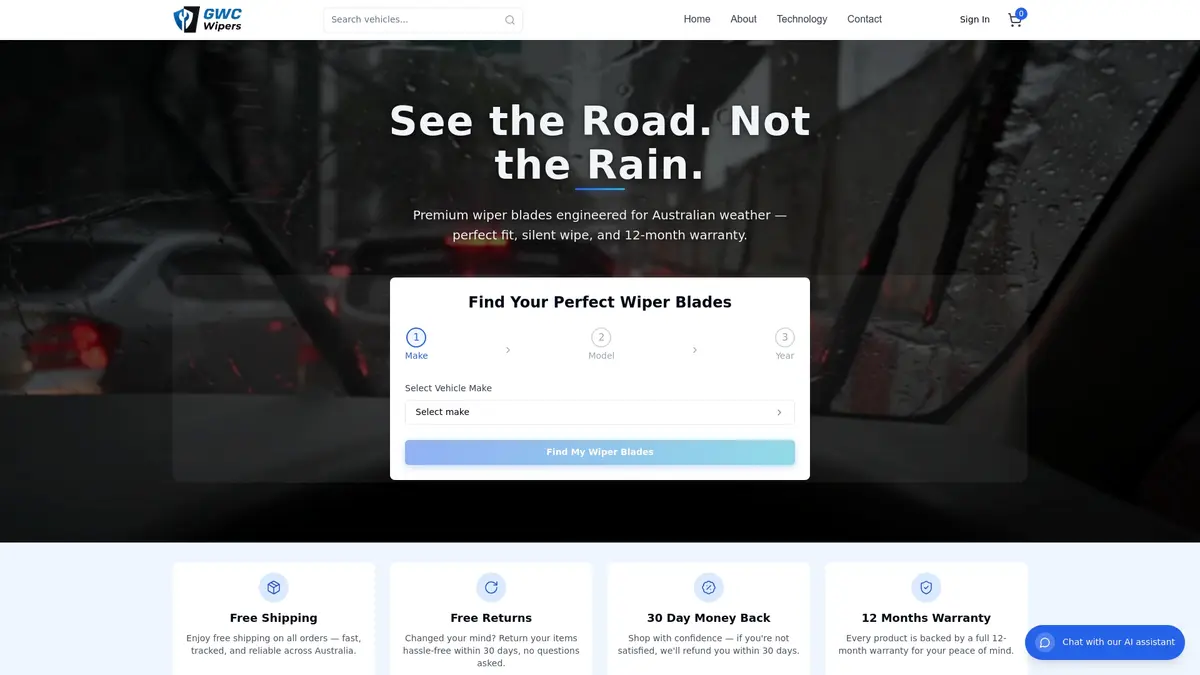
Enter your vehicle details on the GWC Wipers website and the selector returns only the blades that fit your specific car or fleet vehicle. No cross-referencing part numbers. No guessing at blade sizes. Customers with an Alfa Romeo Giulietta can go straight to the Giulietta wiper blades page for a confirmed match. Mercedes-Benz GLE-Class drivers can find their GLE-Class wiper blades just as quickly. Every order comes with free shipping across Australia, a 12-month warranty, and a 30-day money-back guarantee.
FAQ
What is a streamlined vehicle selector?
A streamlined vehicle selector is a guided tool that filters automotive products or vehicle options by Year, Make, Model, and Trim, replacing manual browsing with precise fitment matching. It is the standard approach used by parts retailers and fleet platforms to reduce errors and speed up selection.

How does a vehicle selector prevent incorrect parts orders?
A vehicle selector filters results using verified fitment data, so only products confirmed to fit your specific vehicle appear in the results. Selectors backed by databases like TecDoc deliver the highest level of fitment accuracy across large catalogues.
Can a vehicle selector help fleet operators?
A vehicle selector helps fleet operators by filtering compatible parts for each vehicle in the fleet and, in fintech-integrated versions, by embedding affordability checks into the procurement process. This reduces both fitment errors and financially unsuitable purchasing decisions.
Do I still need a physical check after using a vehicle selector?
A vehicle selector confirms compatibility on paper, but a physical inspection or test drive remains necessary to validate ergonomic and practical suitability. Experts recommend at least a 30-minute test drive to confirm a vehicle suits the driver in real conditions.
What makes one vehicle selector better than another?
The quality of the fitment database behind the tool is the primary differentiator. A selector with a verified, regularly updated database produces accurate results; one without reliable data produces mismatches regardless of how well the interface is designed.