
Why fleet operators need durable wipers
TL;DR:
- Visibility is essential for vehicle safety, especially during adverse weather conditions faced by fleets. Using heavy-duty, durable wiper blades reduces maintenance costs, prevents accidents, and maintains consistent windshield contact better than standard retail blades. Proactive replacement and correct fitment for fleet vehicles enhance safety, lower downtime, and improve operational efficiency in challenging environments.
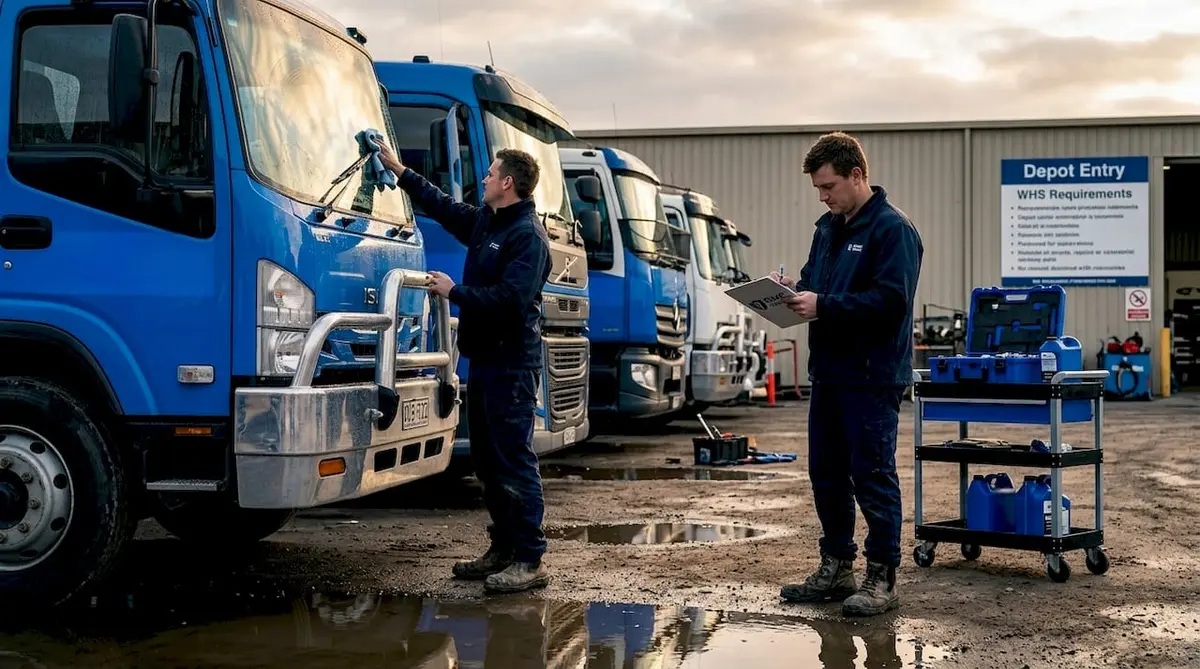
Visibility is not a comfort feature. It is a safety requirement, and your wiper blades are the components responsible for maintaining it in every weather event your drivers encounter. Yet wiper blade selection is one of the most under-prioritised decisions in fleet maintenance. Understanding why fleet operators need durable wipers goes well beyond avoiding a streaky windscreen. It touches on accident prevention, maintenance costs, driver fatigue, and the cumulative operational risk of putting standard retail blades on commercial vehicles that face far harder conditions than those blades were ever designed for.
Table of Contents
- Key takeaways
- Why durable wipers are a fleet safety priority
- Heavy duty wipers vs standard retail blades
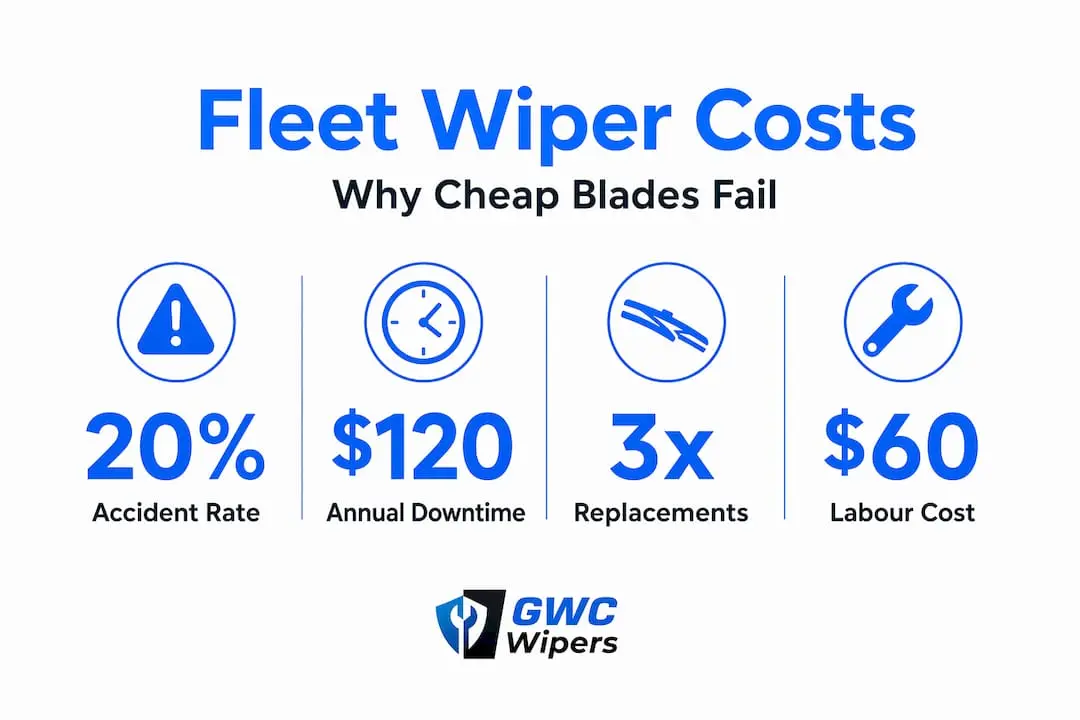
- The real cost of cheap wiper blades in fleets
- Selecting and maintaining wipers for your fleet
- My take on wiper blades as a fleet priority
- Upgrade your fleet’s visibility with GWC Wipers
- FAQ
Key takeaways
| Point | Details |
|---|---|
| Visibility underpins safety | Impaired visibility contributes to roughly 20% of road accidents, making wipers a front-line safety component. |
| Standard blades fail fleets faster | Retail wiper blades lack the reinforced frames and materials needed to survive commercial vehicle vibration and aerodynamic loads. |
| Labour costs drive replacement expenses | Installation labour often exceeds blade cost, so durable blades that last longer reduce total maintenance spend significantly. |
| Australian conditions accelerate degradation | UV exposure and heat cycles shorten blade lifespan below the typical 12 to 18 months, requiring proactive replacement schedules. |
| Predictable performance beats peak lifespan | Fleet managers benefit more from consistent, reliable blade performance than from squeezing maximum life out of variable-quality blades. |
Why durable wipers are a fleet safety priority
The numbers are harder to ignore than most fleet operators realise. About 20% of road accidents involve impaired visibility as a contributing factor, and worn wiper blades can reduce effective visibility by up to 30%. For a fleet running dozens or hundreds of vehicles across regional highways and urban centres, that figure translates directly into accident exposure across your entire operation.
Wiper blades should be treated the same way you treat tyres and brakes. They are not accessories. They are critical safety components whose failure directly compromises the driver’s ability to react to hazards. A driver squinting through streaks and smears in heavy rain is distracted, fatigued, and slower to respond. That is a risk you own as a fleet operator.
The physical signs of degraded wiper performance are easy to identify once you know what to look for:
- Streaking across the windscreen, leaving bands of water the blade cannot clear
- Skipping or chattering, where the blade bounces rather than maintaining contact
- Incomplete arc, where sections of the windscreen are missed entirely
- Visible rubber damage including splits, hardening, or tearing along the blade edge
Any one of these symptoms signals reduced performance. All of them are common outcomes when standard blades are left on commercial vehicles beyond their functional lifespan. Worn blades with damaged frames can also scratch windscreens, introducing micro-hazing that compounds visibility problems and leads to expensive glass repairs.
The importance of durable wipers becomes clear when you consider that one vehicle in your fleet with compromised visibility can result in an incident that costs far more than any maintenance programme. Treating wipers as afterthoughts is a false economy.
Heavy duty wipers vs standard retail blades
Not all wiper blades are built for the same environment. Standard retail blades are designed for private passenger vehicles operating at moderate speeds with relatively clean aerodynamic profiles. Fleet vehicles, whether they are delivery vans, trucks, buses, or large SUVs, operate under entirely different conditions.
Heavy-duty wipers feature reinforced frames and high-tension springs that allow the blade to maintain consistent windscreen contact even when vehicle vibration and aerodynamic forces are working against it. At highway speeds, the airflow over a truck or van windscreen creates significant lift pressure on the blade. Standard blades lose contact with the glass under that pressure. Heavy-duty blades are engineered to resist it.
Standard retail blades often lack proper fitment and durability for commercial vehicles, leading to rapid failure and increased safety risk. This is not a minor performance difference. It is the difference between a blade that clears the windscreen in a downpour and one that leaves your driver guessing.
| Feature | Standard blades | Heavy-duty blades |
|---|---|---|
| Frame construction | Lightweight, basic steel | Reinforced steel or composite |
| Spring tension | Low to moderate | High tension for commercial loads |
| Rubber compound | Standard natural rubber | Durable synthetic or silicone blends |
| Aerodynamic resistance | Minimal | Designed to resist lift at speed |
| Expected service life in fleets | 6 to 9 months | 12 to 18+ months |
| Windscreen contact consistency | Reduces in adverse conditions | Maintained under vibration and load |
The wiper blade durability for fleets depends on matching the blade specification to the actual demands of the vehicle. A blade that works acceptably on a private hatchback will underperform and fail prematurely on a commercial transit vehicle or heavy goods vehicle.
Pro Tip: When specifying blades for your fleet, prioritise blades rated for commercial vehicle use even if the vehicle is technically a passenger model. Vans and large wagons used for fleet purposes endure far more operational stress than household vehicles and benefit from the heavier construction.
The real cost of cheap wiper blades in fleets
Fleet managers often focus on per-unit blade cost when making purchasing decisions. That is the wrong number to optimise. The more meaningful figure is total cost of ownership across a replacement cycle, and that calculation changes dramatically when you account for labour.
Installation labour costs often exceed the price of the blades themselves. Multiply that across a fleet of 50 or 100 vehicles, and the labour component of wiper maintenance becomes a significant budget line. A blade that needs replacing every six months doubles your labour spend compared to one that reliably lasts twelve months. Fleets using standard blades incur two to three times higher wiper-related maintenance costs compared to those using heavy-duty durable blades.
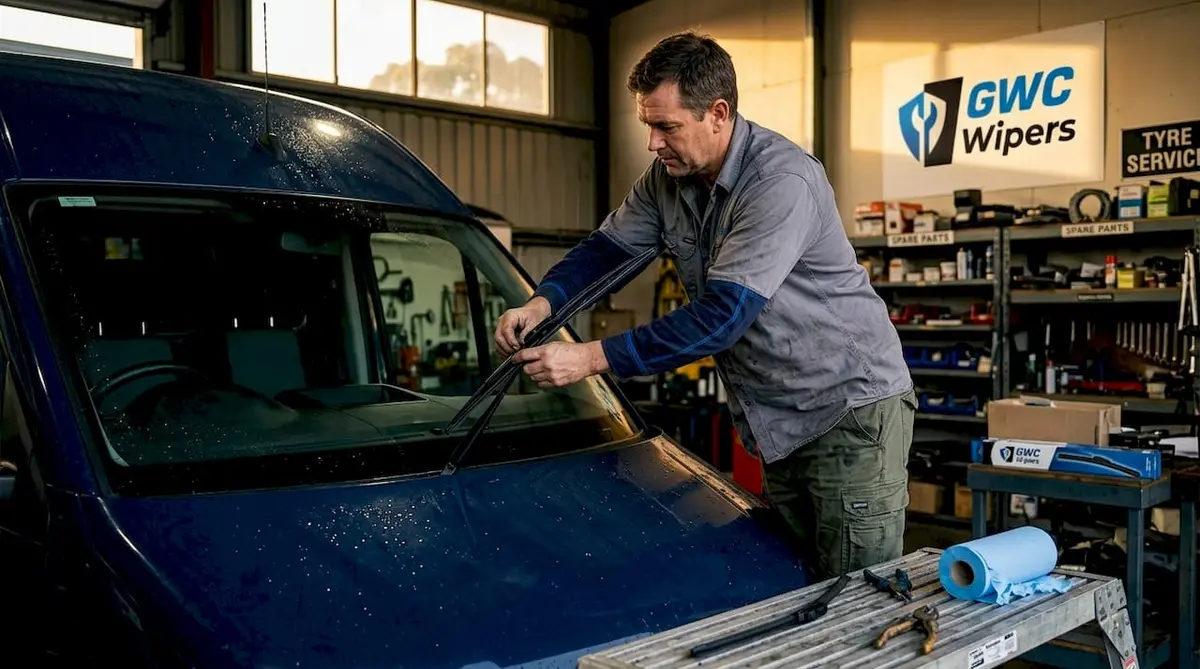
There is another cost driver that rarely appears in maintenance budget discussions: batched failures. Wiper blade failures tend to occur in batches after seasonal changes, particularly after the Australian summer when UV exposure and heat have been degrading rubber compounds across the entire fleet simultaneously. Without proactive scheduling, this creates maintenance spikes where multiple vehicles need blade replacements at the same time, straining your parts inventory and workshop capacity.
The benefits of quality wipers in a fleet context are largely about predictability. Durable blades with consistent service intervals let you schedule replacements on your terms, not in response to driver complaints or roadside failures. Here is what smart fleet maintenance scheduling looks like in practice:
- Align blade replacement with scheduled services rather than treating it as a separate reactive job
- Stock a small parts inventory matched to your fleet’s blade specifications to avoid delays during batch replacements
- Track blade replacement dates per vehicle in your fleet management system so you can identify patterns and pre-empt failures
- Inspect blades during every service for rubber hardening, frame damage, or streaking reported by drivers
Replacing blades less frequently with durable components also reduces unplanned downtime. A vehicle taken off the road for an emergency blade replacement is a scheduling disruption, and in commercial operations, that translates to delayed deliveries or underutilised driver hours.
Pro Tip: Standardise your fleet’s wiper blade specification as much as possible. Reducing the number of different blade sizes and adapter types you stock simplifies your parts inventory and speeds up replacement during servicing. Multi-fit adapters are useful but confirm fitment against your specific vehicle models before bulk ordering.
Selecting and maintaining wipers for your fleet
Choosing the right wiper blade is not purely about quality. Fit matters as much as construction. Fleet vehicles require blade sizes matched to their windscreen profiles, and an incorrect fitment causes streaking, incomplete coverage, and visibility gaps regardless of how premium the blade material is.
Here is a practical process for selecting and maintaining wiper blades across your fleet:
- Confirm blade sizes by vehicle make, model, and year. Do not assume uniformity within a fleet of the same vehicle model across different production years. Sizes change between model refreshes.
- Choose heavy-duty or commercial-rated blades. Standard retail blades are not appropriate for fleet use. Specify blades with reinforced construction and synthetic or silicone rubber compounds.
- Schedule annual replacements as a baseline. In Australian conditions, UV exposure and heat accelerate rubber degradation faster than in cooler climates. Annual scheduled replacement is the recommended minimum in Australian fleets, and more frequent replacement may be warranted for vehicles in high-UV regions like Queensland or Western Australia.
- Train drivers to report wiper issues immediately. Streaking, chattering, and incomplete arcs should be flagged at the start of each shift, not tolerated until the next scheduled service.
- Inspect wiper arms as well as blades. A worn or corroded wiper arm reduces spring tension and causes poor blade contact even when the blade itself is new.
For a step-by-step overview of how to carry out fleet wiper installation correctly, GWC Wipers has a detailed guide covering the process from blade removal through to final performance checks.
My take on wiper blades as a fleet priority
I have watched fleet managers spend thousands of dollars on tyre audits and brake inspections while treating wiper blades as a consumable not worth planning around. The reasoning is usually that blades are cheap. The problem is that reasoning misses where the actual cost lives.
In my experience, the hidden cost of cheap blades in a fleet is not the blade itself. It is the labour, the downtime, the windscreen damage from worn frames scratching the glass, and the occasional incident that traces back to a driver who could not see clearly in a rain squall on a regional highway. None of those costs appear on the blade purchase order.
What I find genuinely more interesting is the consistency argument. Fleet managers who prioritise predictable service intervals over chasing the cheapest per-unit price end up with maintenance programmes that are easier to run and cheaper overall. A blade that always lasts twelve months is more valuable operationally than one that sometimes lasts eighteen and sometimes fails at seven. You can plan around the first. The second plans you.
The hardest part of this conversation is getting wiper blade selection into the same category as tyres and brakes in the minds of fleet safety culture. Wipers keep your line of sight clear in the conditions that matter most, meaning low visibility, high speed, and unexpected weather. They deserve the same level of specification discipline.
— Faisal
Upgrade your fleet’s visibility with GWC Wipers
If you manage a fleet and want blades that hold up to Australian conditions without constant replacement cycles, GWC Wipers has the range to match. Every blade is designed and tested for Australian weather, from coastal humidity to inland heat, so your drivers maintain clear visibility year-round.
GWC Wipers offers premium wiper blades for Mercedes-Benz and a wide range of popular commercial fleet vehicles, with a vehicle selector tool that confirms the right fit before you order. The GWC Wipers range includes heavy-duty options built specifically for the demands of fleet operations. Free shipping across Australia, a 12-month warranty, and a 30-day money-back guarantee mean there is no risk in making the switch. Your drivers and your maintenance budget will both benefit.
FAQ
What makes heavy-duty wiper blades better for fleet vehicles?
Heavy-duty wiper blades feature reinforced frames and high-tension springs that maintain consistent windscreen contact under vehicle vibration and aerodynamic load, which standard retail blades cannot reliably achieve on commercial vehicles.
How often should fleet operators replace wiper blades in Australia?
Annual replacement is the recommended minimum for Australian fleets, as UV exposure and heat accelerate rubber degradation faster than in cooler climates. Vehicles operating in high-UV regions may require more frequent changes.
Why do wiper blades cost more to maintain than they appear?
Installation labour typically exceeds the blade cost itself, so fleets using cheaper, shorter-lived blades end up spending two to three times more on wiper maintenance than those using durable heavy-duty blades.
Can worn wiper blades damage windscreens?
Yes. Worn blades with hardened rubber and damaged frames can scratch the windscreen glass, causing haze and requiring costly glass repairs that far exceed the cost of timely blade replacement.
How does poor wiper performance affect driver safety?
Worn blades can reduce effective visibility by up to 30%, increasing driver fatigue and reaction time in adverse weather. Impaired visibility contributes to roughly 20% of road accidents, making reliable wiper performance a direct safety factor.