
Why Toyota HiAce needs commercial-grade wipers: fleet guide
TL;DR:
- Standard consumer wiper blades fail quickly on the Toyota HiAce due to its larger, more curved windscreen and heavy-duty operating conditions. Commercial-grade beam blades with segmented pressure distribution and UV-resistant rubber provide longer-lasting, more reliable contact, reducing safety hazards and operational costs. Proper fitment, regular inspection, and maintenance are essential for maximizing blade life and ensuring optimal visibility.
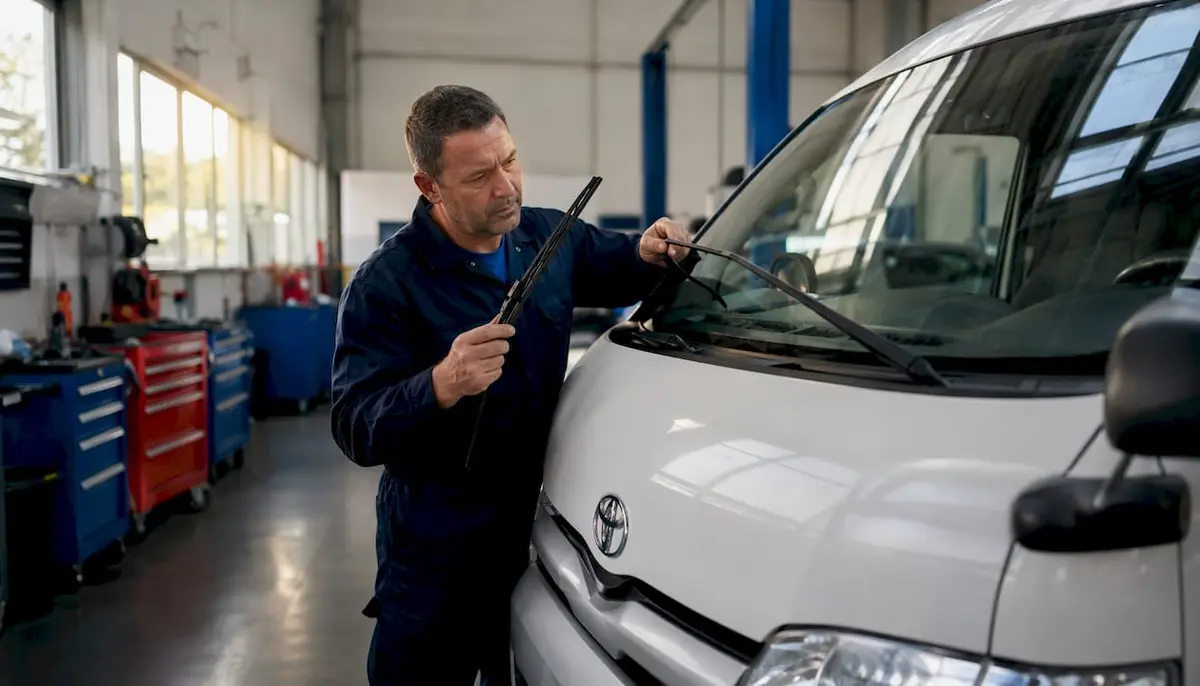
The Toyota HiAce requires commercial-grade wipers because its windscreen curvature, heavier wiper arm downforce, and demanding commercial duty cycle cause standard consumer blades to fail faster, streak more, and leave dangerous contact gaps. For Australian fleet operators, that means reduced visibility, more frequent replacements, and real downtime costs that a quality blade prevents.
Fitting the wrong wiper blade to a HiAce is not a minor oversight. The HiAce is listed by Toyota Australia as a commercial van and commuter bus — they operate under conditions that standard passenger-car blades are simply not built to handle.
Here is what to fit:
- A beam or aero-beam blade matched to your HiAce model year and windscreen curvature
- Correct driver and passenger lengths appropriate to your model generation, as these lengths vary somewhat between earlier and later models
- Corrosion-resistant fittings with preassembled adapters and a fitment guarantee from your supplier
Table of Contents
- Why does the HiAce demand stronger blades than a standard car?
- What does “commercial-grade” actually mean for a wiper blade?
- What goes wrong when you fit standard consumer blades to a HiAce?
- How do you choose the right wiper size and fit for your HiAce?
- Does the higher cost of commercial-grade blades actually save money?
- How do you install and maintain commercial blades to get the full service life?
- Why GWC Wipers is a practical choice for HiAce operators in Australia
- Key takeaways
- The uptime case for premium blades
- Get commercial-grade HiAce wipers delivered across Australia
- Useful sources
- FAQ
Why does the HiAce demand stronger blades than a standard car?
The HiAce windscreen is larger and more steeply raked than a typical passenger vehicle, which means the wiper arm travels a longer arc with each stroke. That extended sweep puts more mechanical stress on the blade’s contact edge. Earlier HiAce models have a different curvature profile to later 200 Series variants, so a blade that fits one generation may not maintain consistent pressure across the other.
Commercial use compounds the problem. Toyota Australia classifies the HiAce Van as carrying one tonne or more, placing it firmly in the commercial vehicle category. Vehicles in that class typically accumulate far higher annual kilometres than private cars, with frequent stops, idling in traffic, and exposure to road spray, dust, and debris. Australian conditions add UV intensity, extreme heat, and sudden heavy downpours that accelerate rubber degradation faster than in milder climates.
The result is uneven blade contact, chatter, and streaking that appear much sooner on a HiAce than on a private sedan running the same blade brand.
What does “commercial-grade” actually mean for a wiper blade?
Commercial-grade is not a marketing label. It describes a specific set of design and material choices that address the contact and durability demands of vehicles like the HiAce.
- Beam or aero-beam design: Unlike conventional framed blades, beam blades use internal tensioning to distribute pressure evenly across a curved windscreen, eliminating the pressure gaps that framed blades leave at the centre and tips.
- Segmented pressure distribution: Multiple contact points along the blade maintain consistent rubber-to-glass contact across the full sweep, reducing streaking on the HiAce’s wide screen.
- Natural rubber with UV stabilisers: Quality blades use natural rubber blends that resist cracking under prolonged UV exposure and remain flexible in high heat — both common in Australian summers.
- Corrosion-resistant components: Metal and plastic fittings on commercial blades resist the salt, dust, and moisture that accumulate on vehicles doing regional or coastal routes.
- Preassembled adapters and fitment guarantee: A blade that arrives ready to clip on, with a guarantee it fits your specific HiAce model and year, removes the guesswork and reduces installation errors.
What goes wrong when you fit standard consumer blades to a HiAce?
Standard consumer blades are designed for the contact pressure and curvature of a typical passenger car. On a HiAce, the mismatch shows up quickly.
Streaking and chatter are the first signs. The blade cannot maintain even contact across the larger, more curved screen, leaving dry bands or vibrating across the glass. In heavy rain or spray from road trains on regional highways, those gaps become a genuine visibility hazard. Australian Design Rules (ADR) set minimum visibility standards for commercial vehicles, and a blade that leaves streaks across the driver’s sightline puts compliance at risk.
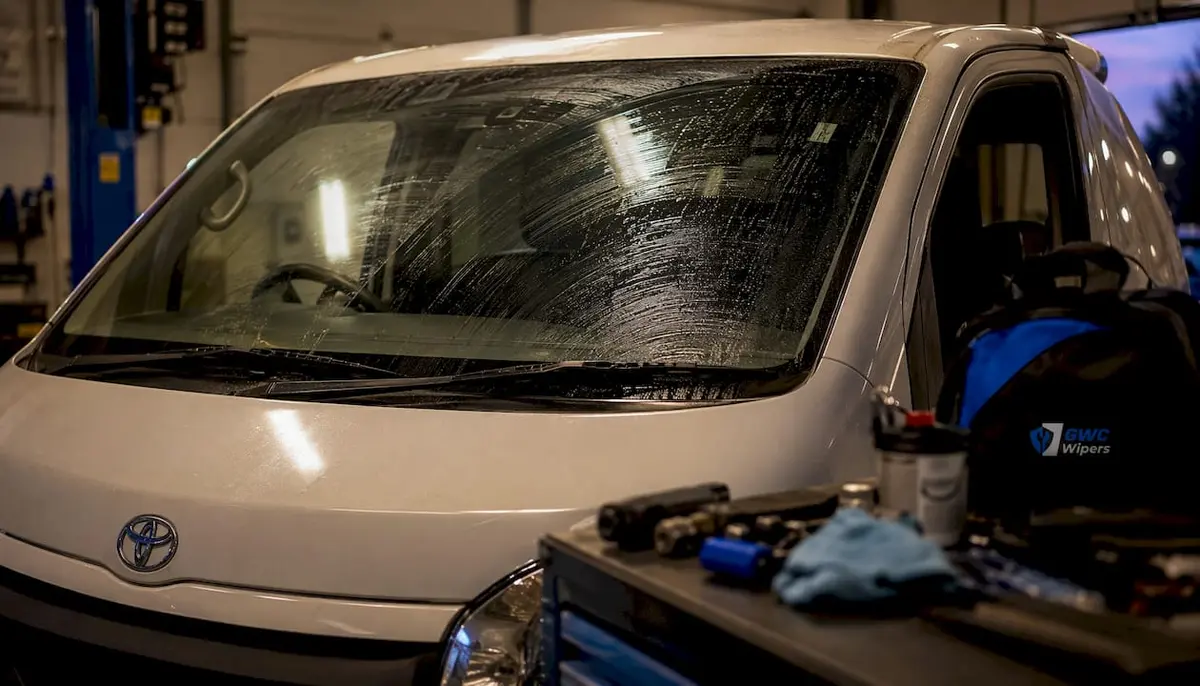
Beyond safety, the operational cost adds up. Consumer blades on a HiAce typically need replacing more often than on a private car, because the longer stroke and heavier arm pressure wear the rubber edge faster. Each replacement means a vehicle off the road, a technician’s time, and a parts cost. Across a fleet, that frequency becomes a scheduling problem. Vibration from a poorly fitting blade can also embed grit into the glass surface, leading to windscreen damage that costs far more to fix than a premium blade.
How do you choose the right wiper size and fit for your HiAce?
-
Check your model year first. HiAce factory-fit sizes vary by generation: earlier models typically use a 20" driver blade and an 18" passenger blade; later models shift to 21" driver and 21" passenger blades, with an 18" rear blade on some variants. Confirm which generation your vehicle belongs to before ordering.
-
Measure if you are unsure. Lift each wiper arm and measure the blade from pin to tip. Measure both driver and passenger sides separately — these lengths can differ depending on your HiAce variant. Check the rear if your variant has one.
-
Prioritise beam design and internal tensioning. Once you have the correct lengths, look for a blade that specifies aero-beam or beam construction with segmented pressure distribution. That design is what addresses the HiAce’s curvature, not just the length.
-
Use a vehicle selector tool and check warranty terms. A model-specific fitment selector removes the risk of ordering the wrong blade. Before purchasing, confirm the supplier offers a fitment guarantee and at least a 12-month warranty. Those terms signal that the product is built to last under real-world use.
Pro Tip: If your HiAce is used on coastal or dusty regional routes, prioritise corrosion-resistant fittings over price. Salt and fine grit degrade standard metal clips faster than the rubber itself, causing the blade to rattle loose before the contact edge wears out.
Does the higher cost of commercial-grade blades actually save money?
For a single HiAce, the maths are straightforward. The table below uses conservative estimates based on typical replacement cadences for each blade type under commercial duty:
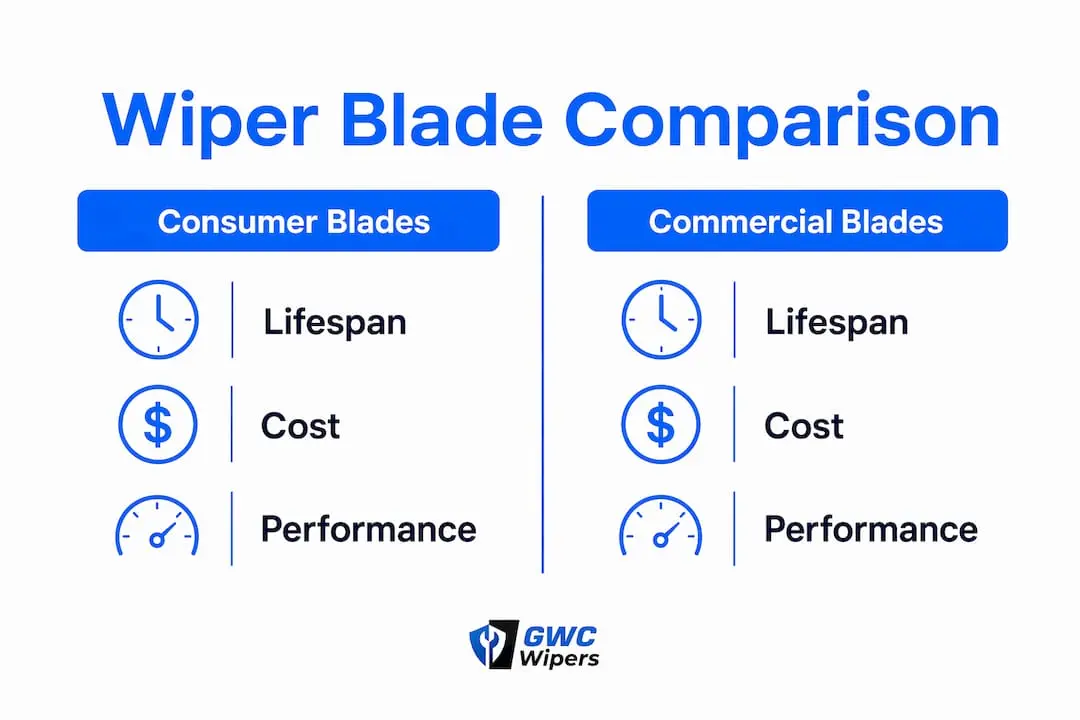
| Factor | Consumer blade | Commercial-grade blade |
|---|---|---|
| Expected lifespan under HiAce duty | 4–6 months | 10–14 months |
| Replacements per year | 2–3 | 1 |
| Labour and downtime per replacement | 20–30 min per event | 20–30 min per event |
The blade cost alone is lower with commercial-grade blades. Add the labour and scheduling cost of two or three replacement events versus one, and the gap widens further. Across a fleet of ten HiAce vans, that difference in downtime and parts handling becomes a meaningful line item. Fleet operators often underestimate the hidden cost of increased replacement frequency until they model it per vehicle.
How do you install and maintain commercial blades to get the full service life?
Installation:
- Seat the blade connector fully until it clicks. A blade that is not locked in will chatter and wear unevenly from day one.
- Check arm alignment before fitting. A bent or misaligned arm puts uneven downforce on one end of the blade, shortening its life regardless of blade quality.
- Never twist the blade during installation. Beam blades rely on their internal tension profile; twisting distorts that profile permanently.
Inspection and maintenance:
- Run a quick visual check at the start of each shift: look for lifted edges, cracks, or debris caught under the blade.
- Monthly, lift each blade and wipe the rubber edge with a damp cloth to remove embedded grit. Grit acts like sandpaper on the glass.
- Replace blades at the first sign of streaking or chatter — do not wait for the next scheduled service.
- If streaking persists after fitting a new blade, check the wiper arm spring tension. A weak arm spring reduces downforce and causes the same symptoms as a worn blade. Replacing the arm is sometimes the fix, not the blade.
Checking for windscreen surface damage is also worth adding to your monthly inspection, particularly on vehicles fitted with ADAS cameras, where a pitted screen can affect sensor calibration.
Why GWC Wipers is a practical choice for HiAce operators in Australia
GWC Wipers designs and manufactures premium wiper blades specifically for Australian weather conditions, with fitment coverage across a wide range of Toyota models. For HiAce owners and fleet managers, the product features align directly with what the vehicle demands:
- Beam design with advanced segmented pressure distribution for consistent contact across the HiAce’s curved windscreen
- Natural rubber construction with UV stabilisers and heat resistance suited to Australian summers
- Corrosion-resistant fittings and preassembled adapters for straightforward DIY installation
- A vehicle selector tool that confirms the correct blade for your specific HiAce model and year
- Fitment guarantee, 12-month warranty, and 30-day money-back guarantee
Browse the full Toyota wiper blade range to confirm fitment for your HiAce model and year.
Key takeaways
Commercial-grade beam blades matched to your HiAce model year reduce replacement frequency, lower annual blade costs, and protect fleet uptime in Australian conditions.
| Point | Details |
|---|---|
| HiAce needs beam blades | Windscreen curvature and arm downforce require internal tensioning for consistent contact. |
| Size varies by generation | Earlier models use 20" driver and 18" passenger blades; later models use 21" driver and 21" passenger blades, with an 18" rear on some variants. |
| Commercial-grade saves money | One annual replacement at — costs less than two or three consumer blade changes per year. |
| Factor in labour and downtime | Replacement frequency, not just blade price, determines the real fleet cost per vehicle. |
| GWC Wipers for Australian HiAce fleets | Vehicle selector, fitment guarantee, 12-month warranty, and free shipping Australia-wide. |
The uptime case for premium blades
There is a tendency in fleet management to treat wiper blades as a low-priority consumable. The logic is understandable: they are inexpensive relative to tyres or brakes, and the failure mode seems minor. But a HiAce running a commercial route in a Queensland downpour with a streaking blade is a safety event, not a minor inconvenience. The ADR visibility requirements exist for a reason, and the wiper blade is the last line of defence between the driver and zero forward visibility.
The smarter framing is to treat commercial-grade blades as an uptime investment. A blade that lasts through a full year of commercial duty, fits correctly from day one, and comes with a warranty removes one more unplanned maintenance event from your schedule. For a fleet manager juggling vehicle availability, that predictability has real value.
Get commercial-grade HiAce wipers delivered across Australia
GWC Wipers gives HiAce owners and fleet managers a direct path to the right blade: use the vehicle selector on the GWC Wipers Toyota page, confirm your model and year, and order with free shipping Australia-wide.
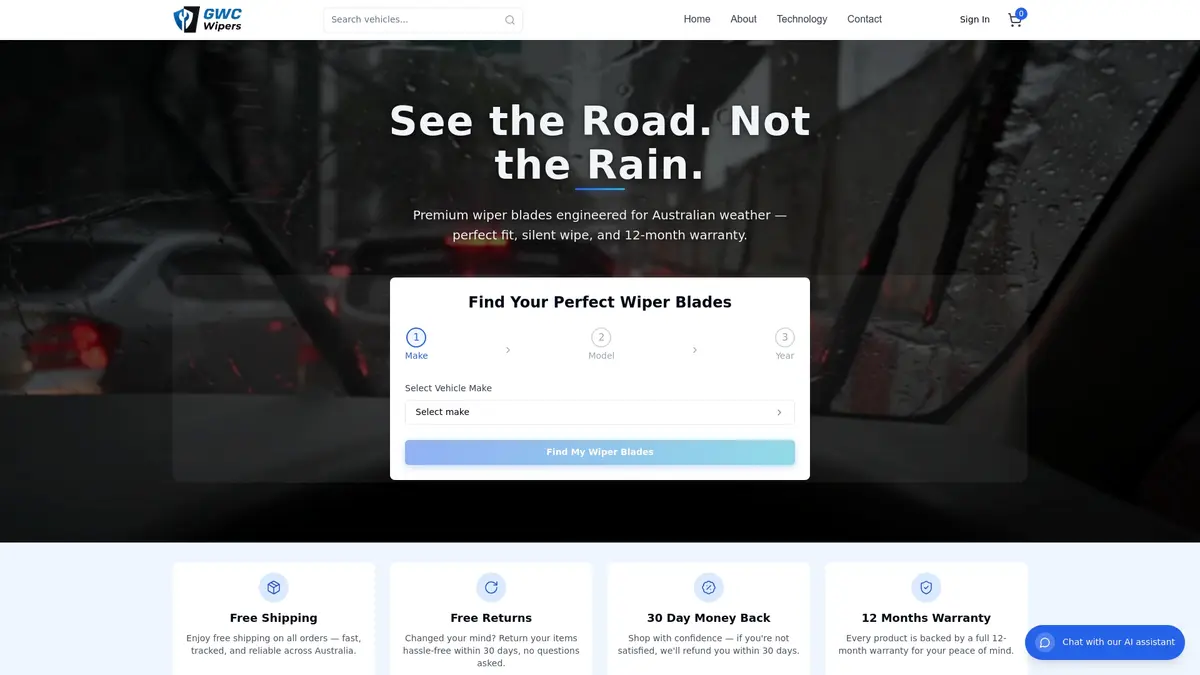
Every order includes a fitment guarantee, a 30-day money-back guarantee, and a 12-month warranty. Blades arrive with preassembled adapters and installation guides, so your team can fit them without specialist tools. If you manage a mixed fleet, GWC also covers a broad range of other makes and models — from Toyota Townace vans to passenger vehicles — through the same vehicle selector.
Confirm your HiAce fitment and place your order at gwcwipers.com.au.
Useful sources
- Toyota HiAce — Commercial Van & Commuter Bus | Toyota Australia — official model classification and specifications
- Purchasing a Commercial Vehicle in a Company | Curve Accountants — HiAce variant classification and fleet cost context
- Buying a Commercial Vehicle Through Your Business | Clarity Taxation — ATO private use thresholds and commercial vehicle documentation
- What size wiper blades for 2017 Toyota HiAce? | AHG Auto Service — factory-fit size reference by model year
- GWC Wipers — Toyota wiper blades — vehicle selector, fitment guarantee, warranty, and shipping details
FAQ
Why does the Toyota HiAce need commercial-grade wipers?
The HiAce has a larger, more curved windscreen and heavier wiper arm downforce than a standard passenger car, and it operates under demanding commercial duty cycles. Standard consumer blades cannot maintain consistent contact across that screen, leading to streaking, chatter, and faster wear.
What size wiper blades does a Toyota HiAce take?
Size varies by model year: earlier HiAce models use a 20" driver blade and an 18" passenger blade; later models use a 21" driver blade and a 21" passenger blade, with an 18" rear blade on some variants. Always confirm against your specific model year before ordering.
What brand of wipers does Toyota recommend for the HiAce?
Toyota promotes its genuine SightLine blades as an exact-fit option for Toyota vehicles. For HiAce operators with commercial duty requirements, beam-style blades with internal tensioning and UV-resistant materials address performance demands that go beyond standard fit.
Is the Toyota HiAce classified as a commercial vehicle in Australia?
Yes. Toyota Australia lists the HiAce as a commercial van and commuter bus. The HiAce Van carries one tonne or more and is classified as a motor vehicle other than a car under Australian tax law, while the HiAce Crew Cab falls under one tonne and is treated differently for tax purposes.
How often should HiAce wiper blades be replaced?
Under commercial duty, consumer blades on a HiAce typically last 4–6 months before streaking or chatter appears. Commercial-grade beam blades, properly maintained, can last 10–14 months. Replace at the first sign of streaking rather than waiting for a scheduled service interval.