
OEM-equivalent wipers for Mazda owners: 2026 guide
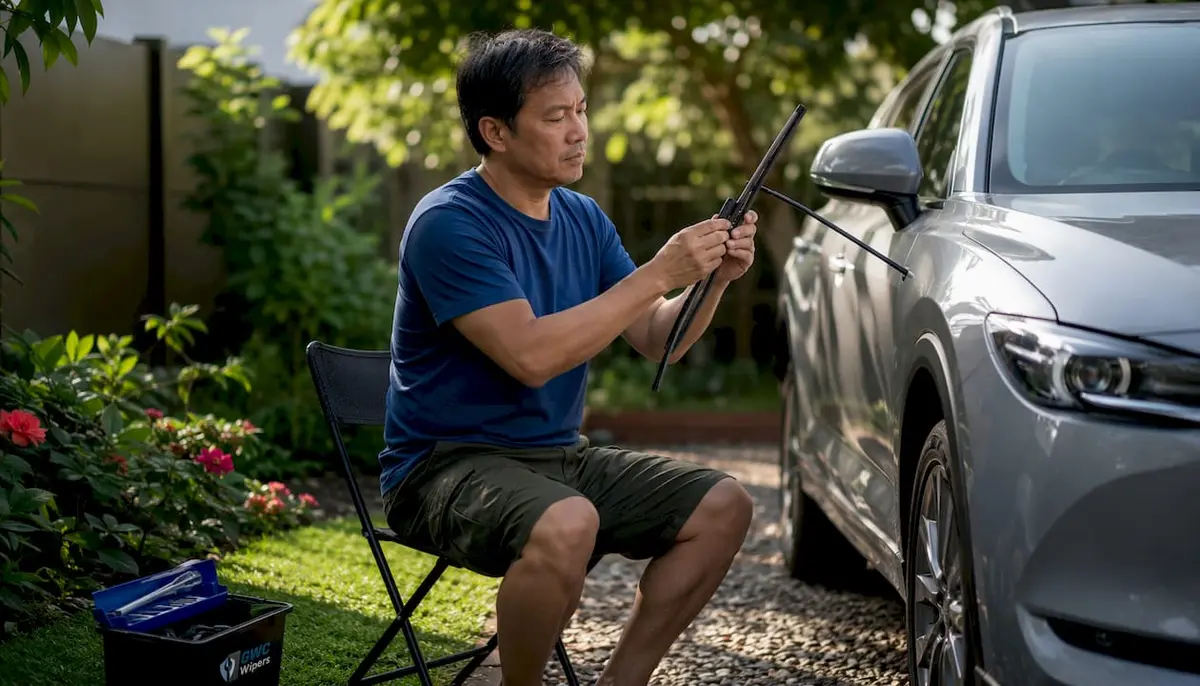
OEM-equivalent windshield wipers give Mazda owners factory-level fit and sensor compatibility without the dealership price tag. They replicate the exact curvature, connector type, and pressure distribution of the original blades, keeping your visibility sharp and your Advanced Driver Assistance Systems (ADAS) working as intended. For Australian Mazda owners dealing with UV-intense summers, heavy coastal rain, and the occasional alpine frost, getting this right is not a minor detail.
The term “OEM-equivalent” refers to blades engineered to match the original equipment manufacturer’s specifications, including windshield geometry, arm tension, and connector style, but sold outside the dealership channel. They are distinct from generic universal aftermarket blades, which rely on multi-adapter systems and generalised curvature moulds.
- Precise fitment: OEM-equivalent blades match your Mazda’s specific arm geometry, eliminating the vibration and noise that universal adapters can introduce.
- ADAS compatibility: Improperly fitting blades can interfere with rain-sensing systems and camera-based safety features by creating streaks across the sensor field.
- Pressure distribution: Factory-matched tension springs maintain even contact across the full sweep path, reducing streaking at highway speeds.
- Cost balance: OEM blades typically cost more than aftermarket options, yet OEM-equivalent blades from reputable suppliers close that gap while preserving the engineering precision.
- Warranty confidence: Using OEM-specification parts keeps you aligned with Mazda’s service requirements, particularly on vehicles still under warranty or lease.
How Mazda windshield wiper components work together
Every Mazda wiper system has four core parts: the blade assembly, the wiper arm, the connector, and the rubber wiping element. Each one affects how cleanly the blade contacts the glass.
The rubber element does the actual wiping, and its profile must match the windshield’s curvature precisely. Mazda windshields are complex curved surfaces, not flat planes. A blade engineered to that curve maintains uniform pressure from the tight inner arc to the sweeping outer edge. Generic aftermarket moulds often miss this, leaving gaps that cause skipping and uneven wear.
Connector type is where many Mazda owners run into trouble. Common connector styles across the Mazda range include the J-hook, pin, and bayonet fittings. OEM blades come pre-fitted to the correct connector, so installation is plug-and-play. Universal aftermarket blades rely on adapter kits, which can introduce looseness and vibration over time.
Material choice also matters. Most factory-fitted Mazda blades use natural rubber with a graphite coating, which wipes quietly and performs reliably across a broad temperature range. Silicone is the premium alternative: it lasts longer, handles UV degradation better, and leaves a hydrophobic film on the glass. For Australian conditions, silicone is worth considering, particularly if your Mazda parks outdoors year-round.
When should you replace your Mazda wiper blades?
Wiper blades wear out faster than most drivers expect. Typical wiper blade lifespan is 6–12 months depending on use and climate, but in Australia six months is a more reliable interval for most drivers due to harsher conditions. UV exposure, heat, and ozone degrade rubber compounds even when the wipers are not in use.
Watch for these signs that replacement is overdue:
- Streaking across the windshield after each wipe, even on a clean screen
- Chattering or skipping, where the blade bounces rather than glides
- Squealing noise, usually caused by hardened or cracked rubber
- Missing rubber chunks, visible as gaps along the blade edge
- Smearing in heavy rain, where the blade pushes water sideways instead of clearing it
Statistic callout: Australian weather extremes accelerate blade degradation; UV and heat cause rubber to harden and crack faster than in temperate climates. Regular blade replacement every 6–12 months, or sooner if you notice performance issues, is a sensible baseline for most Australian Mazda owners.
Replacing blades before they fail completely is the safer approach. A blade that streaks during a sudden downpour on the Hume Highway or the Pacific Motorway is a genuine safety risk, not just an inconvenience.
How to replace OEM-equivalent wiper blades on your Mazda
Replacing your own wiper blades takes about ten minutes and requires no tools. Before you start, park on a flat surface, turn the ignition off, and lift the wiper arms carefully away from the glass. Never let a raised arm snap back onto a bare windshield.
Step-by-step replacement:
- Identify your Mazda’s blade sizes. Driver and passenger blades are often different lengths. Check your owner’s manual or use an online vehicle selector tool to confirm both sizes and the connector type.
- Press the release tab on the existing blade where it meets the wiper arm. Slide the blade downward along the arm to disengage it from the connector.
- Hold the new OEM-equivalent blade next to the arm and align the connector. Slide it upward until you hear a firm click. Give it a gentle tug to confirm it is locked.
- Lower the arm back onto the glass slowly. Repeat for the other side and, if applicable, the rear wiper.
- Test both blades with washer fluid before driving. A clean, streak-free sweep confirms correct installation.
Pro Tip: Never lift both wiper arms at the same time without placing a folded cloth on the windshield first. If one arm falls while the other is raised, the impact can crack the glass.
Dispose of old blades responsibly. Many automotive retailers and council recycling centres accept rubber and metal wiper components. Avoid leaving them in general waste where the metal frame can cause issues.
OEM vs aftermarket Mazda wiper blades: what you need to know
The core difference between OEM and aftermarket blades is not always quality. It is fitment certainty. Many aftermarket blades are produced by the same factories that supply vehicle manufacturers, meaning the underlying engineering can be identical. The risk with aftermarket lies in the lower end of the market, where universal sizing and cheap adapters compromise the fit.
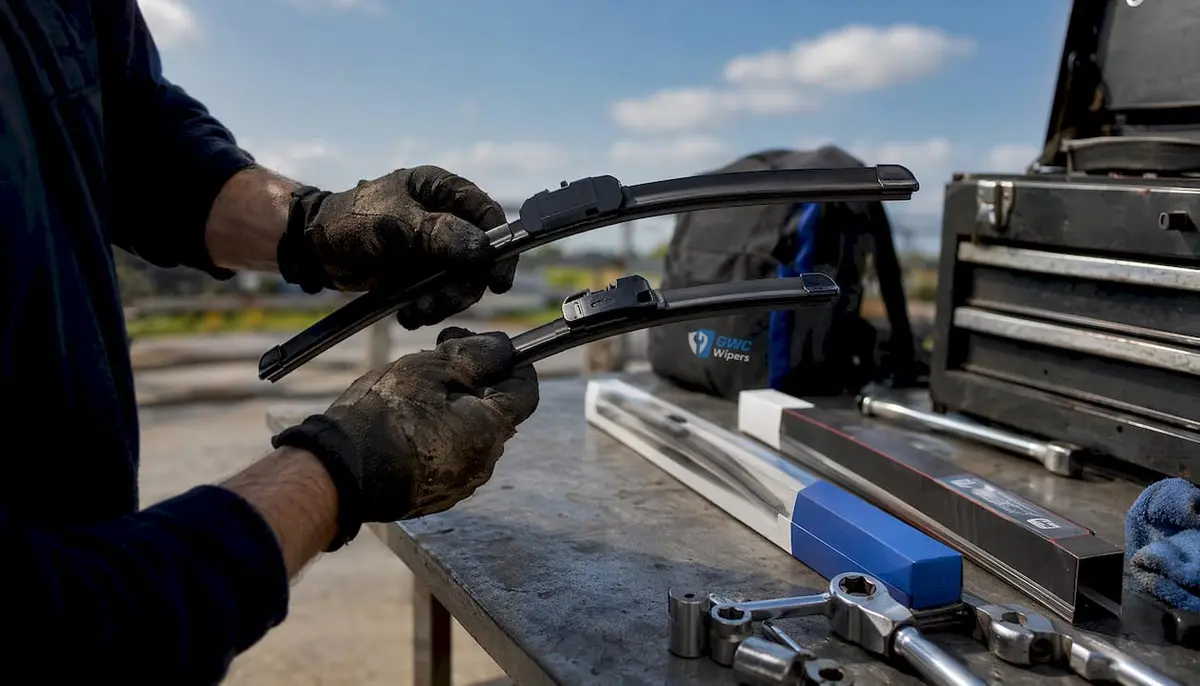
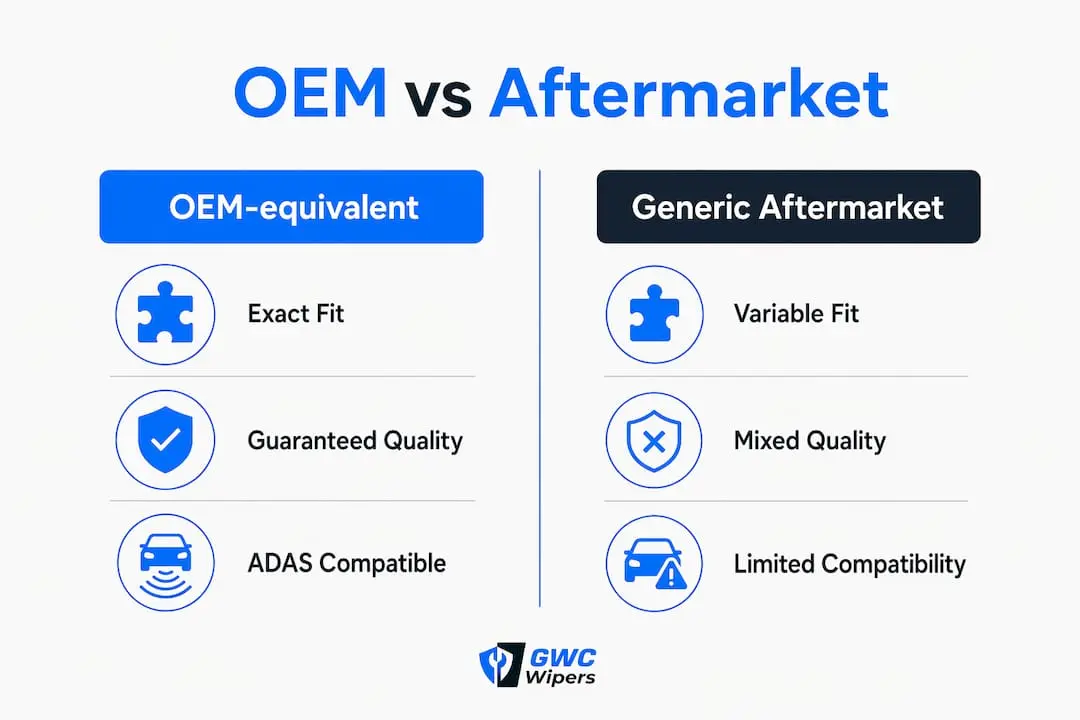
| Factor | OEM-equivalent blades | Generic aftermarket blades |
|---|---|---|
| Fitment | Exact match to Mazda arm and windshield | Universal adapters; fit varies |
| Pressure distribution | Vehicle-specific tension; even contact | May have gaps at blade tips |
| ADAS compatibility | Tested for sensor clearance | Not guaranteed |
| Material options | Natural rubber; silicone available | Varies widely by brand |
| Installation | No adapters needed | Adapter kit often required |
| Average lifespan | 6–12 months | 12–24 months for premium options |
| Noise | Engineered for quiet operation | Premium brands quiet; budget types may squeak |
| Warranty compliance | Maintains OEM service alignment | May affect warranty on newer vehicles |
Silicone blades from reputable suppliers represent the best of both worlds for many Mazda owners. They outlast standard rubber, resist UV degradation, and perform well in both heavy rain and dry heat. The trade-off is a higher upfront cost, though the longer service life often offsets this. Manufacturers like Bosch, Valeo, and PIAA produce OEM blades for automakers as well, which is why their aftermarket products can match factory performance closely.
Verifying quality before you buy matters. Look for blades that state compatibility with your exact Mazda model year and part number, not just a blade length. Phrases like “OEM fit” or “meets OEM specifications” without a specific vehicle reference are marketing language, not a guarantee of precision engineering.
The importance of OEM-spec parts extends beyond wipers: any component that interfaces with ADAS sensors or safety systems deserves the same scrutiny.
Australian market considerations for Mazda wiper blades
Australia’s climate is genuinely demanding on wiper blades. UV radiation degrades rubber compounds faster than in cooler climates, and temperature swings between a 40°C summer day and a cold winter morning cause the rubber to expand and contract repeatedly. OEM blades are tested for UV and temperature resilience, which is why OEM-equivalent quality matters more here than in milder markets.
Silicone blades are particularly well-suited to Australian conditions. They resist UV hardening, perform reliably across a wider temperature range, and the hydrophobic film they deposit on the glass improves water beading between wipe cycles. For Mazda owners in Queensland, the Northern Territory, or Western Australia, silicone is the practical choice.
Choosing OEM-equivalent wiper blades for your Mazda means you are not gambling on fit or sensor compatibility. In Australian conditions, where a sudden storm can arrive with little warning, having blades you can trust is part of responsible vehicle maintenance.
GWC Wipers is an Australian specialist that stocks OEM-equivalent Mazda wiper blades with a perfect fit guarantee, free shipping across Australia, and a 12-month warranty. Their vehicle selector tool identifies the correct blade sizes and connector types for your specific Mazda model and year, removing the guesswork from the process. A 30-day money-back guarantee backs every purchase, and their Australian support team can assist with fitment questions.
OEM-equivalent wiper compatibility by Mazda model
Mazda’s range spans compact hatchbacks, SUVs, and electric vehicles, and blade sizes vary considerably across models. Getting the right size and connector type for your specific vehicle is the starting point for any replacement.
Mazda 3 (BP, 2019 onwards): The current-generation Mazda 3 uses a 26-inch driver blade and a 16-inch passenger blade with a J-hook connector. The frameless beam blade design suits the Mazda 3’s curved windshield well, maintaining even pressure across the full sweep.
Mazda CX-5 (KF, 2017 onwards): One of Australia’s most popular Mazda models, the CX-5 uses a 26-inch driver and 16-inch passenger configuration. The CX-5 features Mazda’s i-ACTIVSENSE suite, which includes a forward-facing camera mounted near the top of the windshield. OEM-equivalent blades that clear the full wiper field are essential to keep that camera unobstructed.
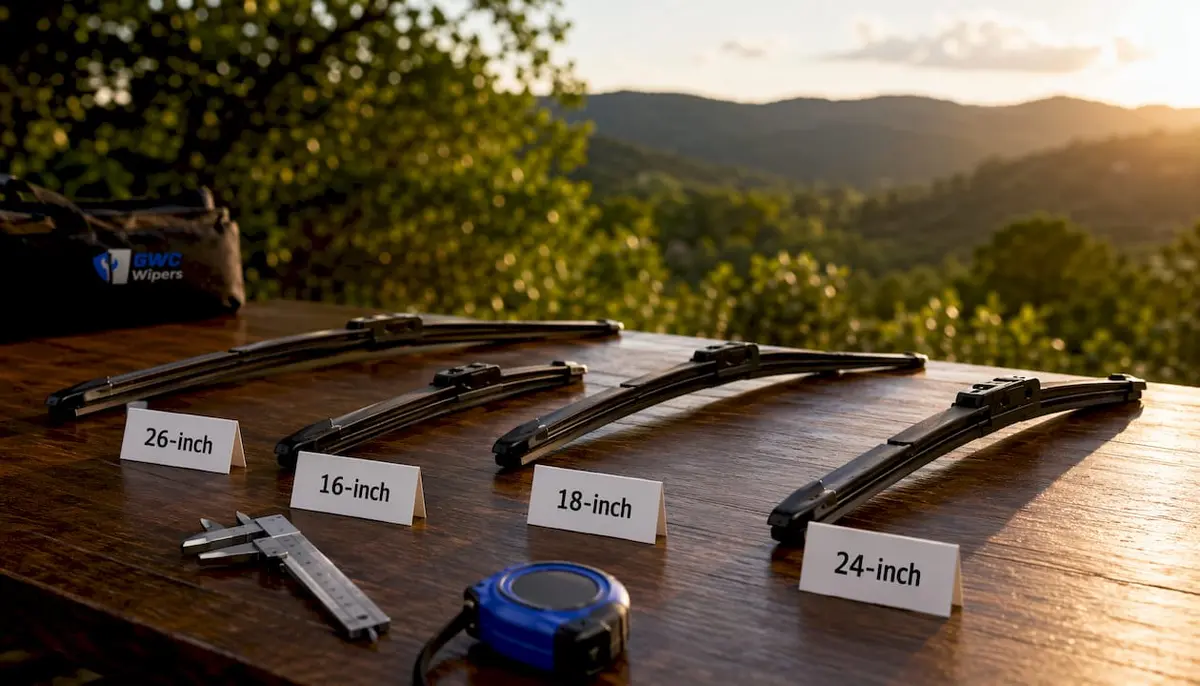
Mazda CX-9 (TC, 2016 onwards): The CX-9’s larger windshield requires a 26-inch driver blade and an 18-inch passenger blade. Given the CX-9’s full ADAS package, including radar cruise control and lane-keep assist, precise wiping performance directly supports these systems.
Mazda MX-30 (2021 onwards): Mazda’s first battery electric vehicle sold in Australia has specific blade requirements tied to its unique windshield geometry. OEM-equivalent blades for the MX-30 are available through GWC Wipers, with sizing confirmed via the vehicle selector tool.
Mazda MPV: Older MPV models still on Australian roads use a different connector configuration from current Mazda passenger vehicles. Mazda MPV wiper blades require careful size and connector verification before purchase.
Mazda 6 (GL, 2013 onwards): The Mazda 6 sedan and wagon use a 24-inch driver blade and a 19-inch passenger blade. The asymmetric sizing is a common source of error when owners purchase replacement blades without checking both sides.
Mazda BT-50: The BT-50 ute uses a conventional frame-style blade on most variants, with a J-hook connector. Beam blades are compatible on later models and offer better performance in the dusty conditions common to regional Australian driving.
Always verify blade sizes against your owner’s manual or a vehicle-specific selector tool rather than relying on blade length alone. Connector type, blade profile, and windshield curvature all affect whether a blade will perform correctly on your vehicle.
Key takeaways
OEM-equivalent wiper blades give Mazda owners factory-matched fitment and ADAS compatibility at a lower cost than dealership OEM parts, making them the practical choice for most Australian drivers.
| Point | Details |
|---|---|
| Fitment precision matters | OEM-equivalent blades match Mazda’s arm geometry and windshield curvature, preventing streaking and noise. |
| ADAS systems depend on clear wiping | Poorly fitting blades can obstruct rain sensors and forward cameras, affecting safety system accuracy. |
| Replace every 6–12 months | Australian UV and heat degrade rubber faster; silicone blades extend service life in harsh climates. |
| Verify size and connector type | Driver and passenger blades often differ in length; always confirm both sizes and the connector style for your model. |
| OEM-equivalent beats generic aftermarket | Blades with model-specific engineering outperform universal-fit options on fit, noise, and sensor compatibility. |
FAQ
Are OEM wiper blades better than aftermarket for Mazda?
Not always. OEM blades guarantee correct fitment and connector type, but many aftermarket blades are made by the same factories and can match or exceed OEM performance. The key is choosing aftermarket blades engineered for your specific Mazda model, not universal-fit options.
What wiper blades does Mazda use from the factory?
Mazda sources wiper blades from third-party suppliers including manufacturers like Bosch, Valeo, and Denso, which also sell blades under their own brands. The factory blades are typically natural rubber with a graphite coating, matched to each model’s windshield curvature and arm connector type.
What does OEM mean for wiper blades?
OEM stands for Original Equipment Manufacturer. For wiper blades, it means the blade was made to the exact specifications of what came fitted to your vehicle from the factory, including blade length, connector style, and windshield curvature match.
How do I know if an OEM-equivalent blade will fit my Mazda?
Check your owner’s manual for blade sizes, or use a vehicle selector tool that matches blades by make, model, and year. Confirm both the driver and passenger blade lengths and the connector type, as these vary across Mazda models and model years.
How often should Mazda owners replace their wiper blades in Australia?
Mazda owners in Australia should replace their wiper blades every 6–12 months, with six months being a more reliable interval for most due to the country’s strong UV exposure and heat. Replace sooner if you notice streaking, chattering, or smearing during rain.