
Best Jeep Wiper Blades in Australia: 2026 Comparison
The best wiper blade for your Jeep is the one that fits your exact model and year, presses evenly across a curved windscreen and copes with Australian sun, dust and downpours. Brand matters less than fit and condition. A well-matched blade from any reputable maker will outperform an ill-fitting one that costs more. Below we compare the options Jeep owners talk about most, explain how to choose, and show you how to confirm your size before you buy.
TL;DR
- Fit comes first. Jeep wiper sizes change between generations, so check your exact model and year at the GWC Wipers fitment finder.
- Bosch Icon, Trico Silicone Ceramic, Rain-X and Michelin are the names Jeep owners and testers mention most. Each has real strengths.
- Rubber breaks down with UV and heat, so plan to replace blades at least once a year, and sooner in harsh sun.
- GWC Wipers offers vehicle-specific blades with free shipping across Australia, a 30-day money-back guarantee and a 12-month warranty.
Table of Contents
- What makes a wiper blade good on a Jeep
- The main contenders compared
- Wrangler, Grand Cherokee, Gladiator: what changes by model
- Silicone or rubber: which suits Australian conditions
- Why streaks and chatter happen, and how to fix them
- Our view on choosing Jeep wiper blades
- Order wipers that fit your Jeep
- How to fit new blades on your Jeep
- How much should you spend
- FAQ
- Sources
What makes a wiper blade good on a Jeep
Jeeps are not like a typical hatchback. A Wrangler has a near-upright windscreen that collects dust, bugs and mud. A Grand Cherokee has a long, raked glass area. A Gladiator sits high and takes spray from every direction. Those differences change what you should ask of a blade.
Five things decide whether a blade performs well:
- Correct length and connector. A blade that is too short leaves a wedge of unwiped glass. One that is too long can hit the pillar or the other blade.
- Even pressure. Beam and segmented designs spread pressure along the whole edge, which helps on curved glass. Older conventional frames press at a handful of points.
- Rubber or silicone quality. The wiping edge is what clears the glass. Heat, UV and ozone harden it, and a hard edge chatters and streaks.
- Aerodynamics. At highway speed, a poor profile lifts off the glass. That matters on boxy Jeeps with strong airflow over the windscreen.
- Support if it goes wrong. A fitment guarantee and a warranty matter more than a brand logo when you are the one standing in the driveway with the wrong blade.
The main contenders compared
Here is how the brands Jeep owners compare. We have kept to what sources actually say, and we have not invented performance numbers.
| Brand and model | Design | What the evidence says | Worth knowing for a Jeep |
|---|---|---|---|
| Bosch Icon | Bracketless beam, synthetic rubber | Bosch says its ClearMax 365 rubber technology protects the wiping edge for longer life. Jeep forum owners often recommend it. | Popular with Wrangler and Gladiator owners. Confirm the connector for your model. |
| Trico Silicone Ceramic | Silicone beam with ceramic coating | Trico claims protection against ozone, UV and extreme weather, in 14 to 28 inch lengths. | Silicone suits hot, sunny conditions. Check the size range covers your model. |
| Rain-X | Range includes blades and water-repellent products | A well-known name in the category, often named alongside Bosch in Jeep forums. | Often paired with its glass treatments. |
| Michelin Endurance XT | Conventional-style blade | Ranked first in a 2019 nine-blade test with no left-sweep streaks. | The test was US-based and from 2019, so treat it as one data point. |
| OEM blades | Fitted at the factory | Several Jeep owners say they replace them with aftermarket blades once they wear out. | Fine as a baseline, but not always the longest lasting. |
| GWC Wipers | Natural rubber, segmented pressure distribution, aerodynamic design | Designed and sold for Australian conditions, with a fitment guarantee. | Vehicle-specific fitment, preassembled adapters, free Australian shipping. |
Bosch Icon
Bosch Icon is the blade most often recommended in Jeep owner threads. One JeepForum discussion on the best Jeep wipers points to the beam-style design and owner experience. The same thread says that design helps the blade stay flat against the glass. Owners also report that they like it. Those are owner opinions rather than lab measurements, so weigh them accordingly. MotorTrend’s 2026 roundup notes that Icon uses a synthetic rubber compound designed to optimise durability and performance.
Trico Silicone Ceramic
Trico’s silicone blade is the other name that comes up constantly. Silicone has a reputation for lasting longer, and MotorTrend’s page says silicone blades are significantly more durable than rubber. That is a useful point for Australian sun. The trade-off is that silicone can behave differently on glass that has built up road film or wax, which is why a clean windscreen matters. Trico also lists a vehicle-size finder, which is a good habit whichever brand you choose.
Rain-X and Michelin
Rain-X is better known in Australia for its glass treatments, and many Jeep owners use it that way. As blades, it is a respectable mid-market choice. Michelin’s Endurance XT stood out in the 2019 test above, which scored blades on streaking across the sweep. A single US test from several years ago does not decide the matter, but it shows Michelin is a credible option if it is stocked for your model.
What owners say about the Reddit and forum favourites
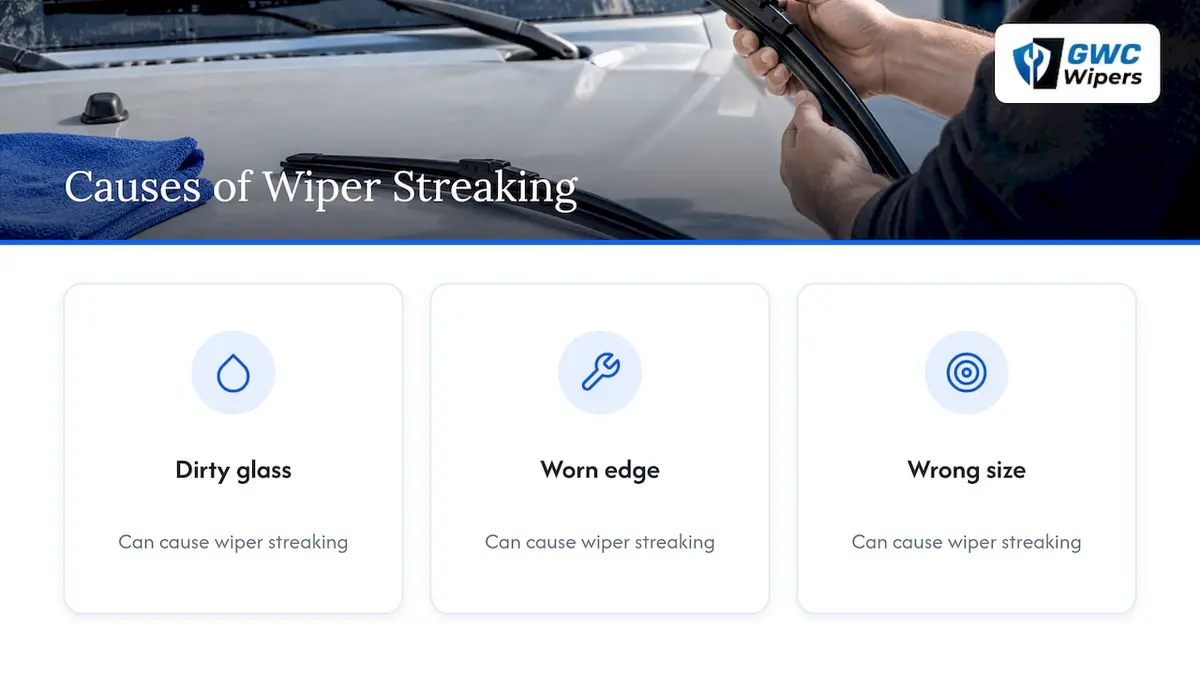
Jeep forums tend to agree on a few points. Bosch Icon gets repeated praise. Trico silicone gets mixed reports: some owners get a long life, others see streaking within months. A common complaint in forum threads is blades that begin to streak after a few months. Streaking is often caused by a dirty windscreen, a worn edge or the wrong size, not only by the blade brand. That is worth remembering before you blame the product.
Wrangler, Grand Cherokee, Gladiator: what changes by model
Jeep has used several different wiper layouts over the years. Wiper size is tied to the model generation, not to the badge.
Jeep Wrangler
The Wrangler comes in distinct generations: the TJ, the JK and the JL. Each has its own fitment, and the blade connector can differ as well. We list them separately so you do not guess:
If you are not sure which generation you have, the Wrangler overview page lets you narrow it down. The rear window has its own blade, and it is often forgotten. A cracked or missing rear wiper makes reversing in the rain much harder.
Jeep Grand Cherokee
The Grand Cherokee is where size errors happen most, because the front blades grew over time. One US-based size chart lists these approximate front, front passenger and rear lengths in inches:
| Years | Driver | Passenger | Rear |
|---|---|---|---|
| 1993 to 1998 | 20 | 20 | 11 |
| 1999 to 2009 | 21 | 21 | 14 |
| 2011 to 2013 | 22 | 21 | 12 |
| 2014 to 2021 | 22 | 21 | 11 |
| 2022 to 2025 (including L) | 26 | 20 | 10 |
These figures come from a Grand Cherokee wiper size chart built for the US market, and the chart itself says to confirm your variant. Australian-delivered cars can differ, so use the table as a guide to how much sizes shift between generations, not as a shopping list. Check your exact car in our fitment finder before you order.
Jeep Gladiator and Cherokee
The Gladiator shares a lot of design with the JL Wrangler, but it has its own fitment pages for 2020 to 2023 and 2020 to 2025. See the Gladiator overview if you are unsure. For the smaller wagon, our Jeep Cherokee page lists the matching blades.
Silicone or rubber: which suits Australian conditions
Silicone blades are often sold on durability, and MotorTrend notes they last significantly longer than rubber. Rubber blades usually clear glass quietly and cost less. Which suits you depends on how you drive.
- Mostly sealed roads and city use: either material works well, so fit and price decide it.
- Long hot stretches or outback driving: UV exposure hardens any wiping edge. Park in shade when you can and inspect blades more often.
- Heavy rain in the tropics: the key is even pressure on the glass, so a segmented or beam design helps more than the material alone.
- Dusty tracks and off-road use: wipe the blades and glass regularly. Grit on the edge scratches the glass and shortens blade life.
Whichever you pick, rubber breaks down with time. The JeepForum thread above recommends replacing blades at least once a year, or twice a year in harsher climates. In much of Australia, the twice-a-year end of that advice is a sensible starting point if your Jeep lives outside.
Why streaks and chatter happen, and how to fix them
Before you spend money, rule out the common causes:
- Dirty glass. Road film, bird droppings and wax residue make even new blades streak. A proper streak-free glass cleaning method takes five minutes and often solves the problem.
- Dirty blade edges. Wipe the rubber with a damp cloth until it comes away clean.
- A hardened or split edge. If you see cracks or a ragged edge, the blade is finished.
- Wrong size or connector. A blade that lifts at one end will chatter and miss a strip of glass.
- A bent arm. Arms lose tension over time. If a good blade still lifts, have the arm checked by a mechanic.
Some owners try to save money by swapping fresh rubber into old metal supports. A Jeep Garage thread describes owners doing this, but also says that finding the right size and compatibility can be challenging. For most drivers, a complete blade that is made to fit is simpler and less likely to leave you with gaps.
Our view on choosing Jeep wiper blades
We design and sell wiper blades for Australian conditions, so we look at this from the driveway, not the lab. Here is how we think about it.
First, we do not believe any one blade is right for every Jeep. The fastest way to a bad result is an approximate size. That is why our selector works from make, model and year, and why we stand behind it with a perfect fit guarantee. If we get it wrong, you have 30 days to return the blades for your money back.
Second, heat and UV are the quiet killers here. Blades that would last years in a mild climate can harden and chatter within a season in Australian sun. We use natural rubber with segmented pressure distribution and an aerodynamic profile because the edge has to keep contact with the glass, even when the car is rushing through a storm at highway speed.
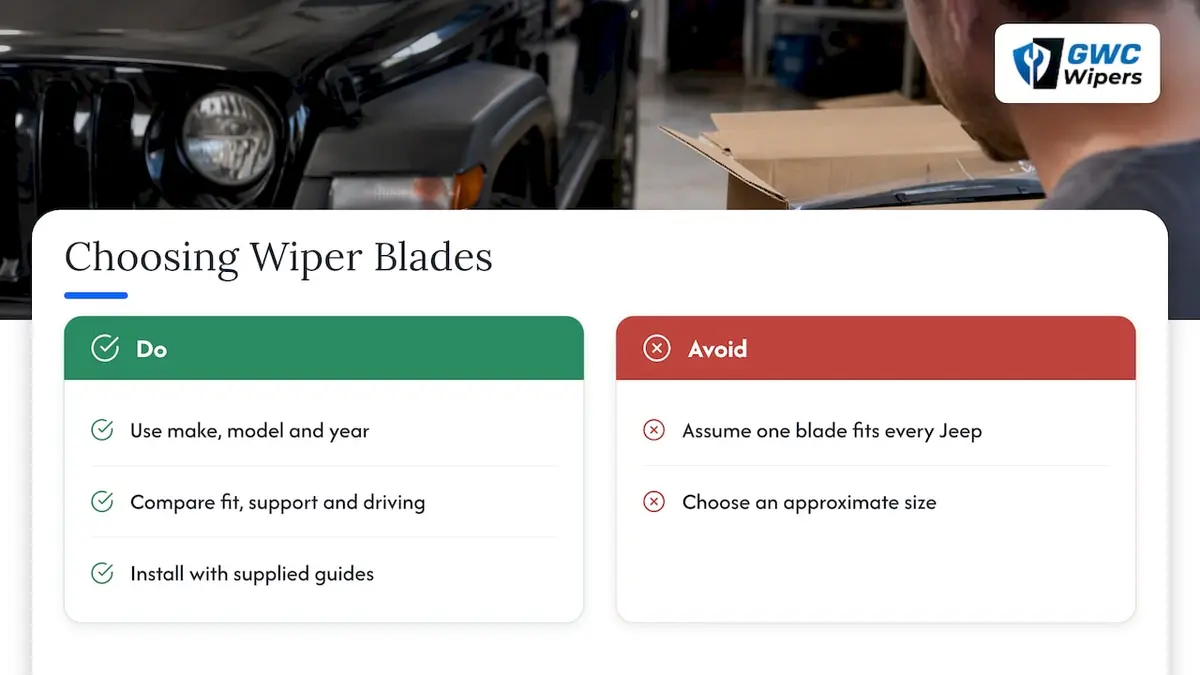
Third, installation should not be a barrier. Our blades come with preassembled adapters and detailed guides, so you can fit them yourself without special tools.
Finally, we encourage comparison. Look at the brands in the table above, check the evidence, and then choose on fit, support and how you drive.
— Faisal
Order wipers that fit your Jeep
GWC Wipers sells premium blades matched to over 2,500 vehicle models, including the Wrangler, Gladiator and Cherokee. Every order ships free across Australia, with express shipping available at checkout, and is covered by a 30-day money-back guarantee and a 12-month warranty. Start at the GWC Wipers home page and pick your vehicle.
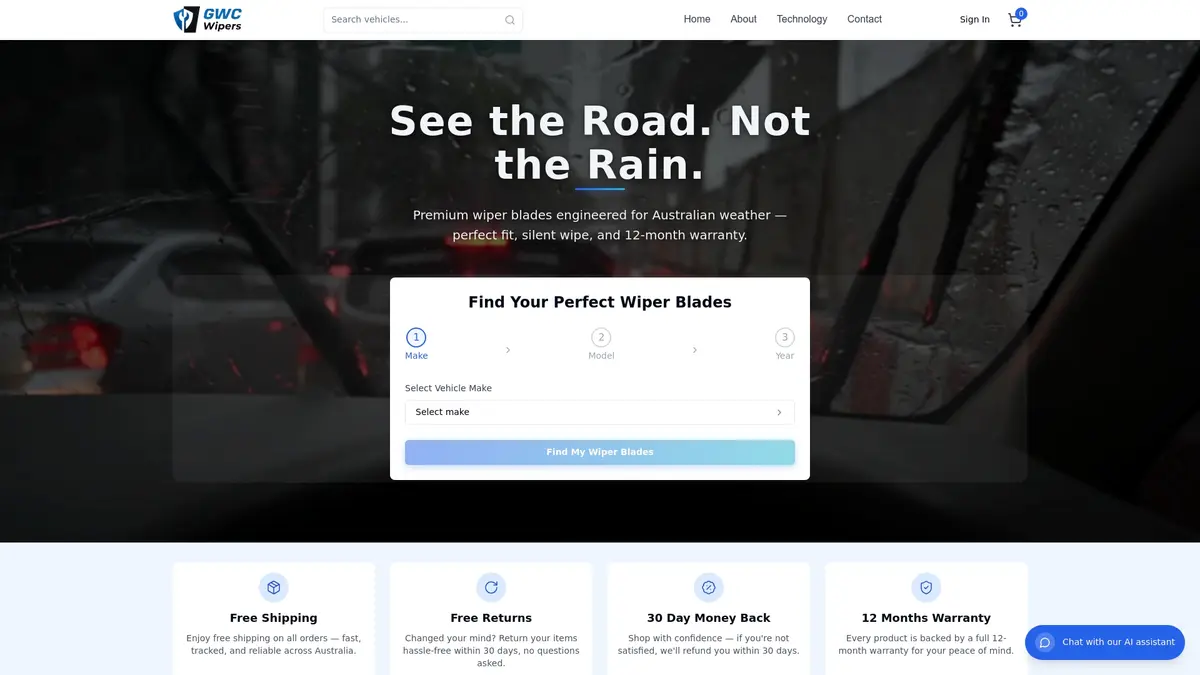
If you drive a Wrangler, go straight to the Wrangler fitment pages. Choose the generation that matches your year, and you will see the front and rear blades that belong on your car.
How to fit new blades on your Jeep
Most Jeep blades take about ten minutes to change. The steps are similar across models, but follow the guide that comes with your blades.
- Lift the wiper arm away from the glass until it locks upright. Place a folded towel on the windscreen to protect it if the arm slips.
- Find the release tab where the blade meets the arm. Press it and slide the old blade off.
- Fit the new blade, using the preassembled adapter that suits your arm. You should hear or feel a click.
- Check the blade moves freely and sits flat.
- Lower the arm gently, then test with the washers.
- Repeat for the rear blade if your Jeep has one.
If the new blade will not click into place, stop. Do not force it. Recheck the model and year, and contact support.
How much should you spend
We do not have a verified current Australian price list for the other brands, and prices move with stock and promotions, so check the retailer you plan to buy from on the day. A few principles help:
- Price per year of life matters more than price per pair. A blade replaced every six months costs more over time than one that lasts twelve.
- Warranty length and return terms tell you how confident a seller is in the fit.
- A cheap blade that is the wrong size costs the full price again.
FAQ
Which brand of wiper blade is best for a Jeep?
There is no single winner. Bosch Icon, Trico Silicone Ceramic and Michelin all have supporters and some test evidence. For most owners, correct fit and fresh rubber matter more than the brand name on the box.
Are Rain-X or Bosch wipers better?
Bosch Icon is the more commonly recommended blade in Jeep owner forums. Rain-X is known mainly for its glass treatments and also sells blades. Choose on how well the blade fits your model, then check the warranty.
How often should I replace Jeep wiper blades?
At least once a year, according to the JeepForum guidance above. In hot, sunny parts of Australia, twice a year is a reasonable plan. Replace sooner if you see streaks, skipping or a split edge.
What size wiper blades does my Jeep need?
It depends on the model and year, and sizes change between generations. A Grand Cherokee front blade, for example, grows from about 20 inches in the 1990s to about 26 inches in recent US-market charts. Enter your exact car in the GWC Wipers fitment finder to confirm.
Sources
- Bosch ICON wiper blades
- Michelin vs Rain-X: 9 wiper blades tested
- The Best Wiper Blades For 2026, MotorTrend
- What Are the Best Jeep Windshield Wipers? JeepForum
- Jeep Grand Cherokee wiper blade sizes chart
- Clean car glass method
Perfect Fit: find wipers that fit your exact car at gwcwipers.com.au/wiper-blades.