
Best Rain Wiper Blades in Australia: How to Choose
The best rain wiper blades for your car are the ones that fit your exact make, model and year, press evenly across the glass and are still fresh enough to wipe cleanly. In practice that usually means a beam or hybrid blade in the right length with the right connector, replaced before the rubber has been baked by a summer of UV. No single brand wins on every car, so this guide shows you how to choose, using independent testing and Australian trade guidance.
TL;DR
- Fitment comes first. A premium blade in the wrong length or connector leaves unwiped patches, whatever the brand.
- Beam blades suit most modern cars, and trade guidance reports that more than 80% of new passenger vehicles are designed for them.
- Treat 12 months as a guide, not a rule. Heat, UV and dust can cut that to about six months, so replace when blades streak, shudder or chatter.
- Independent tests judge blades on drying, durability and mounting, so choose by the conditions you drive in, not by a single ranking.
- Most streaking after a swap comes down to a dirty windscreen, a poorly seated adapter or a mismatched blade, and is fixable in minutes.
Table of Contents
- Why rain performance is a safety issue
- What makes a blade good in heavy rain
- Beam, hybrid and conventional blades compared
- Silicone or natural rubber for Australian conditions
- What independent testing really tells you
- How the brands you will meet in Australia compare
- Matching blades to your vehicle
- Perspective: what we see after rain
- How often to replace blades
- Fitting new blades safely
- Fixing streaks after a swap
- Fleets, workshops and standardising stock
- A simple checklist for choosing
- Find wipers guaranteed to fit
- FAQ
- Sources
Why rain performance is a safety issue
In Australia, rain rarely arrives politely. You get tropical downpours in Cairns and Darwin, afternoon storms on the east coast, and long, grey winter drizzle in Melbourne and Hobart. Between those events, sun and heat do their work on the rubber.
Wiper performance is also a compliance and safety matter. Transport WA says wipers and washers should be able to prevent dirt and moisture from obscuring visibility through the windscreen. The NSW Point to Point Transport Commissioner notes that drivers need the clearest possible view of the road, particularly at dusk, at night or in rain.
So choosing wipers for rain is not about a premium feel. It is about whether you can see a stopped car through a wall of water at 100 km/h on a dark highway.
What makes a blade good in heavy rain
Four things matter more than the name on the packaging.
- Even pressure along the whole blade. Modern windscreens are curved. A blade that lifts in the middle or at the tips leaves streaks and unwiped bands.
- Stability at speed. A low-profile, aerodynamic shape resists lift when you are doing highway speeds in a storm.
- Rubber condition and compound. Fresh edges clear water in one clean pass. Perished or heat-hardened rubber smears it.
- The right fit. Length, connector type and arm style must match your vehicle.
The last point is the one most buyers underestimate. Bosch and O’Brien both emphasise vehicle-specific selection, because an incorrectly matched length, adapter or pressure profile can leave areas unwiped even when the blade material is premium.
Beam, hybrid and conventional blades compared
Three designs cover most of what you will see on the shelf. Haynes Australia describes beam blades as using a flexible profile without a conventional articulated frame. That helps them hug curved glass and removes exposed joints that can corrode. Hybrids combine a framed structure with an aerodynamic cover, and conventional blades use an exposed metal frame.
| Type | How it is built | Strengths in rain | Watch-outs |
|---|---|---|---|
| Beam (flat) | Frameless, flexible spine, often with an integrated spoiler | Even contact on curved glass, quiet, fewer exposed corrosion points | Must match the connector; not every older arm accepts one |
| Hybrid | Frame hidden under an aerodynamic cover | Good wind stability with a familiar fitment range | Slightly more parts than a pure beam |
| Conventional | Exposed metal frame with multiple pressure points | Widely available and usually the lowest cost | Frame joints can corrode and collect water, and pressure is less even on strongly curved glass |
There is a caveat. The more-than-80% figure is a vehicle-design statistic. It does not mean every replacement on every car should be a beam blade. If your car was built for a conventional or hybrid blade, fit what the arm and connector are designed for, or confirm that a beam blade has the correct adapter.
Silicone or natural rubber for Australian conditions
You will see plenty of claims that silicone is the heavy-rain answer. Australian guidance describes silicone as temperature-resistant and beam designs as performing well in cold conditions, but it does not establish one compound as universally superior.
For Australian drivers, we would weigh it this way:
- UV and heat resistance matter more than winter ratings in most of the country. Blades on a car parked outdoors in Perth or Brisbane take a beating long before they meet frost.
- Observed wiping quality matters more than the label. A blade that clears cleanly for the first six months and still does so at twelve is doing its job.
- Winter-specific blades are not automatically the best choice here. Beam designs have fewer exposed frame areas where ice or water can collect, which helps in the cold, but fitment and heat tolerance should still lead your decision.
Our own blades use natural rubber with segmented pressure distribution, an aerodynamic profile and corrosion-resistant construction, built around Australian weather.
What independent testing really tells you
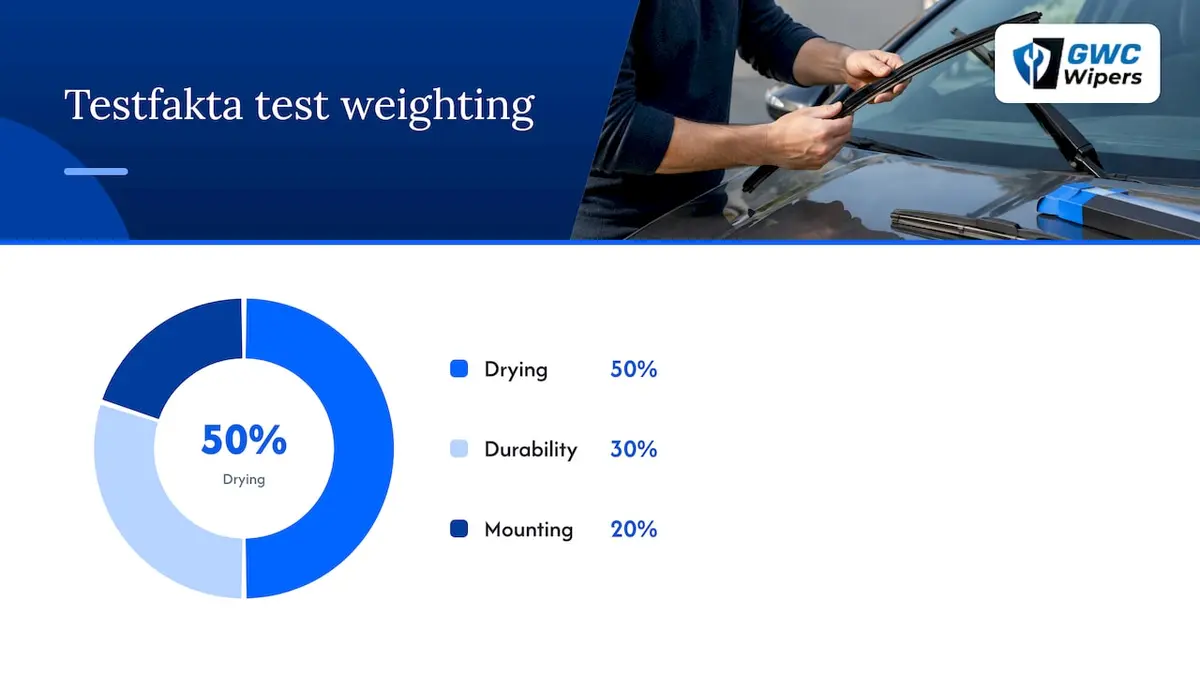
People love a league table. The most useful independent data we found is the October 2024 Testfakta flatblade test, which scored blades in a 650 mm size. It weighted drying performance at 50%, durability at 30% and mounting at 20%. The Bosch AeroTwin AP 650 U scored highest overall at 9.5 out of 10, and the other blades varied substantially on high-speed drying, durability and ease of mounting.
Three lessons follow:
- The result applies to that size and those test conditions. It is not a verdict on every vehicle.
- Different blades won on different criteria. If you do mostly motorway kilometres, high-speed drying counts for more. If your car lives outside, durability counts for more.
- A laboratory score cannot replace exact fitment. A top-scoring blade that does not suit your arm is the wrong blade.
That is why we avoid crowning a universal winner. If you want to understand how blade testing works, we explain it in our guide to wiper blade performance testing.
How the brands you will meet in Australia compare
You will see a handful of names at auto parts stores, workshops and online. Bosch, Trico, Tridon and Calibre are among the household names stocked at Supercheap Auto. Here is how to think about them without declaring a winner.
- Bosch has a strong independent test result in the size tested, as above, and publishes a roughly 12-month replacement guide.
- Trico markets its Force range as a premium aftermarket option. Aftermarket trade coverage says Trico claims it is made in the same factory, with the same processes and materials, as its other premium lines. That is the manufacturer’s claim, not an independent finding.
- Workshop and retail ranges are convenient and often cheaper, but you still have to confirm the connector and length for your car.
- GWC Wipers designs and sells blades specifically for Australian conditions, with vehicle-specific fitment for over 2,500 models and a fitment guarantee. Our advantage is not a lab trophy. It is that we make the fitment decision easier and back it with free shipping Australia-wide, a 30-day money-back guarantee and a 12-month warranty.
The fairest way to compare any of them is on four points: does it fit your exact vehicle, how does the vendor stand behind that fit, what rubber and frame design does it use, and what happens if it does not work for you.
Matching blades to your vehicle
Length alone is a poor guide. Driver and passenger blades are often different lengths, and the rear blade is often a separate part. Haynes notes that rear blades can be model-specific integrated units, so check front or rear position, body style and connector as well as make, model and year.
The same model can change between generations, so the year matters. A few examples of Australian vehicles where the generation or year range changes the answer:
- Toyota Prado 120 series (2002 to 2009), which differs from later Prados.
- Ford Ranger 2022 to 2025, a popular ute where size and connector should be confirmed for the generation.
- Mazda CX-5 2017 to 2025, a high-volume SUV owned across city and regional areas.
- Toyota RAV4 2019 to 2025, another common model where year range matters.
To check your own car, start at our wiper blades range and use the selector. If you drive a particular marque, we also have make pages, including Toyota, BMW, Mercedes-Benz and Mitsubishi. If you drive a ute and want more on that category, read our guide to rain wiper blades for utes. For a broader look at the options, see our guide to windscreen wiper blade types for Australian drivers.
For a simple method of confirming fitment, our article on choosing blades that actually fit your vehicle walks through it.
Perspective: what we see after rain
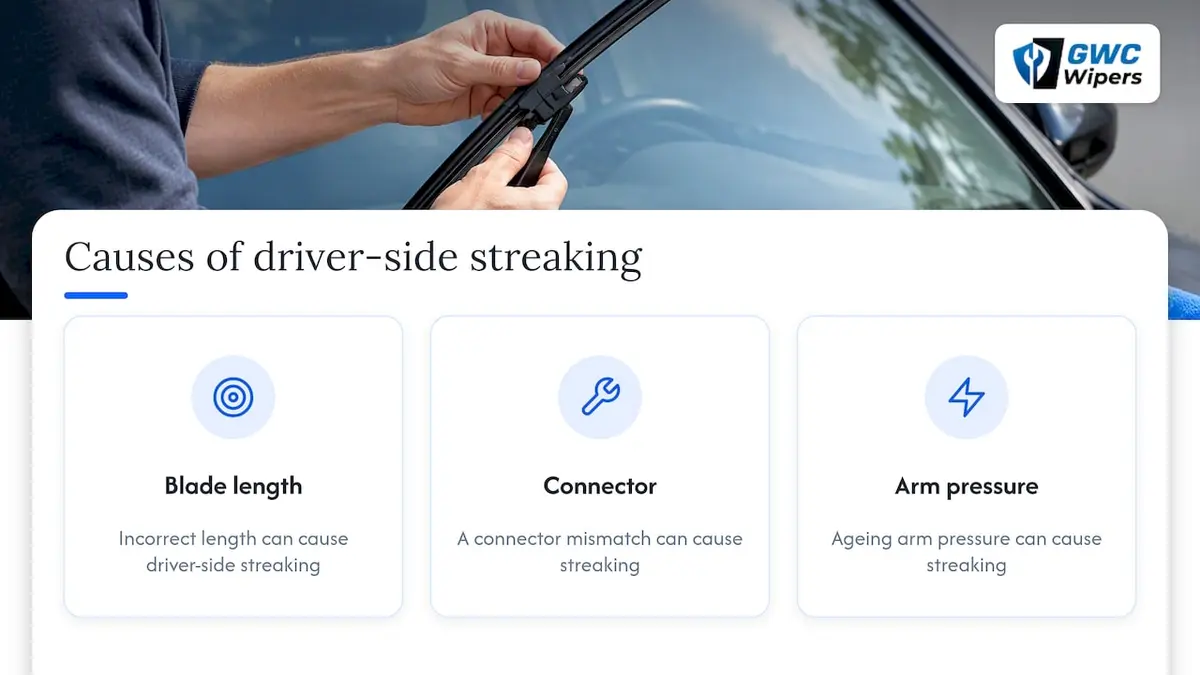
We design and sell wipers for Australian weather, so we hear the same story repeatedly. Someone buys a blade because a review called it the best, then finds it streaks on the driver’s side. Nine times out of ten the problem is not the brand. It is the length, the connector or the age of the arm pressure.
That is why we built the business around fitment first. A vehicle selector that uses make, model and year, preassembled adapters and tool-free installation take most of the guesswork out. We would rather you spend two minutes confirming the right blade than twenty minutes in a carpark swapping the wrong one.
On rain performance, we focus on what you can control: even pressure from segmented design, an aerodynamic profile that resists lift and corrosion-resistant parts. We do not claim any blade is the best for every car, and you should be wary of anyone who does.
— Faisal
How often to replace blades
The common guide is about every 12 months. Haynes says that even in places without much rain, blades should be replaced roughly every 12 months because the rubber perishes in sunlight or cold. O’Brien gives the same guide and notes that harsh conditions may shorten life to around six months, while Autobahn offers a six-to-twelve month range.
In practice, use performance as your trigger. Safe Transport Victoria advises drivers to replace blades that shudder or streak. Replace sooner if you notice:
- Streaks or smears in a single pass
- Chatter or shuddering across the glass
- Unwiped bands, particularly at the blade tips
- Split, cracked or hardened rubber
- A blade that lifts off the glass at speed
Heat, UV, dust and insects all wear the rubber faster, so a car parked outside in Western Sydney or inland Queensland deserves more frequent checks than a garaged one. Our six-month guide to how Australian weather affects wiper blades explains why, and our clean or replace test gives you a six-step way to decide. If you want the reasoning behind regular swaps, see why regular wiper blade replacement matters.
Fitting new blades safely
Replacing blades usually needs no tools and takes a few minutes, according to Haynes. A careful sequence keeps your glass and arms safe:
- Lift the arm away from the windscreen and, if needed, place a folded towel on the glass under it. A snapping arm can crack a windscreen.
- Release the old blade at the connector and slide it off.
- Clip the new blade on and confirm that you hear or feel it lock. Bosch highlights secure locking as a safety feature.
- Lower the arm gently onto the glass. Do not let it spring back.
- Wet the windscreen and test a few passes before you drive.
In freezing conditions, make sure the blade is not stuck to the glass before you switch the wipers on. If your windscreen is chipped or cracked, have it looked at first. Auto glass specialists such as GWP Glassworks have written a useful checklist of questions to ask before driving in the rain if your glass needs attention.
Fixing streaks after a swap
New blades that streak are frustrating, but the cause is usually simple:
- Dirty glass. Road film, wax and insects smear the rubber edge. Clean the windscreen and the blade edge with glass cleaner.
- Adapter not fully seated. Reattach and check it locks.
- Wrong length or type. A blade that is too long or short leaves bands.
- Worn or bent arm. If the arm no longer presses evenly, new rubber will not cure it.
Our step-by-step guide to fixing wiper streaks after replacement covers the fix in 10 to 15 minutes. If the problem looks more serious, see how to spot unsafe wiper blades.
Fleets, workshops and standardising stock
If you run several vehicles, beam blades can reduce corrosion exposure and simplify stock control. A universal range still needs connector and application checks. One Australian trade source reports a Trico Force programme of 12 SKUs covering over 98% of vehicles. That is a trade-published claim, not an independent fleet trial, so validate current catalogue coverage before you standardise.
Fleet operators should also include windscreens, wipers and washers in pre-departure and preventative-maintenance checks. The NSW Point to Point Transport Commissioner’s guidance says vehicles with unsafe windscreen damage must not provide passenger services.
A simple checklist for choosing
Before you buy, run through this:
- Confirm make, model, year, body style, front or rear position and connector.
- Choose the blade design your vehicle is built for, and prefer beam or hybrid if your arms support them.
- Look at UV and heat durability, not just winter claims.
- Check what happens if the blade does not fit: returns, guarantees and warranty.
- Clean your windscreen when you fit them, and check again at six months.
Find wipers guaranteed to fit
We sell premium wiper blades designed and made for Australian weather, with free shipping across Australia, a 30-day money-back guarantee and a 12-month warranty. Our fitment guarantee is backed by a vehicle lookup. Choose your make, model and year at GWC Wipers to find the right blades for your car. Pricing is shown on each product page, and express shipping is available if you need blades in a hurry.
FAQ
What are the best wiper blades for heavy rain?
Beam or hybrid blades in the correct size for your car usually perform best, because they keep even pressure on curved glass and resist lift at speed. Independent tests show results vary by size and criterion, so choose by fitment and your driving conditions rather than one ranking.
Are beam wiper blades better than conventional ones?
Often, for modern cars. Beam blades have no exposed frame joints, which reduces corrosion and helps them hold contact on curved windscreens. Your car must still accept the connector, so check fitment before buying.
How often should I replace wiper blades in Australia?
A 12-month guide is common, but heat, UV and dust can reduce practical life to about six months. Replace them as soon as they streak, shudder, chatter or leave unwiped sections.
Do I need special storm wiper blades?
Not as a separate category. What helps in a storm is a correctly fitted blade with fresh rubber, even pressure and an aerodynamic shape. Confirm the fit for your make, model and year first.
Sources
- Transport WA: Regular vehicle checks fact sheet
- Point to Point NSW: Safety alert on cracked windscreens
- O’Brien AutoGlass: Windscreen wiper blades replacement
- O’Brien
- Haynes Australia: Wiper blade replacement
- Mechanic trade news: Wiper servicing
- Autobahn: Wiper blades advice
- Testfakta: Windscreen wipers flatblade test, October 2024
- Aftermarket: Trico premium quality windscreen wipers
- Safe Transport Victoria: Drive safely this winter
- Supercheap Auto: Wipers