
Bosch Wiper Blades vs GWC: Guaranteed Fit or Aerotwin in Australia?
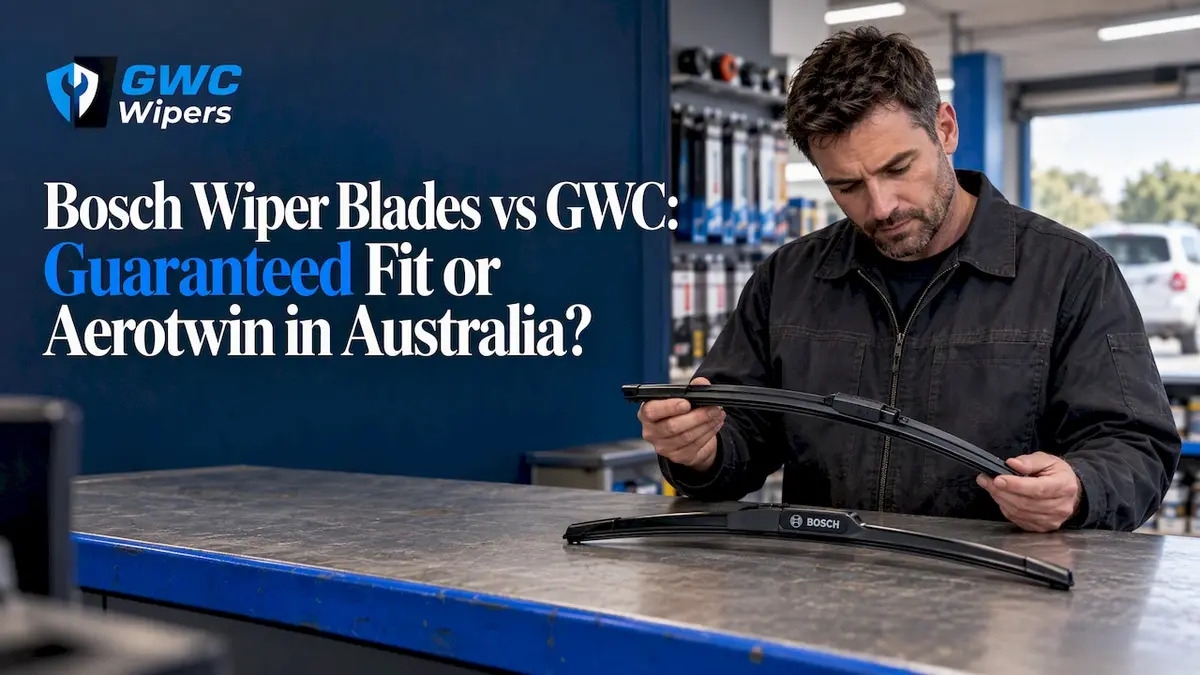
For most drivers, we recommend GWC wiper blades, because our vehicle-specific listings and fitment guarantee take the guesswork out of buying the right blade for your car. Bosch is a sensible alternative when you want a factory-style beam match, such as the Aerotwin on some European models. If you are comparing Bosch wiper blades vs GWC, fit and value decide it.
TL;DR:
- Measure the driver and passenger blades separately, because many cars use different lengths; confirm both sizes and connector types before ordering.
- Beam blades spread pressure across curved windscreens, while framed or hybrid designs can suit flatter older glass at a lower price.
- Standard replacement pairs often cost around $20 to $60, while premium beam or hybrid blades cost more; check whether listings price one blade or two.
- Replace blades about every six months, but inspect sooner after hot summers for streaks, chatter, cracks, or rubber edges that stay split after cleaning.
- Bosch warranty and return terms vary by seller, so check the retailer’s listing; GWC handles claims directly under published warranty and refund terms.
Table of Contents
- How do Bosch and GWC blades compare side by side?
- How do you choose the right wiper blade for your car?
- Does blade construction change how a wiper performs?
- What affects visibility and wet-weather wiping?
- How long do wiper blades last, and when should you replace them?
- Which technology features matter in Australian weather?
- What is customer support and after-sales service like?
- How easy is it to get these blades across Australia?
- How do you install wiper blades and make them last?
- Why we back vehicle-specific, guaranteed-fit blades
- How do you buy GWC blades and check fit before you order?
- FAQ
- Sources
How do Bosch and GWC blades compare side by side?
The real differences sit in how you find the right size, how the blades are sold and what backs the purchase. Our own listings come from the GWC vehicle selector, and we publish our terms openly. Bosch details below are limited to what is commonly reported about each blade.
| Blade | Construction | Fitment method | Warranty or guarantee | Best for |
|---|---|---|---|---|
| GWC premium wiper blades | Premium wiper blade | Vehicle-specific, chosen by make, model and year | Fitment guarantee, warranty and money-back guarantee | Drivers who want guaranteed fit and local support |
| Bosch Aerotwin | Beam-style blade | Fitted to many European cars as a factory part | Check the retailer’s listing | Owners seeking a factory-style beam replacement for curved windscreens |
| Bosch SmartFit Pro | Universal flat blade | Multi-adaptor system for many arm types | Check the retailer’s listing | Older or import cars where fitment guides disagree |
Beam blades are frameless and apply pressure more evenly across the windscreen, which helps on curved glass; standard replacement pairs often cost around $20–$60, and premium beam or hybrid blades cost more. Price depends on size and brand, and on whether the listing is for one blade or a matched pair.
Three differences drive most decisions. The first is fitment approach: a vehicle-specific listing tells you exactly what suits your car, while a universal blade relies on adaptors. The second is price confusion: always check whether the number you see covers one blade or two. Our wiper blade cost guide explains the single versus pair issue. The third is what happens if the blade does not fit, which is where a guarantee matters.
How do you choose the right wiper blade for your car?
Work through this checklist in order, and the decision usually makes itself.
- Find your blade length by measuring the existing blades, or run your vehicle through a selector that lists size and connector type.
- Prefer vehicle-specific listings when they exist, since they remove the sizing and adaptor guesswork.
- Match the blade type to your windscreen and conditions: beam for strongly curved glass and heavy rain, universal when fitment is genuinely uncertain.
- Check whether the price is per blade or per matched pair, then compare the cost of the full set you need.
- Favour sellers with a clear fitment guarantee and published warranty terms.
Pro Tip: Measure the driver and passenger blades separately. Many cars use two different lengths, and buying a single “matching” pair is a common cause of returns.
You can confirm sizes with our wiper blade sizes guide, then check a make-level page such as our Toyota fitment hub to see how a vehicle-specific listing looks in practice.
Does blade construction change how a wiper performs?
Yes, and it is the biggest physical difference between a cheap blade and a good one. A traditional framed blade uses a metal skeleton with several pressure points. It is cheaper and common for everyday city driving, but the frame can lift in the middle on strongly curved glass and can collect grit or ice in its joints.
A beam blade replaces the skeleton with a single spring steel strip inside the rubber, so pressure is spread evenly along the blade. Hybrid blades enclose a frame under an aerodynamic cover, which gives some of the beam look with a more traditional load path.
The Bosch Aerotwin follows the beam approach. Beam blades press evenly across curved screens, which reduces chatter and missed patches as they age. The Bosch SmartFit Pro is a universal flat blade, so it trades some of that tailored feel for adaptor flexibility.
The practical takeaway: if your windscreen is strongly curved, as on many hatchbacks and SUVs, a beam blade is the safer choice. On a flat, older windscreen, a quality framed or hybrid blade can still do the job at a lower price.
What affects visibility and wet-weather wiping?
Streaking and chatter are the two complaints behind most blade replacements. Streaking usually points to a worn or contaminated rubber edge, while chatter is the blade skipping across the glass instead of sweeping smoothly.
Pressure distribution matters here. When a blade presses evenly, the rubber stays flat against the glass and clears water in a single clean pass. When pressure is uneven, you see unwiped bands, especially at the edges of the sweep. That is the reason beam construction gets so much attention in wet-weather comparisons.
Fit matters just as much as design. A blade that is too long can foul the pillar or the other blade, and one that is too short leaves a wider unwiped area. A correctly sized, vehicle-specific blade wipes the area the manufacturer intended.
Other causes are easy to overlook:
- A dirty windscreen transfers oil and film to a new blade within days.
- Waxy products and some washer fluids can leave a smear.
- A bent or weak wiper arm can ruin a good blade.
If a new blade still chatters, clean the glass and the rubber with a damp cloth and check the arm before blaming the blade.
How long do wiper blades last, and when should you replace them?
Rubber ages with heat, UV exposure and use, not just with distance. As a general rule, wiper blades typically need replacing about every six months, a guideline from RACQ.
Australian conditions are hard on rubber. A car parked outdoors through summer sees the rubber edge harden and crack well before it wears down. Garaged or shaded cars tend to keep blades in good shape for longer.
Watch for these signs instead of relying on the calendar alone:
- Streaks or smears that cleaning does not fix
- Chattering or skipping across the glass
- Splitting, curling or a visibly nicked rubber edge
- Water left behind in bands after each pass
Both Bosch and GWC blades are subject to the same ageing, so a longer warranty is not a substitute for checking the rubber. Check our warranty terms for what is covered, and inspect your blades regularly. If you live somewhere with long, hot summers, inspect them before the wet season starts, because a blade that looked fine in autumn can be brittle by spring.
Which technology features matter in Australian weather?
Australian drivers face a wide spread of conditions: intense UV, heavy tropical downpours, dust, and in alpine areas, ice and snow. Features should be judged against that.
From what is commonly reported, the Bosch Aerotwin’s selling point is its beam design with consistent pressure along the blade, while the SmartFit Pro focuses on a universal adaptor system for broad compatibility. Both are sensible engineering choices for different needs.
Our GWC blades are built around natural rubber construction, segmented pressure distribution, an aerodynamic design and corrosion resistance. Aerodynamics matter at highway speed, where wind can lift a poorly shaped blade off the glass. Corrosion resistance matters near the coast, where salt air attacks metal parts. Preassembled adapters also mean most installs need no tools.
We do not claim our blades beat Bosch on every measure. Independent, side-by-side Australian test results for these specific models are not publicly listed, so we keep the comparison to design and fitment. If heavy rain on a strongly curved screen is your main worry, either brand’s beam blade is a reasonable starting point. If fitment confidence is your main worry, a vehicle-specific listing with a guarantee reduces the risk.
What is customer support and after-sales service like?
Support is where the two brands differ most in practice, because Bosch blades are usually bought through a retailer and ours are sold directly.
With Bosch, any claim or return generally goes through the store that sold the blade, so your experience depends on that retailer’s policy. Bosch’s own warranty terms can differ by product and seller, so check the listing before you buy.
With GWC, you deal with us directly. Our terms include a fitment guarantee, warranty and money-back guarantee. If a blade does not fit or you are unhappy with it, you contact our Australian support team rather than a third party. That is the practical benefit of buying from the maker and seller in one place.
Before buying from any seller, it helps to check:
- Who handles returns, and within how many days
- Whether the guarantee covers fit, faults or both
- How you contact support if something goes wrong
A clear answer to all three is worth more than a small saving on the sticker price.
How easy is it to get these blades across Australia?
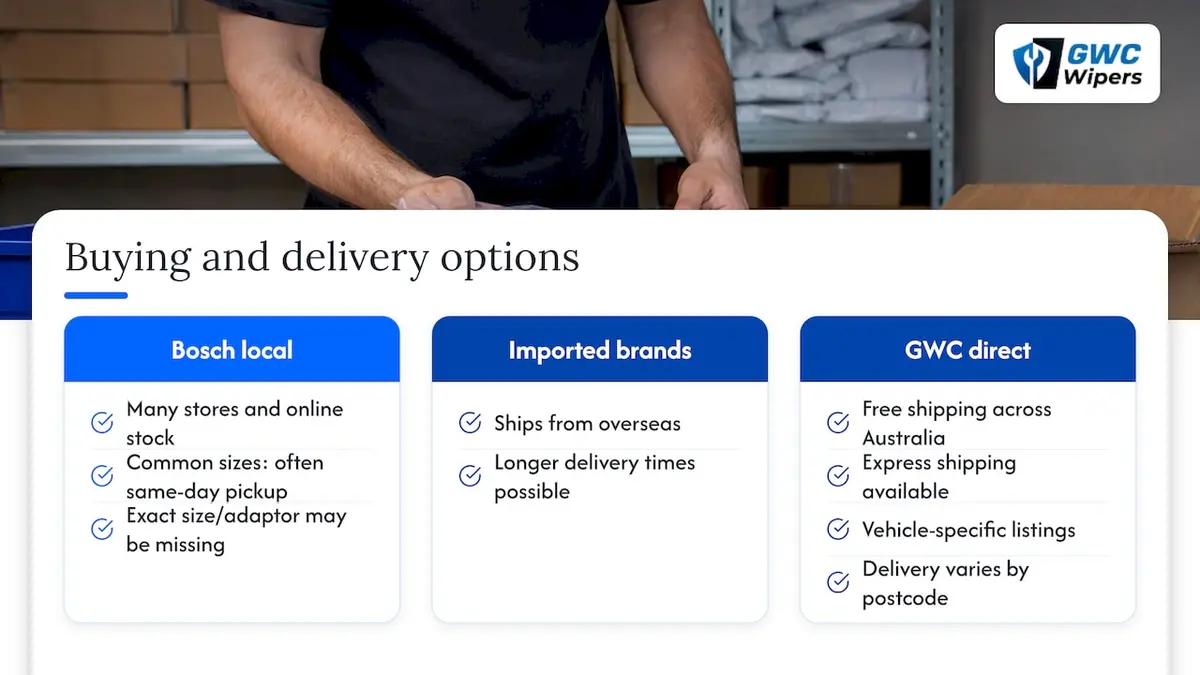
Availability depends on where you buy. Bosch blades are stocked in many auto stores and online, so you can often pick up a common size the same day. The trade-off is that the exact size or adaptor for your car may not be on the shelf, particularly for European or older models.
Some imported brands ship from overseas and can have long delivery times compared with locally stocked blades, so it pays to confirm where an item ships from before ordering.
We ship GWC blades with free shipping across Australia, and express shipping is also available. Because our listings are vehicle-specific, you order the exact blades for your car instead of hunting through shelves for the right length. Delivery times vary by location, so check the options at checkout for your postcode.
A simple rule: if you need blades today, a local store may be fastest. If you would rather order the right pair once and have it arrive at your door, ordering direct avoids the in-store size gamble. Fleet owners and regional drivers, who are often far from a well-stocked store, tend to find direct delivery the more convenient route.
How do you install wiper blades and make them last?
Installation is straightforward on most cars, and many blades do not need tools.
- Lift the wiper arm away from the windscreen until it locks upright. Place a folded towel on the glass in case the arm snaps back.
- Press the release tab on the connector and slide the old blade off the hook.
- Slide the new blade on until it clicks firmly into place.
- Lower the arm gently back onto the glass.
- Repeat on the other side, keeping the correct length on each.
RACQ publishes practical replacement steps, including measuring blade length, if you want a second walkthrough. Our blades come with preassembled adapters and detailed guides to keep this simple.
To get more life from any blade:
- Wipe the rubber edge and the windscreen with a damp cloth every few weeks.
- Never run the wipers on a dry windscreen.
- Lift the arms before scraping frost or ice.
- Park in shade when you can.
Small habits like these protect the rubber edge, and the edge is what does the wiping.
Why we back vehicle-specific, guaranteed-fit blades
Most wiper complaints trace back to something simple: the wrong size, the wrong connector, or a blade that was never right for the car. A universal blade can solve that for some cars, but it still asks you to judge whether the adaptor suits your arm. Vehicle-specific listings move that judgement to us.
That is why we built our range around a vehicle selector, with fitment, warranty and money-back terms. If a blade does not suit your car, you are covered. We still think a Bosch beam blade is a fair choice when you want a factory-matching replacement on a specific European model, particularly where that blade was fitted from new. The best blade is the one that fits properly and that you will actually replace on time.
— Faisal
How do you buy GWC blades and check fit before you order?
Checking fit is quick and can help avoid returns. Start at our wiper blades page, choose your make, model and year, and the selector shows the blades for your car. You can also browse our make pages directly, such as Mercedes-Benz or BMW.
What to expect when you order:
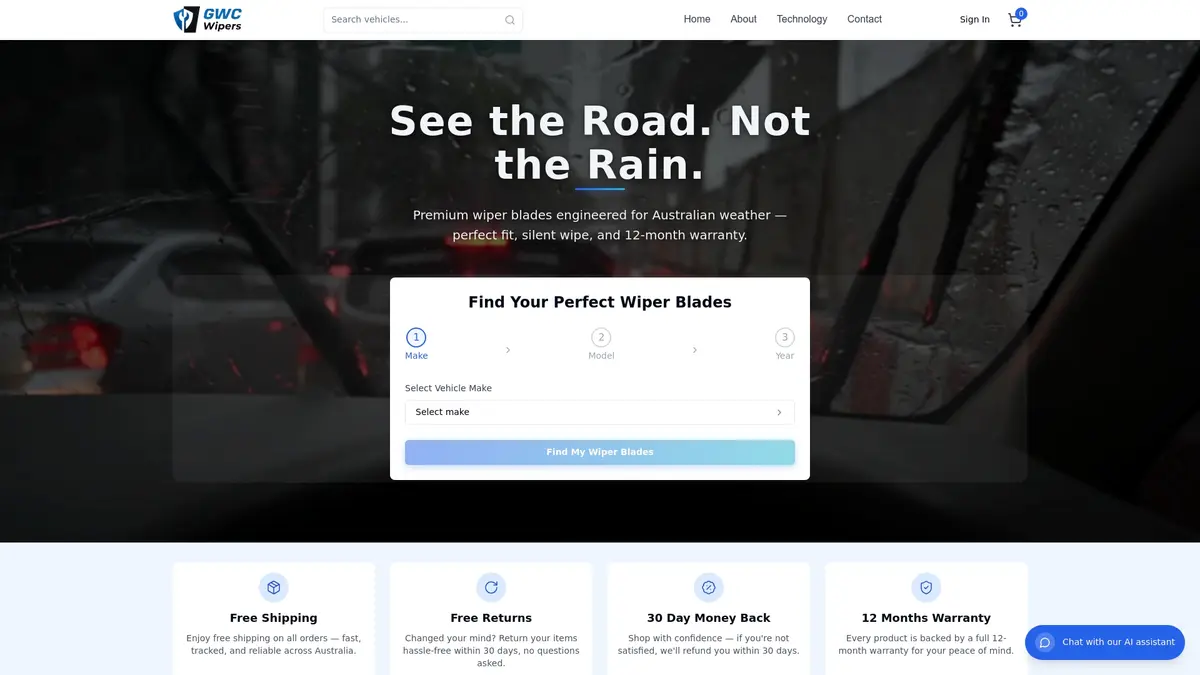
- Free shipping across Australia, with express shipping also available
- A fitment guarantee on vehicle-specific listings
- Published money-back guarantee and warranty terms
- Detailed install guides included, with preassembled adapters for tool-free fitting
If you are unsure of your exact model or year, measure your current blades first, then confirm with the selector before you order. Start at Gwcwipers and find the blades that fit your car.
FAQ
Are Bosch or GWC wiper blades better for my car?
It depends on what you value most. We recommend GWC for most buyers because our listings are vehicle-specific and backed by a fitment guarantee, while Bosch suits drivers who want a factory-style beam match on certain European cars.
What does OE mean on wiper blades?
OE means original equipment, the type of part fitted to the car at the factory. A blade described as an OE-style match is designed to replace the one your car came with, which is why some owners prefer it on European models.
How do I find my windscreen wiper size?
Measure each existing blade from end to end, or use a vehicle selector that lists the size and connector for your make, model and year. Driver and passenger blades are often different lengths, so check both sides.
How often should I replace my wiper blades?
About every six months is the usual guidance. Replace them sooner if you see streaking, chatter or a split rubber edge, which is common after a hot summer.
Sources
- Best Wiper Blades Australia: What Fits and What Lasts
- How to Replace Windshield Wipers Without Messing It Up- Cars24 Australia
- How to change wiper blades | RACQ