
Wiper blade sizes: Find the perfect fit for your car
Picking up a new set of wiper blades sounds simple enough, yet countless Australian drivers end up with streaky windscreens, missed patches, and blades that lift off the glass at highway speed. The problem usually comes down to one overlooked detail: size. Not all wiper blades are the same length, and not all connectors are interchangeable. From the tropical downpours of Far North Queensland to the icy mornings of the Snowy Mountains, your wipers need to match your vehicle’s exact specifications to keep your line of sight clear when it matters most. This guide walks you through everything you need to know about wiper blade sizing, compatibility, and confident DIY installation.
Table of Contents
- Why wiper blade sizes matter for Australian vehicles
- How to identify your wiper blade size
- Comparing blade sizes: Front vs rear and universal fit myths
- Tips for choosing and installing wiper blades yourself
- Find your perfect wiper blade with GWC Wipers
- Frequently asked questions
Key Takeaways
| Point | Details |
|---|---|
| Australian conditions matter | Choosing the right wiper blade size is essential for safe driving in Australia’s varied weather. |
| ±1 inch flexibility | A blade within ±1 inch of the recommended size can work, but always double-check fit and coverage. |
| Annual replacement needed | Replace wiper blades every year for peak performance and risk reduction from heat and hail. |
| Rear blades need care | Rear wipers often have unique size and connector requirements—always check before purchasing. |
| DIY fit is possible | With the right steps, most drivers can install new blades confidently and safely. |
Why wiper blade sizes matter for Australian vehicles
Australia’s climate is genuinely demanding on wiper blades. One week you’re driving through a summer storm in Sydney, the next you’re dealing with dust and UV exposure on a regional highway in Western Australia. Your wipers are one of the few safety components that work directly against the elements every single time you drive in wet conditions, so getting the size right is not optional.
Fitting the wrong blade length creates real problems. A blade that’s too short leaves uncleaned arcs across your windscreen, reducing your field of vision. A blade that’s too long can collide with the windscreen frame, cause juddering, or fail to seat properly against the glass. Both scenarios increase your risk on the road, which is why blade replacement importance is something every driver should take seriously.
Here are the key sizing rules to keep in mind:
- A ±1 inch tolerance is generally acceptable, but always verify coverage and fit before driving.
- Replace your wiper blades at least once a year, more frequently if you drive in harsh conditions.
- Lift your blades away from the windscreen during extreme heat or hail to prevent rubber damage and glass scratching.
- Never assume that because a blade fits the arm, it will perform correctly across the full wiper arc.
“A ±1 inch tolerance is ok but verify; replace yearly; lift in extreme heat or hail.” — mywipersize.com.au
Annual replacement is especially important in Australia because UV radiation degrades rubber compounds faster here than in cooler climates. A blade that looks fine may already be cracking or hardening beneath the surface, causing streaks even in light rain.
How to identify your wiper blade size
Finding the correct blade size for your vehicle is straightforward once you know where to look. There are three reliable methods, and using more than one is always a good idea.
- Check your owner’s manual. Most manuals include a section on wiper blade specifications, listing the driver’s side, passenger side, and rear blade lengths separately.
- Use an online vehicle lookup tool. Entering your make, model, and year into a blade finder gives you accurate sizing instantly. You can browse blade sizes by make to find the right match for your vehicle.
- Measure your existing blades directly. Remove the blade from the arm and measure the rubber element from end to end. This is the most reliable method if your manual is missing.
One area where drivers often get caught out is the rear wiper. Rear blades often have unique size and connector requirements that differ significantly from the front pair. The rear arm attachment point varies between manufacturers, so a blade that fits your front arms perfectly may not connect to the rear at all.

Pro Tip: Before ordering, always confirm both the blade length and the connector type for your rear wiper. Some vehicles, like the Suzuki Vitara, use a pinch-tab connector on the rear that differs from the hook-style connectors common on front arms. You can check blade sizing for the Vitara as a practical example of how rear specs differ.
Here’s a quick reference for some popular Australian models:
| Vehicle | Driver side | Passenger side | Rear blade |
|---|---|---|---|
| Toyota Corolla (2019+) | 26 inch | 16 inch | 14 inch |
| Mazda CX-5 (2017+) | 26 inch | 18 inch | 12 inch |
| Hyundai Tucson (2021+) | 26 inch | 18 inch | 14 inch |
| Ford Ranger (2022+) | 24 inch | 18 inch | No rear |
| Suzuki Vitara (2015+) | 24 inch | 16 inch | 12 inch |
Always cross-check these figures against your own manual or a vehicle-specific lookup, as production changes can affect sizing mid-model-year.
Comparing blade sizes: Front vs rear and universal fit myths
A common misconception is that front and rear wiper blades are interchangeable, or that a “universal” blade will fit any car. Neither is reliably true, and acting on these assumptions can cost you time, money, and safety.
Front blades are typically longer and designed to cover a wide, curved windscreen. They are built to handle higher speeds and greater aerodynamic pressure. Rear blades are shorter, often use different connector styles, and are designed for the smaller, more steeply angled rear window. Swapping them is rarely practical.
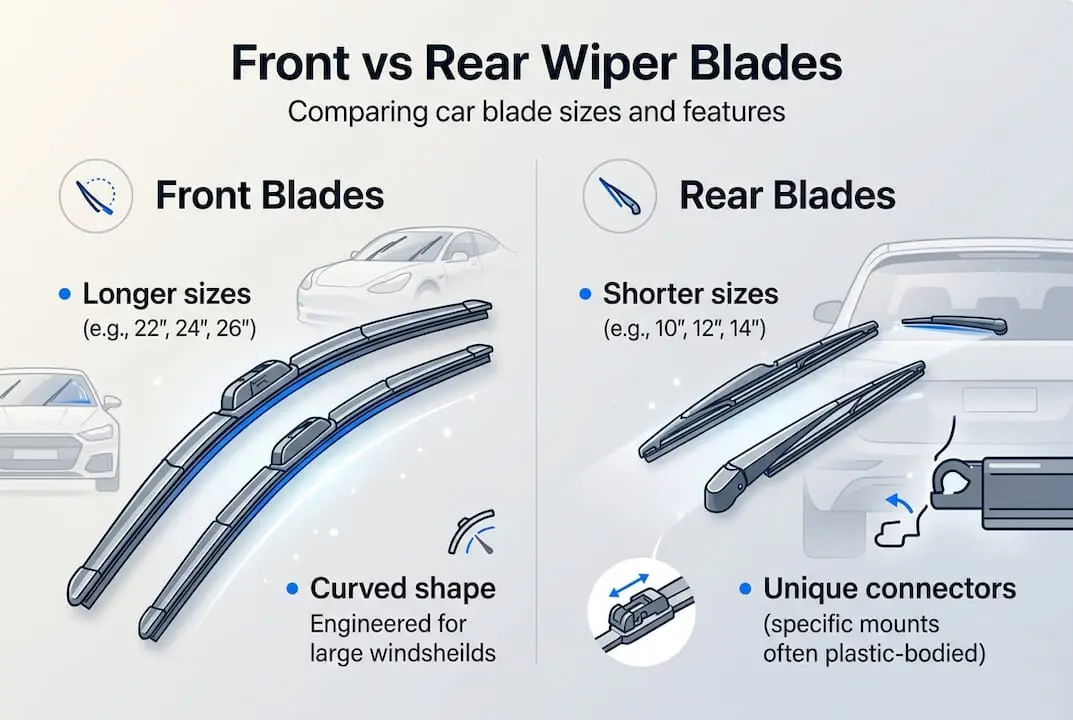
The table below highlights the key differences:
| Feature | Front blades | Rear blades |
|---|---|---|
| Typical length | 18 to 28 inches | 10 to 16 inches |
| Connector types | Hook, pinch-tab, side-pin | Pinch-tab, bayonet, unique OEM |
| Aerodynamic design | Yes, often spoilered | Minimal, compact |
| Replacement frequency | Every 12 months | Every 12 to 18 months |
| Universal fit available | Rarely reliable | Almost never reliable |
Universal fit blades are marketed as a one-size-fits-many solution, but rear blades are often unique in size and connector, making universal claims misleading. Even on the front, a universal blade may not seat correctly against the curvature of your specific windscreen, leading to poor contact and streaking.
Key points to remember when comparing blade types:
- Always match the connector type, not just the blade length.
- Aerodynamic spoilers on front blades improve contact at highway speeds; rear blades rarely need this feature.
- Using an aftermarket fit guide helps you avoid compatibility errors before you buy.
- Cheap universal blades may fit loosely, vibrate, and wear unevenly, reducing their effective lifespan.
Tips for choosing and installing wiper blades yourself
Installing wiper blades yourself is one of the easiest DIY tasks on any vehicle. With the right blade in hand, the whole job takes under ten minutes. Here’s how to do it confidently.
- Lift the wiper arm away from the windscreen until it locks in the upright position. Be careful: if the arm snaps back without a blade attached, it can crack your windscreen.
- Locate the connector release. Most hook-style connectors have a small tab you press to release the old blade. Pinch-tab and bayonet connectors release differently, so check your blade’s instructions.
- Slide the old blade off the arm and note the connector orientation before discarding it.
- Align the new blade with the arm connector and press firmly until you hear or feel a click. Give it a gentle tug to confirm it’s locked in place.
- Lower the arm slowly back onto the windscreen. Never let it drop under its own spring tension.
- Test the blades with your washer fluid before driving to confirm even contact and no skipping.
For Australian conditions specifically, a few extra steps make a real difference. Lift blades in extreme heat or hail to prevent the rubber from bonding to a hot windscreen or being damaged by ice. In summer, park in shade where possible to slow UV degradation of the rubber compound.
Pro Tip: Before purchasing, physically check the connector on your existing blade or look up your vehicle’s connector type online. Connector mismatches are the number one reason DIY installations fail. If you drive a Honda CR-V, for example, you can confirm the exact connector and blade length needed by checking the blade fitment for CR-V before you order.
Common mistakes to avoid:
- Buying blades based on length alone without checking the connector type.
- Skipping the rear wiper replacement because it’s less visible.
- Leaving old blades on past the 12-month mark, even if they appear undamaged.
- Storing your vehicle outdoors without lifting blades during heatwaves or hailstorms.
Find your perfect wiper blade with GWC Wipers
Now that you understand how sizing, connector types, and Australian conditions all affect wiper blade performance, the next step is finding the right blade for your specific vehicle. At GWC Wipers, we’ve made that process as straightforward as possible.
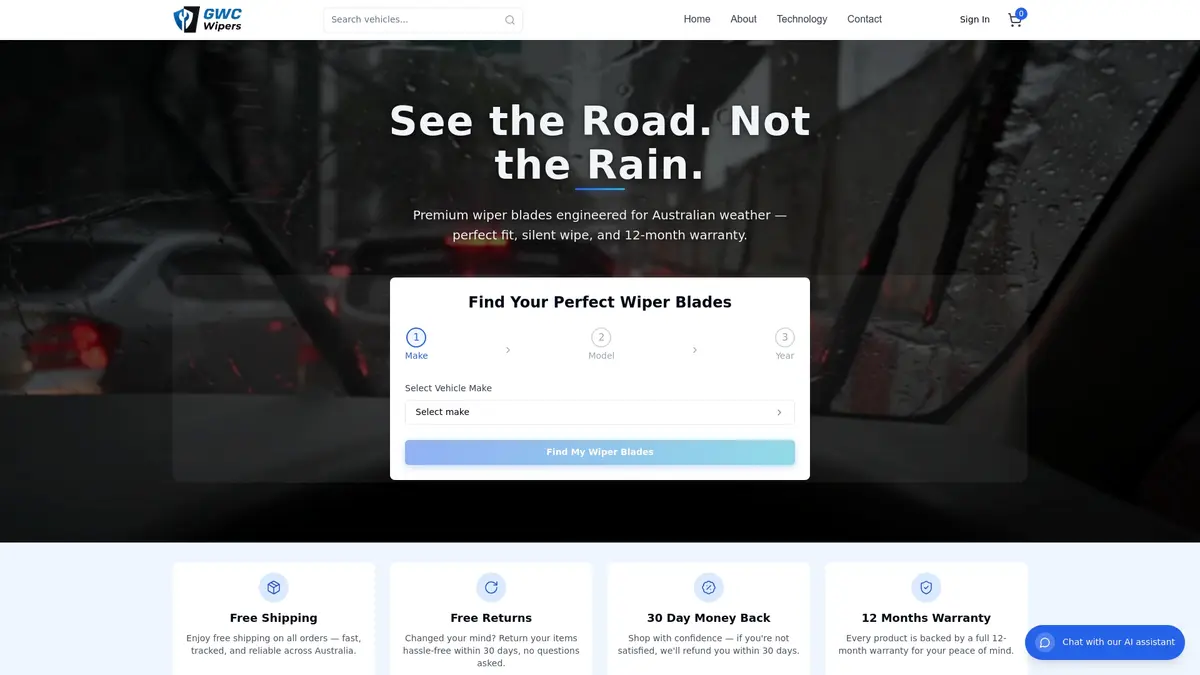
Our vehicle selector tool lets you search by make, model, and year to find a blade that fits perfectly, every time. Whether you drive a Mercedes-Benz and need CLA-Class blades, a Volkswagen and want Arteon blades, or you’re looking for reliable Toyota blades for your everyday driver, we stock premium options built for Australian weather. Every order includes free shipping across Australia, a 30-day money-back guarantee, and a 12-month warranty. Our friendly Australian support team is always available if you need help confirming your fit before you buy.
Frequently asked questions
Can I use a different sized wiper blade if it’s close to my car’s requirement?
A blade within ±1 inch of your specified size may work in most cases, but always check that it covers the full wiper arc without hitting the windscreen frame.
How often should wiper blades be replaced in Australia?
You should replace wiper blades yearly at minimum, as Australia’s UV radiation and temperature extremes accelerate rubber degradation faster than in milder climates.
Is it necessary to lift wiper blades in extreme heat or hail?
Yes. Lifting blades in extreme heat prevents the rubber from bonding to a hot windscreen, and lifting them during hail protects both the blade and the glass from impact damage.
How do I find the right connector for my rear wiper blade?
Check your owner’s manual or use a vehicle-specific blade finder, as rear blades have unique connectors that vary significantly between manufacturers and cannot be assumed from front blade specs.
Can universal fit wiper blades work for all vehicles?
Universal blades are rarely a reliable solution. Connector type and exact blade length are both critical, and universal blades often fail to fit rear wipers in particular due to the wide variation in rear arm designs.
Recommended
- Suzuki Vitara 2015-2023 (LY) Wiper Blades | GWC Wipers
- Ford Fiesta 2003-2008 (WP WQ) Hatch Wiper Blades | GWC Wipers
- Mitsubishi Eclipse 2017-2023 (YA) Wiper Blades | GWC Wipers
- MINI Cooper 2014-2023 (F55 F56 F65 F66) Wiper Blades | GWC Wipers
- Golf cart tire sizes explained: choose the right fit in 2026 — GOLFCARTSTUFF.COM™