
Vehicle Specific Wiper Blades: Guaranteed Fit for Australian Cars

Vehicle specific wiper blades are blades engineered to match one car’s exact length, connector shape and curvature, and the fastest way to find yours is to enter your make, model and year into a vehicle selector rather than guessing from a generic size chart. If you’d rather check manually, measure your current driver, passenger and rear blades and note the connector style before you buy. The GWC Wipers vehicle lookup does this matching for you in seconds.
TL;DR:
- Enter your exact make, model, and year in a vehicle selector; confirm each front and rear length separately, plus the connector type.
- Use the manual or measure the rubber, not the arm, if lookup details are unavailable; registration or VIN checks only confirm model variants.
- Universal blades may suit older cars with standard J hook arms, but choose vehicle specific blades for cameras, washer jets, heated elements, or unusual arms.
- After installation, tug the blade, check its full sweep, and spray washer fluid; replace it if it chatters, skips, streaks, or has cracked rubber.
- Replace blades roughly every six to 12 months, sooner in harsh conditions, and change both front blades together; avoid household detergent on the rubber.
Table of Contents
- What vehicle specific wiper blades are and why exact fit matters
- How to find the correct wiper blade using your vehicle’s make, model and year
- Connector types and blade styles: how to identify what’s on your car
- Installation steps and the secure engagement test to run after fitting
- When to replace wiper blades and simple maintenance tips
- Vehicle specific vs universal blades: a quick decision checklist
- Publisher perspective: why we prioritise vehicle-specific fitment
- Perfect fit CTA: use the GWC Wipers vehicle lookup
- FAQ
- Sources
- Authoritative sources and guides
What vehicle specific wiper blades are and why exact fit matters
A vehicle specific wiper blade is built to one car’s dimensions: the correct length for each arm, the right connector so it locks on without an adapter, and a curvature that matches the windscreen’s own shape. Get any of these wrong and the blade will not sit evenly against the glass.
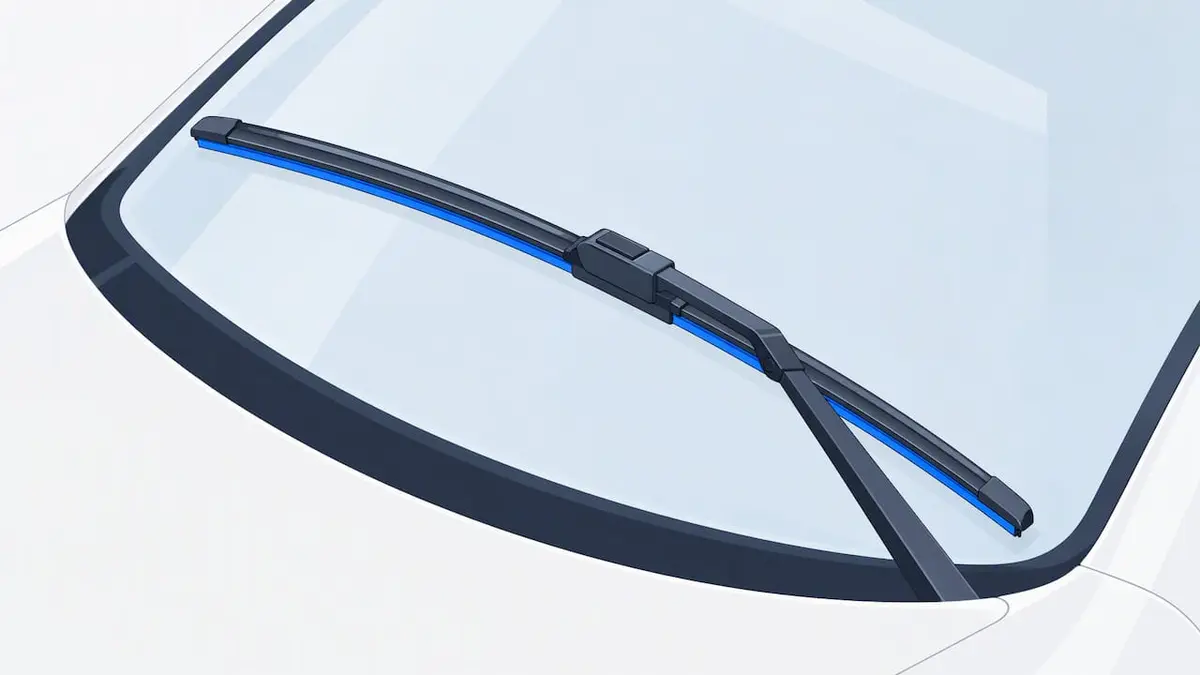
That mismatch shows up as streaking, chatter or patches the blade simply cannot reach, because pressure along the blade is no longer distributed the way the manufacturer designed it. On newer vehicles with windscreen-mounted cameras, an incorrect parking position or curvature can also interfere with the camera’s clear view.
Vehicle-specific fitment covers four things at once:
- Length: too long and the blade overhangs the glass; too short and it leaves unwiped edges.
- Connector: the attachment point has to lock securely to the arm, not just sit loosely in place.
- Curvature: the blade’s natural bend should mirror the windscreen’s curve for even contact.
- Front and rear fitment: rear blades are usually a different size and connector to the front pair, so they need separate confirmation.
How to find the correct wiper blade using your vehicle’s make, model and year
Confirming fitment before you buy takes a few minutes and avoids a return later. Here’s the order we’d work through it in.
- Start with a vehicle selector. Enter your make, model and year and it returns the exact blade lengths and connector type for both front arms and, where fitted, the rear.
- Check the owner’s manual. Most manuals list driver, passenger and rear wiper sizes in millimetres under the maintenance or specifications section.
- Measure the existing blades if the manual isn’t handy. Lay a tape measure along the full length of the rubber, not the metal arm, and record each one separately since the driver and passenger sides often differ.
- Note the connector type while you’re there. Look at how the blade clips onto the arm: a hook, a side button or a pin will determine which replacement fits without an adapter.
- Use your registration or VIN only as a cross-check. These can help confirm the model variant when a car has had a mid-life update, but they don’t replace measuring or a proper selector lookup for the final size.
A Toyota Hilux, for instance, commonly needs a different front blade length to a Mazda CX-5, and both will differ again from a Ford Ranger, even though all three are popular on Australian roads. That’s the kind of variation a size chart alone won’t catch, and it’s why entering the exact make, model and year matters more than guessing from “similar” vehicles.
Pro Tip: Write both the length and the connector type on a sticky note before you shop online. Having both details ready means you order once and get it right the first time.
Connector types and blade styles: how to identify what’s on your car
Before ordering, take a close look at how your current blade attaches to the arm. Getting this wrong is the most common reason a new blade doesn’t lock on properly.
- J-hook: a curved metal hook on the arm that the blade clips over, common on older and simpler models.
- Bayonet or side-lock: the blade slides onto a flat arm tip and locks with a side latch.
- Pinch tab: you squeeze a small tab to release the blade, then slide the new one on.
- Push-button: a button on top of the blade releases it from a specific adapter shape.
- Top-lock: the connector sits on top of the arm rather than wrapping around it.
You’ll also come across two broad blade styles. Euro-style blades use a refillable rubber insert held in a metal backing, which you can trim and replace without swapping the whole assembly. Beam and flat blades are a single moulded unit with the spring tension built into the blade itself, usually with a factory-fitted adapter. Where a vehicle uses an unusual arm shape or integrated washer jets, choosing wiper blades that actually fit your vehicle depends on getting this connector detail right, with an adapter only needed when the replacement blade’s factory fitting doesn’t already match the arm.
Installation steps and the secure engagement test to run after fitting
Fitting a correctly sized blade is usually tool-free and takes only a minute or two once you know the connector type, as RACQ’s installation guidance outlines. Lay a soft cloth over the windscreen edge first to protect the glass if the arm slips.
- Lift the wiper arm away from the glass until it locks in the raised service position.
- Release the old blade by pressing the tab, button or latch specific to your connector.
- Slide the old blade off the hook or pin.
- Slide the new blade on until you feel or hear it lock into place.
- Lower the arm gently back onto the glass, never letting it snap down.
Once fitted, run three checks: a firm tug to confirm the blade won’t come loose, a full sweep by hand or with the wipers on to check even contact across the glass, and a washer-fluid spray to see the blade clear the full arc cleanly. RACQ’s guidance treats secure engagement as safety-critical, since a blade whose claw hasn’t locked can scratch the windscreen or detach while driving. If you’re trimming a refill insert rather than fitting a full assembly, leave a small margin of rubber beyond the end claw to maintain secure engagement, as RACQ specifies, to stop the insert slipping free later.
When to replace wiper blades and simple maintenance tips
Most blades need replacing roughly every year or so, depending on how much sun, dust and road grime they’ve copped, according to RACV’s maintenance guidance. Coastal driving tends to shorten the wiper lifespan through salt exposure and corrosion on metal fittings.
Watch for these signs rather than relying on the calendar alone:
- Squeaking or chattering across the glass during a sweep.
- Skipping where the blade jumps instead of gliding smoothly.
- Streaks or smearing that reappear even after cleaning.
- Visible cracking, splitting or a torn edge along the rubber.
Between replacements, wipe the rubber edge with a soft cloth, top up washer fluid regularly and clear any blocked washer jets. Use an approved washer fluid rather than household detergent, since RACV notes detergents can damage the rubber and contribute to streaking. If streaking persists after a fresh fit, our guide to fixing wiper streaks after replacement walks through the likely causes. Replace both front blades together, even if only one shows wear, so contact pressure stays even across the glass.
Vehicle specific vs universal blades: a quick decision checklist
Vehicle-specific blades win on every fitment dimension that matters: the connector matches without an adapter, the length and curvature are correct for that windscreen, and pressure stays even along the full sweep. Universal blades can work acceptably on simpler cars with a standard J-hook arm, provided the length is right and any adapter included is a reliable fit, but they’re a compromise rather than a match.
Use this checklist to decide which way to go:
- Integrated washer jets or heated wiper elements: lean vehicle-specific, since fitment tolerances are tighter.
- Windscreen-mounted camera or sensor housing: vehicle-specific protects the camera’s clear field of view.
- Aerodynamic spoiler or unusual arm geometry: generic blades often won’t sit flush.
- Simple, older vehicle with a standard J-hook arm: a well-matched universal blade can be acceptable if length is correct.
Publisher perspective: why we prioritise vehicle-specific fitment
We’d rather a reader spend two extra minutes confirming fitment than fit a blade that streaks or, worse, detaches on the motorway. Our vehicle lookup exists because guessing from a generic chart gets the connector wrong more often than drivers expect. Try it against your rego plate and see how precisely it narrows things down.
— Faisal
Perfect fit CTA: use the GWC Wipers vehicle lookup
We built our vehicle lookup to remove the guesswork from buying wiper blades: enter your make, model and year, and it returns blades matched to your exact length, connector and curvature, with a fitment guarantee behind every result.
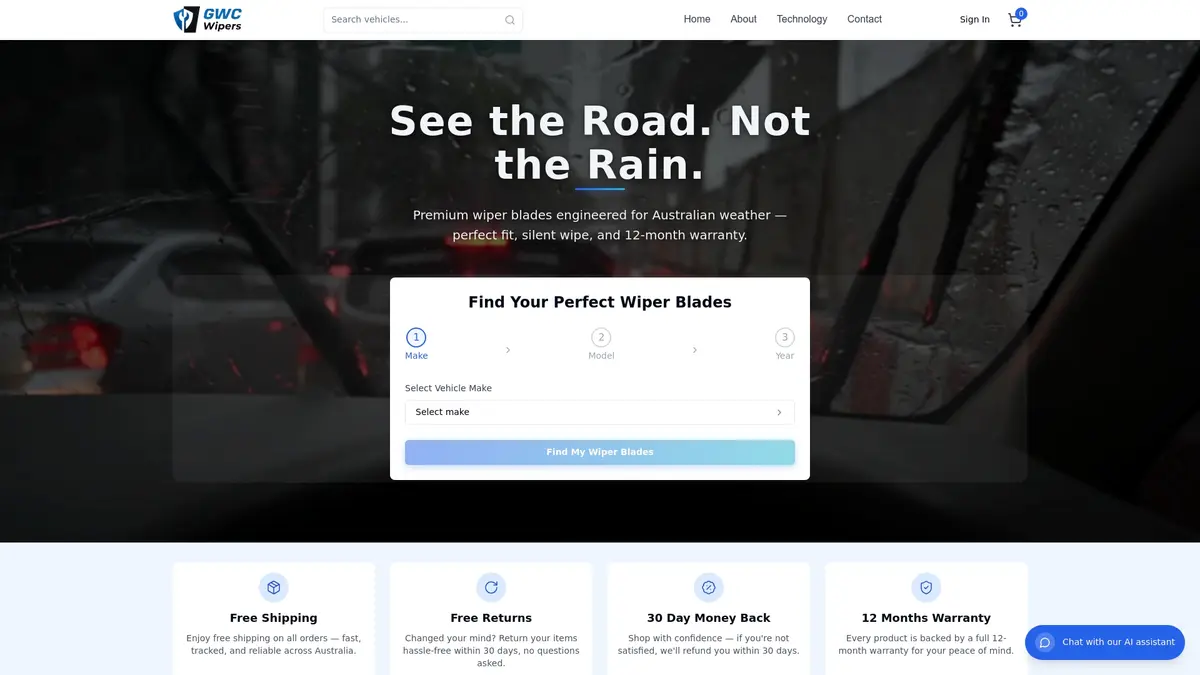
Beyond the fit itself, orders typically include assurances such as free shipping across the country, a money-back guarantee, and a warranty covering manufacturing defects.
If you drive a Toyota Hilux, that fitment hub shows exactly how precise the matching gets, down to the model year. For streak-free glass once your new blades are fitted, Diamondbrite’s streak-free cleaning method is a solid companion step. Use the GWC vehicle lookup to find wipers guaranteed to fit your exact make, model and year.
FAQ
Do you need specific wiper blades for your car?
Yes, in practical terms: your wipers need to match your car’s exact blade length, connector type and curvature to sit flush against the glass and clear it fully. A mismatched blade, even if it technically clips on, often leaves streaks or unwiped patches because the pressure along its length isn’t distributed the way your windscreen needs.
How long do windscreen wipers last?
Most wiper blades last around six to 12 months before needing replacement, depending on sun exposure, dust and driving conditions, according to RACV. Watch for squeaking, skipping or streaking as signs it’s time sooner rather than later.
Can you replace wiper blades yourself?
Yes, replacing wiper blades is a tool-free job for most vehicles once you know the connector type, typically taking only a minute or two per blade as described in RACQ’s step-by-step guide. After fitting, always run a tug test, a full sweep and a washer-fluid check to confirm secure engagement.
What should you check before choosing a wiper blade brand?
Check that the brand offers a vehicle selector or confirmed sizing for your exact make, model and year, rather than relying on a generic length chart. Our vehicle lookup matches blades to your vehicle’s connector and curvature automatically, backed by a money-back guarantee and a 12-month warranty.
What happens if my wipers stop working properly after a blade replacement?
A fresh blade that still performs poorly can point to a fault further up the wiper system rather than the rubber itself. An Australian vehicle recall record for certain Mitsubishi ASX models shows corrosion can cause the wiper link ball joint to separate, which would affect wiper function regardless of blade quality.
Sources
- How to change wiper blades | RACQ
- Replace worn windscreen wipers | RACV
- REC-001045 - Mitsubishi Motors Australia Ltd - MITSUBISHI ASX 2010 - 2016 | Vehicle Recalls