
Wiper blade cost in Australia: what to expect
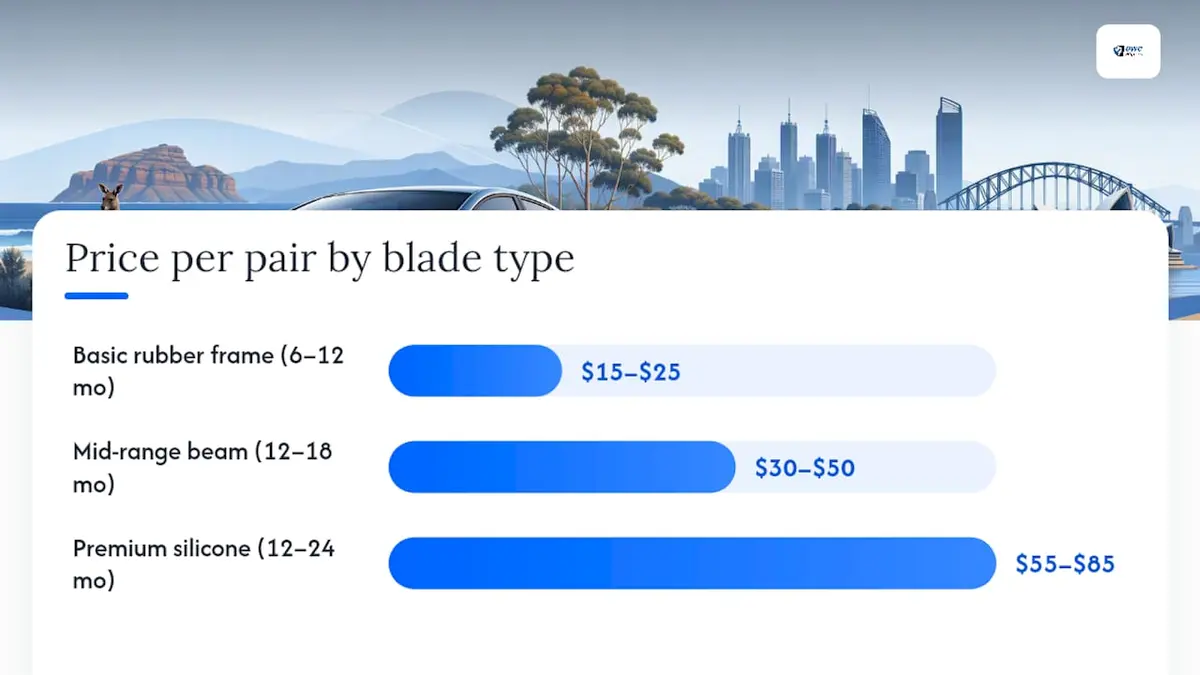
Wiper blade prices in Australia typically run $15–$25 per pair for basic rubber frame blades, $30–$50 per pair for mid-range beam blades, and $55–$85 per pair for premium beam or silicone options, according to current retail price-band data. On a per-blade basis, AutoGuru’s repair guidance puts the typical replacement cost at around $15–$30 per blade. For most Australian drivers, the mid-range category offers a price-performance sweet spot that balances reliability and value.
A recommended buying approach is selecting a mid-range beam blade from a direct-to-consumer supplier offering vehicle-specific fitment, free delivery, and warranty support. That combination keeps your upfront cost reasonable and your total annual ownership cost lower than cycling through cheap blades every few months.
- Budget rubber frame blades: $15–$25 per pair, lifespan roughly 6–12 months
- Mid-range beam or hybrid blades: $30–$50 per pair, lifespan roughly 12–18 months
- Premium beam or silicone blades: $55–$85 per pair, lifespan roughly 12–24 months
- Per-blade cost (single replacement): approximately $15–$30
Key takeaways
Mid-range beam blades at $35–$45 per pair deliver the best annual cost for most Australian drivers, combining reliable performance with a 12–18 month lifespan that matches or beats budget rubber on a cost-per-year basis.
| Point | Details |
|---|---|
| Budget blade price range | Basic rubber frame blades cost $15–$25 per pair; expect to replace them every 6–12 months. |
| Mid-range sweet spot | Beam blades at $35–$45 per pair offer the best value for most Aussie drivers across most conditions. |
| Premium and silicone value | At $55–$85 per pair, silicone blades last 12–24 months, making them cost-competitive annually in high-UV or coastal areas. |
| Lifecycle cost matters | Annual cost of budget vs mid-range blades is nearly identical; mid-range wins on performance and replacement frequency. |
| GWC Wipers recommendation | GWC Wipers offers vehicle-specific fitment, free shipping, 30-day money-back, and a 12-month warranty Australia-wide. |
Table of Contents
- How much do wiper blades cost in Australia by type?
- What makes wiper blade prices vary so much?
- Where can you buy wiper blades in Australia?
- Is it worth fitting wiper blades yourself?
- How long do wiper blades last in Australian conditions?
- How do you choose the right wiper blades for your vehicle?
- What should you check about warranties, returns, and shipping?
- Why cheap blades often cost more in the long run
- GWC Wipers: purpose-built for Australian conditions
- Sources
- FAQ
How much do wiper blades cost in Australia by type?
The price you pay is almost entirely determined by blade design and material. Here is what each category delivers and what you should expect to spend.
| Blade type | Typical price (per pair) | Expected lifespan | Best suited for |
|---|---|---|---|
| Basic rubber frame | $15–$25 | 6–12 months | City driving, garaged vehicles, tight budgets |
| Mid-range beam/hybrid | $30–$50 | 12–18 months | Highway, suburban, mixed conditions |
| Premium beam/silicone | $55–$85 | 12–24 months | Coastal, high-UV, heavy rain regions |
The wide spread between the cheapest and most expensive options reflects a real market dynamic. Market data show that average export prices for locally produced or premium-grade blades run around $27 per unit, while low-cost imports average roughly $3.20 per unit. That gap explains why two blades sitting side by side on a shelf can look nearly identical yet perform very differently over six months of Australian sun and rain.
One more pricing dimension worth knowing: rubber refill strips cost less than a full blade assembly, but most repair guides recommend replacing the whole assembly. Refills can be fiddly to fit correctly, and a misaligned refill often smears rather than wipes.
Quick buying takeaways:
- Best value for most drivers: mid-range beam blade at $35–$45 per pair
- Best longevity per dollar: silicone or premium beam, especially in coastal and high-UV areas
- When to buy budget: short-term vehicle, garaged car with infrequent rain exposure
- Avoid refill strips unless you are confident with the fitting process
What makes wiper blade prices vary so much?
Several factors push the price up or down, and knowing them helps you avoid paying for features your conditions do not require.
Material and construction are the biggest drivers. Natural rubber compounds cost less to produce than silicone, but silicone handles UV exposure and heat far better. Beam blades use a tensioned steel or composite spine instead of a metal frame with multiple pressure points, which improves contact across a curved windscreen and raises the manufacturing cost. Hydrophobic coatings add another layer of expense but genuinely reduce smearing in heavy rain.

Fitment complexity matters more than most buyers realise. Standard hook-arm connections are cheap and universal. Some European models and newer vehicles use pin, side-pin, or bayonet connectors that require specific adapters. Blades sold with preassembled adapters for your exact vehicle cost slightly more but save you the frustration of a blade that technically fits the arm but sits at the wrong angle.
Retail channel and packaging add cost that has nothing to do with blade performance. Branded blister packs in a big-box store carry shelf-space and marketing overheads. A direct-to-consumer online seller with lower overheads can often deliver a comparable or better blade for less.
Shipping and installation are easy to overlook. A $20 pair of blades with a $12 shipping fee costs more than a $28 pair with free delivery.
Pro Tip: If your vehicle has different-sized driver and passenger blades (most do), check whether buying a mixed pair from a fitment-specific seller is cheaper than buying two identical blades and discarding the wrong size.
Where can you buy wiper blades in Australia?
Your choice of channel affects both the price you pay and the confidence you have that the blade will fit.
- Online direct-to-consumer specialists (such as GWC Wipers) use a vehicle selector tool to match blades to your exact make, model, and year. They typically offer free shipping Australia-wide, clear warranty terms, and fitment guarantees. Price is usually competitive with big-box retail once you factor in shipping savings.
- Large hardware and auto retailers (big-box chains) carry a broad range of blades for same-day pickup. Hybrid blades at these stores are commonly priced around $18–$20 per pair for popular sizes, which is competitive for a quick purchase. The trade-off is that staff fitment advice can be inconsistent, and returns for wrong-size purchases are inconvenient.
- Mechanics and service centres will fit blades as part of a service or as a standalone job. You pay a labour component on top of the blade cost, which adds $15–$30 or more depending on the workshop. Convenient if you are already in for a service; poor value as a standalone trip.
Before purchasing from any channel, check three things: whether a fitment guarantee or money-back option is offered, what the return window is for wrong-size orders, and whether postage costs apply to returns.
Is it worth fitting wiper blades yourself?
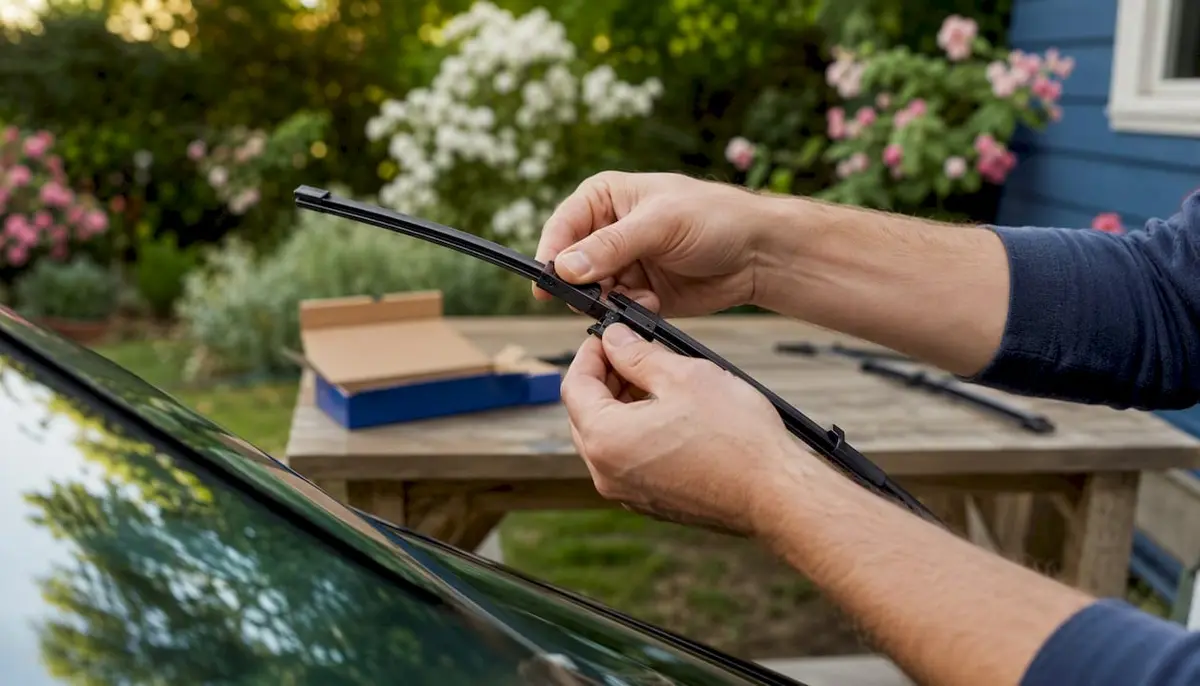
For most drivers, yes. A standard wiper blade swap takes 5–15 minutes per side and requires no tools beyond what comes in the box. The process is: lift the wiper arm, press the release tab on the old blade, slide it off, click the new blade onto the arm, and lower it back to the screen. Most modern blades come with preassembled adapters that eliminate the guesswork entirely.
Paying a mechanic to fit blades adds $15–$30 in labour for a job that genuinely does not need professional hands. The one exception is vehicles with unusual arm connections or concealed wiper systems (some European models), where a wrong-fit attempt can scratch the screen or damage the arm.
A simple DIY readiness check:
- Confirm your vehicle’s driver and passenger blade sizes (check your owner’s manual or use an online fitment tool)
- Verify the arm connector type before ordering
- Park on a flat surface with the ignition off
- Have a soft cloth ready to protect the screen if the arm springs back
Pro Tip: Blades with preassembled, vehicle-specific adapters reduce fitting time to under five minutes and almost eliminate the risk of a loose connection that causes juddering or streaking.
How long do wiper blades last in Australian conditions?
Standard rubber blades typically last 6–12 months in Australian conditions, while silicone blades generally last 12–24 months. The gap comes down to how each material handles UV radiation, heat, and coastal salt — all of which accelerate rubber degradation faster here than in cooler climates. Australian specialists consistently highlight corrosion resistance and UV-tolerant materials as non-negotiable for blades that will survive more than one summer.
Running the numbers makes the case for spending more upfront:
- Budget rubber at $20/pair, replaced every 8 months: roughly $30 per year
- Mid-range beam at $40/pair, lasting 15 months: roughly $32 per year
- Premium silicone at $70/pair, lasting 20 months: roughly $42 per year
The mid-range beam blade is the clearest value proposition: nearly identical annual cost to budget rubber, with noticeably better wet-weather performance and a longer replacement interval.
Silicone blades last significantly longer than standard rubber blades under UV and heat exposure, making them a genuinely competitive option over a full year in sunny Australian conditions.
Pro Tip: If your car parks outdoors in direct sun year-round, the lifespan advantage of a silicone or premium beam blade closes the price gap within the first replacement cycle.
How do you choose the right wiper blades for your vehicle?
Work through this checklist before you buy:
Selection checklist:
- Confirm driver and passenger blade sizes using your owner’s manual or a vehicle selector tool
- Check your arm connector type (hook, pin, side-pin, or bayonet)
- Match material to your climate: rubber for mild/garaged, silicone or premium beam for coastal, high-UV, or heavy-rain regions
- Decide your replacement interval preference: annual (budget rubber) or every 18–24 months (premium beam or silicone)
- Verify the seller offers a fitment guarantee or money-back option
- Confirm free shipping or calculate total delivered cost
Selection signals by driver profile:
- City driver, garaged overnight: mid-range beam blade, replace annually
- Highway driver, outdoor parking: premium beam or silicone, replace every 18 months
- Coastal driver (salt air, high humidity): silicone with corrosion-resistant frame, replace every 12–18 months
- Infrequent driver, tight budget: budget rubber frame, check condition every 6 months
Common mistakes to avoid: buying by length alone without checking the connector type; assuming the most expensive blade is always the safest choice; ignoring the rear wiper, which often uses a different size and connector entirely.
What should you check about warranties, returns, and shipping?
These factors change the real cost of a purchase more than most buyers account for.
- Warranty length: look for a minimum 12-month warranty. A blade that fails at month seven under a no-warranty policy costs you the full replacement price again.
- Returns window: a 30-day money-back or returns period gives you enough time to confirm fitment and performance in real conditions.
- Fitment guarantee: some sellers offer a specific promise that if the blade does not fit your vehicle as listed, they will replace or refund it. This is the most useful trust signal for online purchases.
- Shipping costs: free shipping Australia-wide removes a hidden cost that can add $10–$15 to a single-pair order. On a $20 budget pair, that is a 50–75% price increase before the blade even arrives.
GWC Wipers backs its products with a 30-day money-back guarantee and a 12-month warranty, with free shipping across Australia. For a single-pair order, that combination makes the delivered price genuinely comparable to in-store retail without the uncertainty of self-selecting the wrong size.
A fitment guarantee is the single most underrated trust signal when buying wiper blades online. Without it, a wrong-size order becomes a returns process that costs you time and sometimes postage.
Why cheap blades often cost more in the long run
Most drivers who buy the cheapest available blades are not making a bad decision — they are making an incomplete one. The $15 frame blade looks like a saving until you replace it twice in the time a $40 beam blade would have lasted once. In Queensland or Western Australia, where UV intensity and heat are extreme, rubber degrades faster still, compressing that replacement cycle further.
The other thing buyers underestimate is the cost of a poor wipe. Streaking and juddering are not just annoying — they reduce visibility in a downpour, which is precisely when you need the blade to perform. A blade that smears rather than clears is a safety issue, not just a maintenance inconvenience.
The mid-range beam blade at $35–$45 per pair is the recommendation that holds up across almost every Australian driving profile. It costs roughly the same per year as a budget blade, lasts longer, and performs reliably in the wet-season conditions that matter most.
GWC Wipers: purpose-built for Australian conditions
GWC Wipers designs and manufactures wiper blades specifically for the Australian market, covering fitment for Toyota, Mercedes-Benz, and thousands of other models. Every blade uses natural rubber construction with aerodynamic design and preassembled adapters, so fitting takes minutes rather than a trip to a mechanic. The vehicle selector tool confirms the exact driver and passenger sizes for your make, model, and year before you order.
Free shipping Australia-wide, a 30-day money-back guarantee, and a 12-month warranty mean the delivered price is the real price, with no hidden postage or fitment risk. Use the GWC Wipers vehicle selector to confirm your fitment and place your order today.
Sources
- Silicone vs Rubber Wiper Blades: Which Is Worth It? - Roof Rack World
- Windscreen Wipers Replacement | Wiper Blade Replacement | AutoGuru
- Australia and Oceania’s Vehicle Windscreen Wiper Market Report 2026 - Prices, Size, Forecast, and Companies
- How Much Should a Set of Windshield Wipers Cost in 2026?
FAQ
How much should a set of wiper blades cost in Australia?
Most Australian drivers should expect to pay $30–$50 per pair for a reliable mid-range beam blade, with budget options starting around $15–$25 and premium silicone blades reaching $55–$85 per pair.
How much does a single wiper blade replacement cost?
Per-blade replacement typically costs $15–$30, based on repair-guide estimates for the Australian market. Replacing both blades at once is generally better value and keeps wipe quality consistent across the screen.
What are the best wiper blades for Australian conditions?
Mid-range beam blades or silicone blades perform best in Australian conditions because they handle UV exposure, heat, and coastal humidity better than basic rubber frame blades. GWC Wipers offers vehicle-specific beam blades designed for Australian weather, backed by a 12-month warranty and free shipping.
Is it worth buying expensive wiper blades?
Premium silicone blades cost more upfront but last roughly 1.5–2× longer than standard rubber, making them cost-competitive on an annual basis, particularly for drivers in high-UV or coastal areas. For most drivers, a mid-range beam blade at $35–$45 per pair delivers the best balance of cost and performance.