
Must-have tools for car care: 12 essentials every DIYer needs
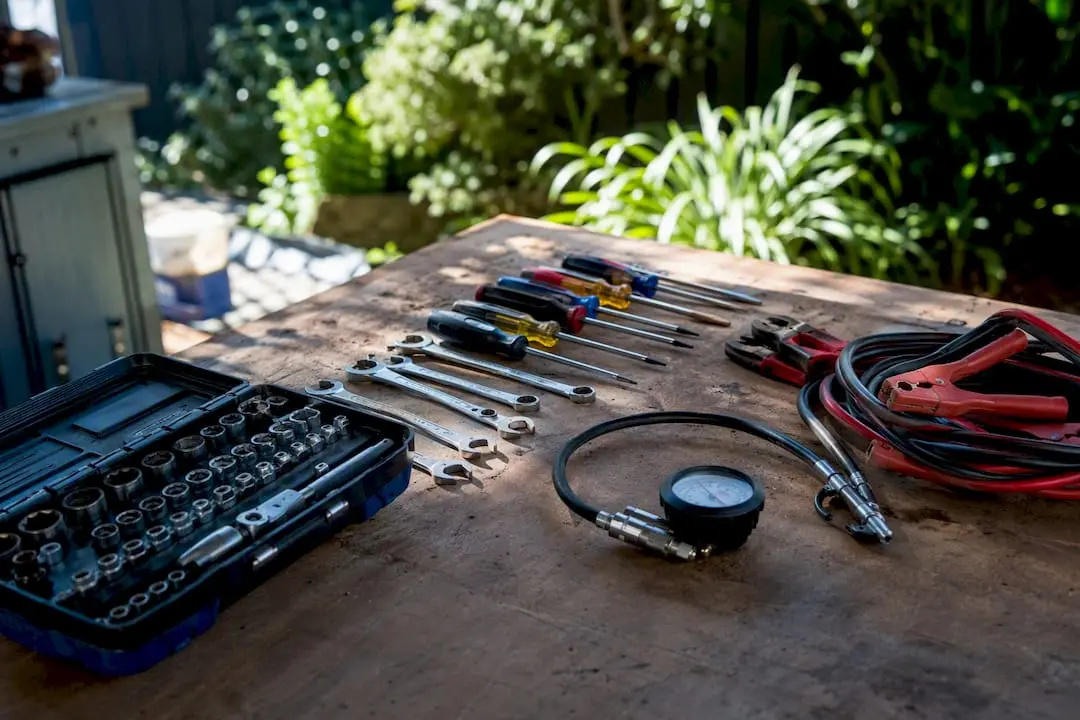
A well-stocked toolkit for routine car care and roadside emergencies runs to around 12 to 15 items: a jack and rated jack stands, lug wrench, socket and spanner set, screwdrivers, pliers, hex/Torx keys, a tyre pressure gauge and inflator, jumper cables or a jump starter, a torch, first-aid and hi-vis gear, and a handful of consumables like duct tape and a funnel. That is the whole shortlist. Everything else in this guide is detail on why each item earns its place and which ones to buy first.
Keep this split in mind before you spend a cent:
- Hand tools: metric socket set, combination spanners, screwdriver set, pliers, hex/Torx keys
- Tyre and wheel gear: jack, jack stands, lug wrench, tyre pressure gauge, portable inflator
- Battery and electrical: jumper cables or jump starter, multimeter, terminal cleaner
- Safety and emergency: hi-vis vest, warning triangle, first-aid kit, torch, fire extinguisher
- Consumables: funnel, drain pan, rags, duct tape, cable ties, washer fluid
If you’re building this from nothing, spend first on the safety gear and tyre-changing tools, then a decent socket set. A flat tyre or a dead battery on the side of the road will happen to you long before you need a torque wrench, and no diagnostic gadget matters if you can’t safely get the car off a jack.
Key Takeaways
A practical car care toolkit needs roughly 12 to 15 items, prioritised by safety and tyre readiness first, with quality hand tools and diagnostics added as budget allows.
| Point | Details |
|---|---|
| Buy safety and tyre gear first | Jack, rated stands, lug wrench, hi-vis vest and first-aid kit prevent the most common roadside risks. |
| Invest in a quality socket set | Chrome vanadium sockets with a lifetime warranty resist rounding fasteners and outlast cheap sets. |
| Add diagnostics gradually | A basic OBD-II reader covers most needs; upgrade to a full scanner only when chasing intermittent faults. |
| Store fluids sealed and labelled | Keep an inventory of consumables like washer fluid and coolant to avoid running short mid-job. |
| Replace wipers on schedule | Change blades roughly every six months or 10,000 km, or sooner if they streak or judder. |
Table of Contents
- Core hand tools every car owner should have
- Tyre and wheel tools for changing a tyre and topping up pressure
- Electrical and battery tools for jump-starts and basic checks
- Diagnostic and power tools worth adding as you upgrade
- Safety gear and roadside emergency items
- Consumables and small items that make repairs possible
- How to choose tool quality, and how to store what you buy
- Windscreen care: the tools that keep your view clear
- Why buying a few good tools beats buying a lot of cheap ones
- Sources
- FAQ
Core hand tools every car owner should have
Most of what you’ll ever do to a car, from swapping an air filter to tightening a loose panel, comes down to seven tools. Get these right and you’ve covered the bulk of routine maintenance before you buy anything else.
- Metric socket set (typically 8mm to 19mm, with a few smaller sizes for interior trim and electrical connections)
- Ratchet and extension bars to reach fasteners in tight engine bays
- Combination spanners in the same metric range, for bolts a socket can’t reach
- Screwdriver set, flat and Phillips head, plus a small precision set for electronics and interior clips
- Pliers, standard, needle-nose, and a pair of locking (Vice-Grip style) pliers
- Hex and Torx key set, since a growing number of trim panels and even some engine components use them
- Breaker bar for stubborn bolts that a standard ratchet won’t budge
Almost every car sold since the 1970s uses metric fasteners, so a metric-only set covers the vast majority of Australian-market vehicles. You don’t need imperial sizes unless you’re working on an older American import or specific aftermarket parts.
Buying cheap here is the single most common false economy in car care. A $20 socket set with soft chrome vanadium plating will round off bolt heads under real torque, and a rounded bolt head turns a five-minute job into a trip to a mechanic with an angle grinder. Spend the extra $40 to $60 on a mid-range branded set with a lifetime warranty and you’ll use the same sockets for a decade. This lines up with a starter-kit approach motoring guides recommend: a metric socket set, combination spanners, and a screwdriver set as the backbone of any home kit.
Pro Tip: Always match the socket or spanner size exactly to the fastener. A slightly loose fit is how knuckles get skinned and bolt heads get rounded, and it’s the single most preventable injury in a home garage.
Tyre and wheel tools for changing a tyre and topping up pressure
A flat tyre is the most common roadside failure you’ll face, and it’s also the easiest to prepare for. The core kit is small.
- Jack (a scissor jack is fine for occasional use; a floor jack is faster and more stable if you do this often)
- Rated jack stands, never rely on a jack alone to hold the car up while you work
- Lug wrench or wheel brace to loosen and tighten wheel nuts
- Wheel chocks to stop the car rolling, plus a pair of gloves
- Tyre pressure gauge for accurate checks (dash warning lights are not precise)
- Portable air compressor or inflator to top up pressure without a servo
- Tyre repair or plug kit and sealant for small punctures that don’t need a full tyre swap
A basic setup along these lines, jack, stands, lug wrench, gauge and inflator, covers almost every roadside tyre situation you’ll meet. For a confident DIYer, a full wheel change takes about 15 to 20 minutes start to finish; a simple plug repair on a punctured tread is often quicker, closer to 10 minutes once the wheel is off the ground.
Never work under a car supported only by a jack. Jack stands are rated to hold weight; jacks are only rated to lift it. That distinction is the difference between a flat tyre and a crushed hand.
Always change a tyre on flat, firm ground, well away from traffic if you can manage it. If you’re stopped on the shoulder in wet conditions, remember that other drivers need a longer following distance in rain, often a minimum four seconds instead of the usual three, so give yourself extra visibility and space before you start work.
Electrical and battery tools for jump-starts and basic checks
A dead battery is the second most common roadside headache after a flat tyre, and the tools to deal with it are compact.
- Jumper cables are cheap and reliable but need a second running car and someone who knows the correct order to connect them
- Portable jump starter is pricier but works solo, fits in a glovebox, and skips the risk of connecting cables to the wrong terminal
- Multimeter for checking battery voltage and diagnosing minor electrical faults before they become expensive
- Battery terminal cleaner and a pair of insulated pliers for corrosion buildup
- Nitrile gloves to keep battery acid and corrosion off your skin
Car batteries contain sulphuric acid and can produce hydrogen gas, which is why sparking near the terminals is a real risk during a jump-start, not just a theoretical one.
Connect jumper cables in the correct sequence, positive to positive first, negative to a grounded metal point away from the battery, and never lean over the battery while it’s connected. If a battery looks swollen, is leaking, or the car won’t hold charge even after jumping it, that’s a job for a professional rather than a driveway fix.
Diagnostic and power tools worth adding as you upgrade
Once the basics are covered, the next tier of tools is about speed and precision rather than survival. Start with a basic OBD-II code reader (under $50 gets you fault-code readouts on most cars built after 1996) and a cordless drill/driver for general jobs.
When you’re ready to spend more, a click-type torque wrench stops you over-tightening wheel nuts or engine bolts, an impact driver speeds up wheel changes, and a professional-grade OBD scanner reads live sensor data rather than just fault codes.
Modern cars increasingly blend mechanical and electronic systems, which is why a serious home toolkit now needs both wrenches and a multimeter or OBD-II scanner side by side.
A basic reader is enough if you just want to clear a dash warning light or check what triggered it. A full scanner earns its price once you’re chasing intermittent faults or want live data instead of a generic code. Keep cordless tool batteries charged but not left on the charger permanently, most lithium-ion packs last longer stored at partial charge than kept at 100%.
Safety gear and roadside emergency items
Some items in a car toolkit exist purely so a bad day doesn’t turn into a dangerous one.
- Hi-vis vest to wear the moment you step out on a roadside
- Warning triangle or hazard lights placed well behind the car
- First-aid kit, small dry-chemical fire extinguisher, and a window breaker/seatbelt cutter
- Tow strap or rope, duct tape, and cable ties for temporary fixes that get you home
A visible driver is a safer driver. Standing at the roadside without hi-vis or a warning triangle in low light or heavy rain is one of the most avoidable risks in car ownership.
If you’re stopped roadside in rain, other traffic needs more room to react, which is part of why authorities recommend a longer following distance in wet conditions. Some states have specific requirements around warning triangles or fire extinguishers for certain vehicle classes, so it’s worth checking your local road authority’s rules rather than assuming.
Consumables and small items that make repairs possible
The tools get the attention, but half of any real repair depends on the small stuff sitting in a box nearby.
- Funnel and drain pan for fluid changes
- Rags or microfibre cloths, always more than you think you’ll need
- Spare fuses, zip ties, assorted washers
- Basic lubricant (a penetrating oil for stuck fasteners) and brake cleaner
- Washer fluid and a small bottle of coolant for emergency top-ups
Keep washer fluid, a torch, and basic first-aid gear in the car itself. Heavier consumables like brake cleaner, spare fuses, and drain pans live in the garage until you need them.
Pro Tip: Store fluids in their original, clearly labelled containers, upright, away from heat, and keep a simple written inventory taped inside the toolbox lid so you know what’s running low before you’re halfway through a job.
How to choose tool quality, and how to store what you buy
Buying in the right order saves money and stops you duplicating gear later.
- Safety items and tyre tools (jack, stands, lug wrench, hi-vis, first-aid kit)
- Core hand tools (socket set, spanners, screwdrivers, pliers)
- Diagnostics and power tools (OBD-II reader, torque wrench, cordless drill) as budget allows
When judging quality, look at the material (chrome vanadium steel resists wear better than cheap alloys), the drive size (3/8 inch sockets suit most car work, 1/2 inch for higher torque jobs like wheel nuts), and the torque range on any torque wrench you buy. A lifetime warranty on hand tools is a strong signal the maker trusts their own product.
- Store sockets and spanners in a labelled case, not loose in a bag, so a missing size is obvious at a glance
- Wipe tools dry after use and apply a light oil coat to prevent rust, especially in coastal areas
- Get torque wrenches calibrated periodically if you use one often, accuracy drifts with heavy use
- Keep cordless tool batteries at partial charge for storage, and never store them fully flat
Windscreen care: the tools that keep your view clear
Good visibility depends on a smaller kit than most people expect: a decent set of wiper blades, top-up washer fluid, a squeegee, a soft brush for dust and grit, and microfibre cloths for the glass itself — learn the streak-free method for UK owners to keep your car glass perfectly clear. Together they handle the two things that ruin a clear view: dirt building up on the outside and streaking wipers making it worse.
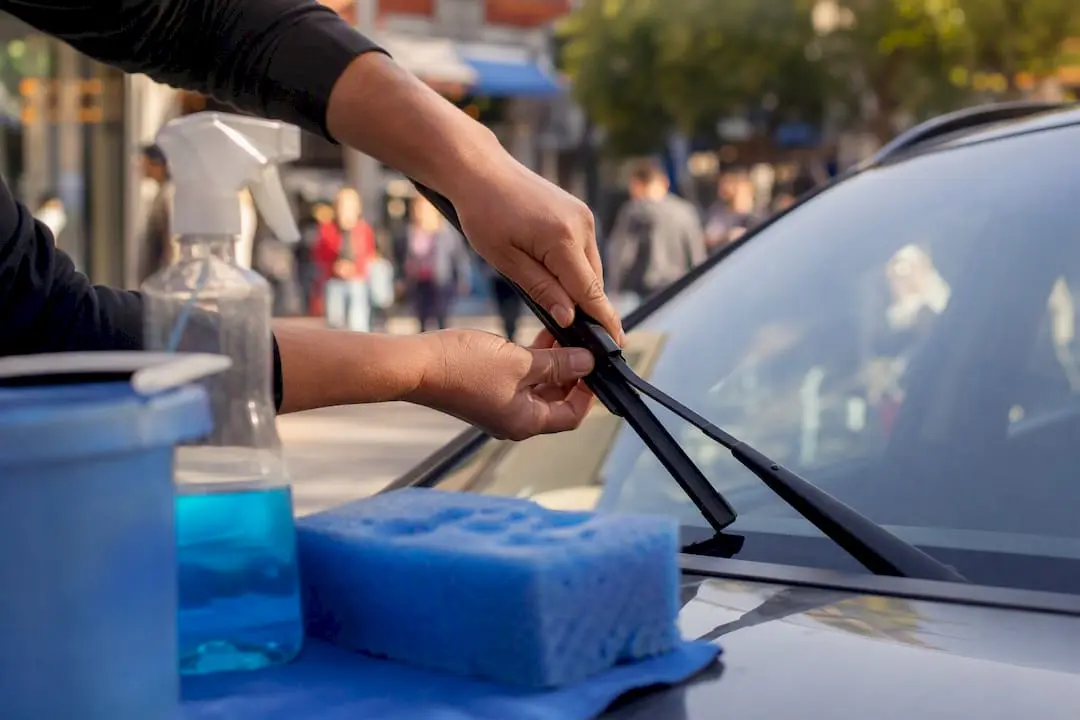
Replacing a wiper blade takes about two minutes once you know the release clip on your specific model, lift the arm, press the tab, slide the old blade off, and click the new one into place. As a rule, replace wiper blades roughly every six months or 10,000 km, or sooner if you notice streaking, judder, or squealing across the glass. GWC Wipers builds its fitment guides around exact make, model, and year, so there’s no guesswork on clip type or blade length.
Pro Tip: If your windscreen fogs up on a cold morning, run the air conditioner rather than just the heater. AC pulls moisture out of the cabin air and clears condensation faster than warm air alone.
Why buying a few good tools beats buying a lot of cheap ones
Most of the value in a car toolkit sits in a small number of items used constantly, not the dozens used once a year. A quality socket set, a reliable jack and stands, and a torque wrench that actually holds calibration will outlast three cheap versions of the same thing, and they’ll never let you down halfway through a job.
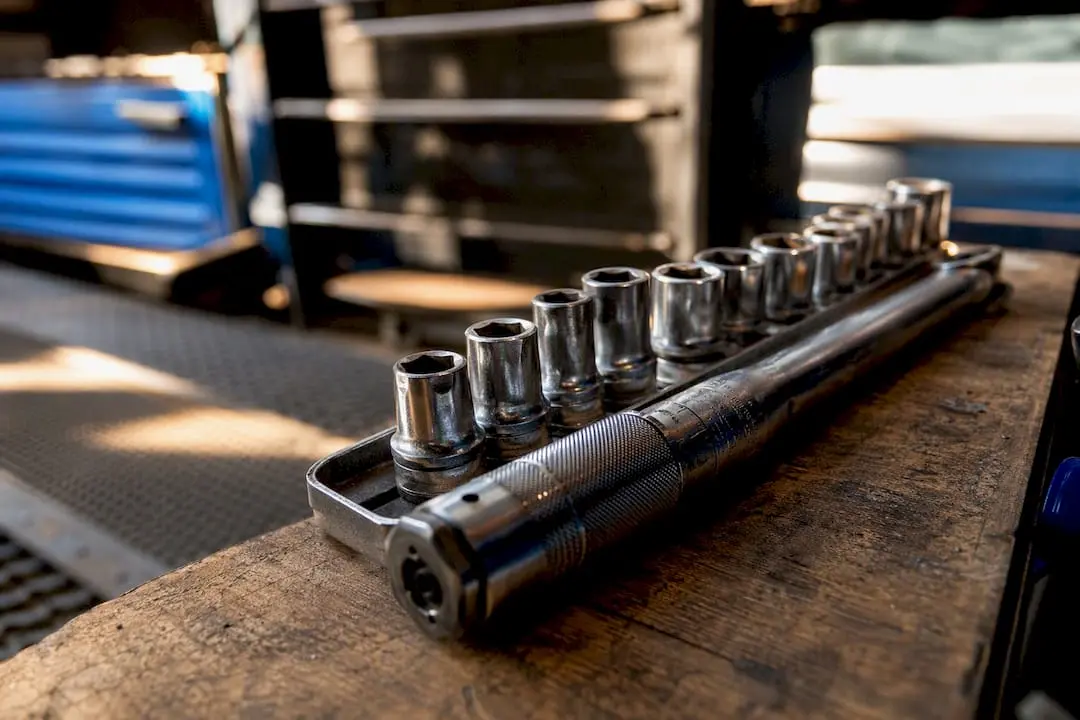
Build the kit in stages rather than buying everything in one trip. Start with safety and tyre gear, add hand tools next, then let diagnostics and power tools follow as the jobs you’re tackling get more ambitious. A toolkit built this way tends to be better matched to what you actually do with your car, rather than what a bundle deal happened to include.
Sources
Always cross-check torque specs and part numbers against your owner’s manual, and confirm any equipment requirements against your local road authority’s rules before a long trip.
FAQ
What are the most important tools for car maintenance?
A metric socket set, combination spanners, a jack with rated stands, a tyre pressure gauge, and jumper cables or a jump starter cover the majority of routine maintenance and roadside issues.
What tools do I need to maintain my car?
Beyond the core hand tools, you’ll want a portable inflator, a basic OBD-II code reader, screwdrivers, pliers, and consumables like a funnel, rags, and washer fluid.
What are the most important tools to keep in your car?
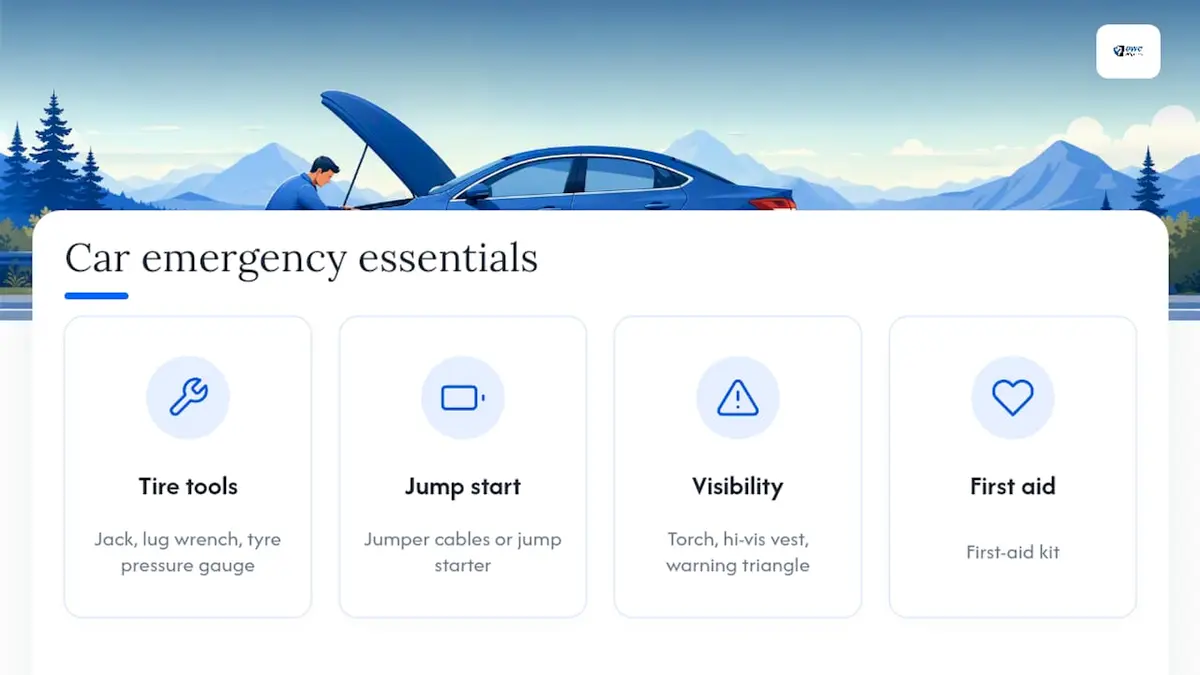
Keep a jack, lug wrench, tyre pressure gauge, jumper cables or jump starter, a torch, first-aid kit, hi-vis vest, and warning triangle in the car itself, not just the garage.
What tools are essential for a car when travelling long distances?
Add a tow strap, duct tape, spare fuses, and extra washer fluid to your usual kit, and check tyre condition and battery health before you leave, especially if wet weather is forecast.
How often should I replace my wiper blades?
Replace wiper blades roughly every six months or 10,000 km, or sooner if you notice streaking, judder, or reduced clearing on the windscreen.