
Tram wiper types, maintenance, and buying guide
TL;DR:
- Tram wipers are specialized, safety-critical components that differ significantly from automotive wipers in size, materials, and design. Regular maintenance, especially in Australian conditions, is essential to prevent failure, ensure visibility, and improve safety. Advanced technologies like beam blades and hydrophobic coatings are shaping more reliable and durable tram wiper systems.
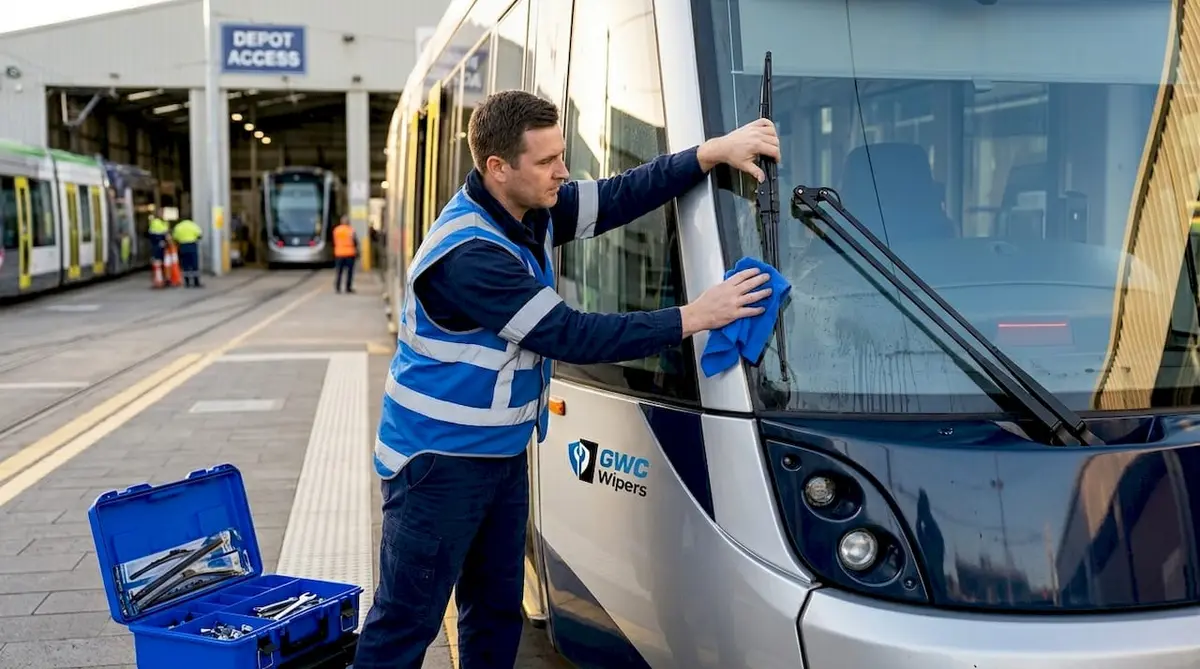
Most commuters barely notice the tram wiper sweeping across the windscreen in front of them. It’s easy to assume it’s a simple rubber strip doing a simple job. But a tram wiper is a precision component operating under conditions far more demanding than those faced by a standard car wiper, and when it fails, the consequences reach well beyond a smeared windscreen.
Table of Contents
- Key takeaways
- Tram wiper types and how they work
- Tram maintenance tips for wiper systems
- Choosing and buying the right tram wiper
- Common misconceptions about tram wipers
- Innovations shaping tram wiper technology
- My perspective on tram wipers and commuter safety
- Get reliable wiper solutions from GWC Wipers
- FAQ
Key takeaways
| Point | Details |
|---|---|
| Tram wipers are specialised | They differ significantly from automotive wipers in size, mounting, and blade material requirements. |
| Maintenance prevents failures | Regular cleaning and fastener checks stop vibration-related wear before it becomes a safety issue. |
| Weather drives your choice | Australian conditions including dust, UV exposure, and heavy rain require premium blade materials. |
| Compatibility matters | Always match the wiper to the tram model and windscreen shape before purchasing. |
| Technology is advancing | Beam blades, sensor integration, and hydrophobic coatings are reshaping tram wiper performance. |
Tram wiper types and how they work
Not all railway vehicle wipers are built the same, and tram wipers sit in their own distinct category. Understanding the differences helps you appreciate why operators and maintenance crews treat them as safety-critical components rather than consumable afterthoughts.
Blade types used on trams
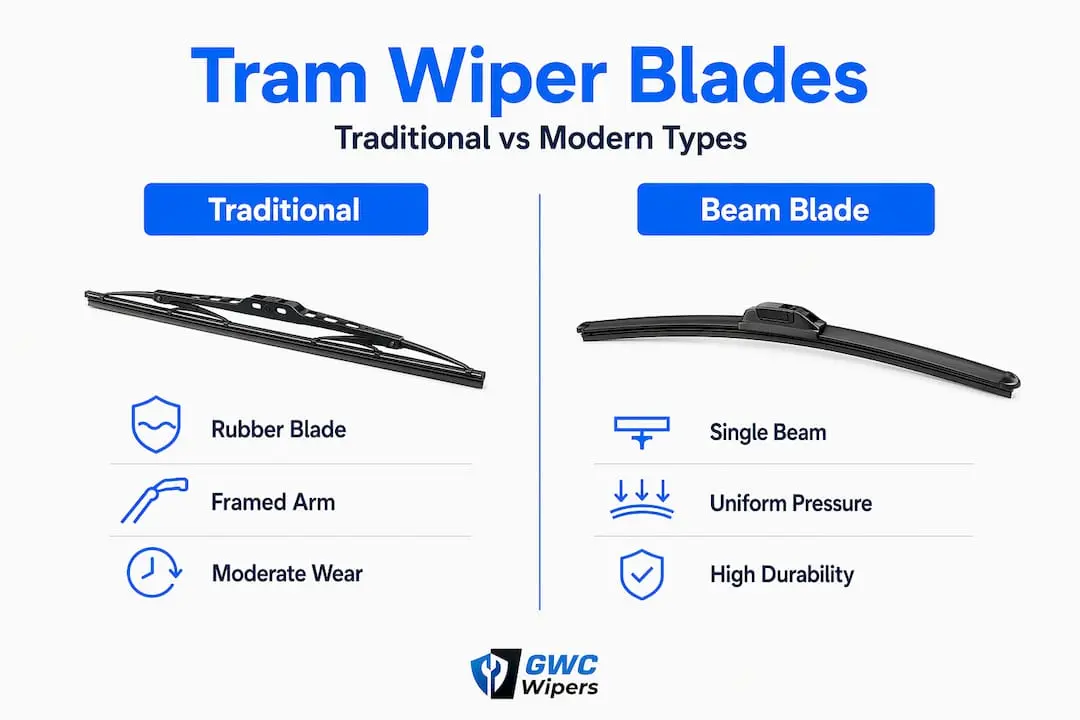
The three main blade designs found on trams are traditional rubber blades, hybrid blades, and beam blades. Traditional rubber blades use a metal frame to hold a rubber strip against the windscreen. They are cost-effective and widely available, but the exposed frame can collect grime and corrode in coastal or dusty environments. Hybrid blades combine a protective shell with an internal frame, offering better debris resistance while maintaining consistent pressure across the blade. Beam blades, which use a single curved piece of tensioned material without any external frame, deliver the most uniform contact across large curved windscreens and are increasingly favoured in modern tram fleets.
Tram windscreens are considerably larger than those on passenger cars, which means the wiper arm and blade must generate higher and more evenly distributed pressure. Mounting systems on trams are also purpose-built, with heavier pivot assemblies and reinforced linkages designed to handle the vibration and load cycles of continuous urban operation.
How tram wipers differ from other vehicle wipers
It’s worth understanding how tram wipers compare to what you’d find on a car or a freight train. Automotive wipers are engineered for lighter loads and shorter operational cycles. Train wipers, particularly on high-speed rail, often use pneumatic or electrically heated systems to handle extreme conditions at speed. Tram wipers sit between these two worlds. They operate at lower speeds but in stop-start urban environments with frequent exposure to road spray, dust, and varying rainfall intensity.
One distinction worth clarifying: in tram infrastructure, the word “wiper” sometimes refers to rail-sweeping rotary broom equipment used to clear debris from tracks, with precise preload settings of 10 to 20 mm and specific angles to avoid excessive wear. This is entirely separate from the windscreen wiper system on the tram cab itself.
Comparison of tram wiper blade types
| Blade type | Frame design | Best suited for | Durability in Australian conditions |
|---|---|---|---|
| Traditional rubber | Metal frame | Older tram models | Moderate; frame prone to corrosion |
| Hybrid | Protective shell with frame | Mixed urban environments | Good; resists debris and dust |
| Beam | Frameless, tensioned | Modern trams with curved screens | Excellent; uniform pressure, no frame corrosion |
Tram maintenance tips for wiper systems
Wiper maintenance on trams is not glamorous work, but it is some of the most consequential. A blade that streaks or skips at the wrong moment can compromise a driver’s ability to see a pedestrian, a signal, or another vehicle at an intersection. The good news is that most failures are preventable with consistent, straightforward care.
Daily and monthly checks
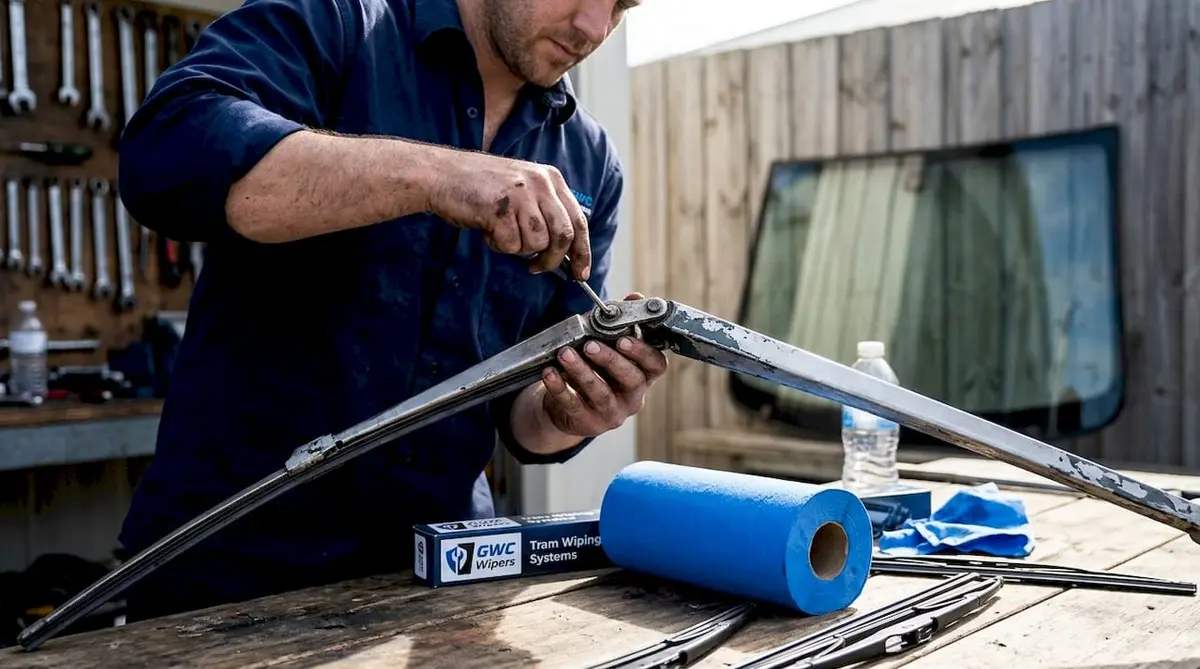
Daily maintenance should include a visual inspection of the blade for tears, hardening, or uneven wear. The wiper arm should sit flush against the windscreen when at rest, and the washer nozzles should spray cleanly without blockage. Monthly checks go deeper. Washing blades with mild soap and inspecting all fasteners for tightness should be part of every scheduled service.
Mechanical vibration is one of the most underestimated causes of wiper failure in rail vehicles. Vibration can loosen bolts, nuts, and linkages over time, leading to arm misalignment or complete detachment. On a tram running multiple routes per day, this process accelerates quickly.
Pro Tip: When inspecting a tram wiper arm, apply gentle upward pressure to test for play in the pivot joint. Any noticeable movement beyond a few millimetres suggests the fasteners need tightening or the pivot assembly needs replacement before the next service run.
Australian environmental challenges
Australia’s climate creates conditions that accelerate wiper wear faster than many other parts of the world. UV radiation degrades rubber compounds, making blades brittle and prone to cracking even when they appear visually intact. Dust from dry spells and construction zones in cities like Melbourne, Adelaide, and Perth coats blade edges and acts as an abrasive during each wipe cycle. Coastal salt air in cities like Sydney and Brisbane corrodes metal frame components on traditional blades.
A practical maintenance routine for Australian tram operators should include the following:
- Inspect blade rubber for cracking, hardening, or feathering after every 500 service hours
- Clean blade edges with a damp cloth before and after dusty periods
- Check wiper arm spring tension monthly to confirm consistent pressure
- Replace blade rubber separately when the metal frame remains intact, as rubber blade feathers can be replaced without discarding the whole assembly
- Lubricate pivot points with a suitable grease during scheduled servicing
Choosing and buying the right tram wiper
Selecting a tram wiper is not as straightforward as picking one off a shelf. There are several factors that determine whether a blade will perform reliably across the range of conditions your local tram network encounters.
Compatibility and windscreen fit
The first consideration is compatibility with the specific tram model and windscreen geometry. Tram windscreens vary considerably between manufacturers and generations of rolling stock. A blade that doesn’t match the curvature of the screen will leave dry patches at the edges and create smearing in the centre. Always confirm the correct arm attachment type, blade length, and curvature specification before ordering.
Weather and material considerations
Australian weather patterns should directly influence your material choice. Premium natural rubber blades with corrosion-resistant metalware offer improved durability for vehicles operating in variable climates. For trams running in high-UV environments, silicone-infused rubber compounds resist hardening significantly longer than standard natural rubber. Beam blades are particularly effective in heavy rainfall because their frameless design prevents water pooling and maintains consistent contact pressure throughout the wipe cycle.
Key factors to assess when purchasing a tram wiper:
- Blade length and arm attachment compatibility with your tram model
- Rubber compound type (natural rubber, silicone blend, or synthetic) matched to local climate
- Frame material (frameless beam, coated metal, or polymer shell) suited to coastal or dusty environments
- Warranty coverage and availability of replacement rubber inserts
- Supplier’s ability to provide after-sale technical support and spare parts
Pro Tip: Before committing to a supplier, ask specifically about replacement part availability for the blade inserts. A premium blade with no local supply chain for its rubber refills will cost you more in the long run than a slightly less advanced product with reliable local support.
Where to buy quality tram wipers
Look for suppliers who specialise in high-performance wiper systems and can demonstrate knowledge of rail vehicle requirements. Certifications, warranty periods, and clear product specifications are reliable indicators of a trustworthy supplier. The wiper market is valued at $7.62 billion in 2026 globally, with an 8.44% compound annual growth rate, which means more specialised and high-quality options are reaching the Australian market than ever before.
Common misconceptions about tram wipers
There’s a persistent assumption that any wiper blade rated for a large vehicle will perform adequately on a tram. This is not accurate, and the misconception carries real safety implications.
Why “one size fits all” thinking fails
Tram wipers must meet specific operational and safety standards that go beyond what automotive wipers are designed for. Wiper system integration is critical for compliance with Australian rail safety standards overseen by the Office of the National Rail Safety Regulator (ONRSR). A wiper that isn’t validated as part of the tram’s safety system doesn’t just risk poor visibility. It risks non-compliance with national rail regulations.
“Wiper system performance directly affects tram driver visibility and overall passenger safety, particularly in wet or dusty conditions common in Australian cities.”
Common misconceptions and the realities that correct them:
- Misconception: All wiper blades perform the same in rain. Reality: Blade profile, rubber hardness, and arm pressure all affect streak-free performance in heavy rain.
- Misconception: Wiper failure is obvious. Reality: Gradual degradation from UV exposure or vibration-loosened fasteners can go unnoticed until a critical moment.
- Misconception: Vandalism only affects aesthetics. Reality: Deliberate damage to wiper arms or blades creates immediate safety risks and requires prompt replacement before the tram returns to service.
- Misconception: Track sweeping equipment and windscreen wipers share maintenance requirements. Reality: These are entirely separate systems with different specifications and servicing intervals.
Neglecting wiper maintenance also has downstream effects on braking safety. Reduced driver visibility in wet conditions affects reaction times, which directly impacts the tram’s ability to stop within safe distances at intersections and pedestrian crossings.
Innovations shaping tram wiper technology
The tram wiper is not a static product. Across the global rail sector, wiper technology is advancing at a pace that will change what Australian commuters experience over the next decade.
-
Beam blade adoption: Frameless beam blades are replacing traditional designs in modern tram fleets because they deliver better coverage on curved screens and resist clogging in dusty or wet conditions. High-performance wiper systems increasingly incorporate beam blade technology alongside rigorous safety validation.
-
Sensor-integrated maintenance: Rail operators in Australia are increasingly adopting data-driven maintenance regimes that monitor safety-critical systems including wipers. Sensors can detect arm pressure loss or blade degradation before a failure occurs, reducing unplanned downtime.
-
Hydrophobic windscreen coatings: When applied to tram windscreens, hydrophobic treatments cause water to bead and roll off at low speeds, reducing the workload on the wiper blade and extending its service life. These coatings work best when paired with high-quality beam or hybrid blades.
-
Advanced rubber compounds: Material science improvements are producing rubber blends that resist UV degradation and maintain flexibility across a wider temperature range, directly addressing the challenges of Australian summers and alpine conditions in regional areas.
The global wiper market is projected to reach $14.58 billion by 2035, and much of that growth is being driven by demand for specialised solutions in commercial and rail applications. Australian tram networks stand to benefit significantly from these advances as procurement cycles bring newer rolling stock into service.
My perspective on tram wipers and commuter safety
I’ve spent years looking closely at how vehicle safety systems are maintained, and tram wipers consistently receive less attention than they deserve. In public discussions about tram safety, the conversation almost always gravitates toward braking, track condition, or signalling. The wiper barely rates a mention.
What I’ve noticed, particularly during Melbourne’s unpredictable autumn downpours and Adelaide’s dust-laden northerlies, is that the difference between a well-maintained tram wiper and a neglected one is visible from the passenger cabin. You can see the driver leaning forward, adjusting their line of sight, compensating for a blade that’s leaving a greasy arc across the screen. That’s not a minor inconvenience. That’s a safety gap.
My experience tells me that reactive replacement is far more costly than a disciplined maintenance schedule. Operators who wait for a blade to fail before replacing it inevitably do so at the worst possible time, often mid-service in adverse weather. The practical value of checking blade integrity and fastener tightness on a regular cycle is enormous compared to the cost of a replacement blade.
I’d also encourage commuters to advocate for transparency in tram maintenance records. You have every right to know that the vehicle carrying you through peak-hour rain has been properly serviced. The local context matters here. Australian cities face a genuinely demanding combination of UV exposure, dust, and intense seasonal rainfall that puts wiper systems under pressure that operators in milder climates simply don’t encounter.
— Faisal
Get reliable wiper solutions from GWC Wipers
If reading this has prompted you to think more carefully about wiper quality, whether for a tram fleet or your own vehicle, GWC Wipers is worth your attention.
GWC Wipers is an Australian-based supplier specialising in premium wiper blades built for local conditions. Their range includes premium wiper blades with natural rubber compounds, corrosion-resistant metalware, and EZ-Lock connectors designed for reliable performance across diverse Australian climates. For fleet operators and commuters alike, GWC Wipers offers free shipping across Australia, a 12-month warranty, and a 30-day money-back guarantee. Their Ford wiper blades range demonstrates the same commitment to durability and fit accuracy. If you’re ready to move from reactive replacement to proactive maintenance, GWC Wipers provides the product quality and local support to make that shift straightforward.
FAQ
What is a tram wiper and how does it differ from a car wiper?
A tram wiper is a purpose-built windscreen wiper system designed for the larger windscreens, heavier vibration loads, and continuous operational cycles of tram vehicles. Unlike automotive wipers, tram wipers must meet rail safety compliance standards and are typically available in traditional rubber, hybrid, or beam blade designs suited to the specific geometry of tram cabs.
How often should tram wiper blades be replaced?
Tram wiper blades should be inspected after every 500 service hours and replaced when the rubber shows cracking, hardening, or feathering. In Australian conditions with high UV exposure and dust, blades may degrade faster than in milder climates, making more frequent inspection advisable.
Can the rubber insert be replaced without changing the whole blade?
Yes. When the metal or polymer frame remains structurally intact, the rubber blade feathers can be replaced separately, which extends the life of the assembly and reduces maintenance costs without compromising performance.
What makes beam blades better for trams in heavy rain?
Beam blades use a single tensioned piece of material without an external frame, which delivers uniform pressure across the full length of the blade. This design prevents water pooling, resists clogging from debris, and maintains consistent contact on curved tram windscreens during heavy rainfall.
Are tram wipers covered by Australian rail safety regulations?
Yes. Wiper system integration is validated as part of compliance with Australian rail safety standards overseen by the Office of the National Rail Safety Regulator (ONRSR). A wiper that is not properly specified or maintained can constitute a non-compliance issue, not just a performance problem.