
Diagnose in 5 Minutes: Washer Fluid or Wipers for Australian Drivers
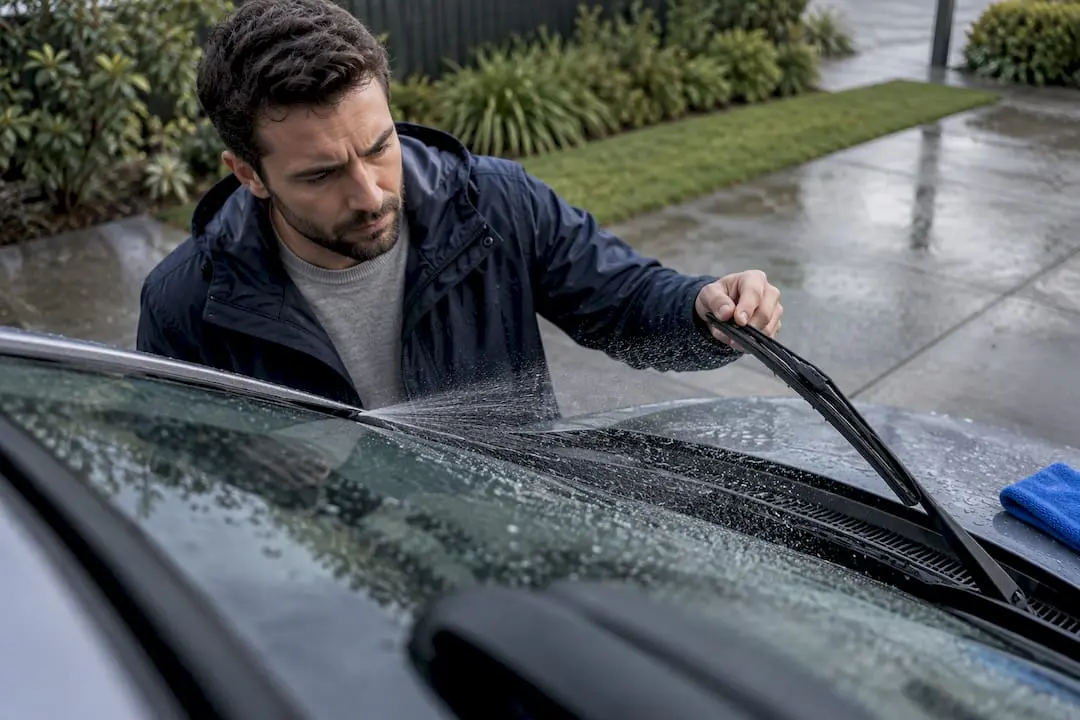
If your wipers streak, chatter or skip across the glass, the rubber is worn and needs replacing. If the arms move but nothing sprays, or the spray is weak and patchy, the fault sits with the fluid or the jets, not the blades. Washer fluid cleans road grime; it can’t restore rubber that’s already hardened or cracked.
TL;DR:
- Worn wiper blades show visible cracks, tears, or missing sections and produce streaks, skips, or chatter even after cleaning the glass.
- Washer fluid issues are often linked to empty reservoirs or clogged jets, not the blades, especially when spray patterns are uneven or weak.
- Replacing blades with the correct size and fit for your vehicle, using preassembled adapters, ensures proper sealing and performance.
- Cleaning the rubber edge and glass can temporarily restore performance if streaks only recently appeared, but hardened rubber needs replacement.
- Wiper blades should typically be replaced every six to twelve months, especially in harsh climates or heavy use, to comply with safety standards.
Table of Contents
- Quick checks to tell blade wear from a washer fault
- How to top up washer fluid and choose the right one
- When worn wiper blades need replacing
- Cleaning and quick fixes that can restore performance
- Choosing the right replacement blades without guesswork
- Why the fluid-versus-blade question gets overcomplicated
- Get the right blades fitted with no guesswork
- Sources
- FAQ
Quick checks to tell blade wear from a washer fault
You can pin down the cause in under five minutes without any tools. Start the engine, run the washers, and watch what happens before you touch anything under the bonnet.
- Run the wipers dry first, then with washer fluid, and compare the wipe: if streaking or a squeaking chatter shows up both times, the blades are worn.
- Look closely at the rubber edge for cracking, curling, splitting or missing chunks, which are visible signs of a blade that has hardened past its useful life.
- Pop the bonnet and check the washer reservoir level, then trigger the washers again to see whether the spray pattern reaches the glass evenly.
- Note whether the spray favours one side of the windscreen, which usually points to a blocked or misaligned nozzle rather than an empty tank.
The symptom tells you where to look. According to TYREPLUS, streaking, chatter or skipping usually means the rubber edge has hardened or been damaged, and washer fluid won’t fix that. A weak or absent spray, on the other hand, is more often an empty reservoir or a clogged jet than a blade problem, so there’s no need to buy new blades if the arms are moving cleanly and it’s only the spray that’s letting you down.
How to top up washer fluid and choose the right one
Topping up is the easier fix, and it’s worth doing properly rather than guessing. Modern cars increasingly rely on clear washer jets to keep forward-facing cameras and sensors clean, so this isn’t just about a clear windscreen anymore, according to RACV.
- Find the reservoir under the bonnet, usually marked with a windscreen and water-droplet symbol.
- Check the fill line and top up with a funnel to avoid spilling fluid on the engine bay.
- Choose a purpose-made automotive washer fluid: all-season blends for general use, bug-removal formulas for country driving, or an antifreeze-rated fluid if you’re in a cold climate prone to frost.
- If using a concentrate, dilute it exactly as directed; too weak and it won’t clean, too strong and it can streak.
- In an emergency, plain tap water is an acceptable short-term substitute, but never use household detergents or ammonia-based glass cleaners, which can damage seals and paintwork.
Pro Tip: Keep a small bottle of proper washer fluid in the boot so you’re never tempted to top up with whatever’s on hand.
When worn wiper blades need replacing
Some symptoms mean the blade itself is done, and no amount of fluid or cleaning will fix them. Persistent streaking after cleaning, skipping across dry patches, a squeal or chatter, and rubber that’s cracked, frayed or missing sections are all signs to stop troubleshooting and start shopping.
- Cracked, hardened or torn rubber that no longer sits flush against the glass.
- Streaks that return within a wipe or two, even after cleaning the blade and glass.
- Skipping or hopping instead of a smooth, continuous sweep.
- A rhythmic squeak or chatter that wasn’t there a few months ago.
Most guidance recommends replacing wiper blades every six to 12 months, with more frequent swaps in harsher climates or under heavy use, according to RACQ. That interval matters beyond comfort. Under the Australian Light Vehicle Standards Rules 2015, a vehicle must have operational wipers and washers that give the driver an adequate view from the normal driving position, and cracked or hardened wipers are a listed cause for rejection at inspection. Before buying anything, run the dry and wet wiper test from the checklist above one more time. If the wipe is still uneven after a clean glass and a topped-up reservoir, the blades have failed, not the fluid.
Cleaning and quick fixes that can restore performance
Before you commit to new blades, a proper clean sometimes solves the problem, particularly if the streaking only started recently. Wipe the rubber edge with a cloth dampened in washer fluid or diluted glass cleaner, then clean the glass itself, since grime on the windscreen can mimic a failing blade.
- Wipe the blade edge and the glass separately, since dirt on either surface causes streaking on its own.
- Clear a blocked jet with a fine needle inserted gently into the nozzle hole, working from the same angle the spray should exit.
- Stop and seek professional help if the jets are part of an integrated heated or camera-linked washer system, since forcing them can misalign the setup.
- Check blades visually once a month and give the whole system a proper inspection before winter.
Pro Tip: If a clean glass and a cleared jet still leave streaks, the rubber compound has hardened and a wipe-down won’t bring it back.
Choosing the right replacement blades without guesswork
Once you’ve confirmed it’s the blades, fitment is the next hurdle. A vehicle selector that matches blades to your exact make, model and year removes the guesswork of measuring arm lengths or matching mounting types yourself, and it’s the difference between a blade that seats properly and one that skips or scratches the glass.
- Use a size and fitment tool rather than guessing from the old blade’s length, since mounting types vary even within the same model range.
- Favour blades with preassembled adapters, since they cut down on fitting errors during a driveway swap.
- Check for an aerodynamic profile and quality rubber compound, both of which affect how well the blade holds the glass at speed.
- Confirm the warranty terms before buying, since a blade that fails early should be covered.
The wiper blades hub lets you search by vehicle and see the matching options straight away. If you’re replacing blades on a dual-cab like the Toyota Hilux, the model-specific page shows the exact fitment for your year range rather than a generic universal size.
Why the fluid-versus-blade question gets overcomplicated
Most advice on this topic treats washer fluid and wiper blades as one maintenance task, when they’re really two separate systems that happen to share a windscreen. That framing leads drivers to buy a fluid additive when the rubber has already hardened, or to replace blades when the real fault is a blocked jet that a five-minute clean would have fixed.
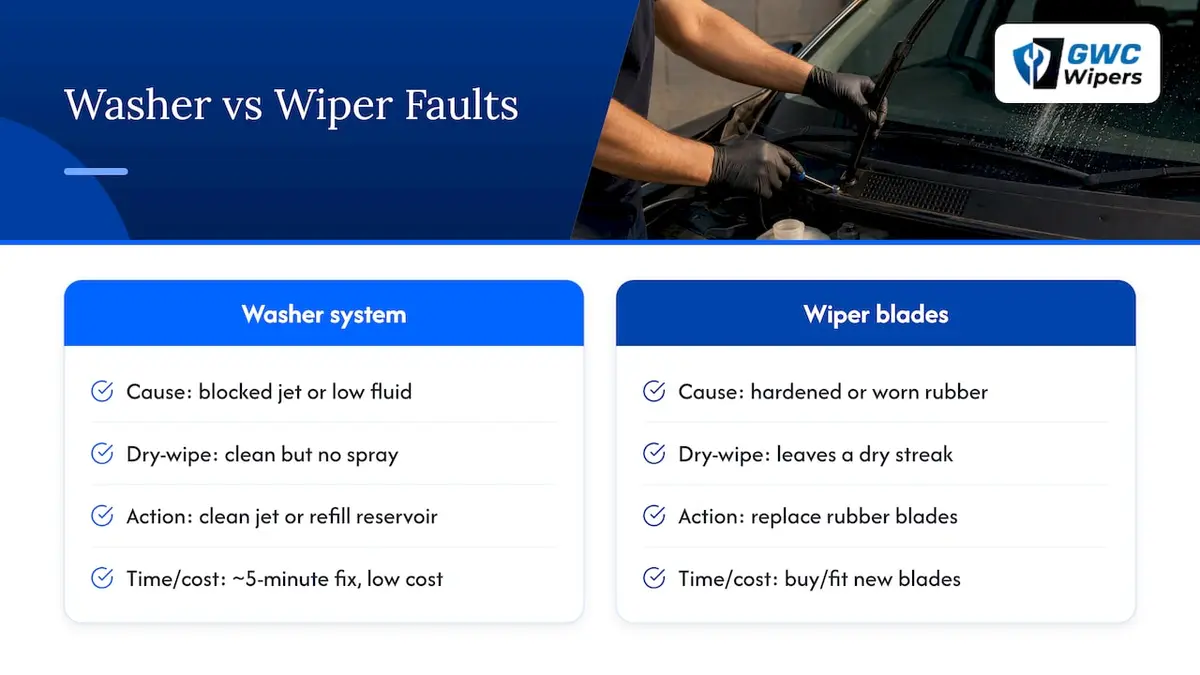
The overlooked point is that the dry-wipe test, run before you touch the reservoir or the blade, tells you almost everything. A dry streak means rubber wear. A dry wipe that’s clean but no spray appears means the fluid system. Skipping that one check is why so many drivers replace blades that were fine, or top up fluid that was never the problem.
Prioritise the diagnosis over the purchase. It costs nothing and takes less time than reading a product page.
— Faisal
Get the right blades fitted with no guesswork
If your dry-wipe test points to worn rubber, the fastest fix is matching new blades to your exact vehicle rather than grabbing a generic size off a shelf.
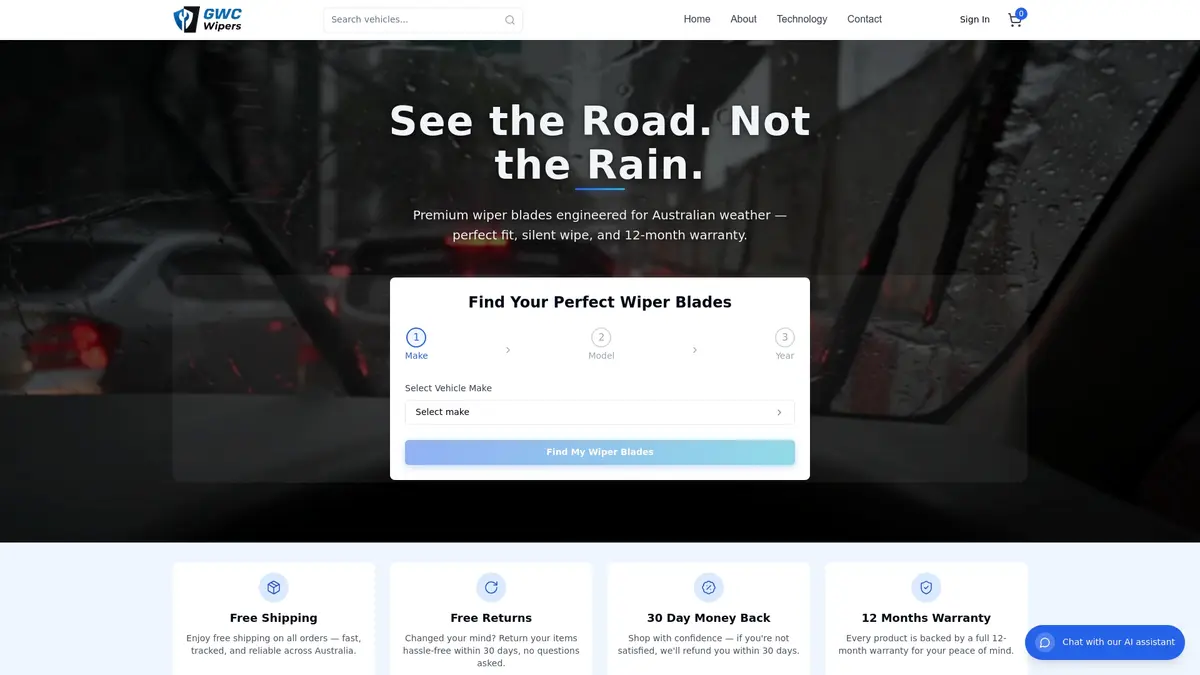
- Search by make, model and year on the wiper blades hub to see the Perfect Fit options for your car.
- Blades arrive with preassembled adapters, so fitting is a tool-free driveway job.
- Check the warranty terms before buying, since a blade that fails early should be covered.
Start at the wiper blades hub and find the set built for your vehicle.
Sources
- Wipers Service I TYREPLUS Australia
- Australian Light Vehicle Standards Rules 2015
- Easy DIY car maintenance tips and safety checks | RACV
- How to change wiper blades | RACQ
FAQ
Is it better to use water instead of windscreen washer fluid?
Plain tap water is fine as a short-term emergency top-up, but it lacks the cleaning agents that cut through bug residue and road film. In cold areas it can also freeze in the lines, so a proper washer fluid is the better long-term choice according to RACV.
Does it matter which windscreen washer fluid I buy?
Yes, because different formulas suit different conditions: an all-season blend for general driving, a bug-removal formula for country roads, or an antifreeze-rated fluid where frost is common. Avoid household detergents, which can damage seals and paintwork.
Do you really need windscreen washer fluid?
Yes. Beyond keeping the glass clear, many modern vehicles also use washer fluid to clean forward-facing cameras and sensors, so an empty reservoir can affect more than visibility, according to RACV.
Are wiper blades and washer fluid the same thing?
No, they’re two separate systems that share the same job of keeping your windscreen clear. Washer fluid cleans the glass, while wiper blades physically wipe it, and a worn blade won’t be fixed by any amount of fluid.
When should I replace my wiper blades?
Replace them when you see cracked, hardened or frayed rubber, persistent streaking, skipping or a chatter sound that wasn’t there before. Most guidance suggests replacing wiper blades every six to 12 months depending on climate and use, according to RACQ.