
Wiper replacement frequency: safer Australian driving
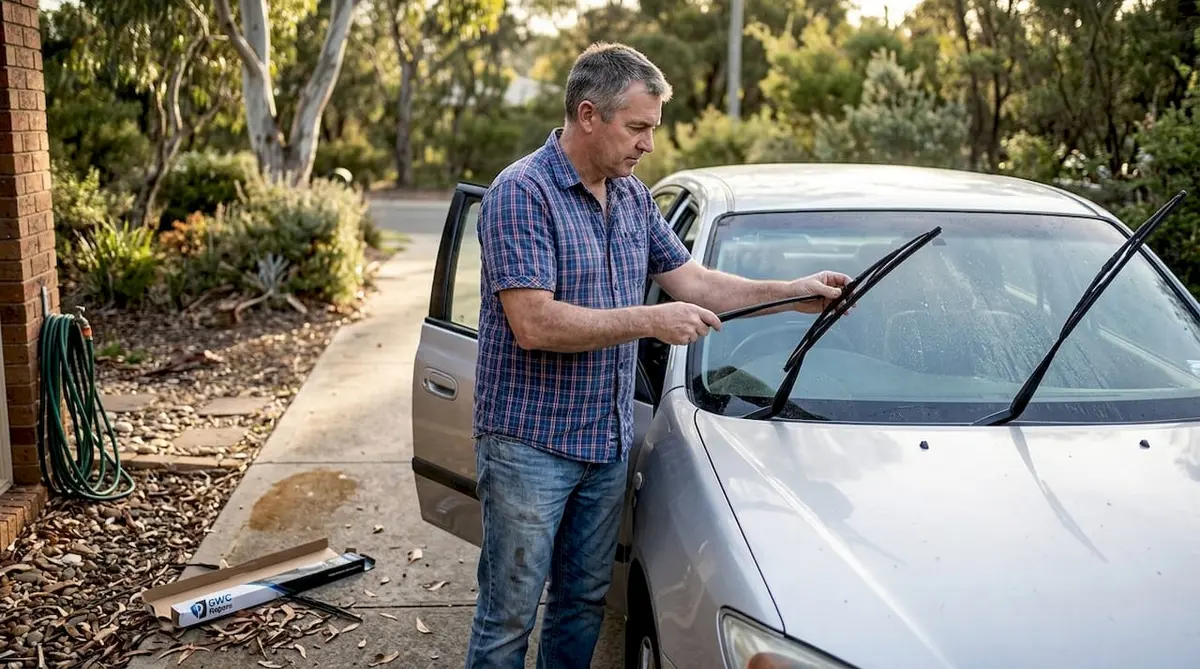
Most Australian drivers assume their wiper blades are fine until they smear rain across the windscreen in the middle of a storm. By then, the damage is already done. Australia’s intense UV exposure, extreme heat, coastal salt air, and sudden heavy downpours create some of the harshest conditions for wiper blades in the world. Replacing them on a sensible schedule is not just about convenience. It is about keeping you and everyone else on the road safe. This guide covers how often to replace your wipers, what warning signs to watch for, how to inspect and maintain them properly, and why staying ahead of wear is always the smarter choice.
Table of Contents
- Why wiper condition matters for Australian roads
- What affects how often you should replace wipers?
- How and when to inspect your wipers like a pro
- Caring for your wipers: preventative maintenance tips
- The mistake most Aussie drivers make about wiper frequency
- Find the perfect wipers for your car
- Frequently asked questions
Key Takeaways
| Point | Details |
|---|---|
| Inspect regularly | Monthly checks will help you spot fading wiper performance before it becomes dangerous. |
| Replace every 6–12 months | Most Australian drivers need new wiper blades at least once a year, or sooner in rough weather. |
| Look for warning signs | Streaking, noise, and split rubber always mean it’s time to change your blades. |
| Prevention extends lifespan | Regular cleaning and parking in shade can add months to your wipers’ life. |
Why wiper condition matters for Australian roads
Your wiper blades play a crucial role in keeping your line of sight clear when rain, dust, or road spray hits your windscreen. When they fail, even partially, your ability to react to hazards drops significantly. A blade that streaks or smears does not just annoy you. It creates a genuine blind spot at exactly the moment you need full visibility.
Australia’s roads bring unique challenges. Sudden summer storms in Queensland, heavy winter rain in Victoria, red dust in outback regions, and salt-laden air along coastal routes all attack wiper rubber in different ways. No matter where you drive, the demands on your wipers are real and constant.
Worn wipers compromise visibility and increase accident risk; under Australian standards, wipers are legally required to be functional and effective at all times.
From a legal standpoint, Australian Design Rules (ADR) require that your vehicle’s wipers are in proper working order. If you are involved in an accident and your wipers are found to be unroadworthy, your insurance claim could be affected. That is a risk no driver should take.
Here are the most common dangers of driving with worn wiper blades:
- Streaking and smearing: Leaves horizontal bands of water across your view, reducing contrast and depth perception.
- Skipping or chattering: The blade bounces across the glass instead of wiping cleanly, leaving large uncleared patches.
- Squeaking: Worn rubber dragging on dry glass can signal the blade is losing its flexibility and contact edge.
- Lifted edges: The rubber pulls away from the glass at the corners, leaving wide arcs of unwiped water.
- Scratching: A severely degraded blade can expose the metal arm, which scratches the windscreen directly.
Understanding wiper blade performance testing can help you appreciate exactly how much engineering goes into a blade that works reliably under pressure. Having set the scene for why wiper health is crucial, let’s understand what influences their lifespan.
What affects how often you should replace wipers?
The standard recommendation from experts is to replace wiper blades every 6 to 12 months, though environmental conditions have a major impact on where in that range your blades will fall. Australian drivers often find themselves at the shorter end of that window.
UV radiation is one of the biggest culprits. The Australian sun breaks down rubber compounds faster than in cooler climates, causing blades to harden and crack even when they are not being used. Heat compounds this effect. A car parked outdoors in summer can reach internal temperatures above 60 degrees Celsius, which accelerates rubber degradation significantly.
Here are the key factors that shorten wiper lifespan in Australia:
- UV exposure: Hardens and cracks rubber, especially in Queensland, the Northern Territory, and Western Australia.
- Extreme heat: Parked cars in full sun cause blades to warp and lose their flexible contact edge.
- Coastal salt air: Corrodes the metal frame and degrades rubber faster in beachside suburbs.
- Bush dust and debris: Abrasive particles grind away the rubber edge with every wipe.
- Infrequent use: Blades left stationary in heat can bond slightly to the glass or dry out.
| Condition | Expected lifespan | Key risk factors |
|---|---|---|
| Mild (cool, shaded, low UV) | Up to 12 months | Minimal wear |
| Moderate (suburban, some sun) | 8 to 10 months | UV, occasional heat |
| Harsh (coastal, outback, high UV) | 4 to 6 months | Salt, UV, extreme heat |
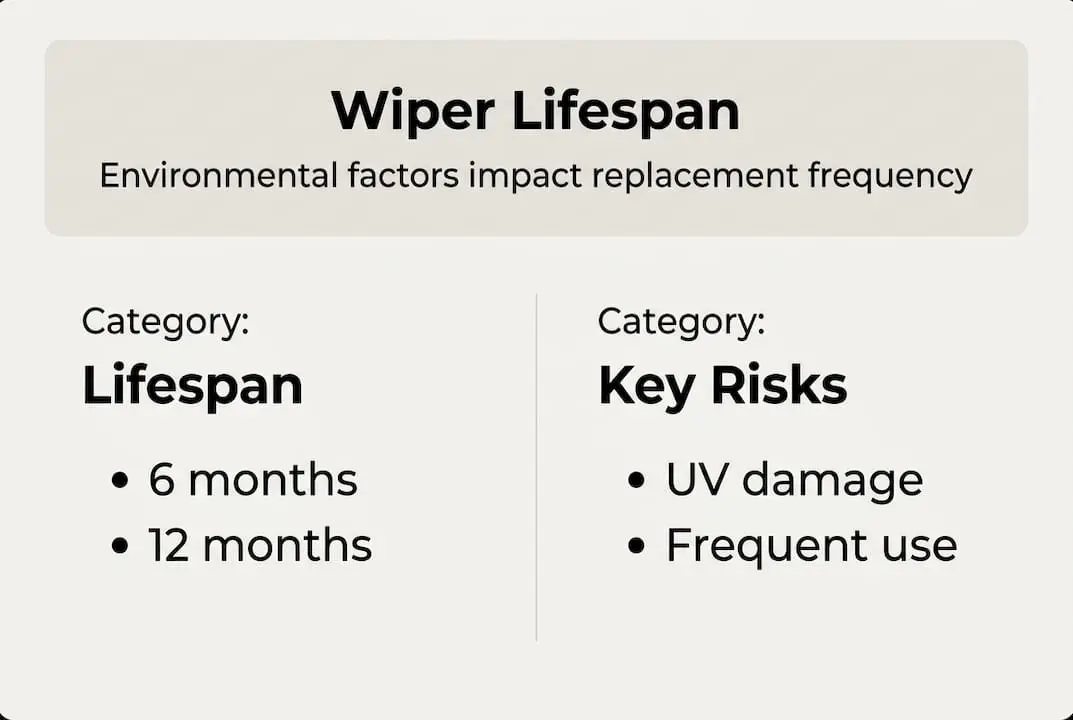
Understanding the wiper replacement importance for your specific driving environment helps you set a realistic schedule rather than guessing. Drivers in regional or outback areas, or those who park outdoors daily, should lean toward the shorter replacement window. If you drive in particularly demanding conditions, heavy-duty wiper blades engineered for Australian environments can offer meaningfully longer service life.
Pro Tip: When purchasing new blades, choose ones specifically designed for Australian conditions. Blades built with UV-resistant rubber compounds and corrosion-resistant frames will outlast standard imported options in our climate.
How and when to inspect your wipers like a pro
Understanding the factors at play, here is how to check if your wipers are ready for replacement. The calendar is a useful guide, but inspection always tells the real story. A blade that looks intact can still perform poorly, and one that looks slightly worn might still wipe cleanly. Testing is the only way to know for certain.
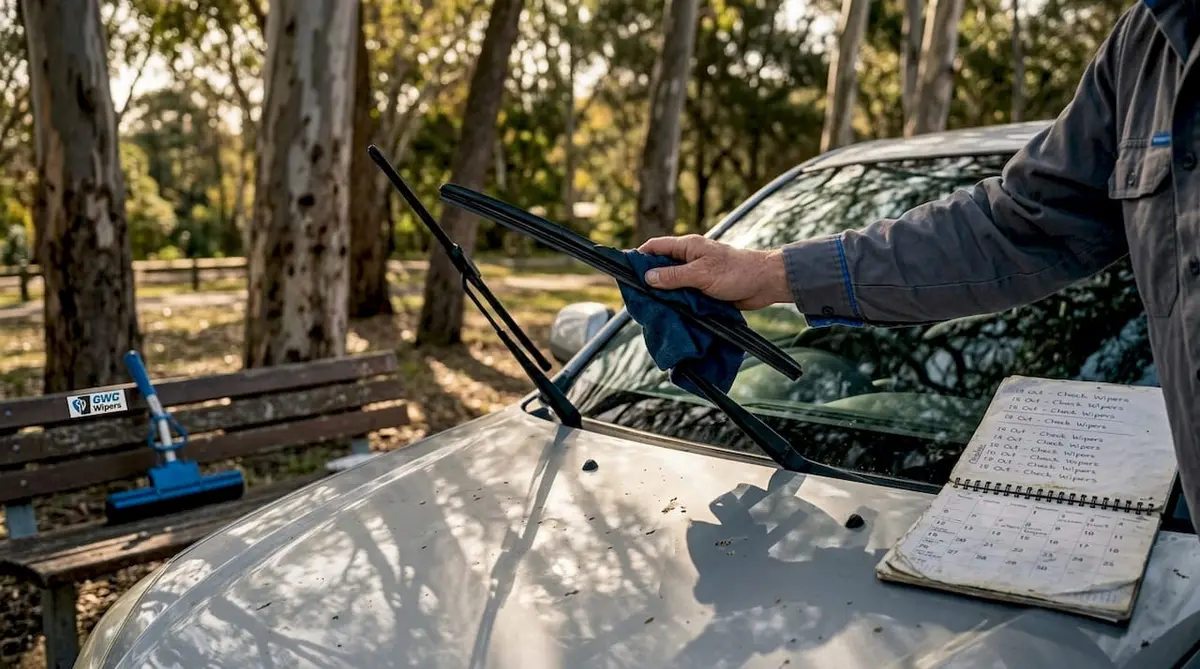
Experts recommend inspecting wipers monthly or at least every three months, checking for streaking, smearing, squeaks, splits, skipping motion, and any reduction in visibility during rain. Getting into this habit takes less than two minutes and can prevent a dangerous surprise during a storm.
How to inspect your wiper blades:
- Visual check: Lift each blade away from the windscreen and run your finger along the rubber edge. Feel for cracks, tears, or hardened sections.
- Flexibility test: Gently bend the rubber strip. Fresh rubber flexes easily. Old rubber resists bending or snaps back stiffly.
- Frame inspection: Check the metal or plastic frame for rust, bent sections, or loose joints that prevent even pressure across the blade.
- Wipe test: Run your wipers at low speed on a lightly wet windscreen. Watch for streaks, skips, or unwiped patches.
- Noise check: Listen for squeaking or chattering during the wipe test. Either sound signals poor contact with the glass.
- Rear wiper check: Do not forget the rear blade. It is often neglected and deteriorates at the same rate as the front blades.
A useful stat to keep in mind: the 6 to 12 month replacement window is a starting point, not a rule. Inspection results should always take priority over the calendar. If your blades fail any of the checks above at four months, replace them. Waiting until the six-month mark is false economy.
Pro Tip: Every time you stop to refuel, take 30 seconds to clean your wiper blades with a damp cloth or petrol station squeegee. Removing built-up grime keeps the rubber pliable and improves wipe quality between replacements. Learning more about inspecting wiper blades properly can make this routine second nature.
Caring for your wipers: preventative maintenance tips
Having examined inspection, let’s cover how to make your wipers last longer and save you money. Proper maintenance does not require special tools or much time. A few consistent habits can add months to your blade life and keep your visibility sharp between replacements.
Cleaning is the single most effective maintenance step. Wipe blades down with a cloth dampened in warm soapy water every few weeks. This removes the film of road grime, insect residue, and oxidised rubber that builds up on the blade edge and reduces wipe quality. Rinse with clean water and allow to dry before lowering them back onto the glass.
Common mistakes that shorten wiper life include:
- Dry wiping: Running wipers on a dry windscreen causes friction that degrades rubber rapidly. Always use washer fluid first.
- Neglecting the rear wiper: The rear blade is exposed to exhaust residue and road spray. It needs the same attention as the front pair.
- Leaving blades down in extreme heat: If you park outdoors in summer, lift the blades away from the glass to prevent them bonding or warping.
- Waiting until the rainy season: By the time the rains arrive, your blades may already be too degraded to perform well.
- Using the wrong washer fluid: Concentrated or undiluted fluid can leave a residue that coats the blade rubber and reduces effectiveness.
| Maintenance habit | Result |
|---|---|
| Clean blades fortnightly | Longer rubber life, cleaner wipe |
| Park in shade or use a sunshade | Slower UV and heat degradation |
| Lift blades in extreme heat | Prevents warping and glass bonding |
| Replace both blades together | Consistent performance across windscreen |
| Align replacement with servicing | Easier to remember, no missed intervals |
A consistent maintenance routine also means you are less likely to be caught out when conditions change suddenly. Aligning your wiper replacement with your regular car service is one of the easiest ways to stay on schedule without having to track it separately.
Pro Tip: Always replace both front blades at the same time. Even if one looks better than the other, they wear at a similar rate. Replacing both ensures even performance across your entire windscreen and removes the guesswork about which blade is causing issues.
The mistake most Aussie drivers make about wiper frequency
After learning the best ways to care for your wipers, here is our honest take on what most drivers overlook. The most common mistake is waiting for a dramatic failure before acting. Drivers expect a wiper to fall apart or stop moving entirely before they consider replacing it. But the real danger is gradual. A blade that wipes at 70 percent effectiveness feels almost normal until you are in a heavy downpour and suddenly realise you cannot see the car in front of you.
This is false economy at its most risky. Delaying replacement to save $30 or $40 can lead to a cracked windscreen from a degraded blade frame, or worse, an accident caused by reduced visibility. The risks of old wipers go well beyond inconvenience.
Our view is straightforward: treat wiper inspection the same way you treat checking your tyre pressure or engine oil. It takes minutes, costs nothing, and the consequences of neglect are far more expensive than a timely replacement. Build it into your routine and it becomes effortless.
Find the perfect wipers for your car
If your inspection has revealed it is time for new blades, or you simply want to stay ahead of the next storm season, GWC Wipers makes the process straightforward.
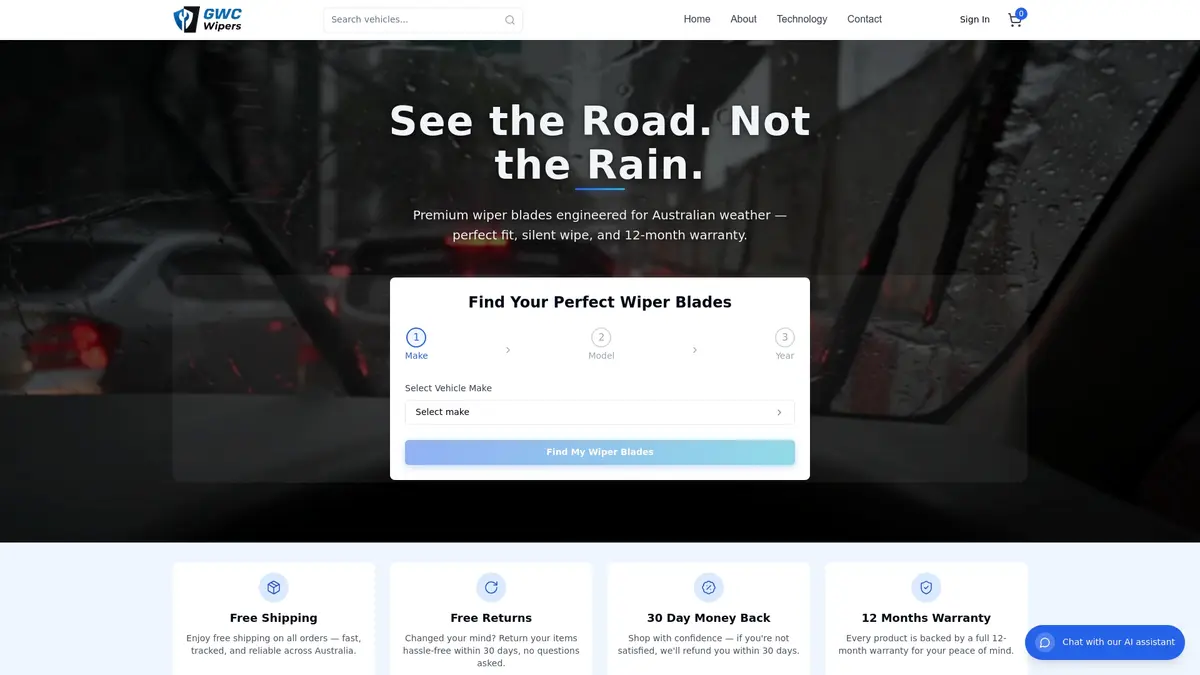
Use our vehicle selector to find perfect fit wiper blades matched to your exact make, model, and year. We stock a wide range for all major Australian vehicles, including premium Mercedes-Benz wiper blades and many more. Every blade is engineered for Australian conditions, backed by a 12-month warranty, a 30-day money-back guarantee, and free shipping across Australia. You can browse all wiper options and have the right blades at your door in days, with a simple DIY installation guide included.
Frequently asked questions
How often should I replace my wiper blades in Australia?
Most experts recommend every 6 to 12 months, but check them regularly as harsh Australian weather can shorten their life considerably, particularly in high UV or coastal areas.
What are the signs my wiper blades need replacing?
Look for streaking, smearing, squeaking, skipping, or cracks in the rubber. Any of these signs means it is time to replace your wipers before conditions get worse.
Can cleaning my wipers extend their life?
Yes. Cleaning blades regularly with warm soapy water removes grime and residue that degrades rubber, helping you get the most out of each set of blades.
Is it necessary to replace both wiper blades at once?
It is strongly recommended. Replacing both sides together ensures balanced, consistent performance across your entire windscreen and removes any uncertainty about which blade is underperforming.