
1 Inch Causes Blind Spots. Fix Wiper Blade Size Mismatch in Australia

A wiper blade size mismatch is a genuine safety and mechanical risk, not just a cosmetic niggle. If your blades clash, screech, or overhang the glass when parked, stop driving in heavy rain until you’ve checked them. The fix is straightforward: measure the rubber, confirm the connector type, and order the correct set before your next wet commute.
TL;DR:
- Wiper blade size mismatches can cause clashing, streaking, and noise, with even a small length difference leading to damage or poor performance.
- Oversized blades risk scratching or bending arms, creating contact zones not designed for, while undersized blades cause inadequate wiping and undue motor strain.
- Measuring your blades involves a five-minute check of rubber length and connector type, with vehicle-specific tools recommended for accuracy.
- Fitting the wrong size should lead to stopping rain-driven driving, inspecting for damage, and replacing blades with proper measurements to prevent costly repairs.
- Using a vehicle-specific fitment tool ensures correct blade sizes and connector types, backed by guarantees, avoiding the common habit of guessing or using universal blades.
Table of Contents
- What are the signs of a wiper blade size mismatch?
- Why does blade length and connector type actually matter?
- How do you measure your wiper blades for the correct size?
- What should you do if you’ve already fitted the wrong size?
- How do you install and test new blades correctly?
- Why do so many drivers get wiper blade sizing wrong?
- How Com solves wiper blade size mismatches
- Sources
- FAQ
What are the signs of a wiper blade size mismatch?
The clearest sign is a blind patch at the corner of your windscreen that never clears, no matter how many passes the blade makes. Streaking across the glass, especially in an arc pattern that repeats every wipe, usually means the blade edge isn’t tracking the curve of the glass properly because it’s the wrong length for that arm.
Listen for it too. A squeal or chatter as the blades cross paths in the middle of the windscreen, or a hard clacking noise near the edges, tells you the blades are fighting the glass rather than gliding across it. A blade that’s too short leaves blind spots and streaks; a blade that’s too long can contact the glass edge, create a high‑pitched squeal and risk scratching or bending the arm.
Before you drive anywhere, run these checks:
- Park on level ground, lift each arm gently, and look at where the rubber tip sits relative to the glass edge.
- Check for overhang past the windscreen frame on either side.
- Compare both blades. Driver and passenger sides are often deliberately different lengths, so identical or swapped blades can leave one side undersized.
- Turn the wipers on at low speed with the engine idling and watch for any contact point where the blades meet or scrape.
Even a small difference in blade length is enough to cause real trouble. Small mismatches can cause blades to clash mid-sweep or strike the windscreen frame, which is a bigger deal than most drivers assume. If you see or hear any of this, don’t head out into heavy rain until you’ve sorted it.
Why does blade length and connector type actually matter?
Windscreen wiper systems aren’t just rubber on glass. The pivot points, the arc each arm sweeps, and the timing between the driver and passenger blades are all engineered around a specific length and a specific connector for that exact make and model. Change the length and you change the geometry the whole system was designed around.
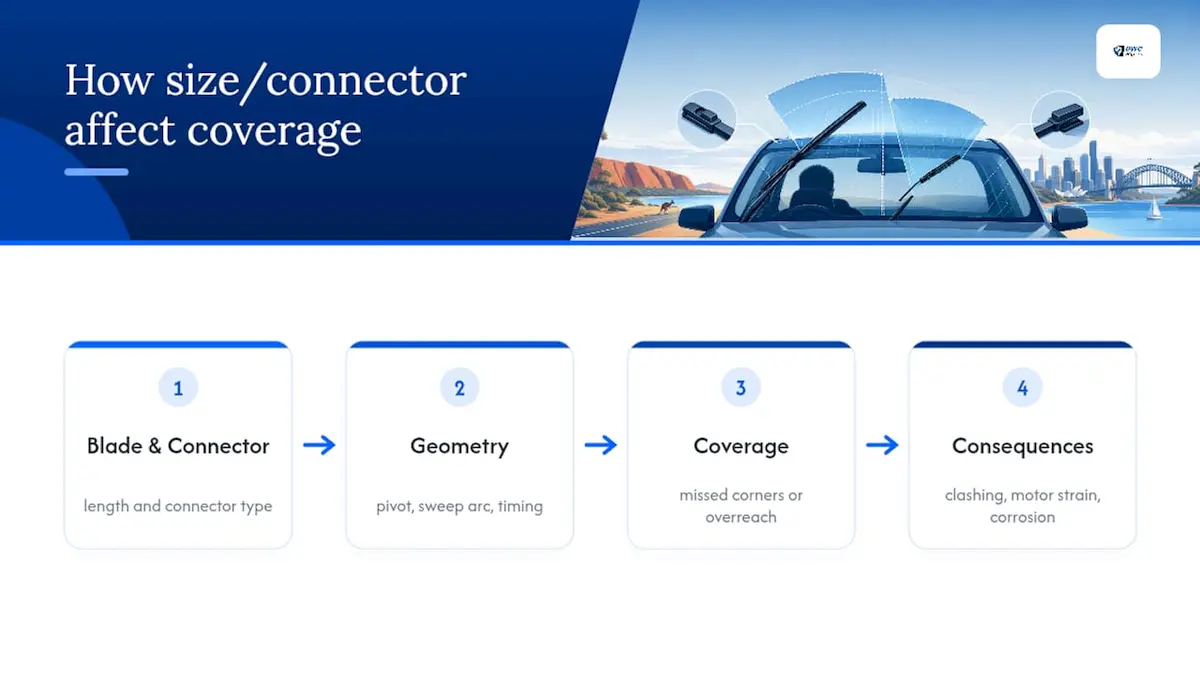
Run an oversized blade and you risk clashing in the middle of the sweep, bent arms from repeated hard contact, extra strain on the wiper motor, and scratched paint or glass at the point of overreach. Oversized blades can even rest off the edge of the glass when parked, letting water drip onto cowl electronics or engine bay trim, which over time invites corrosion you won’t notice until something else fails.
Undersized blades create their own problems: uncleared triangles of glass at the corners, motors working longer and harder to compensate, and rain sensors on newer vehicles misreading how much water is actually on the glass.
Small oversizes are more dangerous than most drivers expect, because they create mechanical contact zones that were never part of the original wiper arc design.
Pro Tip: If a new blade feels tight or catches as it sweeps past the middle of the screen on its first test run, don’t assume it’ll “bed in.” That resistance is the arm and motor absorbing stress they weren’t built to handle.
How do you measure your wiper blades for the correct size?
Getting this right takes five minutes and no special tools.
- Lift the wiper arm away from the glass and lock it in the service position if your vehicle has one.
- Measure the rubber wiping element only, tip to tip, not the metal arm or the whole assembly.
- Record the length in millimetres if you can. If you’re working in inches, round to the nearest whole inch, since most replacement sets are sold in fixed increments.
- Check the connector where the blade clips onto the arm. Common types include hook (J-hook), pin-type, bayonet, and side-lock connectors, and beam-style blades often use a different fitting to conventional bracket blades.
- If the old blade is unreadable or missing, verify the correct length and connector against your owner’s manual, a VIN lookup, or a proper vehicle-specific fitment tool rather than guessing from the old part.
A few things worth knowing before you order:
- Driver and passenger blades are frequently different lengths by design, so never assume both sides should match.
- Universal fit kits rely on adapters that add weight and stress to the arm over time, so an exact-fit set is the safer long-term choice.
- Our step-by-step measuring guide walks through the process with photos if you want a visual reference alongside these steps.
What should you do if you’ve already fitted the wrong size?
First, stop driving in wet conditions until this is sorted. If the blades clash or overhang badly, remove them altogether rather than risk arm damage on your next trip through rain.
Once the vehicle is safely parked, run through a thorough inspection checklist:
- Check both wiper arms for visible bending or misalignment against the glass.
- Look at the retaining clips for cracks or a loose fit, since repeated clashing can snap them.
- Start the wipers briefly and listen for grinding or straining from the motor.
- Inspect the windscreen itself for fine scratches, especially near the edges where an oversized blade may have made contact.
If you spot scratching, photograph it clearly with a ruler or coin in frame for scale before you contact anyone about warranty or insurance support. Light surface marks can sometimes be polished out, but deeper scratches need a professional assessment.
Most of this is a straightforward DIY fix once you have the correct part. Reach for a mechanic only if you find bent arms, motor noise, or anything suggesting the wiper linkage itself has been damaged.
How do you install and test new blades correctly?
Getting the size right is half the job. Fitting it properly finishes it.
- Clean the windscreen and the blade contact edge with glass cleaner before fitting, since grime under the rubber causes streaking even on a correctly sized blade.
- Line up the new blade’s connector with the arm and push until you hear or feel an audible click. If it doesn’t click, it isn’t locked, and it will detach in use.
- Lower the arm gently back onto the glass rather than letting it drop.
- Run a low-speed test with the engine idling, then trigger the washer spray and watch the full arc for streaking, chatter, or any point of overlap between the two blades.
- Replace both front blades together, even if only one looks worn, since uneven wear between sides causes uneven pressure and extra load on the motor.
Pro Tip: Log the fitting date somewhere you’ll actually see it, like a note in your service book or your phone’s calendar. Blade rubber degrades from UV exposure well before it looks worn, so a date beats guessing by eye.
Why do so many drivers get wiper blade sizing wrong?
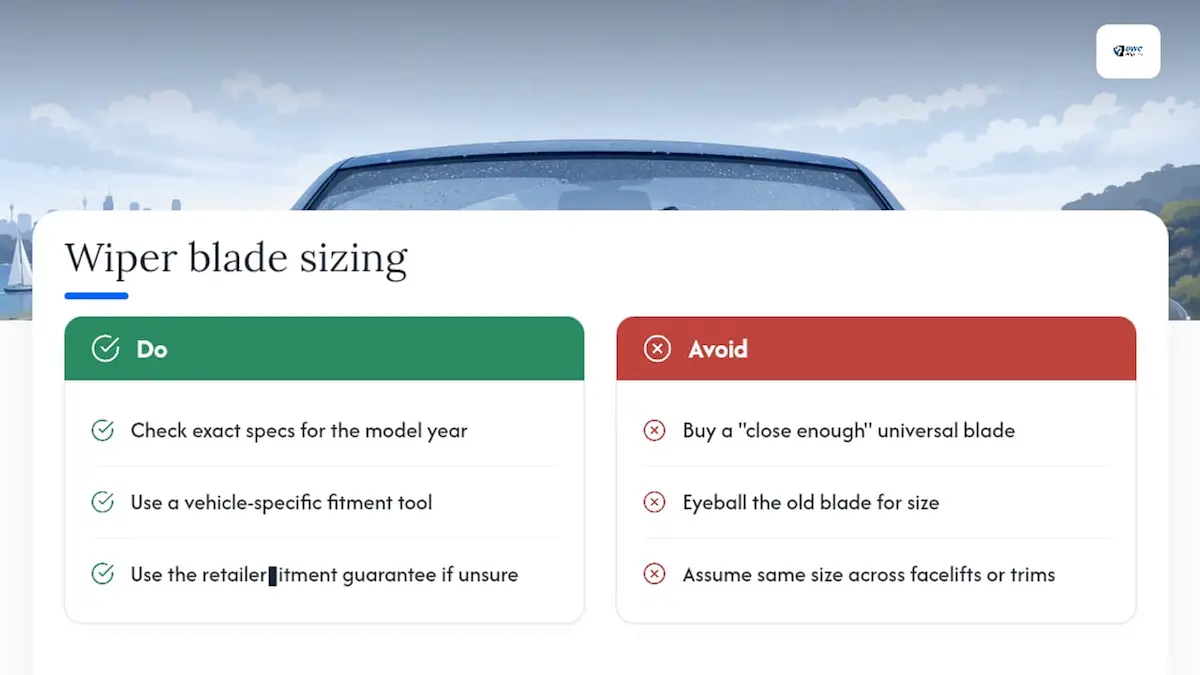
Most size mismatches come down to one habit: buying a “close enough” universal blade instead of checking the exact specs for that model year. Windscreen geometry varies more between facelifts and trim levels than most owners assume, and a size that fit a 2015 model can be wrong for a 2018 update of the same car.
The fix isn’t complicated. Use a proper vehicle-specific fitment tool rather than eyeballing the old blade, and lean on a guarantee if you’re not confident measuring yourself. Getting this one detail right avoids a surprising amount of avoidable wear on arms and motors.
— Faisal
How Com solves wiper blade size mismatches
Guessing at wiper sizes is exactly the problem this guide has been walking you through, and it’s the one Com built its vehicle selector tool to solve. Enter your make, model, and year, and it returns the exact blade lengths and connector type for your vehicle, backed by a fitment guarantee so you’re not left measuring old rubber and hoping for the best.
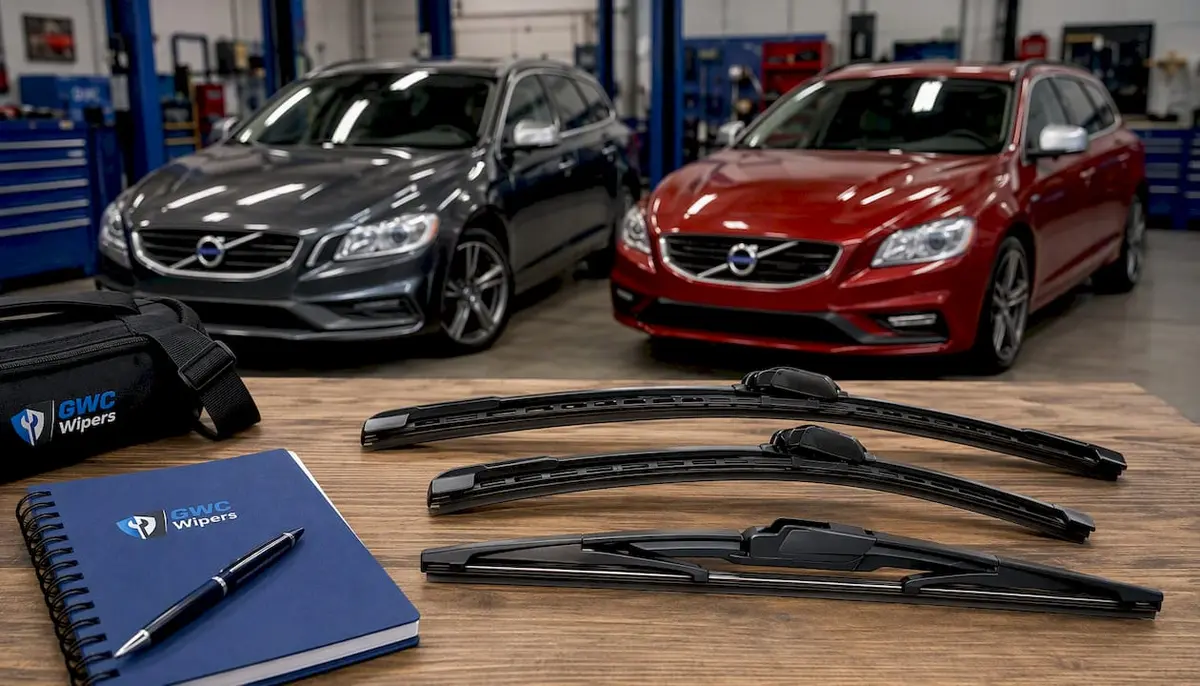
Every set ships with preassembled adapters for tool-free fitting, whether you drive a Volvo V60 built between 2016 and 2018 or the earlier 2011 to 2015 V60, each requiring its own specific set despite sharing a model name. Orders come with free shipping across Australia, a 30-day money-back guarantee, and a 12-month warranty, so if a set ever feels off, you’re covered without an argument. Run your rego or vehicle details through the selector now and get the correct pair on its way before the next wet forecast.
Sources
For readers who want to verify the mechanical detail themselves: Are Both Wiper Blades the Same Size? covers staggered fitment logic, while What Happens If You Use the Wrong Size Wiper Blade? details common damage patterns from mismatched blades.
- Wrong wiper blade size risks: damage, poor performance & how to fix
- Are both wiper blades the same size? Fitment guide & chart
- What happens if you use the wrong size wiper blade? Risks, damage & fixes
FAQ
Can a wiper blade that’s too big damage my car?
Yes. An oversized blade can clash mid-sweep, scratch the glass edge, bend the wiper arm, or place extra strain on the wiper motor over time. Even small size differences can cause repeated mechanical contact that wasn’t part of the original wiper arc design.
Is a 1-inch wiper blade size difference a big deal?
It can be. A difference of even one inch has been shown to cause blades to clash mid-sweep or strike the windscreen frame, so it’s worth measuring precisely rather than rounding loosely.
Should both wiper blades be the same length?
Not usually. Driver and passenger blades are often different lengths by design, matched to the windscreen’s curve and arm geometry on each side. Fitting identical or swapped lengths can leave one side undersized and create clashing on the other.
How do I find the correct wiper blade size for my car?
Measure the rubber element tip to tip, then confirm it against your owner’s manual, a VIN lookup, or a dedicated vehicle-specific tool. Com’s vehicle selector returns exact-fit sizes and connector types for your specific make, model, and year, backed by a fitment guarantee.
What does GWC Wipers cost?
Current prices for Com’s wiper blade sets are listed on the website, where you’ll also find express shipping options at checkout. Every order includes a 30-day money-back guarantee and a 12-month warranty regardless of the set you choose.