
Wiper judder after coating: causes and how to fix it
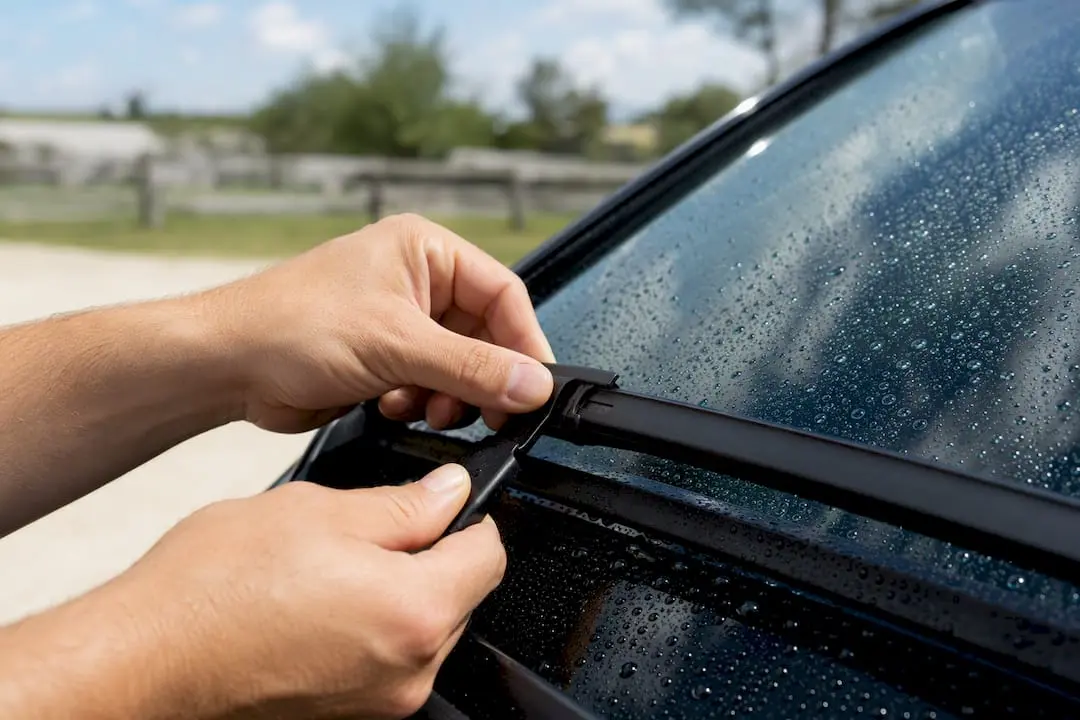
Judder after a glass or ceramic coating is usually the coating making your windscreen too hydrophobic, so the blade can’t stay wet and starts slipping instead of gliding. Start by cleaning the glass and blade, then test a known good blade before you even think about stripping the coating. Most cases resolve without any polishing at all.
TL;DR:
- A hydrophobic coating prevents the thin water film needed for smooth wiper movement, often causing judder due to increased grip and slip issues.
- Testing under different conditions identifies whether the judder follows the blade or relates to coating hydrophobicity, with washer fluid temporarily masking minor problems.
- Replacing worn or mismatched blades with correctly fitted, pressure-distributed blades can resolve most judder cases on coated windscreens.
- Light, temporary treatments like graphite powder or wax can restore lubrication and quiet judder without permanent measures.
- Polishing off the coating is risky, reserved for persistent, confirmed coating-related judder after all diagnostic steps, with professional help recommended for safety.
Table of Contents
- Why does wiper judder happen after a coating?
- Quick fixes to try before you strip anything
- The stepwise fix that solves most judder cases
- When is it worth polishing off the coating?
- How do I choose blades that won’t judder on treated glass?
- Where GWC Wipers fits into fixing coating judder
- What actually decides whether you live with it or strip it
- Get blades that won’t judder on your coated windscreen
- Sources
- FAQ
Why does wiper judder happen after a coating?
A hydrophobic coating is designed to do one job well: push water off the glass so it beads and rolls away. That same design prevents the thin lubricating water film that a wiper blade relies on to glide smoothly. Without that film, the rubber grips the glass, releases, grips again, and you get the stuttering, chattering motion owners call wiper judder.
Detailers who deal with this daily point out that judder rarely has one clean cause. It is usually contamination, blade condition, and coating performance working against each other at the same time, which is why a stepwise elimination process works better than guessing at a single fix. The checklist below walks you through isolating whether the blade, the glass, or the arm is the actual culprit.
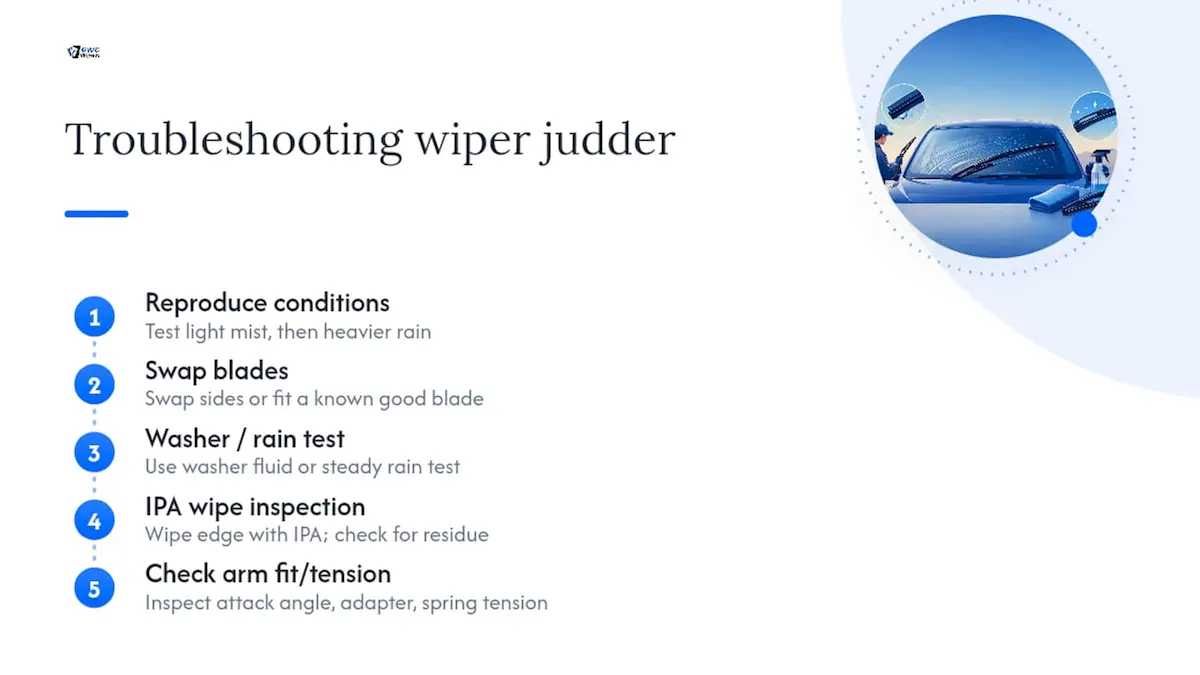
1. Reproduce the conditions. Test on a light mist first, then heavy rain or the washer jets, and try both intermittent and continuous settings. Judder that only shows up on light mist points more toward coating hydrophobicity than blade wear.
2. Swap blades side to side or fit a known good spare. If the judder follows the blade to a different arm, or disappears with a fresh blade, the blade itself is the problem, not the coating.
3. Run a washer fluid or steady rain test. Extra lubrication from washer fluid can mask a mild judder issue, so if it vanishes under wet conditions but returns as the glass dries, that is a strong hydrophobicity signal.
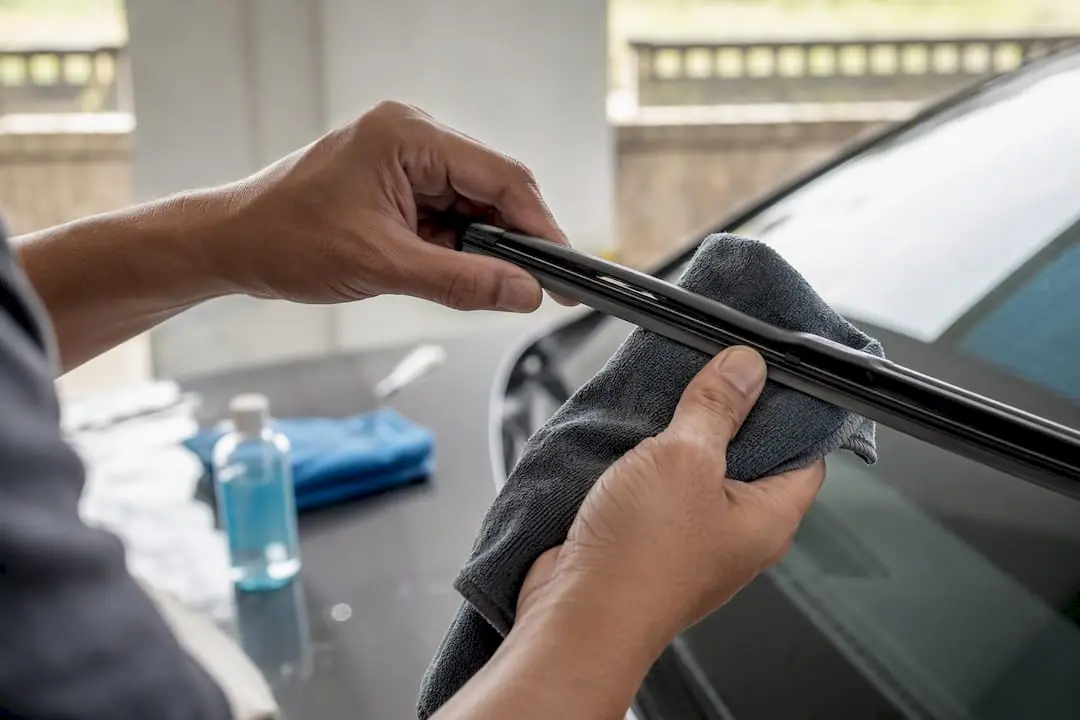
4. Inspect the blade rubber with an isopropyl alcohol wipe test. Wipe the edge with a lint free cloth and IPA and look for a black residue transfer, which points to degraded or glazed rubber.
5. Check the wiper arm’s attack angle, adapter fit, and spring tension. A twisted arm or weak spring stops the blade sitting flush, and no amount of cleaning will fix that.
If the judder started right after coating and survives a swap to a good blade, the coating itself moves to the top of your suspect list.
Quick fixes to try before you strip anything
You don’t need to reach for polish straight away. Several temporary treatments recreate that missing lubricating film and often quiet judder within minutes, and community detailing threads back graphite, wax, and quick detailer as reliable short-term relief.
- Clean the blade rubber with isopropyl alcohol first. Strip any built-up grime or old treatment before applying anything new, or you’ll just be layering products on dirt.
- Apply a small amount of graphite powder or a dry lock lubricant to the rubber edge. Rub it in with a clean cloth rather than spraying it directly onto the glass.
- Try a quick detailer or a light, non-ceramic detailing spray on a towel. Wipe it along the blade edge, not the windscreen, so you’re conditioning the rubber rather than adding more slip-resistant coating to the glass.
- Use a thin rubber conditioner or car wax sparingly, then re-test immediately. A little goes further than you’d think, and too much just attracts dust.
Reapplication is part of the deal here. Lightly oiling or waxing the blade edge works by rebuilding a thin lubricating film, and that film wears off with every wash and every few hundred wipes, so treat this as maintenance, not a cure.
Pro Tip: Never apply a durable ceramic or silicone product to the blade rubber itself. It turns the blade as hydrophobic as the glass, and now both surfaces are fighting the water film instead of just one.
The stepwise fix that solves most judder cases
Most coating-related judder clears up without ever touching a polisher, provided you work through the steps in order rather than jumping straight to the aggressive option. This diagnostic order isolates the real cause before you risk damaging anything permanent.
- Wash and decontaminate the windscreen properly. Use a dedicated automotive glass cleaner rather than household glass spray, which can leave streaking additives behind. A light glass polish is worth using here if you can feel roughness or see bonded contamination under a strong torch, following methods similar to the streak-free glass cleaning approach many detailers recommend.
- Clean the blade edges with isopropyl alcohol and inspect closely. Run a finger along the rubber edge feeling for nicks, hard spots, or a slightly sticky residue. Any of these will cause judder regardless of what’s happening with the coating.
- Fit a known good, correct-fit blade and re-test under steady washer flow or real rain. This is the step that actually tells you whether the blade or the glass is driving the problem.
- Check the arm geometry, adapter fitment, and spring tension. Look at the arm from the side while parked. If it sits twisted rather than flat against the glass, or the spring feels weak when you lift it, that mismatch alone can cause a stutter that has nothing to do with your coating.
If you’ve cleaned the glass, cleaned and inspected the blade, swapped to a verified good blade, and confirmed the arm sits correctly, and the judder is still there, the coating or embedded residue is very likely the remaining cause. That’s your decision gate: everything short of polishing has been ruled out, and mechanical removal becomes the reasonable next step.
When is it worth polishing off the coating?
Polishing is the permanent fix, but it’s also the one with the most room to go wrong, so it deserves a proper decision rather than a reflex reaction to persistent judder.
What polishing actually removes depends on what you’re dealing with. A fully bonded ceramic coating usually needs machine polishing with a fine glass polish or cerium oxide compound to break down the bonded layer, whereas surface residue from a poorly cured coating might come off with a strong glass cleanser and some elbow grease. Knowing which one you have changes how aggressive you need to be.
The risks are real, not theoretical. Laminated windscreens can be damaged by inexperienced machine polishing, optical clarity can suffer if the polish isn’t worked evenly, and any area near a rain sensor or a forward-facing camera behind the glass needs deliberate care, since heat and abrasion in the wrong spot can throw off sensor calibration.
- Polishing yourself demands the right pad, compound, and a slow, methodical technique, plus a way to check for even glass clarity afterwards.
- A professional detailer costs more but generally has the experience to avoid sensor zones and judge how much correction the glass actually needs.
- Vet any detailer by asking specifically how they handle rain-sensor and camera areas before you book.
Some owners skip the full strip entirely and instead go with selective coating, applying the hydrophobic product to the side and rear glass only, or masking off a small strip where the blade rests so a natural re-wet zone stays untreated across the windscreen.
How do I choose blades that won’t judder on treated glass?
The right blade prevents a lot of this from happening in the first place. A correctly fitted blade with even segmented pressure across its length sits flatter against coated glass and resists the stick-slip motion that mismatched or worn blades make worse, an approach GWC Wipers builds into its natural rubber blade design for exactly this reason.
- Choose blades matched to your exact make, model, and year rather than a generic universal fit, since the wrong curve or length changes how evenly pressure lands on the glass.
- Never apply a durable hydrophobic or ceramic product to the blade rubber, even if you’ve coated the glass. Keep the blade itself hydrophilic, or only treat it with a temporary product you’re happy to reapply.
- Wipe the blade edge with a clean cloth after every wash and swap blades on a regular schedule, since ageing rubber glazes over and stops holding a water film no matter what you put on the glass.
- Keep the windscreen properly decontaminated between coatings rather than letting road film build up under a fresh layer of hydrophobic product.
Pro Tip: If you’re planning a fresh coating application, mask off a narrow strip where the blades rest at the base of the windscreen before you apply the product. That small re-wet zone can be the difference between silent wipers and months of stuttering.
Where GWC Wipers fits into fixing coating judder
Once you’ve worked through diagnostics and confirmed the blade, arm, or coating is the issue, getting the right replacement blade matters more than most owners expect. A blade that’s even slightly the wrong length or curve profile will exaggerate stick-slip judder on coated glass, no matter how good the rubber compound is.
GWC Wipers builds its fitment around a vehicle selector covering more than 2,500 models, which removes the guesswork of matching arm type, connector, and blade length that causes so much aftermarket frustration. The natural rubber construction and segmented pressure distribution spread contact more evenly along the glass, which matters directly on treated windscreens where even pressure keeps that thin water film intact for longer. Every set carries a fitment guarantee and a 12-month warranty, so if a blade doesn’t sit right on your particular arm geometry, it’s not a problem you’re stuck troubleshooting alone.
What actually decides whether you live with it or strip it
Coatings earn their keep in heavy rain and on long highway stints where beading water off the glass genuinely improves visibility, and I think a lot of owners give up on a coating too early over judder that a $15 blade swap would have fixed. Occasional judder in light drizzle is a fair trade for that benefit if the alternative is stripping a coating that’s otherwise doing its job.
My rule of thumb: exhaust cleaning, a blade swap, and an arm check before you let anyone near your windscreen with a polisher. Polishing is permanent and carries real risk near sensors, so it should be the last resort, not the first instinct. Work the stepwise process in order, and if you’re still stuck after all four steps, that’s the point to bring in a professional rather than guessing further.
— Faisal
Get blades that won’t judder on your coated windscreen
Com is the straightforward fix for owners who’ve worked through the diagnostics above and landed on “the blade needs replacing.” Rather than guessing at a generic universal fit and rolling the dice on another judder cycle, GWC Wipers matches your exact make, model, and year through its vehicle selector, so the blade arrives with the correct curve, connector, and pressure distribution for your arm from the start.

Every set ships with free shipping across Australia, a 30-day money-back guarantee, and a 12-month warranty, so a poor fit or early wear isn’t a cost you carry alone. Installation follows the included step-by-step guide, and most owners have the new blades fitted in under ten minutes without tools. If you’re driving a Mercedes-Benz, head straight to the Mercedes-Benz wiper blade range or run your rego through the selector to find your exact fit and get moving with a clear, judder-free windscreen.
Sources
For readers wanting more technical depth on the mechanics of stick-slip friction and coating chemistry, these sources go further than this article’s practical checklist.
- What is wiper judder - DetailingWiki
- Ceramic coating and wiper chatter fixes
- Grrrrrr! Wiper judder! | Detailing World Forum
- Windshield coating without wiper chatter, it is possible! | Tesla Motors Club
FAQ
How do I stop my wipers from juddering?
Clean the glass and blade edge first, swap in a known good blade to test it, and try a temporary graphite or wax treatment on the rubber before considering any polishing.
Why are my windshield wipers juddering after a ceramic coating?
The coating likely made the glass too hydrophobic to hold a thin water film, so the blade grips and slips instead of gliding smoothly across the surface.
What are the signs that a ceramic coating is failing?
Water no longer beads tightly and instead sheets across the glass, and you may notice reduced water repellence alongside new or worsening wiper judder as the coating wears unevenly.
How do I remove swirl marks after applying a ceramic coating?
Swirl marks usually need a dedicated glass polish or light machine correction rather than the coating itself, and this is best handled carefully to avoid affecting optical clarity near cameras or sensors.
Will replacing my wiper blades fix judder caused by a coating?
It fixes judder caused by a worn, mismatched, or poorly seated blade, and a correctly fitted, evenly pressured blade like those from GWC Wipers can reduce stick-slip on treated glass, though it won’t remove hydrophobicity from the coating itself.