
Ways to reduce wiper noise: quick fixes for Australian drivers

Clean the windscreen and blade edge, spray washer fluid, then run the wipers at low speed. That single sequence resolves the majority of wiper squeaks without any tools or replacement parts. If the noise persists after that test, work through the checklist below before spending a cent on new blades.
Quick checklist — under 10 minutes:
- Spray washer fluid generously across the full windscreen and run the wipers for 10–15 seconds
- Lift the wiper arms and wipe each blade edge with a clean microfibre cloth dampened with isopropyl alcohol
- Check the glass surface for greasy films, bird droppings, or wax residue and clean if present
- Inspect the blade rubber for visible cracks, splits, or hardened sections
- Run the wipers again at both low and high speed and listen for any remaining squeal or chatter
If noise continues after these steps, the next priorities are arm angle and blade condition.
Table of Contents
- 1. Three quick DIY fixes you can do in 5–10 minutes
- 2. How to clean the windscreen and wiper blades properly
- 3. How to check and adjust wiper arm angle and spring tension
- 4. How to inspect blades and choose replacements suited to Australia
- 5. How to lubricate pivots and check the linkage
- 6. Diagnose the noise: what squeak, chatter, and skip each mean
- 7. When to replace wiper blades — lifespan and cost in Australia
- 8. Why premium blades reduce noise — the technical explanation
- 9. How to test whether the noise is fixed after each step
- Key takeaways
- The fix most drivers skip
- GWC Wipers: premium blades with a perfect fit guarantee
- Useful sources and further reading
- FAQ
1. Three quick DIY fixes you can do in 5–10 minutes
The fastest ways to reduce wiper noise require nothing more than washer fluid, a cloth, and two minutes of attention. Most squeaks come from dry or contaminated glass, not worn blades, so these three fixes address the most likely cause first.
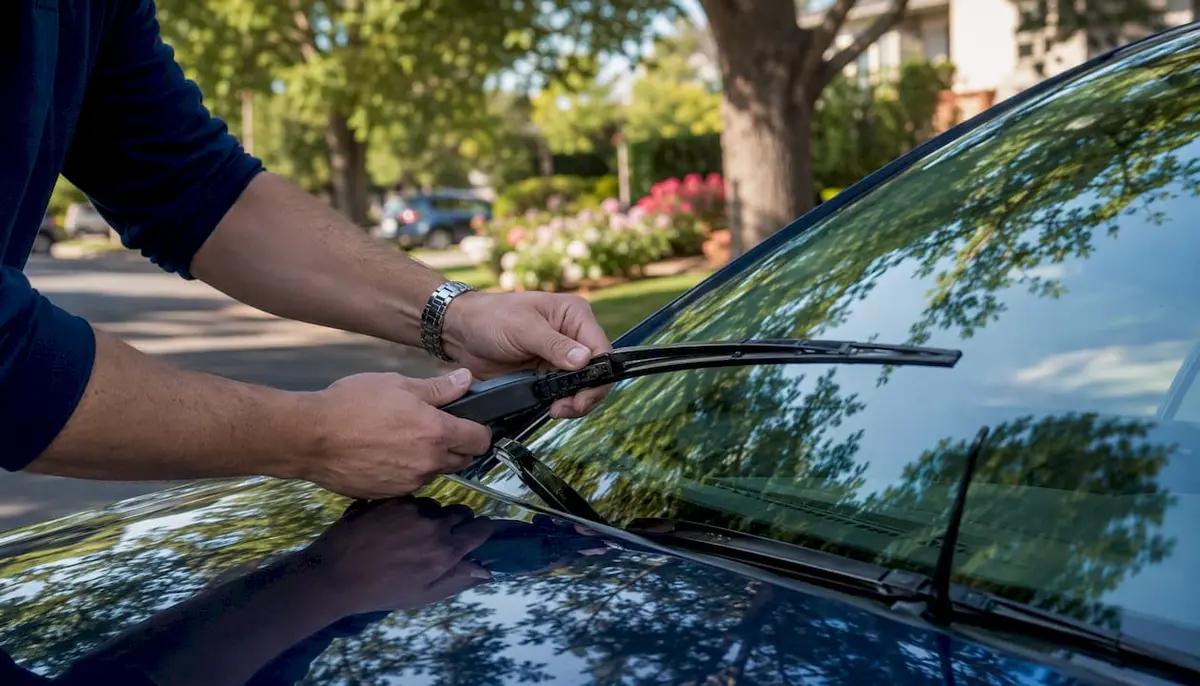
Fix 1 — Wet the screen with washer fluid (2 minutes). Dry wiping is the single most common cause of wiper squeal. Running wipers on a dry screen accelerates rubber wear and creates the high-pitched friction squeak many drivers mistake for blade failure. Spray washer fluid across the full glass, run the wipers at low speed for 15 seconds, then test at high speed. If the squeak disappears, dry wiping was the culprit.
Fix 2 — Wipe the blade edge (3 minutes). Lift each arm away from the glass. Fold a clean microfibre cloth and run it firmly along the full length of the rubber edge, both sides. Road film, insect residue, and dried washer fluid all accumulate on the blade edge and create uneven friction. A single wipe often removes enough contamination to restore quiet operation.
Fix 3 — Clear debris from the blade channel (2 minutes). Grit, leaves, and seed pods lodge in the blade channel and prevent the rubber from sitting flush against the glass. Run your fingers along the channel, remove any debris, then retest.
Pro Tip: Never use household glass sprays, furniture polish, or tyre dressing near the windscreen. These products leave invisible silicone or wax residues that change the friction profile of the glass and can make squeaking significantly worse — automotive glass cleaner or isopropyl alcohol are the safe choices.
2. How to clean the windscreen and wiper blades properly
Cleaning the glass and blade edge properly eliminates most noise causes, but the order and the products you use matter. The wrong cleaner can deposit a residue that creates the same stick-slip friction you were trying to remove.
What you need:
- Two clean microfibre cloths (one for glass, one for blade rubber)
- Isopropyl alcohol (70% or higher) or automotive glass cleaner
- Mild soapy water in a bucket or spray bottle
- Washer fluid for the final rinse and test
- Diluted white vinegar (1 part vinegar to 3 parts water) as an alternative for greasy films
Step-by-step cleaning procedure:
- Park in shade. Cleaning in direct sunlight causes cleaner to evaporate before you can wipe it off, leaving streaks that worsen noise.
- Lift both wiper arms away from the glass and lock them in the raised position.
- Wipe the full windscreen with warm soapy water to strip the initial layer of road grime.
- Apply automotive glass cleaner or a diluted vinegar solution to the glass and wipe with a clean microfibre cloth in overlapping strokes. Greasy films from car washes and tyre dressings require a residue-dissolving cleaner or 70% isopropyl alcohol to restore a uniform friction surface.
- Wipe each blade edge with a separate cloth dampened with isopropyl alcohol. Run the cloth along the rubber in one direction, flip to a clean section, and repeat until no dark residue transfers.
- Lower the arms gently back onto the glass.
- Spray washer fluid and run the wipers at low speed for 15 seconds as a final rinse and test.
Do not use: silicone sprays, tyre dressings, furniture polish, or any wax-based product near the windscreen. Silicone and wax create mixed-friction patches that cause the blade edge to alternate between sliding and sticking, producing exactly the chatter you are trying to stop.
Pro Tip: New blades sometimes squeak for the first few wipes because of a protective factory oil applied during manufacturing. A single wipe of the blade edge with isopropyl alcohol removes this coating and usually stops the noise immediately.
3. How to check and adjust wiper arm angle and spring tension
Incorrect arm angle or a weakened spring often causes chatter even when the blade itself is in perfect condition. This is one of the most overlooked causes of persistent wiper noise, and Australian installers consistently flag arm-to-glass alignment as the first thing to check before blaming a new blade.
Inspection checklist:
- Look at the blade from the side while it rests on the glass. The rubber should sit flat across its full length, not lifted at the heel or toe.
- Check for uneven wear along the blade edge. Wear concentrated at one end indicates the arm is applying pressure unevenly.
- Inspect the pivot point at the base of the arm for looseness or corrosion.
- Watch the blade at the end of each stroke. It should flip cleanly and smoothly. A blade that hesitates, drags, or fails to flip at the reversal point is a sign of arm tension or angle problems.
- Look for any visible bend in the arm itself, particularly near the pivot.
A wiper arm that has snapped back against the glass without a blade fitted can deform the arm angle permanently, preventing correct blade contact and causing persistent chatter that no amount of cleaning will fix.
For a simple angle adjustment, lift the arm, hold the blade end, and apply gentle upward pressure to increase contact force. Do this incrementally and retest after each adjustment. If the arm is visibly bent, corroded at the pivot, or the spring feels slack, a mechanic should assess it. Forcing a bent arm risks cracking the windscreen.
Pro Tip: Watch both ends of the blade during a wipe stroke. If one end lifts off the glass while the other drags, the arm angle is uneven. That asymmetric contact is the direct cause of stick-slip chatter and no blade replacement will cure it until the arm is corrected.
4. How to inspect blades and choose replacements suited to Australia
Replace blades that are cracked, split, hardened, or show uneven wear. In Australian conditions, UV exposure and heat accelerate rubber degradation faster than in cooler climates, so blades that look acceptable in May can be genuinely worn by October.
Visual and performance replacement checklist:
- Cracks or splits visible along the rubber edge
- Hardened or stiff rubber that does not flex when pressed
- Streaking or smearing that persists after cleaning the glass
- Skipping or hopping across the glass during a wipe stroke
- Deformed blade edge (curled, flattened, or uneven profile)
- Age over 12 months, particularly if the vehicle is parked outdoors in direct sun
Blade types and Australian suitability:
Conventional blades use a metal frame with multiple pressure points and are widely available and affordable. They perform adequately in moderate conditions but the exposed metal frame is vulnerable to corrosion in coastal areas and can accumulate debris in heavy rain.
Beam blades use a single curved spring steel strip with no external frame, distributing pressure evenly across the full blade length. They handle heavy Australian downpours well and resist the UV degradation that cracks conventional rubber faster. The even pressure distribution also directly reduces the stick-slip instability that causes chatter.
Hybrid blades combine a protective aerodynamic shell with an internal beam-style spring. They offer the all-weather durability of a beam blade with added protection against the grit and heat that shorten blade life in outback and regional driving.
For a correct fit, use a vehicle fitment selector tool that matches blade size and attachment type to your exact make, model, and year. GWC Wipers covers over 2,500 vehicle models with a fitment guarantee, so you are not guessing at compatibility. Replacement blades in Australia typically range from a low price for basic conventional options up to a higher price for premium beam or hybrid designs.
5. How to lubricate pivots and check the linkage
Light lubrication of the wiper pivot points can stop clunking, reduce uneven arm pressure, and eliminate noise caused by mechanical friction rather than blade-to-glass contact. Targeted lubrication of metal pivots is a straightforward maintenance step that is often skipped during routine servicing.
What to lubricate and what to avoid:
- Lubricate: pivot points at the base of each wiper arm, hinge points on conventional blade frames, and any exposed metal-to-metal contact points in the linkage
- Do not spray: blade rubber, glass, painted panels, or any electrical connectors near the wiper motor
- Recommended products: white lithium grease for pivot points (it stays in place under heat and load); silicone spray for metal-to-metal joints where you can keep it away from rubber and glass entirely
Apply lubricant sparingly with a small brush or a controlled spray, then wipe away any excess immediately. Excess lubricant migrates onto the glass or blade rubber and creates exactly the contamination problem you cleaned away in Step 2.
If lubrication does not reduce the noise, check the linkage for play by grasping the wiper arm near the pivot and rocking it gently side to side. Noticeable looseness in the linkage or at the motor shaft indicates mechanical wear that requires professional assessment. A worn linkage causes the arm to oscillate unevenly, which no blade or cleaning routine can compensate for.
6. Diagnose the noise: what squeak, chatter, and skip each mean
Match the sound you hear to the most likely cause and you will reach the right fix faster. The table below maps the three most common wiper noise types to their probable causes and remedies.
| Symptom | Likely cause | Immediate fix | When to replace or seek help |
|---|---|---|---|
| High-pitched squeal | Dry glass, contaminated blade edge, or factory coating on new blade | Spray washer fluid; wipe blade edge with isopropyl alcohol | Replace blade if squeal persists after cleaning |
| Judder / chatter | Stick-slip friction from dirty glass, incorrect arm angle, or uneven pressure | Clean glass thoroughly; check arm angle and flip at stroke ends | Replace blade if rubber is hardened; see mechanic if arm is bent |
| Skipping / hopping | Deformed blade edge, weakened arm spring, or debris in blade channel | Clear channel debris; check arm tension | Replace blade if edge is deformed; replace arm if spring is slack |
| Streaking with noise | Contaminated glass or split rubber | Deep clean glass with automotive cleaner; inspect rubber | Replace blade if rubber is cracked or split |
| Clunking at pivot | Dry or corroded pivot point | Lubricate pivot with white lithium grease | See mechanic if linkage has noticeable play |
Symptoms in the last two rows, particularly clunking with linkage play, indicate mechanical problems that go beyond blade maintenance. Continuing to drive with a loose linkage risks the arm losing contact with the glass entirely during heavy rain.
7. When to replace wiper blades — lifespan and cost in Australia
The typical replacement window for wiper blades is 6–12 months, though Australian conditions often push that toward the shorter end. Intense UV exposure, sustained heat above 35°C, and ozone in coastal air all accelerate rubber hardening and cracking. A blade that lasts 12 months in a cool, shaded garage may need replacement after 6 months on a vehicle parked outdoors in Queensland or Western Australia.
| Factor | Effect on blade life | Practical guidance |
|---|---|---|
| UV and heat exposure | Hardens and cracks rubber faster | Inspect every 6 months if parked outdoors |
| Heavy rain use | Accelerates edge wear | Check blade edge after each wet season |
| Bird droppings / tree sap | Degrades rubber on contact | Clean off promptly; do not wipe dry |
| Infrequent use | Rubber dries and deforms | Run wipers with washer fluid monthly even in dry weather |
| Coastal salt air | Corrodes metal frames | Prefer beam or hybrid blades in coastal areas |
Cost in Australia: basic conventional blades run approximately $15–$25 per blade. Premium beam or hybrid blades sit in the $30–$60 range per blade. A DIY swap takes around 5–10 minutes per blade with preassembled adapters. A mechanic fit typically adds a labour charge on top of the blade cost.
For protecting your wiper blades through the full replacement cycle, regular cleaning and parking in shade are the two highest-impact habits.
8. Why premium blades reduce noise — the technical explanation
Premium blades reduce noise by maintaining uniform contact pressure across the full blade length and preventing the stick-slip instability that causes chatter. Understanding why this matters helps you choose the right replacement rather than repeating the same problem with a cheaper blade.
The technical term for wiper chatter is velocity-weakening friction, or stick-slip. As the blade moves across the glass, friction causes the rubber to deform slightly and store elastic energy. When that stored energy exceeds the static friction holding the blade in place, the rubber snaps forward suddenly, then sticks again. This cycle repeats many times per second, producing the audible judder. Research published in Frontiers in Mechanical Engineering confirms that even pressure distribution across the blade prevents this instability by keeping the contact angle consistent throughout the stroke.
What premium blade design does differently:
- Segmented pressure distribution applies consistent force along the full blade length, eliminating the high-pressure and low-pressure zones that trigger stick-slip
- Aerodynamic profiles reduce lift at highway speeds, keeping the blade in contact with the glass rather than floating above it
- Natural rubber compounds maintain flexibility across the temperature range Australian drivers encounter, from sub-zero alpine mornings to 45°C summer afternoons
- Corrosion-resistant construction prevents the frame degradation that causes uneven arm pressure over time
GWC Wipers premium blades are built around these principles and are designed specifically for Australian weather conditions. The noise reduction technology behind the blade design addresses stick-slip directly. Every set comes with a 12-month warranty and a 30-day money-back guarantee, and the vehicle fitment selector covers over 2,500 models to confirm compatibility before you order.
9. How to test whether the noise is fixed after each step
After cleaning, adjusting, or replacing, run a structured test rather than waiting for the next rainstorm. A quick verification tells you whether the fix worked or whether you need to move to the next step.
- Spray washer fluid generously across the full windscreen.
- Run the wipers at low speed for 15 seconds. Listen for any squeal, chatter, or skipping.
- Switch to high speed and repeat. Some noise only appears at higher wipe frequencies.
- Watch each blade through a full stroke. Check that both ends maintain contact with the glass and that the blade flips cleanly at each reversal point.
- If the noise is gone, drive the vehicle for 10–15 minutes in normal conditions and retest. Heat and vibration can reveal residual issues that do not appear in a stationary test.
- Re-test after 24–48 hours, particularly after the vehicle has been parked in direct sun. Heat causes rubber to stiffen temporarily, and a blade that was quiet when cool may develop a light squeak after heat exposure.
If noise returns after sun exposure but clears once the blade warms up and softens, the rubber is approaching the end of its useful life. That is the signal to replace rather than clean again.
Key takeaways
Cleaning the windscreen and blade edge with isopropyl alcohol, then testing with washer fluid, resolves most wiper noise without any replacement parts or tools.
| Point | Details |
|---|---|
| Clean first, replace second | A dirty glass or contaminated blade edge causes most squeaks; clean before assuming the blade is worn. |
| Check arm angle before buying | Incorrect arm-to-glass angle causes chatter even with new blades; inspect flip at stroke ends first. |
| Replace at 6–12 months in Australia | UV, heat, and coastal salt shorten blade life; inspect every 6 months if parked outdoors. |
| Avoid silicone and wax near glass | These products create mixed-friction patches that worsen noise; use automotive glass cleaner or isopropyl alcohol only. |
| GWC Wipers for a guaranteed fit | GWC Wipers premium blades cover 2,500+ models with a vehicle selector, 12-month warranty, and 30-day money-back guarantee. |
The fix most drivers skip
Most wiper noise complaints are solved before a new blade is ever fitted. The diagnosis order matters more than the parts you buy.
Drivers tend to reach for a replacement blade the moment wipers squeak, which makes sense on the surface. But a blade swap on a contaminated windscreen or a misaligned arm will produce the same noise within days. The real fix is the sequence: clean the glass properly, check the arm angle, then decide whether the blade itself is the problem.
The stick-slip physics behind wiper chatter make this clear. When the glass surface exhibits uneven friction—caused by wax, silicone, or dried washer fluid residue—even a brand-new blade will chatter. The blade is not the variable. The glass surface is. That is why the cleaning step comes first in every credible wiper noise reduction guide, and why diagnosing wiper blade noise before replacing saves both time and money.
When a blade genuinely does need replacing, the choice of design matters in Australia more than it does in milder climates. The combination of UV degradation, temperature extremes, and heavy seasonal rain means a conventional frame blade that performs adequately in the UK or northern Europe will often harden and crack within a single Australian summer. Beam and hybrid designs, with their even pressure distribution and enclosed construction, simply last longer here and stay quieter doing it.
GWC Wipers: premium blades with a perfect fit guarantee
If cleaning and adjustment have not fully resolved the noise, or if your blades are past the 12-month mark, GWC Wipers offers a straightforward path to a confirmed replacement.

GWC Wipers designs and manufactures premium wiper blades specifically for Australian weather, covering over 2,500 vehicle models through a vehicle fitment selector that matches blade size and attachment type to your exact make, model, and year. Every blade uses natural rubber construction with segmented pressure distribution to prevent the stick-slip chatter described above. Preassembled adapters mean a DIY swap takes around 5–10 minutes with no specialist tools, and a detailed installation guide is included.
Every order ships free across Australia. Blades are backed by a 12-month warranty and a 30-day money-back guarantee, so if the fit or performance is not right, you are covered. Browse by vehicle, confirm your fit, and order at gwcwipers.com.au.
Useful sources and further reading
The following sources support the technical claims and maintenance steps in this article:
- Frontiers in Mechanical Engineering — stick-slip friction study — supports the technical explanation of velocity-weakening friction and pressure distribution
- Roof Rack World — how to clean wiper blades and stop the squeak — supports cleaning steps, silicone warnings, and residue removal advice
- Innovation Auto Glass — how to clean and maintain windshield wipers — supports blade lifespan estimates and replacement indicators
- Family Handyman — common causes of squeaky windshield wipers — supports factory coating note for new blades
- Speedy Windshield Repair — is WD-40 safe for car glass? — relevant background on the effect of household sprays on automotive glass
FAQ
What is the fastest way to stop wiper squeaking?
Spray washer fluid across the full windscreen and run the wipers for 15 seconds. This resolves most squeaks caused by dry or lightly contaminated glass without any tools or replacement parts.
What should you put on wipers to stop noise?
Wipe the blade edge with isopropyl alcohol to remove road film and residue. Never use silicone spray or WD-40 on the blade rubber or glass, as these products create uneven friction and worsen chatter.
Why do my windscreen wipers sound so loud even after replacing them?
New blades can squeak due to a protective factory oil on the rubber, or because the wiper arm angle is misaligned. Wipe the new blade edge with isopropyl alcohol and check that the blade flips cleanly at each end of the stroke.
How often should wiper blades be replaced in Australia?
Blades typically last 6–12 months, though UV exposure, heat, and coastal salt air in Australian conditions often shorten that to 6 months for vehicles parked outdoors. Inspect the blade edge every 6 months and replace at the first sign of cracking, hardening, or streaking.
Can a wiper arm cause noise even with a new blade fitted?
Yes. A bent or misaligned arm prevents the blade from sitting flush against the glass, causing stick-slip chatter regardless of blade quality. Check the arm angle and blade flip at the stroke ends before concluding the blade itself is faulty.