
Wiper refills explained: Save money, maintain clear vision
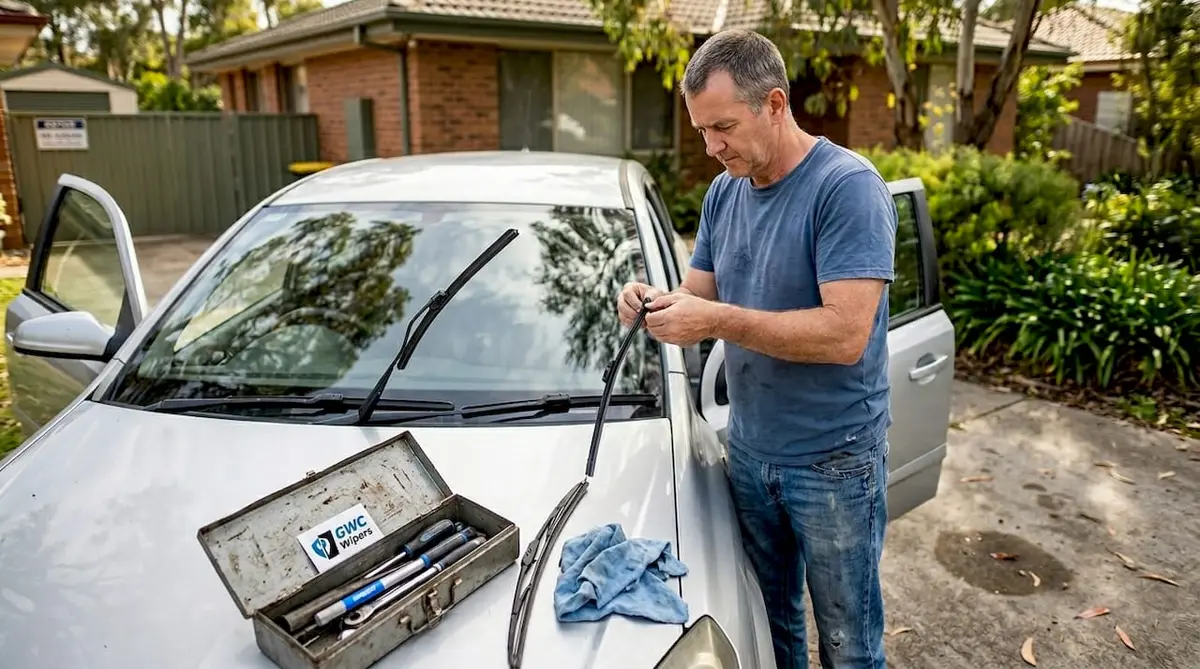
Many Australian drivers automatically replace their entire wiper blade the moment it starts streaking, but that’s often unnecessary and costly. A simple wiper refill can restore peak performance at a fraction of the price. Whether you’re dealing with summer UV damage in Queensland or winter downpours in Melbourne, understanding the difference between a refill and a full blade replacement could save you time, money, and frustration. This article covers what wiper refills are, how they work, their genuine advantages and limitations, and exactly when to use them.
Table of Contents
- Understanding wiper refills: Definition and basics
- Pros and cons of wiper refills versus full blade replacements
- Recognising when to use refills: Signs and vehicle compatibility
- How to replace a wiper refill: Step-by-step DIY guide
- Maintaining your wipers for optimum performance
- Find the right wiper blades and refills for your vehicle
- Frequently asked questions
Key Takeaways
| Point | Details |
|---|---|
| Refills are cost-effective | Wiper refills let you save money by replacing only the rubber insert, not the full blade. |
| Premium blades boost safety | High-quality blades offer more even pressure and reliable visibility in harsh Australian conditions. |
| DIY install is achievable | Most drivers can install wiper refills themselves with careful steps and proper tools. |
| Check compatibility first | Not all vehicles support refill replacements, so always check before buying. |
Understanding wiper refills: Definition and basics
A wiper refill is the rubber insert that sits inside your existing wiper blade frame. When your wipers start leaving streaks or making noise, it’s often just this rubber strip that has worn out, not the entire blade assembly. Wiper refills replace only the rubber component, not the whole blade, which means the metal or plastic frame stays in place while you swap out the worn part.
A standard wiper blade has three main components:
- The frame: The metal or plastic structure that holds everything together and connects to your vehicle’s wiper arm.
- The refill (rubber insert): The flexible rubber strip that makes direct contact with your windscreen to clear water and debris.
- The connector: The attachment point that links the blade to the wiper arm on your car.
Refills slide into the existing frame using small tabs or clips, locking into position once correctly seated. The process is similar to replacing a razor blade cartridge. You keep the handle and swap out the working part. This is why many drivers prefer refills when their frame is still structurally sound.
For those comfortable with basic car maintenance, our DIY wiper install guide walks you through the process clearly, whether you’re fitting a refill or a full blade.
Pros and cons of wiper refills versus full blade replacements
Now that you know what wiper refills are, let’s weigh their benefits and shortcomings compared to full blades.
| Feature | Wiper refill | Full blade replacement |
|---|---|---|
| Cost | Lower upfront cost | Higher upfront cost |
| Environmental impact | Less plastic waste | More material discarded |
| Performance | Good if frame is intact | Consistently superior |
| Installation ease | Moderate | Generally straightforward |
| Suitability for harsh weather | Variable | Reliable in all conditions |
| Lifespan | Depends on frame condition | Full reset of components |
Refills offer two clear wins: they’re kinder to your wallet and produce less waste. If your blade frame is still in good shape, a refill can restore wiping performance without the cost of a full replacement. For eco-conscious drivers, this is a meaningful advantage.
However, Car and Driver tests favour full premium blades for performance and safety, particularly in demanding conditions. Premium blades use aerodynamic designs and high-tension springs to apply even pressure across the entire windscreen. A refill fitted to an ageing frame may not deliver that same consistency, especially during heavy rain or when driving at highway speeds.
Worth knowing: In Australia’s harsh climate, UV exposure degrades rubber faster than in cooler countries. A refill fitted to a warped or corroded frame won’t perform reliably, no matter how fresh the rubber is.
Pro Tip: Before buying a refill, flex your existing blade frame gently. If it feels stiff, uneven, or shows visible rust or cracking, invest in a full blade replacement instead. A new refill in a compromised frame is money wasted.
For guidance on fitting either option, our DIY wiper install guide covers both scenarios with clear instructions.
Recognising when to use refills: Signs and vehicle compatibility
Knowing the strengths and weaknesses, let’s get practical: when should you actually use a wiper refill?
The most reliable indicator is the condition of your blade frame. If the frame is still flexible, corrosion-free, and holds its shape, a refill is a sensible choice. Here are the key signs that a refill may be all you need:
- Streaking or smearing: The rubber has hardened or cracked but the frame is still intact.
- Squeaking on a clean windscreen: The rubber edge has worn smooth but the frame sits correctly.
- Visible rubber deterioration: Splits or tears in the rubber strip with no frame damage.
- Recent full blade installation: If your blades are less than 12 months old and the frame is undamaged, a refill makes sense.
Compatibility is a critical factor. Assessment is case by case because not all vehicles or blade designs support refills. Beam blades, which are increasingly common on newer Australian vehicles, are a single moulded unit with no separate frame, so they cannot accept a traditional refill. Conventional bracket-style blades are the ones that typically support refills.

Australian weather adds another layer of complexity. Intense UV exposure in northern states accelerates rubber degradation, meaning refills may need replacing more frequently than in cooler climates. Coastal salt air can also corrode blade frames faster, making full replacements more appropriate in those regions.
For specific vehicle compatibility, you can browse options like Fiesta WP WQ hatch refills or Nissan Leaf refills to confirm what suits your car.
How to replace a wiper refill: Step-by-step DIY guide
Ready to take action? Here’s how to replace a wiper refill like a pro.
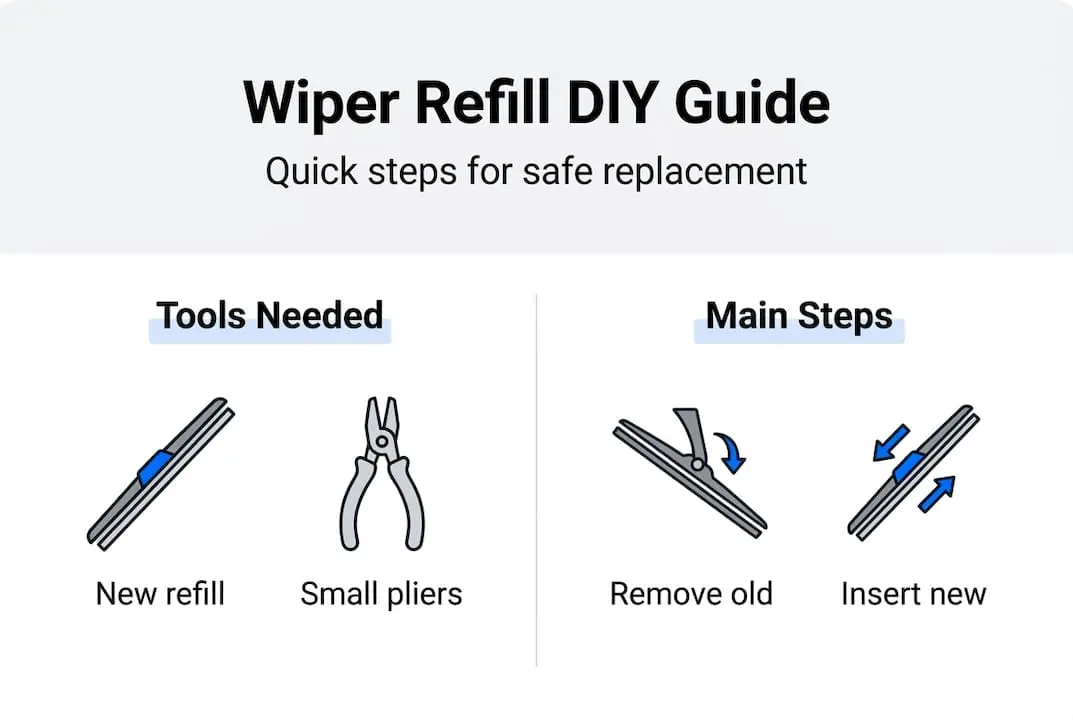
DIY replacement is straightforward with care and the right tools. Most Australian drivers can complete this job in under 15 minutes per blade.
- Gather your tools: You’ll need your new refill (matched to your blade length), a soft cloth, and possibly a small flathead screwdriver for stubborn clips.
- Protect your windscreen: Lay a folded towel over the glass before lifting the wiper arm. If the arm snaps back without a blade, it can crack your windscreen.
- Lift the wiper arm: Raise it until it locks in the upright position, away from the glass.
- Identify the refill release point: Look for small tabs or clips at the end of the rubber insert where it meets the frame.
- Slide out the old refill: Press the tabs inward and slide the rubber strip out from one end. It should move smoothly along the frame’s grooves.
- Insert the new refill: Align the new rubber strip with the frame grooves and slide it in from the same end. Push firmly until the tabs click into place at both ends.
- Lower the arm gently: Return the wiper arm to the windscreen slowly. Never let it snap down.
- Test immediately: Run your wipers with washer fluid to confirm even contact and no streaking.
Pro Tip: Always match your refill length exactly to your existing blade. Even a few millimetres difference can cause uneven wiping or the refill slipping out during use.
For a visual walkthrough, our step-by-step install guide includes detailed instructions. If you drive a popular model like the Volkswagen Polo hatch, you’ll find vehicle-specific fitment information to make the job even easier.
Maintaining your wipers for optimum performance
Once your new refill is installed, a few simple checks will ensure crystal-clear vision in all conditions.
Regular cleaning and seasonal checks keep wipers working at their best and extend the life of both the refill and the frame. Here’s what to build into your routine:
- Clean the rubber monthly: Use a damp cloth with a small amount of isopropyl alcohol to wipe along the rubber edge. This removes road grime, insect residue, and built-up wax that cause streaking.
- Inspect before each season: Before summer and before winter, lift your blades and check the rubber for cracks, hardening, or splits. Australian summers are particularly brutal on rubber compounds.
- Check frame integrity twice a year: Look for rust, bent sections, or uneven pressure points along the frame. A frame that no longer sits flush against the windscreen needs replacing, not just a new refill.
- Avoid dry wiping: Never run your wipers on a dry windscreen. This accelerates rubber wear significantly and can scratch the glass.
- Park in shade where possible: UV exposure is one of the fastest ways to degrade wiper rubber in Australia. Parking undercover or using a windscreen shade extends refill life noticeably.
- Use quality washer fluid: Plain water can leave mineral deposits on the rubber. A proper washer fluid keeps the rubber supple and the windscreen clean.
For a full breakdown of best practices, our ongoing wiper maintenance guide covers everything from cleaning techniques to knowing when it’s genuinely time to upgrade.
Find the right wiper blades and refills for your vehicle
If you’re ready to upgrade or explore your options, here’s how you can find the best fit for your car.
At GWC Wipers, we’ve built our range specifically for Australian driving conditions, from the tropical north to the alpine south. Our vehicle selector tool makes it simple to find the exact refill or blade that fits your make, model, and year, with no guesswork involved.
Whether you drive a Mercedes-Benz or a Toyota, we stock premium options designed to handle UV exposure, heavy rain, and everything in between. Every purchase comes with free shipping across Australia, a 30-day money-back guarantee, and a 12-month warranty. Browse the full selection at GWC Wipers and get the right fit the first time, backed by genuine local expertise.
Frequently asked questions
Are wiper refills really as effective as new blades?
Wiper refills can restore clear wiping if your blade frame is still in good shape, but full premium blades offer superior performance and safety, especially in tough Australian weather conditions.
How often should I replace my wiper refills?
In Australia, wiper refills should be checked every six months and replaced if they streak or squeak. Seasonal checks are essential because harsh UV and coastal conditions can shorten their lifespan considerably.
Can all vehicles use wiper refills?
No. Beam-style blades and some premium wiper systems are single-unit designs that cannot accept a traditional refill. Assessment is case by case, so always confirm compatibility with your specific vehicle model before purchasing.
Is DIY installation difficult for wiper refills?
DIY replacement is straightforward for most Australian cars when you follow a clear step-by-step guide and take care to match the correct refill length to your existing blade frame.