
Common auto glass issues: how to spot and fix them fast
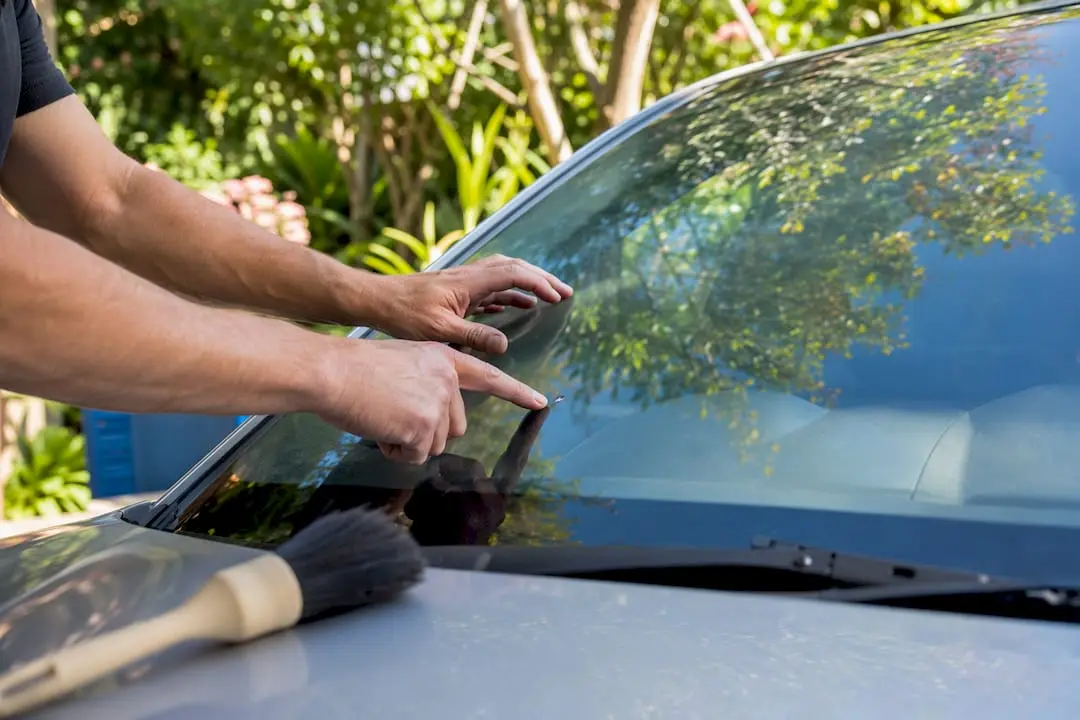
The most common auto glass issues are chips, star breaks, bullseye breaks, cracks, edge cracks, surface pits, scratches, delamination, shattered glass, and seal failure. Chips in your line of sight, cracks that are spreading, or shattered glass need urgent attention. Smaller pits and light scratches can usually wait for your next scheduled service.
Here’s your quick triage guide:
- Fix now: any chip in your direct line of sight, a crack that’s visibly growing, or shattered glass
- Book soon: small chips outside the driver’s view, minor edge damage, light surface scratches
- Monitor: faint surface pits or hairline marks that aren’t spreading
If a crack stretches across your line of sight or the glass has shattered, don’t drive the vehicle. Get it towed to a licensed repairer instead.
The size and location of the damage decide whether a technician can repair it or has to replace the whole windscreen, which we cover in detail further down.
Key Takeaways
Chips and cracks in a driver’s line of sight, or damage over roughly 25 to 75mm depending on the break type, generally require replacement rather than repair.
| Point | Details |
|---|---|
| Identify the damage type | Chips, star breaks, bullseye breaks, and edge cracks each carry different urgency and repair odds. |
| Act fast on small chips | A quick resin repair while a chip is small often avoids a full, more expensive replacement later. |
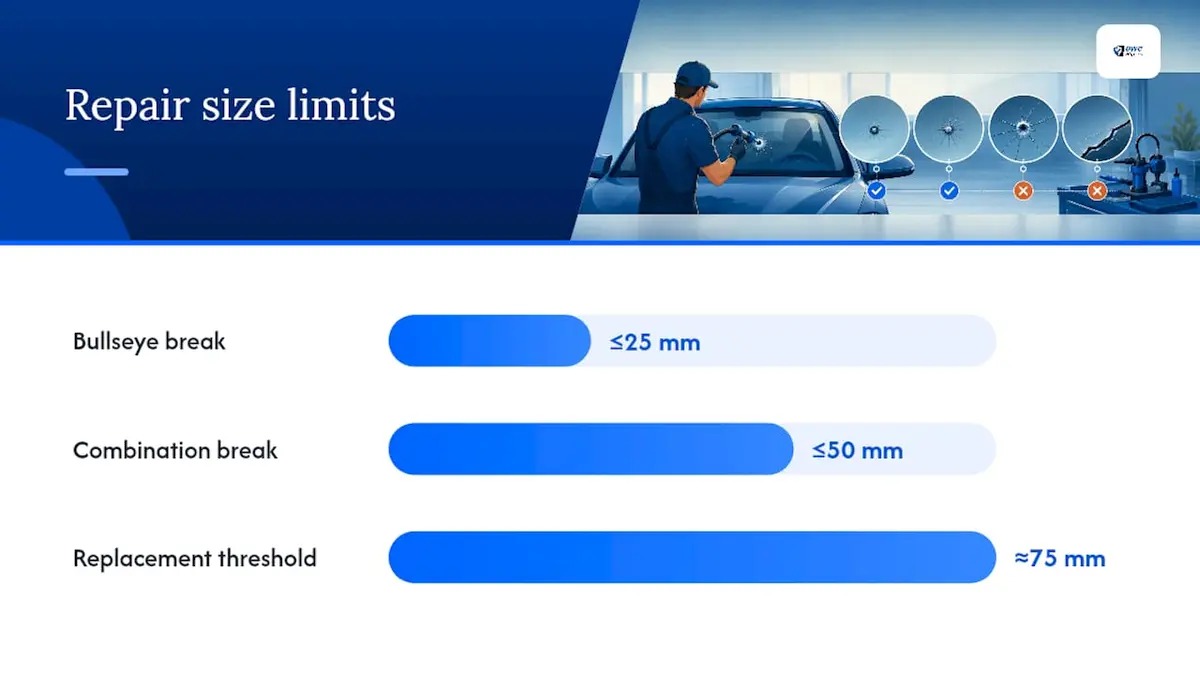
| Know the size limits | Bullseye breaks up to 25mm and combination breaks up to 50mm are usually repairable; larger ones aren’t. |
| Never drive with obstructive damage | Cracks in the driver’s sightline or shattered glass mean towing to a licensed repairer, not driving. |
| Maintain your wipers | Com’s segmented-pressure blades and correct fitment reduce the fine scratching that erodes windscreen clarity over time. |
Table of Contents
- List of common auto glass issues and how to identify them
- What actually causes these auto glass problems
- Repair or replace: the size and location rules that matter
- What happens at the repair shop
- Simple habits that prevent most auto glass damage
- How worn wipers contribute to glass damage over time
- Sources
- FAQ
List of common auto glass issues and how to identify them
Knowing the right name for the damage on your windscreen helps you describe it accurately to a repairer and understand how urgent it is. Here’s the full rundown of common windshield issues, from minor to severe.
- Chip or pit — a small, localised impact mark, often no bigger than a coin. Low severity on its own, but a common starting point for bigger problems if left untreated. Usually caused by a stray stone off the road.
- Bullseye break — a circular chip with a dark centre ring, resembling a small round pool of damage. Medium severity; it distorts vision in that patch of glass and tends to widen with vibration.
- Half moon — similar to a bullseye but shaped like a crescent rather than a full circle. Medium severity, usually from an angled impact.
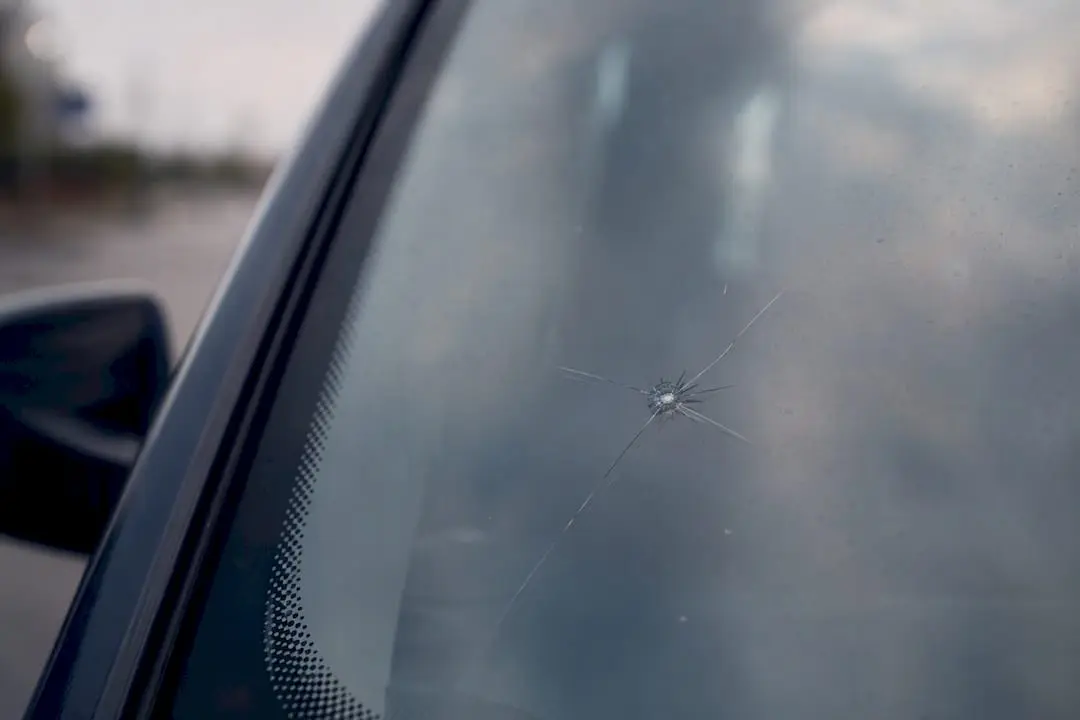
- Star break — a chip with short cracks radiating outward like spokes. Medium to high severity because those legs can travel fast under thermal stress.
- Combination break — a mix of a bullseye or star break with one or more linear cracks running from it. High severity, since it combines several weak points in one spot.
- Linear crack — a straight or gently curved line running across the glass, unconnected to a central impact point. Severity depends entirely on length and whether it’s spreading. A crack that’s grown past a driver’s line of sight generally can’t be repaired and calls for replacement.
- Edge crack — any crack that starts or runs within roughly 75mm of the windscreen’s border. High severity because the edge is under structural load from the frame, and cracks here tend to spread more rapidly.
- Surface pit — shallow, scattered marks on the outer layer of glass, often from years of gravel exposure rather than one single impact. Low severity individually, but widespread pitting scatters light and hurts night vision.
- Scratch — a fine line or set of lines usually caused by abrasive wiper blades or gritty cleaning cloths. Low severity structurally, but it can create glare in low sun and rain.
- Delamination — cloudy or bubbled patches where the laminated layers of glass have started separating, often around the edges. High severity, as it signals the glass itself is failing rather than just being marked.
- Shattered glass — a full break across a large section or the whole pane, usually from a heavy impact, break-in attempt, or severe hail. Critical severity; the vehicle isn’t safe to drive.
- Seal failure — gaps or deterioration in the rubber or adhesive seal around the glass, sometimes showing as water leaks or wind noise. Medium to high severity, since a compromised seal affects both weatherproofing and structural bonding.
What actually causes these auto glass problems
Most auto glass damage follows a predictable pattern once you know what to look for. Here are the main cause and effect pairs seen on the road.
- Road debris and flying stones → chips and stone breaks, especially following trucks or on freshly resurfaced roads
- Potholes and frame stress → cracks that start from mechanical flexing rather than a direct hit
- Thermal shock → an existing chip expanding rapidly when hot glass meets cold water, or vice versa
- Hail and severe storms → multiple chips at once, sometimes full shattering in a bad storm
- Poor installation or defective glass → stress cracks or delamination appearing weeks or months after a replacement, tied to incorrect adhesives or a poor-quality fit
- Worn or incorrect wipers, abrasive cleaning → fine scratches that build up over time
- Vandalism or attempted theft → smashed side or rear glass, usually sudden and severe
- Age and UV exposure → glass and seals becoming more brittle, making existing damage more likely to spread
Loose gravel, flying rocks and rough or unsealed roads remain among the most frequent causes of glass damage for everyday drivers, which is why following distance matters more than most people think.
Pro Tip: Leave extra following distance behind trucks and utes on gravel or unsealed roads. Most stone chips happen when a vehicle ahead kicks debris straight into your windscreen at speed.
Weather-driven damage like hail is largely unavoidable. Debris strikes, thermal shock and wiper-related scratches are the ones you have the most control over.
Repair or replace: the size and location rules that matter
Whether a repairer can fix the damage or needs to replace the whole windscreen comes down to size, location, and how many separate breaks there are. Industry repair standards set out clear numeric limits: a bullseye break generally needs to be 25mm or smaller to remain repairable, a combination break’s body should be modest in size, generally smaller than a few centimeters, and a star break typically should be of limited size, usually not extending beyond a few centimeters.
Industry guidance caps a repairable bullseye at around 25mm and a combination break body at 50mm — beyond that, resin injection can’t restore enough strength.
Repair is generally not recommended when:
- The damage has penetrated both layers of laminated glass, not just the outer surface
- Dirt, moisture or old wax has contaminated the break, which stops resin bonding properly
- There are multiple long cracks or more than two or three separate chips close together
- The damage sits within the sensor zone used by driver-assist cameras
- The crack falls within the driver’s direct line of sight, even if it’s short
If any of these apply, or the glass has shattered, the vehicle may be unroadworthy. RACV’s guidance is blunt on this point: don’t drive it, arrange a tow to a repairer instead.
What happens at the repair shop
Repairs and replacements follow different processes, and knowing what to expect helps you judge how long you’ll be without your car.
A typical chip repair runs like this:
- The technician inspects the break and checks it against size and location limits
- The area is cleaned to remove debris and moisture
- Resin is injected under vacuum or displacement pressure to fill the break
- The resin cures, often under UV light
- The surface is polished flat
A full replacement involves:
- Careful removal of the damaged windscreen and old adhesive
- Fitting new, correctly specified glass with fresh sealant
- Recalibrating ADAS cameras and sensors if your vehicle has them
A straightforward chip repair usually takes 30 to 60 minutes and you can often wait with your car. A replacement typically takes a few hours once curing and recalibration are factored in, and some shops will ask to keep the vehicle longer if parts need ordering. Even a well-executed repair can leave faint optical distortion at the repair site, which is why licensed technicians and manufacturer guidance on ADAS recalibration matter as much as the glasswork itself.
Simple habits that prevent most auto glass damage
Most windscreen problems are manageable with a few consistent habits rather than expensive fixes.
- Run a quick visual check after driving gravel roads, through hail, or past construction zones
- Keep distance from trucks and avoid tailgating on unsealed surfaces
- Replace wiper blades at the first sign of streaking, tearing, or chatter
- Never pour hot water on a frosted windscreen. The thermal shock can turn a hairline chip into a full crack
- Park under cover during storms, and avoid parking beneath trees where falling branches or sap can mark the glass
- Consider a quality protective film on high-risk vehicles, and always fit wipers matched to your exact make and model
Pro Tip: A worn wiper blade doesn’t just streak. It drags grit across the glass every pass, which is how fine scratches build up over months without you noticing.
Small steps like checking your windscreen clarity checklist after rough trips catch problems while they’re still cheap to fix.
How worn wipers contribute to glass damage over time
Wiper condition matters more to your windscreen’s long-term health than most drivers realise. A blade with torn rubber or the wrong curvature doesn’t glide, it drags. That constant low-grade abrasion creates micro-scratches that scatter light, especially noticeable driving into low sun or oncoming headlights at night.
Run a quick check every few months:
- Look for torn or cracked rubber edges along the blade
- Listen for chatter or juddering across the glass, a sign the blade isn’t sitting flat
- Feel the rubber. If it’s gone hard or brittle, it’s overdue for replacement
- Watch for streaking that returns immediately after cleaning
Correct blade length and mounting matter just as much as rubber quality. A blade that’s too long or badly seated creates uneven pressure points, which accelerates wear on both the glass and the seal beneath it; for tips on practical cleaning techniques and preventing scratches, see this streak-free cleaning method for UK owners. Fitment guides that match blades to your exact vehicle model exist for exactly this reason.
A practical note from watching this play out
I’ve seen a coin-sized chip left untreated for a season turn into a crack that ran the width of the windscreen. Acting early, using the triage guide above, and checking your wipers regularly will save you that outcome.
Quality wiper blades as a preventive step
Since abrasive, worn wiper blades are one of the few causes of glass damage you can control directly, the blades you fit are worth getting right.
Com designs blades around three things that matter for glass health, not just clear vision in the rain:
- Segmented pressure distribution that spreads contact evenly across the glass, rather than concentrating wear in one spot
- Natural rubber construction that resists hardening and cracking under Australian UV exposure
- Preassembled adapters matched to more than 2,500 models, so the blade sits correctly rather than creating pressure points
If you’re driving a Toyota or a Mercedes-Benz, you can check exact fitment on the Toyota wiper blades page or the Mercedes-Benz wiper blades page, backed by a 30-day money-back guarantee and 12-month warranty if the fit or performance isn’t right.
Sources
- Repair of Laminated Auto Glass Standard
- Should you repair or replace a cracked windscreen? | RACV
- Top 8 common causes of automotive glass damage on Australian roads
- 5 common causes of windscreen damage – NOVUS Glass
FAQ
What are the most common problems with windshields?
The most common problems are chips, star breaks, bullseye breaks, linear cracks, edge cracks, surface pits, scratches, delamination, and shattered glass, each with different severity and repair odds.
What are the most common causes of windscreen cracks?
Road debris and stone impacts are the leading cause, followed by thermal shock from rapid temperature change, potholes and frame stress, and pre-existing chips that spread over time.
What can ruin a windshield?
Ignoring a small chip, pouring hot water on a frosted windscreen, driving with worn wiper blades, and using poor-quality glass or adhesives during a past replacement can all turn manageable damage into a write-off.
At what point does a cracked windscreen become a problem?
A crack becomes a safety and legal problem once it enters the driver’s direct line of sight, exceeds the length limits set by industry repair standards, or sits within an ADAS sensor zone.