
Best practices for clear windshields: your complete guide
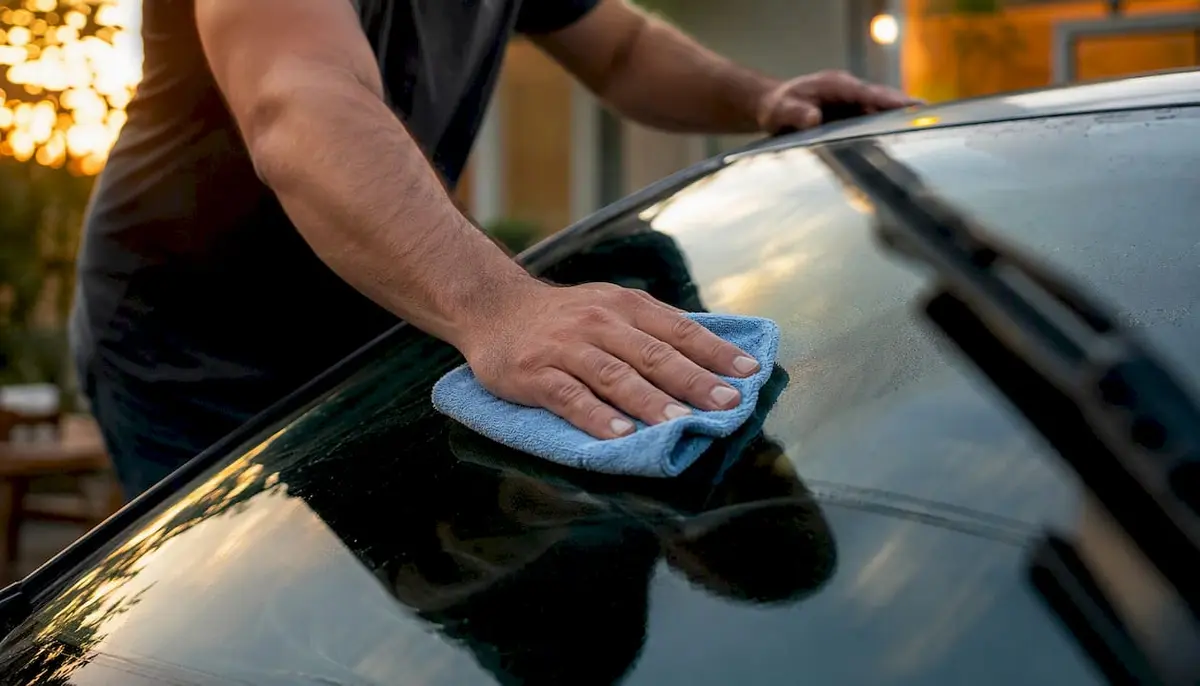
The fastest route to a streak-free windscreen is a simple, repeatable routine: rinse off loose grit, apply an ammonia-free glass cleaner to a microfibre cloth, wipe in circular motions then finish with vertical strokes, and buff dry with a second clean cloth. Check your windshield clarity checklist before every long drive. These best practices for clear windshields take under ten minutes and make a measurable difference to your visibility and safety on Australian roads.
Quick-start checklist — do this now:
- Rinse the windscreen with water to dislodge loose grit before touching the glass
- Spray ammonia-free glass cleaner onto a clean microfibre cloth (not directly onto the glass)
- Wipe in overlapping circular motions to lift grime, then finish with straight vertical strokes
- Buff with a second dry microfibre cloth to remove any remaining residue
- Check wiper blades for streaking, skipping, or cracked rubber
- Top up washer fluid and confirm the jets are aimed correctly
Two safety checks to do right now: stand outside and look through the glass at a low angle to spot haze or film that only shows up in low-sun glare, and run your wipers on a damp screen to confirm they clear cleanly without juddering.
Table of Contents
- What are the best practices for cleaning the exterior windscreen?
- How do you remove interior film and haze from your windscreen?
- How do you defog a windscreen quickly and stop it fogging again?
- How do you inspect wiper blades and choose the right washer fluid?
- When and how often should you clean your windscreen in Australia?
- How do you safely remove bugs, sap, tar, and ice from your windscreen?
- Why washer-fluid hygiene and windscreen clarity are safety and legal issues in Australia
- Key takeaways
- The one thing most drivers get wrong about windscreen maintenance
- Ready to replace your wipers? Here is how to get the right fit
- Useful sources and further reading
- FAQ
What are the best practices for cleaning the exterior windscreen?
Rinsing before you touch the glass is the single most important step most drivers skip. Road grit, salt, and dried bug splatter are abrasive. Rubbing them dry with a cloth, even a quality microfibre, drags particles across the glass and creates fine scratches that scatter light and worsen glare over time.
Once the surface is pre-wet, choose your cleaner carefully. For Australian conditions, ammonia-free commercial glass cleaners are the safest choice across all vehicle types, including those with tinted glass, because ammonia degrades window tint film and can dry out rubber seals. A mild car-wash soap diluted in water works well for general grime. A 50/50 mix of white vinegar and distilled water is a reasonable DIY option for light film, though it is less effective on heavy bug splatter or tar.
Apply the cleaner to your cloth, never directly onto a hot windscreen. Heat causes the solution to evaporate before you can spread it, leaving concentrated residue that streaks badly. Work in sections: circular motions first to lift and loosen grime, then straight vertical strokes to finish. The two-cloth microfibre method — one cloth for cleaning, one for buffing — produces a lint-free, streak-free result that paper towels simply cannot match.
Pro Tip: Keep two separate sets of microfibre cloths: one for exterior glass and one for interior. Cross-contamination from exterior cloths (which pick up road oils and tar) is one of the most common causes of interior haze.
Avoid metal scrapers or abrasive pads on glass under any circumstances. Even light scratching from the wrong tool accelerates hazing and can compromise the structural integrity of laminated glass. Plastic scrapers are acceptable for ice, but only after the glass has been pre-treated.
How do you remove interior film and haze from your windscreen?
Interior glass film is often the root cause of perceived streaks and glare, and most drivers focus entirely on the outside. The film builds up from cigarette smoke, volatile organic compounds (VOCs) off-gassing from dashboard plastics, air conditioning residue, and fine dust particles that settle on the glass over time. At sunrise and sunset, this film scatters light directly into your eyes and significantly reduces contrast.
The interior cleaning routine differs from the exterior in a few key ways:
- Let the glass cool completely before cleaning; warm interior glass causes cleaner to evaporate faster and streak more
- Use an ammonia-free cleaner or a diluted vinegar solution; ammonia fumes are concentrated inside a closed cabin
- Apply cleaner to the cloth, not the glass, and work in horizontal strokes on the inside
- Use vertical strokes on the outside so you can immediately identify which surface still has a smear
- Buff with a second dry microfibre cloth in circular motions to remove any remaining film
The awkward angle of the interior windscreen is a real challenge. A long-handled applicator pad or a folded microfibre wrapped around a flat tool helps you reach the lower corners without pressing your arm against the dash and smearing it across the glass.
Pro Tip: Check your cabin air filter every 15,000 km. A clogged filter recirculates dust and moisture through the AC system, which accelerates interior film build-up on the glass. Replacing it is one of the cheapest ways to keep the inside of your windscreen cleaner for longer.
How do you defog a windscreen quickly and stop it fogging again?
The fastest way to clear a fogged windscreen is to run the fan on full directed at the glass, switch the air conditioning on simultaneously, and set the temperature to match the outside air. This combination removes moisture from the cabin air rapidly. AC acts as a dehumidifier regardless of temperature setting, which is why it clears fog faster than heat alone.
Fog forms when warm, moist cabin air contacts cold glass. The moisture condenses on the surface, and in Australian winters, this happens quickly after rain or overnight parking. The mistake most drivers make is blasting hot air without AC. Hot air holds more moisture, which can temporarily clear the glass but often causes re-fogging within minutes once the airflow drops.
A few practical hacks worth knowing:
- A small container of cat litter (silica-based) placed under the seat absorbs cabin moisture overnight and reduces morning fogging
- Commercial demister sprays applied to the interior glass create a hydrophilic coating that prevents condensation from beading; reapply every few weeks
- Keeping a clean dry microfibre in the glovebox lets you wipe a small clear patch quickly in an emergency
Pro Tip: If your windscreen fogs heavily and persistently, check the cabin for damp floor mats or a leaking heater core. Persistent moisture sources defeat any demisting routine.
If fog is severe enough that you cannot see clearly, pull over safely before attempting to clear it. Driving with significantly obscured vision is a safety risk and may constitute a traffic offence under Australian road rules.
How do you inspect wiper blades and choose the right washer fluid?
Inspect your blades and replace them when they streak, skip, or judder, or at approximately every six months or 10,000 km, whichever comes first. In Australia’s UV-intense climate, rubber degrades faster than the calendar suggests, particularly on vehicles parked outdoors in Queensland or Western Australia.
Blade inspection checklist:
- Run a fingernail along the rubber edge; nicks, cracks, or a rounded profile mean the blade needs replacing
- Lift the blade arm and check the wiper frame for corrosion or bent sections that prevent even contact
- Run the wipers on a damp screen and watch for skipped patches, streaking, or audible judder
- Check that the blade sits flush against the glass across its full length; a lifted centre or edge indicates a worn high-tension spring
| Condition | Replacement trigger | Suggested interval |
|---|---|---|
| Standard suburban use | Streaking or skipping | Every 6 months or 10,000 km |
| Coastal (salt exposure) | Corrosion on frame, rubber hardening | — |
| Dusty outback/regional | Accelerated rubber wear, grit scoring | — |
| Cold climate (alpine/southern) | Rubber cracking, ice damage | Before and after winter season |
For washer fluid, use a purpose-made automotive washer concentrate rather than plain water or household detergents. All-season concentrates work well for most Australian conditions. If you drive in areas with heavy insect activity, a bug-and-tar additive in the fluid helps pre-treat the glass before wiping. In alpine areas of Victoria, New South Wales, or Tasmania, a winter-formula fluid with a lower freeze point prevents the reservoir and jets from icing up overnight.
Stagnant water in the reservoir can harbour bacteria, including Legionella. Flush the reservoir and refill with fresh fluid every six months as a minimum.
GWC Wipers is a recommended Australian option for blade replacement. Their blades are designed and manufactured for Australian weather, cover fitment for over 2,500 vehicle models, and come with a 12-month warranty and 30-day money-back guarantee. Preassembled adapters mean installation takes minutes without tools. You can read more about wiper blade protection and maintenance on their site.
Pro Tip: When topping up the reservoir, use a funnel to avoid spilling concentrated fluid on painted surfaces. Flush the system by running the jets for 10–15 seconds after refilling to clear any residue from the lines.
When and how often should you clean your windscreen in Australia?
Clean in cool, shaded conditions, early morning or late afternoon, because heat causes cleaners to evaporate before you can spread them, leaving concentrated residue that streaks. Direct sunlight also makes it harder to see the glass surface clearly while you work, so you miss patches that only show up later when driving into the sun.
Frequency depends heavily on where and how you drive.
| Environment | Recommended frequency | Common triggers for an immediate clean |
|---|---|---|
| City commuter | — | Heavy rain with road spray, visible film in morning sun |
| Coastal (salt air) | Weekly | After beach trips, overnight salt haze, post-storm |
| Dusty regional/outback | After every significant drive | Red dust film, insect accumulation, dry wind events |
| Suburban with tree cover | Every 2 weeks | Sap, bird droppings, pollen season |
A quick visual check takes seconds: look through the glass at a low angle in bright light. If you see a milky haze, rainbow sheen, or distinct smear patterns, clean it now rather than waiting for your scheduled routine. After heavy rain in a city environment, road spray deposits a fine oily film that is nearly invisible until you drive into low sun.
For a more detailed seasonal breakdown, the car visibility checklist for Aussie weather covers regional and climate-specific guidance worth bookmarking.
How do you safely remove bugs, sap, tar, and ice from your windscreen?
Each contaminant needs a slightly different approach, and the common thread is: soak first, scrape gently second, never dry-scrub.
Bugs and insect splatter: Soak with a wet microfibre or a bug-specific pre-spray for two to three minutes to rehydrate the protein residue. Wipe with moderate pressure using a fresh microfibre. For heavy accumulation, a dedicated bug-and-tar remover applied to the cloth lifts the residue without scratching.
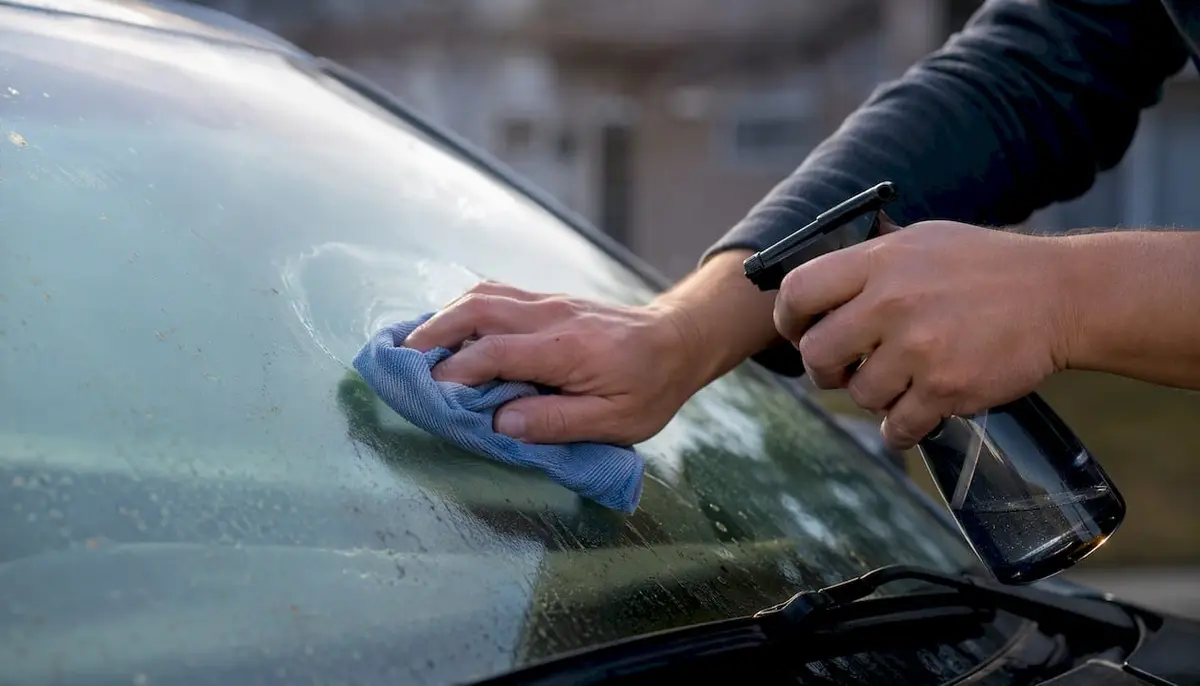
Tree sap: Apply a small amount of isopropyl alcohol (70% concentration) to a microfibre and hold it against the sap for 30 seconds to dissolve the resin. Wipe gently; do not rub dry sap across the glass. Repeat if needed, then follow with a full glass clean to remove any alcohol residue.
Tar and road bitumen: A dedicated tar remover or a small amount of eucalyptus oil on a cloth works well. Apply, allow 60 seconds of dwell time, then wipe. Avoid petroleum-based solvents that can damage rubber seals around the glass.
Bird droppings: Rehydrate with a damp cloth before touching; dried droppings are highly abrasive and will scratch if rubbed dry. The uric acid in bird droppings also etches glass over time, so remove them promptly.
Ice and frost: Use a de-icer spray and your vehicle’s defrost function before any manual scraping. A plastic ice scraper is acceptable once the surface has softened. Never pour hot water on a frozen windscreen; the rapid thermal shock can expand existing chips into full cracks. Temperature fluctuations alone can turn a small chip into a crack that requires full replacement, so address any chips before the cold season arrives. For more on winter windscreen protection, GWC Wipers has a practical cold-weather guide.
Avoid any abrasive pad, steel wool, or metal tool on glass. Even a single pass with the wrong material creates micro-scratches that catch light and accelerate hazing.
Why washer-fluid hygiene and windscreen clarity are safety and legal issues in Australia
Washer-reservoir hygiene and unobstructed vision are not just maintenance preferences — they are safety and roadworthiness requirements. Driving with vision significantly obscured by dirt or grime can constitute a traffic offence under Australian road rules, and a vehicle with a heavily contaminated windscreen may fail a roadworthiness inspection.
Victorian road safety legislation treats vision obstruction as a safety and enforcement issue, and similar provisions apply across other Australian jurisdictions. The practical implication: keeping your windscreen clear is not optional.
On the reservoir side, stagnant water left in the washer system can harbour harmful bacteria. Using a purpose-made washer fluid and flushing the reservoir periodically reduces this risk. For guidance on flushing fluid systems safely, the process is straightforward and takes under ten minutes.
Key safety actions:
- Repair stone chips promptly; temperature changes can expand a small chip into a crack that requires full replacement
- Check that your washer jets are aimed at the windscreen and delivering adequate fluid before long drives
- Replace blades at the first sign of streaking; worn blades smear rather than clear, which is worse than no wiper at all in heavy rain
Pro Tip: Flush the washer reservoir at the start of each season. Empty the old fluid, rinse with clean water, and refill with fresh concentrate. This takes less than five minutes and eliminates the bacterial risk from stagnant water.
For more on why windscreen clarity matters for Australian drivers, including the safety case and legal context, GWC Wipers has a detailed explainer worth reading.
This article provides general information about vehicle maintenance and Australian road safety. It is not legal advice. Confirm current roadworthiness requirements with your state’s road authority or a qualified automotive professional.
Key takeaways
Keeping your windscreen clear requires a consistent routine, the right products, and timely blade replacement — together, these three habits address the vast majority of visibility problems Australian drivers face.
| Point | Details |
|---|---|
| Clean in cool shade | Work in early morning or late afternoon to prevent cleaner evaporating and streaking on hot glass. |
| Use the two-cloth method | Apply with one microfibre, buff with a second dry cloth for a lint-free, streak-free finish. |
| Replace blades approximately every six months | Swap blades at around 10,000 km or sooner if they streak, skip, or judder on a wet screen. |
| Flush the washer reservoir seasonally | Stagnant fluid can harbour bacteria; refill with a purpose-made concentrate every six months. |
| GWC Wipers for Australian fitment | GWC Wipers supplies vehicle-specific blades for over 2,500 models with a 12-month warranty and free shipping across Australia. |
The one thing most drivers get wrong about windscreen maintenance
Most drivers treat windscreen care as a reactive task — they clean when they can barely see, and replace wipers when the rubber is already falling apart. The problem with that approach is that by the time visibility is noticeably affected, the glass has usually accumulated micro-scratches from worn blades and abrasive grit, and the interior film has built up to the point where it scatters light badly at dawn and dusk.
What technicians see repeatedly is drivers who have been running degraded blades for months, often through an entire wet season, and then wonder why their windscreen looks permanently hazy even after a clean. The blades are the delivery mechanism for everything that touches the glass. A worn blade with a cracked or hardened rubber edge does not just streak — it drags road contamination across the surface on every wipe cycle, embedding grime into any existing micro-abrasions.
The fix is straightforward: build blade inspection into your regular service schedule rather than waiting for a problem to announce itself. Check the rubber edge every time you wash the car. If it feels stiff, rounded, or shows any cracking, replace the blades before the next rain event. Paired with the two-cloth cleaning routine and a seasonal reservoir flush, this single habit shift will keep your windscreen clearer and safer for longer than any premium cleaner on the market.
Ready to replace your wipers? Here is how to get the right fit
If your blades are streaking, skipping, or overdue for replacement, fitting a correctly sized, premium pair is the most direct way to restore safe visibility. GWC Wipers designs and manufactures wiper blades specifically for Australian conditions, covering over 2,500 vehicle models with a vehicle-specific fitment guarantee.
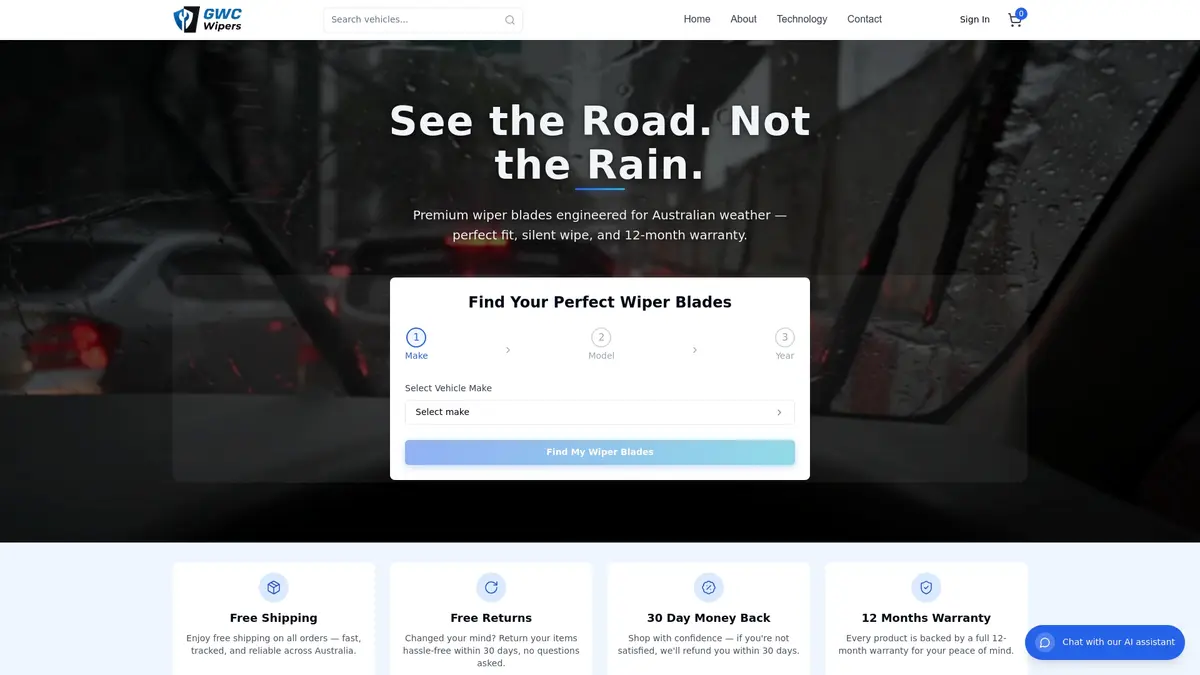
Their blades use natural rubber construction with advanced segmented pressure distribution for consistent contact across the full sweep, and an aerodynamic design that maintains performance at highway speeds. Preassembled adapters mean you can install them yourself in minutes without tools. Every order ships free across Australia and is backed by a 12-month warranty and a 30-day money-back guarantee.
Finding the right blade is simple: use the GWC Wipers vehicle selector on their site, enter your make, model, and year, and the correct blade is identified immediately. Popular models like Toyota wiper blades and Mitsubishi wiper blades are stocked and ready to ship. Head to gwcwipers.com.au to find the right blades for your vehicle and get them delivered to your door.
Useful sources and further reading
These Australian resources support the guidance in this article and are worth bookmarking for ongoing reference:
- How to keep your car windscreen clear when it rains
- Keep Your Windscreen Clear & Wipers Effective — Jim’s Car Detailing
- How to Clean Your Windscreen Without Streaks
- The ultimate guide to a streak-free windscreen
- Essential Windscreen Maintenance Tips for Every Season
- DIY Windscreen Cleaning: Ultimate Guide for Australians
FAQ
How do you get a perfectly clear windscreen?
Rinse the glass first to remove loose grit, then apply an ammonia-free cleaner to a microfibre cloth and wipe in circular motions followed by vertical strokes. Buff with a second dry microfibre cloth, and clean the interior glass using the same two-cloth method with horizontal strokes inside and vertical outside to identify any missed spots.
Is it better to defog with hot or cold air?
Use the air conditioning regardless of temperature setting, combined with airflow directed at the windscreen. AC dehumidifies the cabin air and clears fog faster than heat alone; blasting hot air without AC can temporarily clear the glass but often causes re-fogging once airflow drops.
Does WD-40 clean windscreens?
WD-40 is not recommended for windscreen glass. It leaves an oily residue that smears under wipers, attracts dust, and can impair visibility further. Use an automotive-grade ammonia-free glass cleaner instead.
How do you get a crystal-clear windscreen in Australia?
Clean in cool, shaded conditions using the two-cloth microfibre method, and address the interior glass as well as the exterior — interior film from AC residue and dashboard off-gassing is often the main cause of glare and haze. Replace wiper blades at the first sign of streaking and keep the washer reservoir filled with a purpose-made fluid.