
Natural Rubber Compound Wipers: UV Limits, Additives and Exact Fit
Natural rubber compound wipers deliver strong, immediate wet-weather performance at a lower price than synthetic or silicone blades, making them a sound choice for drivers who replace blades regularly and want reliable contact with the glass from the first wipe. Where they struggle is long-term exposure to harsh heat and UV, which shortens their working life compared with coated synthetics. For a fit-guaranteed replacement, our vehicle lookup matches the right blade to your exact car.
TL;DR:
- Natural rubber blades typically last six to twelve months; sustained heat and UV shorten that span, while coated synthetic or silicone blades last longer.
- Replace blades when the edge cracks, hardens, curls, chatters, skips, or streaks after cleaning; damaged rubber can also fail vehicle inspection.
- Look for named UV stabilizers, ozone resistant additives, or graphite, and confirm any coating covers the wiping edge because poor adhesion can erase its benefits.
- Check the exact blade length and connector for your vehicle, install the blade securely, and clean the glass with mild automotive cleaner to protect the rubber.
Table of Contents
- What natural rubber compounds are and how they differ from synthetic and silicone
- How heat, UV and rain actually affect wiper performance
- Coatings and additives that extend natural rubber life
- When to replace: realistic lifespan and the signs that matter
- Getting the fitment and maintenance right
- A short checklist for choosing natural rubber wipers
- Our approach to compound design and exact fitment
- How natural rubber wiper compounds are actually made
- Why the “set and forget” approach to wiper blades costs you more
- Perfect fit: find your natural rubber wipers now
- FAQ
- Sources
What natural rubber compounds are and how they differ from synthetic and silicone
Natural rubber wiper blades start life as a polymer harvested from the rubber tree, then get blended with additives that turn a soft, perishable material into something that can survive months of sun, grit and glass contact. The base polymer alone would crack and perish within weeks of regular UV exposure, so compounders add anti-ozonants to slow surface oxidation, fillers such as carbon black to add bulk and wear resistance, and plasticisers to keep the rubber flexible in cold mornings and hot afternoons alike. The result is a blade that grips the glass well and clears water cleanly when it is fresh, because the compound is naturally soft and conforms closely to the windscreen’s curve.
EPDM, or ethylene propylene diene monomer, is the synthetic alternative most premium blades use instead of natural rubber. It is a manufactured polymer built specifically to resist ozone and UV attack, which is the natural rubber’s weak point. EPDM compounds tend to hold their flexibility and edge shape for longer under sustained sun exposure, though the trade-off is a firmer initial feel and a higher price point.
Silicone blades use a different chemistry again: polydimethylsiloxane, or PDMS, a polymer with a silicon-oxygen backbone rather than the carbon-based structure of rubber. That backbone makes silicone naturally resistant to heat and UV degradation and gives it a hydrophobic surface that sheds water in a different pattern to rubber. Silicone blades tend to last longer in service, but they are stiffer at low temperatures and often cost more up front.
A quick summary of how the three compare on the shelf:
- Natural rubber: softest, cheapest, best immediate wiping feel, shortest UV lifespan.
- EPDM/synthetic rubber: firmer, mid-to-premium pricing, better UV and ozone resistance over time.
- Silicone (PDMS): most heat and UV resistant, hydrophobic surface, higher price, stiffer in the cold.
Understanding this split matters because the “best” material depends on how long you intend to run the blade and how harsh your local conditions are, not on which option is universally superior.
How heat, UV and rain actually affect wiper performance
Heat and UV exposure attack rubber from the surface inward. On a natural rubber blade, repeated days of strong sun start to oxidise the outer layer, which stiffens it and causes micro-cracking long before the bulk of the blade has worn out. Once that surface cracking begins, you will notice streaking first, then skipping, then an audible chatter as the edge loses its clean line against the glass. The weatherability research on coated EPDM compounds found that surface coatings and multiphase formulations significantly improve resistance to controlled UV irradiation compared with uncoated rubber, which is why many synthetic blades add a coating rather than relying on the base compound alone.
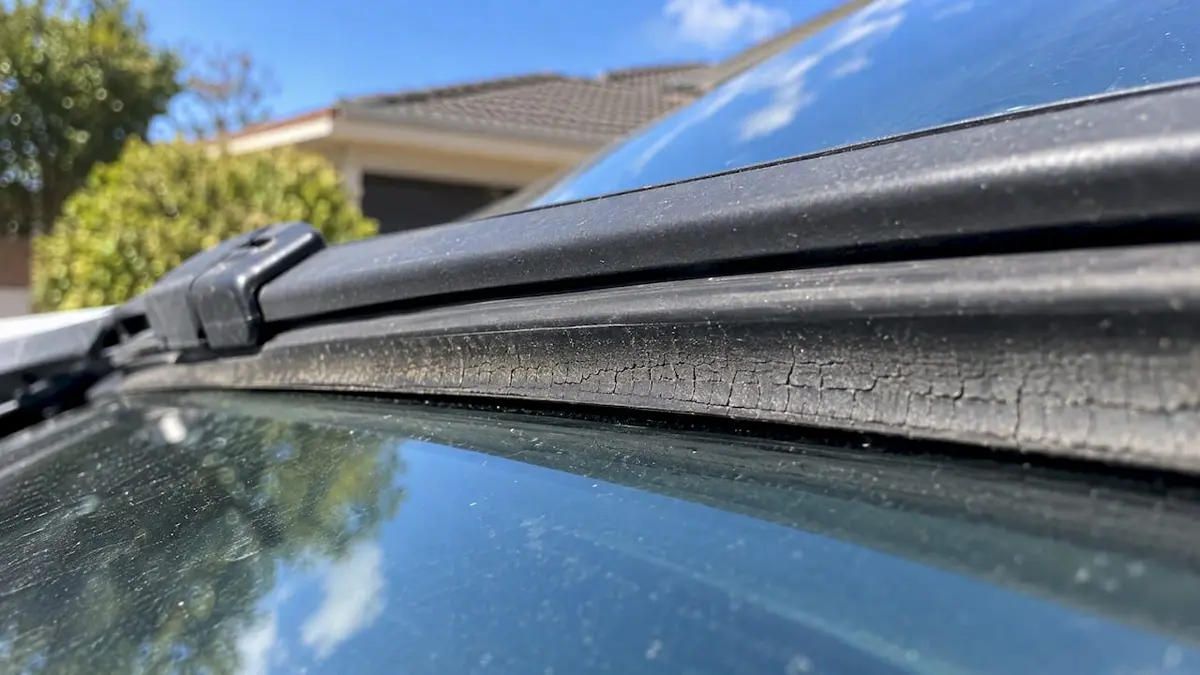
One finding worth noting: accelerated UV weathering tests on nano-silica filled silicone composites show that adding nano-silica can improve UV resistance and reduce the loss of hydrophobic surface properties under sustained exposure, meaning material engineering is narrowing the durability gap between silicone and rubber rather than widening it.
In practice, this plays out differently depending on the conditions you drive in. A heavy rainstorm favours whichever blade still has a clean, uncracked edge, which early in its life is usually the soft natural rubber blade because it conforms so well to the glass. Dusty roads wear every compound faster, since grit acts like sandpaper on the edge regardless of material. Long exposure to hot sun is where natural rubber loses ground fastest, while silicone’s hydrophobic surface sheds water with less friction, though that same beading effect can occasionally cause minor wind lift at highway speed on some blade designs. If you drive a ute or 4x4 on exposed, high-UV routes, our guide to rain performance for utes covers blade choices suited to that kind of exposure.
Coatings and additives that extend natural rubber life
Most of the meaningful difference between a budget rubber blade and a premium one comes down to what gets added to the surface, not the base polymer itself. A few additions do most of the work:
- Graphite coating: reduces friction against the glass, which cuts down on noise and judder during the wipe.
- Anti-ozonants: chemical additives mixed into the compound that slow oxidation from ground-level ozone exposure.
- UV stabilisers: absorb or block ultraviolet energy before it breaks down the polymer chains at the surface.
- Hydrophobic surface treatments: applied to the blade or the glass to help water sheet off more cleanly.
Technical literature on elastomer durability for wiper blades notes that coatings including graphite and PTFE can meaningfully reduce friction and noise, but their effectiveness depends heavily on how well the coating adheres to the base rubber and how fast it wears away in use. A coating that flakes off within a few months delivers none of the benefit printed on the box.
It is also worth distinguishing a blade coating from a glass treatment. A hydrophobic glass treatment, applied directly to the windscreen, helps water bead and roll off between wipes and can reduce the workload on the blade itself, particularly in light drizzle. A blade coating works on the rubber edge and matters most for noise and glide rather than water shedding. The two are complementary rather than substitutes for one another.
Pro Tip: Check the product description for named additives like graphite or UV stabilisers rather than vague claims of “advanced technology”, since the specific ingredient tells you what the coating is actually meant to do.
When to replace: realistic lifespan and the signs that matter
Natural rubber blades typically need replacing every six to twelve months under regular use, with harsh, high-UV conditions pushing that towards the shorter end because surface oxidation accelerates in sustained heat. Coated synthetics and silicone blades often stretch longer between replacements thanks to better UV resistance, though no blade lasts indefinitely once the surface starts to degrade.
Watch for these signs that a blade needs replacing now, not next service:
- Visible cracking or splitting along the rubber edge, even if it still wipes reasonably well.
- Hardened or brittle rubber that no longer flexes easily when you press it with a finger.
- Streaking or skipping across the glass that cleaning the blade does not fix.
- Audible chatter or judder during the wipe stroke, usually a sign the edge has lost its clean line.
- Curling at the tip away from the glass, which leaves a strip of unwiped windscreen.
These are not cosmetic concerns. NHVIM Section 10 lists cracked, hardened, frayed, curled, torn or missing wiper blade rubber as a reason for vehicle rejection during inspection, which makes wiper condition both a safety issue and a compliance one. Our breakdown of roadworthy wiper requirements goes through what inspectors specifically check.
Getting the fitment and maintenance right
A high-quality compound only performs well when the blade is the correct size and connector for your car, so fitment comes before anything else.
- Confirm the exact length and connector type for your make, model and year using a vehicle lookup tool rather than guessing from the old blade, since connector styles vary widely across brands.
- Clean the rubber edge and the glass with a mild automotive glass cleaner, avoiding petroleum-based or ammonia-heavy products that can dry out and crack rubber over time. The Diamondbrite streak-free cleaning method is a useful reference for products that will not attack the blade edge.
- Install the new blade fully clicked into place, checking the arm tension spring still holds firm pressure along the full length of the glass, not just at the centre pivot point.
Pro Tip: Lift the wiper arm away from the glass before fitting a new blade. Forcing a connector on with the arm resting on the windscreen is one of the most common ways to crack glass or bend the arm during a DIY swap.
Common mistakes include buying a blade based on the old one’s visible length without checking the connector type, and skipping a wipe-down of the glass before fitting new rubber, which leaves grit on the surface that scores the new edge within days.
A short checklist for choosing natural rubber wipers
Marketing copy on wiper packaging varies wildly in how much it actually tells you, so a short checklist helps separate genuine compound tech from filler language.
- Listed additives: look for named anti-ozonants, UV stabilisers or graphite rather than vague “advanced formula” claims.
- Coating detail: check whether the coating is applied to the wiping edge or just the backing, since only the edge coating affects noise and glide.
- Fitment information: confirm the listing names your specific make, model and year rather than a generic “universal fit” claim.
- Warranty length: a stated warranty period signals the manufacturer’s own confidence in the compound’s durability.
- Weathering claims: treat specific, sourced test claims with more weight than generic “all-weather” branding.
| What to check | Why it matters | What to ignore |
|---|---|---|
| Named additives (anti-ozonants, UV stabilisers) | Tells you what actually slows degradation | Generic terms like “advanced rubber” |
| Edge coating details | Affects noise, glide and streak resistance | Coating claims with no location specified |
| Exact vehicle fitment | Prevents poor contact and premature wear | “Universal fit” with no connector detail |
| Warranty period | Reflects manufacturer confidence in the compound | No warranty mentioned at all |
For general buying guidance beyond the compound itself, our ultimate guide to choosing windscreen wiper blades walks through the rest of the decision, including blade styles and arm types.
Our approach to compound design and exact fitment
Some blades are built around natural rubber compounds engineered for durability, paired with a segmented pressure distribution design that keeps even contact along the full length of the glass rather than concentrating pressure at the centre, which is a common cause of streaking on cheaper blades. Listings matched to a specific make, model and year through vehicle lookup backed by a fit guarantee prevent guessing at connector types or trimming an adapter to make it work.
Some blades come with a 30-day money-back guarantee and a 12-month warranty, with free shipping offered across the country. Our approach to evaluating blade performance focuses on the practical outcomes that matter in the car: consistent contact pressure, low noise during the wipe stroke and a clean edge that resists streaking as the compound ages. We do not publish invented lab figures, but the design choices behind our blades, from the aerodynamic profile to the preassembled adapters, are aimed squarely at reducing the fiddly parts of a DIY wiper change.
How natural rubber wiper compounds are actually made
Manufacturing a wiper-grade rubber compound starts with raw natural rubber latex, which gets mixed with carbon black, anti-ozonants, plasticisers and curing agents in a process called compounding. This blended stock then goes through extrusion, where it is forced through a die under heat and pressure to form the long, thin profile of a wiper blade edge, with precise control over the edge’s wiping lip shape since that geometry determines how cleanly the blade contacts the glass.
After extrusion, the rubber undergoes vulcanisation, a curing process using heat and sulphur compounds that links the polymer chains together and gives the rubber its final strength and elasticity. Technical literature on elastomer materials for wiper blades notes that surface photodegradation in rubber compounds typically starts at the ends of polymer chains, which is why filler dispersion and formulation quality during this stage directly affect how long the finished blade resists cracking in service.
Coatings, where used, are applied after curing in a separate dip or spray stage, then cured again to bond the coating to the rubber surface. The quality of that bond, more than the coating material itself, determines whether the coating still protects the edge after a few months of contact against glass.
Why the “set and forget” approach to wiper blades costs you more
The conventional advice to just grab whatever blade fits your budget misses the point entirely. Most drivers treat wiper blades as an afterthought, bought once and ignored until visibility fails during a downpour, which is exactly the wrong moment to discover a cracked edge. The compound and coating details most buyers skip over are the ones that determine whether a blade lasts four months or twelve.
What the evidence actually supports is a sharper decision: if you replace blades reliably every six months, a well-made natural rubber compound gives you strong wet-weather performance for the lowest cost. If your car sits outside in strong sun for most of the year, a coated synthetic or silicone blade earns its higher price through a longer working life. The mistake is picking blindly rather than matching the compound to your conditions and your own replacement habits. Fitment should never be the variable you get wrong, since even the best compound performs poorly on a blade that is the wrong length or connector for your car.
— Faisal
Perfect fit: find your natural rubber wipers now
Guessing at blade length and connector type is the easiest way to end up with a wiper that streaks from day one. Our vehicle lookup matches natural rubber compound wipers to your exact make, model and year, so what arrives is what actually fits, whether you drive a Toyota or something less common on the road.
Every order carries our fit guarantee, a 30-day money-back guarantee and a 12-month warranty, with free shipping across the country. Head to our wiper blades range to find the exact set for your car.
FAQ
What material are silicone wiper blades made from?
Silicone wiper blades use polydimethylsiloxane, known as PDMS, a polymer built on a silicon-oxygen backbone rather than the carbon chains found in natural or synthetic rubber. This structure gives silicone its heat resistance and hydrophobic surface, which helps water shed more easily between wipes.
What is the best material for wiper blades overall?
There is no single best material for every driver: natural rubber offers the lowest cost and strong immediate wet-weather feel, while coated EPDM and silicone blades resist UV and heat degradation for longer. The right choice depends on your local sun exposure and how often you are willing to replace blades.
Is silicone or rubber better for wiper blades?
Silicone tends to last longer under heavy UV and heat exposure thanks to its resistant chemical structure, while natural rubber offers softer, closer glass contact at a lower price when fresh. Neither is universally better, since rubber usually needs more frequent replacement to maintain the same wiping quality silicone holds over a longer period.
Can you buy raw rubber to make your own wiper blades?
Raw natural rubber compound is available through industrial rubber suppliers, but it is not sold in a form suited to home wiper blade manufacturing, since the extrusion and vulcanisation steps require specialised equipment. For replacement, using a vehicle-specific lookup to find a pre-made blade in the correct compound is the practical option for most drivers.
How often should natural rubber wiper blades be replaced?
Most natural rubber blades need replacing every six to twelve months, with sustained sun exposure pushing that towards the shorter end due to faster surface oxidation. Visible cracking, hardening or streaking are signs a blade needs replacing regardless of how long it has been fitted.
Sources
- NHVIM V3.2 Section 10 - Windscreens and Windows
- Accelerated ultraviolet weathering investigation on micro/nano-SiO2 filled silicone rubber composites
- Weatherability of coated EPDM rubber compound by controlled UV irradiation - University of South Australia