
What is UV-resistant rubber: a complete guide
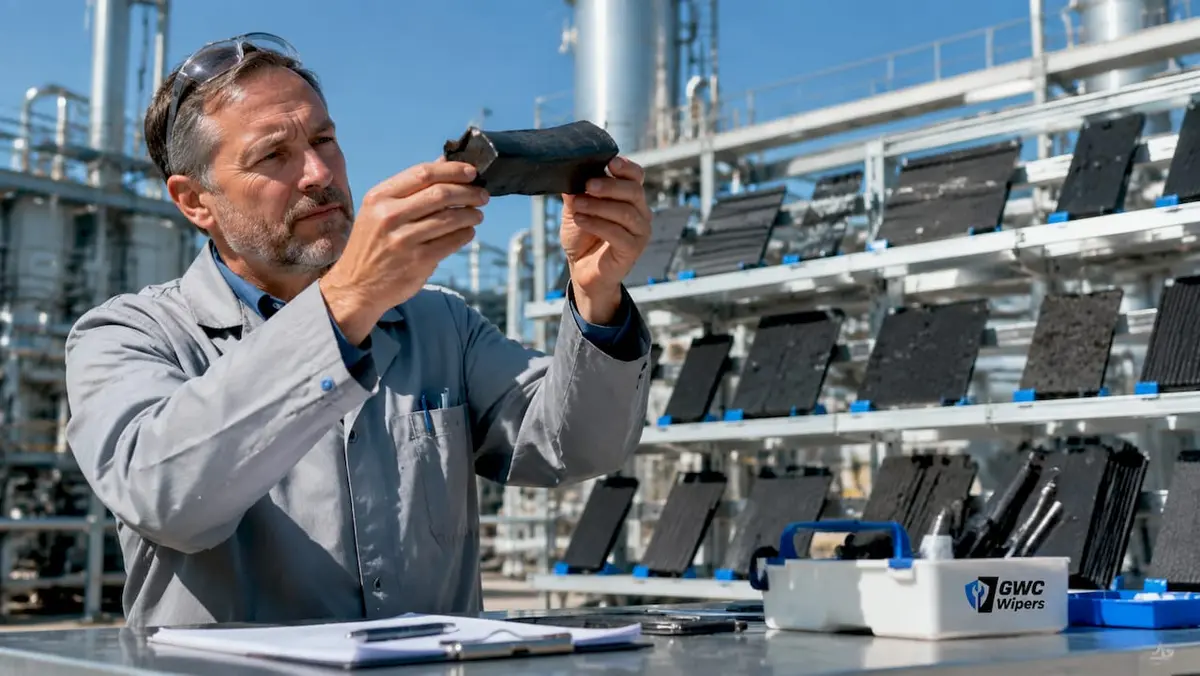
TL;DR:
- UV-resistant rubber can withstand ultraviolet radiation without losing its mechanical properties, unlike standard rubber that degrades rapidly under sunlight. It combines inherently stable polymers like silicone or EPDM with embedded stabilisers such as carbon black to deliver long-term durability against UV, ozone, and heat. Selecting the right type depends on environmental conditions and mechanical stresses, with EPDM often providing the best balance for outdoor applications in Australia.
UV-resistant rubber is defined as an elastomer formulation capable of withstanding degradation from ultraviolet radiation without losing its mechanical properties. For anyone selecting rubber components for outdoor use, understanding this distinction separates products that last years from those that crack and fail within months. Standard rubber degrades rapidly under sunlight because UV rays break carbon-carbon bonds in the polymer chains, causing surface chalking, micro-cracking, and hardening. The industry term you will encounter is “UV-stabilised” or “UV-stable elastomer,” and both phrases describe the same core capability. In Australian conditions, where UV index levels regularly reach extreme ratings, this material choice directly affects safety and service life.
How does UV radiation degrade rubber materials?
UV radiation attacks rubber at the molecular level by delivering photon energy that exceeds the strength of carbon-carbon bonds in standard polymer chains. Once those bonds break, the polymer structure begins to unravel. The visible results include surface chalking, micro-cracking, and a progressive hardening that strips the rubber of its flexibility.
A critical detail that most buyers overlook: UV degradation penetrates only 10–100 µm into the rubber surface. That is roughly the thickness of a human hair. This means surface cracks do not always signal bulk mechanical failure. A component can look visibly damaged while retaining most of its structural integrity beneath the surface.
The real danger is what happens next. UV-induced surface cracks become stress points for ozone attack, which accelerates material failure far beyond what UV alone would cause. Heat compounds this further, speeding up every chemical reaction involved. In Australian summers, all three factors, UV radiation, ozone, and heat, act simultaneously on exposed rubber.
Damage progression follows a predictable timeline. Surface chalking typically appears within weeks of unprotected outdoor exposure. Micro-cracking follows within months. Left unaddressed, the rubber becomes brittle and loses its sealing or mechanical function entirely.
Pro Tip: If you see surface cracking on a rubber seal or wiper blade, do not assume the component has failed structurally. Assess the depth of cracking before replacing. Shallow surface crazing may still allow safe short-term use, but replacement should be scheduled promptly.
What types of rubber are UV resistant?

Industry best practice selects elastomers based on environmental exposure, temperature range, and mechanical stress requirements. No single rubber type wins across every category. The three materials that dominate outdoor applications are silicone (VMQ), EPDM, and Viton (FKM).
Silicone rubber operates effectively across a temperature range of -60°C to +230°C and carries excellent UV stability due to its silicon-oxygen (Si-O) backbone. That backbone is far more resistant to UV photon energy than carbon-based chains. Silicone remains flexible and intact under sustained UV, heat, and cold exposure. Its weakness is abrasion resistance. Silicone wears down faster than EPDM under friction, making it less suitable for applications involving repeated mechanical contact.

EPDM (ethylene propylene diene monomer) is the standard choice for general outdoor weathering. Its saturated polymer backbone provides strong resistance to UV, ozone, and moisture. EPDM handles abrasion better than silicone and costs less. It is the go-to material for automotive seals, roofing membranes, and wiper blades across the industry.
Viton (FKM) sits at the premium end. It combines UV resistance with outstanding chemical resistance, making it the right choice where rubber faces both sunlight and aggressive fluids. NBR (nitrile butadiene rubber) and HNBR (hydrogenated NBR) offer poor natural UV resistance but can be improved significantly through additive compounding.
| Rubber type | UV resistance | Temperature range | Abrasion resistance | Best use case |
|---|---|---|---|---|
| Silicone (VMQ) | Excellent | -60°C to +230°C | Low | Extreme heat and UV exposure |
| EPDM | Very good | -40°C to +150°C | Moderate | General outdoor weathering |
| Viton (FKM) | Very good | -20°C to +200°C | Moderate | Chemical and UV exposure |
| NBR | Poor (base) | -40°C to +120°C | High | Oil resistance, additive-dependent UV |
Pro Tip: For Australian wiper blades and automotive seals, EPDM delivers the best balance of UV resistance, abrasion durability, and cost. Silicone is the better choice for components that face extreme heat alongside UV, such as engine bay seals or solar panel gaskets.
How do manufacturers make rubber UV resistant?
Manufacturers use three main methods to build UV resistance into rubber: choosing an inherently stable base polymer, adding UV absorbers, and incorporating chemical light stabilisers. The most durable products combine all three.
Carbon black is the industry-standard UV screening agent in rubber compounding. It absorbs UV radiation and dissipates the energy as heat before it can break polymer bonds. Carbon black also acts as a reinforcing filler, improving tensile strength alongside UV protection. This dual function makes it the most cost-effective UV stabiliser available. Light-coloured rubber products cannot use carbon black and must rely on chemical stabilisers, which are more expensive and have a finite service life.
UV absorbers like titanium dioxide filter UV energy into heat in a similar way to carbon black but are used in lighter-coloured formulations. HALS (hindered amine light stabilisers) work differently. They neutralise the free radicals generated during UV exposure rather than blocking the radiation itself. HALS do not get consumed in the process, which gives them a longer effective service life than standard UV absorbers.
The compounding process embeds these stabilisers during vulcanisation, the heat-and-pressure curing stage that gives rubber its final properties. Stabilisers added at this stage are distributed throughout the rubber matrix, not just on the surface. This is a fundamentally different approach from applying a protective coating after manufacture.
The distinction between UV-resistant and UV-stabilised rubber matters here:
- UV-resistant rubber uses an inherently stable base polymer (silicone or EPDM) that resists UV attack by its molecular structure alone.
- UV-stabilised rubber uses a less stable base polymer (such as NBR) with added absorbers and HALS to compensate.
- Surface coatings provide temporary UV protection but wear down over time and can accelerate localised degradation once they fail due to substrate movement.
- Embedded stabilisers outlast coatings because they are not subject to surface wear or peeling.
- Combined protection (stable polymer plus embedded stabilisers) delivers the longest service life and is the approach used in premium outdoor rubber products.
True long-term UV durability requires both an inherently UV-resistant polymer and chemical stabilisers embedded in the rubber matrix. Relying on either alone leaves performance gaps.
Where is UV-resistant rubber used, and how do you choose the right type?
UV-resistant rubber appears across a wide range of outdoor products. Automotive seals, wiper blades, roofing membranes, solar panel gaskets, marine fittings, and outdoor electrical cable jackets all depend on UV-stable elastomers to maintain their function over years of sun exposure.
For Australian conditions, the selection criteria go beyond UV resistance alone. Temperature swings from cold winter mornings to extreme summer heat demand a material with a wide service temperature range. Mechanical stresses such as vibration, flexing, and abrasion require a rubber that retains elasticity without cracking. Chemical exposure from road grime, cleaning agents, or industrial fluids adds another layer of complexity.
The UV resistance in wiper blades context illustrates this well. A wiper blade rubber faces UV radiation, ozone, heat, mechanical flexing, and abrasive contact with the windscreen simultaneously. EPDM with carbon black compounding handles this combination reliably. A silicone blade would resist UV and heat but wear out faster against glass.
Common pitfalls in selection and maintenance include:
- Choosing rubber based on UV resistance alone without checking abrasion or temperature ratings.
- Relying on surface coatings as a long-term UV solution rather than specifying a UV-stable compound from the start.
- Ignoring ozone resistance ratings, since UV and ozone degrade rubber through different but compounding mechanisms.
- Skipping regular inspection of outdoor rubber components, allowing surface cracks to deepen into structural failure.
- Using indoor-grade rubber formulations in outdoor applications because they were cheaper at the point of purchase.
Maintenance extends the life of even the best UV-resistant rubber. Keeping rubber components clean removes ozone-attracting contaminants. Parking vehicles undercover reduces cumulative UV dose. For wiper blades specifically, protecting windshield wipers from direct sun when the vehicle is parked significantly slows degradation. Replacing components at the first sign of streaking or chattering prevents the surface damage from progressing to structural failure.
Compounding UV resistance into the rubber itself is more cost-effective than relying on surface coatings over the long term. This is the principle that separates premium outdoor rubber products from budget alternatives.
Key takeaways
UV-resistant rubber requires both an inherently stable base polymer and embedded chemical stabilisers to deliver reliable long-term performance in outdoor conditions.
| Point | Details |
|---|---|
| UV degradation is surface-level | UV penetrates only 10–100 µm, so surface cracks do not always mean structural failure. |
| EPDM suits most outdoor uses | Its saturated backbone resists UV, ozone, and abrasion, making it the standard for automotive and roofing applications. |
| Carbon black is the best UV screener | It absorbs UV and reinforces the rubber matrix, outperforming chemical-only stabilisers in cost and longevity. |
| Coatings are a short-term fix | Embedded stabilisers outlast surface coatings because they are not subject to wear or peeling. |
| Select for combined stressors | UV resistance alone is insufficient. Match the rubber to temperature range, abrasion, and chemical exposure requirements. |
Why I think most buyers underestimate the silicone versus EPDM trade-off
People researching UV-resistant rubber often fixate on UV ratings and overlook abrasion resistance entirely. I have seen this mistake play out repeatedly in automotive and industrial settings. A silicone seal rated for extreme UV and heat looks perfect on paper, then fails within a season because the application involved repeated mechanical contact that silicone simply cannot handle.
Silicone’s Si-O backbone gives it outstanding UV stability, but that same structure makes it soft and prone to surface wear. EPDM is the more practical choice for most outdoor applications precisely because it balances UV resistance with mechanical durability. The trade-off is real, and ignoring it costs money.
The other misconception I encounter is the belief that a UV-protective coating solves the problem permanently. It does not. Coatings degrade, crack, and peel. Once a coating fails on a substrate that was never UV-stable to begin with, the underlying rubber degrades faster than if no coating had been applied at all. The substrate movement that caused the coating to crack also opens the rubber to concentrated UV attack at those failure points.
Material selection is a trade-off balancing UV resistance, temperature tolerance, abrasion resistance, and cost. There is no single correct answer. But the buyers who get it right are the ones who map their actual operating conditions first, then select a compound that addresses every stressor in that environment, not just the most obvious one.
— Faisal
UV-resistant rubber and your wiper blades
Understanding UV-resistant rubber changes how you evaluate every rubber component on your vehicle. Wiper blades are the most exposed rubber part on any car, facing direct sunlight, heat, and ozone every day the vehicle sits outside.
Com stocks premium wiper blades built with durable rubber compounds designed for Australian UV conditions. Whether you drive a Mercedes-Benz, Toyota, or any other vehicle, Com’s range covers the materials and fitment your car needs. Free shipping across Australia, a 12-month warranty, and a 30-day money-back guarantee mean you can buy with confidence. Use the vehicle selector at GWC Wipers to find the right blade for your make, model, and year.
FAQ
What is UV-resistant rubber?
UV-resistant rubber is an elastomer formulated to withstand ultraviolet radiation without losing elasticity, strength, or surface integrity. It uses inherently stable base polymers such as silicone or EPDM, often combined with embedded UV absorbers and chemical light stabilisers.
Is EPDM or silicone better for UV resistance?
Both offer strong UV resistance, but silicone performs better under extreme heat and cold while EPDM handles abrasion and general outdoor weathering more reliably. For most automotive and roofing applications, EPDM is the preferred choice.
How is rubber made UV resistant?
Manufacturers embed UV absorbers such as carbon black or titanium dioxide and chemical stabilisers such as HALS into the rubber during vulcanisation. This distributes protection throughout the material rather than relying on a surface coating.
Does UV damage go all the way through rubber?
UV radiation only penetrates 10–100 µm into the rubber surface, so degradation is primarily a surface phenomenon. Visibly cracked rubber can still retain bulk mechanical integrity, though replacement should be scheduled once surface cracking appears.
How long does UV-resistant rubber last outdoors?
Service life depends on the base polymer, compounding quality, and environmental conditions. EPDM and silicone components with embedded stabilisers typically outlast surface-coated alternatives by a significant margin in Australian outdoor conditions.