
Best rain wiper blades for utes: Australia’s top picks

For Australian utes, GWC Wipers’ aerodynamic beam blades are the top rain wiper blades for utes, delivering consistent windscreen contact, UV-resistant rubber, and vehicle-specific fitment across more than 2,500 models. They handle the full range of Australian conditions: coastal salt spray, dusty outback runs, and sudden heavy downpours on the highway.
- Rain clearing performance: Aerodynamic beam design and fluorine hydrophobic coating keep water sheeting off the glass cleanly, even in sustained rainfall at highway speeds.
- UV and dust resilience: Premium natural rubber compound resists cracking and hardening under intense Australian sun and abrasive dust exposure.
- Correct vehicle fit and warranty: Preassembled adapters, a vehicle fitment selector, a 12-month warranty, and a 30-day money-back guarantee mean you get the right blade the first time.
Table of Contents
- Why do Australian utes need rain-focused wiper blades?
- Which blade type is best for rain on a ute?
- What features should you look for in a rain wiper blade?
- How do you find the right blade size and connector for your ute?
- When should you replace your ute’s wiper blades?
- Why GWC Wipers are the recommended choice for Australian utes
- How to install new wiper blades on your ute
- Key takeaways
- A practical note on wiper blades for Aussie utes
- Ready to fit the right blades on your ute?
- Useful resources
- FAQ
Why do Australian utes need rain-focused wiper blades?
A standard passenger car wiper blade is not built for what a ute faces on Australian roads. The combination of stressors here is genuinely punishing, and the consequences of a failing blade are worse when you’re towing a trailer in a Queensland downpour or navigating a flooded dirt road in the Kimberley.
High UV and heat cycles are the primary killers. Australian UV intensity degrades natural rubber faster than almost anywhere else on earth, causing the blade edge to harden, crack, and lose its flexibility. Once that happens, the blade chatters across the glass instead of wiping cleanly. A ute parked on a work site all day in direct sun accelerates this process significantly.
Heavy downpours and highway speeds create a different problem. When you’re towing at 100 km/h in a summer storm, wind lift can cause a poorly designed blade to lose contact with the glass entirely. The aerodynamic profile of the blade matters here far more than it does on a slow city commute.
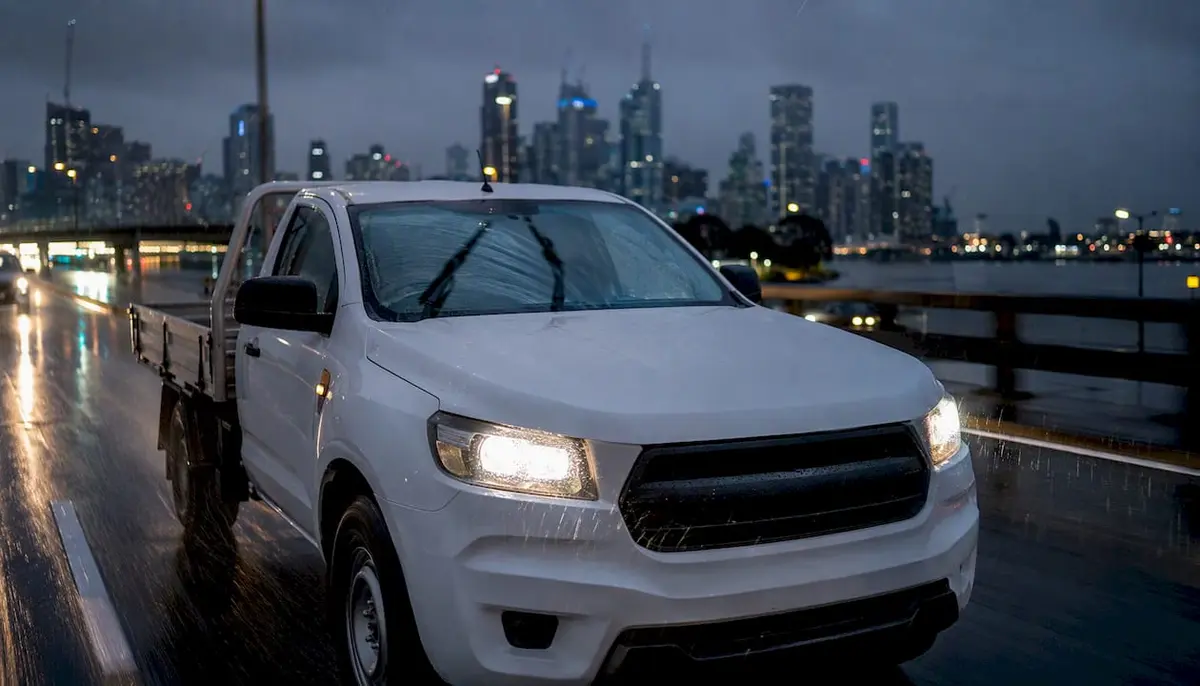
Dust and bush debris act as an abrasive. Utes used on construction sites or unsealed roads accumulate fine particles on the windscreen that grind against the rubber edge every time the wipers run. This wears the blade unevenly and shortens its life considerably.
Coastal salt exposure attacks the metal fittings and joints of conventional blades. For utes driven near the coast, corrosion in the frame can cause uneven pressure distribution long before the rubber itself wears out, leaving streaks across the glass.
Which blade type is best for rain on a ute?
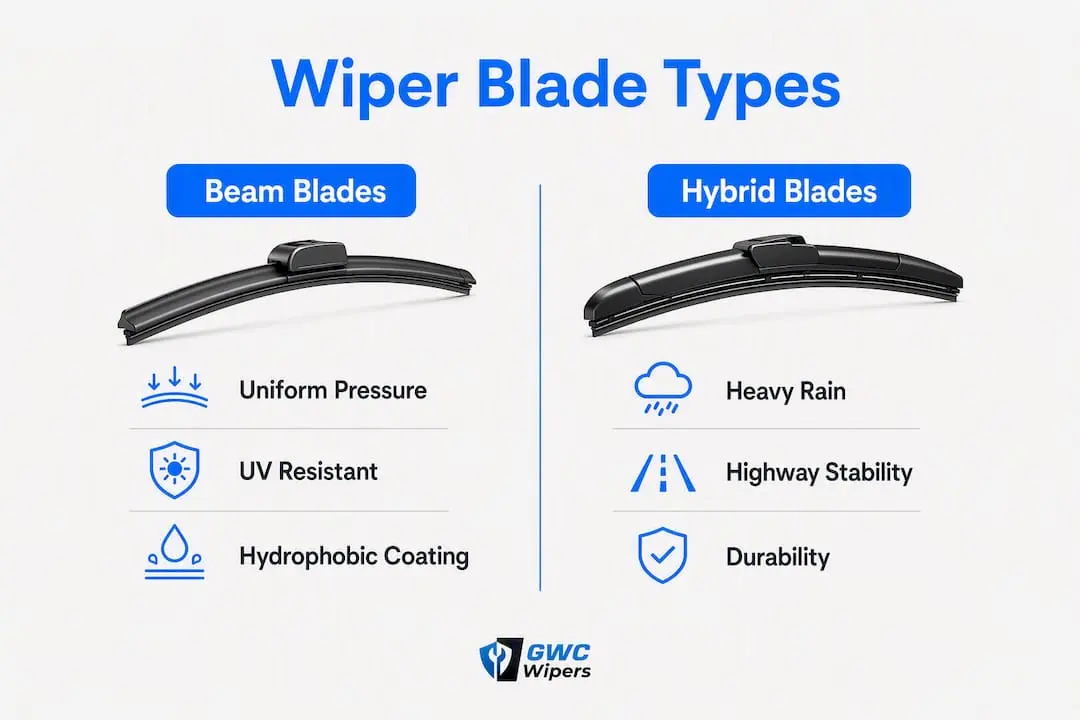
Beam blades are the best choice for most utes in heavy rain. Their frameless, one-piece construction applies uniform pressure across the entire blade length, which means no dead spots and no streaking. There are no exposed metal parts to corrode or trap dust, and the aerodynamic profile resists wind lift at highway speeds. Drivers on technical forums consistently recommend beam-style blades for consistent contact and streak-free performance in sustained rain.
Conventional (framed) blades
- A metal frame holds multiple pressure points against the glass.
- Performs adequately in light rain at low speeds.
- The frame traps dust and grit, accelerating rubber wear on work-site utes. Exposed metal corrodes quickly in coastal environments, and wind lift at highway speeds is a real problem.
Beam (frameless) blades
- A single curved spine distributes pressure evenly from end to end.
- Excels in heavy rain, at highway speeds, and in dusty conditions because there are no frame joints to clog or corrode.
- Costs more upfront, but the aerodynamic beam design and sealed construction typically outlast conventional blades in Australian conditions.
Hybrid blades
- A rubber shell encases a conventional frame, combining the aerodynamic profile of a beam blade with the structured pressure points of a framed design.
- A solid middle-ground option for utes that split time between city driving and occasional dusty runs.
- The rubber shell protects the frame from dust and corrosion, though the internal joints can still wear over time.
| Use case | Best blade type |
|---|---|
| Heavy rain / sustained downpours | Beam |
| Highway towing at speed | Beam |
| Dusty work sites / bush tracks | Beam or hybrid |
| Coastal salt environments | Beam (corrosion-free) |
| Mixed city and light off-road | Hybrid |
What features should you look for in a rain wiper blade?
The features below directly affect how well a blade clears water and how long it lasts under Australian conditions. Check each one before you buy.
- Natural rubber compound: Premium natural rubber stays flexible across a wide temperature range, conforming to the windscreen curve for a clean wipe. Cheaper synthetic blends harden faster under UV exposure.
- Fluorine hydrophobic coating: A fluorine coating reduces surface tension so water beads and runs off the glass rather than smearing. The effect is most noticeable at highway speeds in heavy rain, where it reduces drag and chatter at the microscopic contact points.
- Aerodynamic profile: A low-profile blade design reduces the surface area the wind can catch. On a ute driving at highway speeds, this prevents the blade from lifting off the glass mid-wipe.
- Corrosion-resistant fittings: Sealed joints and corrosion-resistant fittings prevent premature failure from coastal salt or prolonged moisture exposure. This is non-optional for utes driven near the coast or in wet tropical regions.
- Multi-adapter fitment: Modern utes use several different connector types. A blade that ships with preassembled adapters removes the guesswork and avoids the frustration of a blade that won’t click into place.
- Sealed beam construction: A fully sealed blade keeps dust and grit out of the internal structure, which is the single biggest advantage for work-site utes.
Trust signals to check on any product page: a minimum 12-month warranty, a fitment guarantee, independent all-weather performance testing claims, and preassembled adapters included in the box. If a product page doesn’t list these clearly, look elsewhere.
Pro Tip: A fluorine hydrophobic coating is worth paying for if you regularly drive in heavy rain. The water-repelling effect means your wipers do less work per sweep, which extends rubber life as well as improving visibility.
How do you find the right blade size and connector for your ute?
Getting the size wrong is the most common mistake ute owners make when buying blades online. A blade that’s too short leaves an unwiped strip across your line of sight; one that’s too long can clash with the A-pillar or the opposite blade.
- Check your owner’s manual first. Most ute manuals list the driver and passenger blade lengths in the maintenance section. For example, a Toyota Hilux Double Cab (SR/SR5 from July 2015 onward) uses driver and passenger blade lengths recommended in its owner’s manual.
- Use an online vehicle selector. GWC Wipers’ fitment tool lets you enter your make, model, and year to confirm the exact sizes and connector type for your specific ute. This takes about 30 seconds and eliminates guesswork entirely.
- Measure your existing blades if in doubt. Remove the old blade and measure from tip to tip. Note the connector type while the blade is off the arm.
- Identify your connector type. Modern utes commonly use hook connectors, side-pin adapters, hybrid clips, or direct-fit connectors. Connector types vary significantly across 2020s ute models, so always confirm before ordering. Preassembled adapter kits prevent returns and save time.
- Check both arms. Driver and passenger blades are almost always different lengths. Order both at the same time so they wear evenly and you’re not replacing one blade six months after the other.
GWC Wipers covers over 2,500 vehicle models with preassembled adapters designed for DIY installation, which means the correct connector is already attached when the blade arrives.
When should you replace your ute’s wiper blades?
In Australian conditions, wiper blades should be replaced regularly and more frequently than in cooler climates — sooner if you’re parking on an exposed work site or driving regularly through dust. UV, heat, and abrasive grit degrade rubber faster here than in cooler climates, so the 2–3 year replacement cycle common in Europe simply doesn’t apply.
- Streaking or smearing across the glass after each wipe
- Chattering or skipping sounds during operation
- Visible splits, tears, or hardening in the rubber edge
- Reduced pressure on one side of the blade (a sign of frame or spring fatigue)
Maintenance checklist to extend blade life
| Task | Frequency | Why it matters |
|---|---|---|
| Clean windscreen glass | Weekly | Grit on the glass acts as an abrasive on the rubber edge |
| Wipe rubber edge with a damp cloth | Monthly | Removes built-up road film and dust that cause streaking |
| Lift wiper arms when parked in direct sun | Every time | Prevents rubber from bonding to hot glass and deforming |
| Inspect rubber edge for cracks or splits | Every 3 months | Catches early degradation before it affects visibility |
| Replace blades | Every 12 months | Australian UV and heat accelerate rubber hardening |
GWC Wipers backs their blades with a 12-month warranty and a 30-day money-back guarantee, so if a blade fails prematurely, you’re covered. For climate-specific maintenance tips tailored to different Australian regions, their blog covers tropical, arid, and coastal conditions in detail.
Why GWC Wipers are the recommended choice for Australian utes
GWC Wipers meets every criterion that matters for a ute in Australian conditions: rain-clearing performance, UV and dust durability, and vehicle-specific fitment. Here’s how that plays out across the dimensions that matter most.
- Best for heavy rain: Aerodynamic beam design and fluorine hydrophobic coating deliver streak-free wiping in sustained downpours. The uniform pressure distribution means no dead spots, even on a curved ute windscreen.
- Best for high-speed roads: The low-profile aerodynamic design resists wind lift at highway speeds, maintaining glass contact when towing quickly.
- Best for dusty and bush conditions: Sealed beam construction keeps grit out of the blade structure. No exposed metal means no corrosion on outback or coastal runs.
- Material: Premium natural rubber compound with fluorine hydrophobic coating.
- Blade type: Aerodynamic beam (frameless).
- Durability and UV resistance: Natural rubber formulated for Australian UV intensity; resists hardening and cracking under prolonged sun exposure.
- Fitment compatibility: Vehicle-specific fitment for over 2,500 models, including popular utes like the Toyota Hilux, GWM Ute Cannon, and Holden Ute. Preassembled adapters cover hook, pin, and hybrid clip connectors.
- Warranty and guarantee: 12-month warranty, 30-day money-back guarantee, free shipping Australia-wide.
For Toyota Hilux owners, GWC Wipers has a dedicated Hilux fitment guide with exact sizes and adapter details for each model year. The same depth of fitment detail is available for the GWM Ute Cannon and other popular utes.
Practical scenarios where GWC Wipers delivers:
A tradie’s work ute parked on a dusty site all week needs a sealed blade that won’t clog. A coastal fisherman’s ute needs corrosion-resistant fittings that won’t seize after a few months of salt air. A highway tow vehicle needs aerodynamic performance that holds contact at speed. GWC Wipers’ beam blades are built for all three.
Pro Tip: If you’re buying for a fleet of work utes, use the vehicle selector to confirm fitment for each model in one session. GWC Wipers covers a wide enough range that you can order for multiple ute models in a single checkout.
How to install new wiper blades on your ute
Installation takes about five minutes per blade and requires no tools. Follow these steps carefully to avoid scratching the glass or damaging the wiper arm.
- Park on a flat surface and turn the ignition off. Lift the wiper arm away from the windscreen until it locks in the raised position. Never let a bare arm snap back onto the glass — the spring tension is strong enough to crack it.
- Locate the release tab on the old blade. Most ute connectors have a small plastic tab or button where the blade meets the arm. Press or slide it to release the blade and slide it off the hook or pin.
- Select the correct preassembled adapter. GWC Wipers blades ship with adapters already fitted for common connector types. Check the fitment guide included in the box if you’re unsure which adapter matches your arm.
- Slide the new blade onto the arm connector. Align the adapter with the hook or pin and push until you hear a firm click. A blade that doesn’t click securely will lift off the glass at speed.
- Lower the arm gently onto the glass. Don’t let it snap down. Lower it by hand and check that the blade sits flat across the full width of the windscreen.
- Test at low speed first, then at motorway speed. Run the wipers on a wet screen at low speed to confirm even contact. Then test above 80 km/h — poor arm tension or an incorrect adapter can cause intermittent contact that only appears at highway speeds.
Pro Tip: After installation, spray a small amount of water on the windscreen and run the wipers once before driving. This seats the rubber edge and removes any manufacturing residue that could cause streaking on the first real use.
If the adapter doesn’t fit or the blade doesn’t click securely, use the GWC Wipers fitment selector or installation guide to confirm the correct connector for your specific ute model.
Key takeaways
Beam blades with UV-resistant natural rubber and a fluorine hydrophobic coating are the most reliable choice for Australian utes, and GWC Wipers’ vehicle-specific fitment tool removes the guesswork from buying the right size.
| Point | Details |
|---|---|
| Choose beam or hybrid blades | Beam blades deliver uniform pressure and resist wind lift, making them best for rain and highway use on utes. |
| Prioritise UV-resistant rubber | Australian UV degrades standard rubber fast; natural rubber with hydrophobic coating lasts longer and clears better. |
| Confirm fitment before buying | Use a vehicle selector tool to match blade length and connector type to your exact ute make, model, and year. |
| Replace every 12 months | Australian UV, heat, and dust shorten blade life; replace sooner if streaking, chattering, or cracking appears. |
| GWC Wipers for Australian utes | GWC Wipers offers aerodynamic beam blades with a 12-month warranty, 30-day money-back guarantee, and free shipping. |
A practical note on wiper blades for Aussie utes
There’s one piece of advice that doesn’t get enough attention in most wiper blade guides: the rubber compound matters more than the brand name on the packaging. A blade with a premium natural rubber edge and a proper hydrophobic coating will outperform a cheaper blade with a recognisable logo every time in Australian conditions. UV resistance and flexibility at temperature extremes are what separate a blade that lasts 18 months from one that’s chattering and streaking after six.
For ute owners specifically, I’d also add this: if you’re parking your ute outside for extended periods in summer, lift the wiper arms off the glass. The heat from a sun-baked windscreen can deform the rubber edge over time, even on a quality blade. It takes two seconds and adds months to the blade’s life.
Ready to fit the right blades on your ute?
GWC Wipers takes the uncertainty out of buying replacement blades for your ute. Their vehicle fitment selector confirms the exact blade lengths and connector type for your make, model, and year in seconds, and every order ships with preassembled adapters so installation is straightforward. All blades come with a 12-month warranty and a 30-day money-back guarantee, with free shipping across Australia.
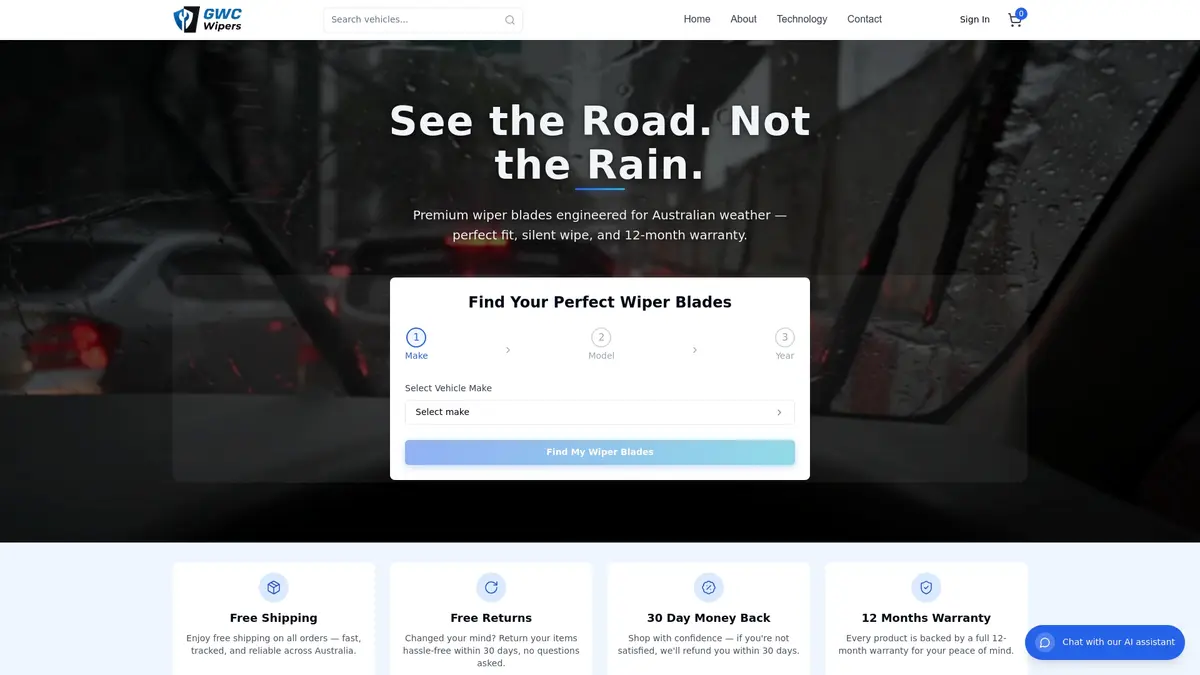
Whether you drive a Toyota Hilux, a GWM Ute Cannon, or another popular ute, GWC Wipers has a vehicle-specific option ready to order. Visit the Toyota wiper blades page to find your exact fitment, or head to gwcwipers.com.au to use the full vehicle selector and place your order today.
Useful resources
- GWC Wipers vehicle fitment selector — confirm blade sizes and connector types for your ute
- Toyota Hilux wiper blade guide — exact sizes and fitment details for each Hilux model year
- Blade types explained for Australian drivers — beam vs hybrid vs conventional, with performance comparisons
- Climate-specific wiper tips — maintenance advice for tropical, arid, and coastal Australian conditions
- All-season wiper maintenance hacks — nine practical tips for extending blade life in local conditions
- GWM Ute Cannon wiper blades — model-specific fitment page for GWM Ute Cannon owners
FAQ
What are the best wiper blades for heavy rain in Australia?
Aerodynamic beam blades with a fluorine hydrophobic coating are the best option for heavy rain. The uniform pressure distribution and water-repelling coating keep the glass clear in sustained downpours, including at highway speeds.
How often should you replace wiper blades on a ute in Australia?
Replace wiper blades every 12 months in Australian conditions, or sooner if you notice streaking, chattering, or visible cracking in the rubber edge. UV, heat, and dust degrade rubber faster here than in cooler climates.
Which wiper blade type suits a ute best?
Beam (frameless) blades suit most utes best because they apply even pressure across the full blade length, resist wind lift at highway speeds, and have no exposed metal to corrode or trap dust on work sites.
How do you find the right wiper blade size for your ute?
Check your owner’s manual for the recommended blade lengths, or use an online vehicle selector like the one at GWC Wipers, which covers over 2,500 models and confirms the correct connector type for your specific ute.
Are GWC Wipers suitable for popular Australian utes?
GWC Wipers offers vehicle-specific fitment for popular utes including the Toyota Hilux and GWM Ute Cannon, with preassembled adapters, a 12-month warranty, a 30-day money-back guarantee, and free shipping across Australia.