
Natural Rubber Wiper Blades: Better Value with 6–12 Month Replacements

Natural rubber wiper blades remain one of the most reliable choices for everyday driving, giving you a cleaner initial wipe, less noise on most windscreens, and a lower upfront cost than silicone. Silicone pulls ahead in constant sun thanks to better UV resistance. If you garage your car or park it under cover and replace blades on schedule, natural rubber gives you the better overall deal.
TL;DR:
- Natural rubber blades provide better initial wipe quality and quieter operation when new but need replacement every six to 12 months due to UV and heat sensitivity.
- Proper fitment and regular cleaning are crucial, as mismatched adapters or grit buildup can cause chatter, streaking, or uneven pressure.
- Silicone blades last longer in constant sun environments but cost more upfront and may require a longer break-in period to eliminate streaking.
- Drivers parking in covered areas benefit more from rubber blades, while outdoor parked vehicles should consider silicone for longer durability.
- Routine checks for squeaking, skipping, or streaking, along with timely replacement, ensure optimal visibility and safety in wet conditions.
Table of Contents
- How natural rubber wiper blades work
- Core benefits of natural rubber wiper blades
- Limits and downsides of natural rubber compared with silicone
- Lifespan, cost and replacement timing
- Maintenance and installation tips to keep rubber blades working well
- Evidence and brand-backed proof points
- Which drivers should choose natural rubber
- GWC Wipers: get the right fit for your car
- FAQ
- Sources
How natural rubber wiper blades work
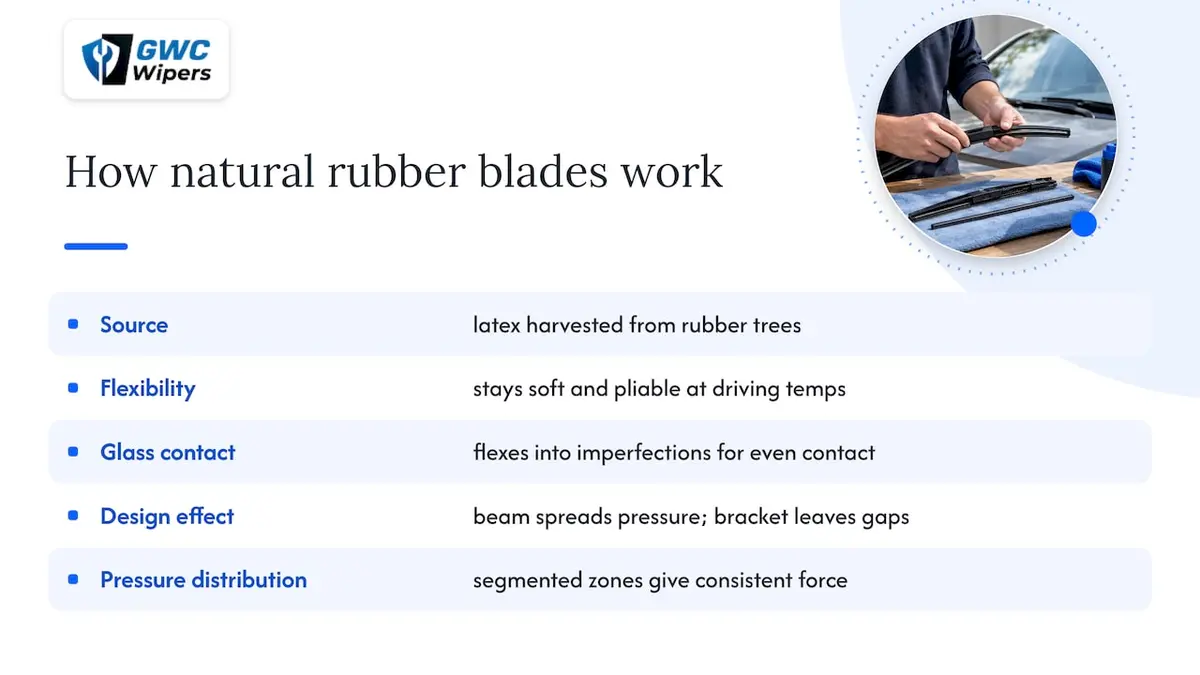
Natural rubber comes from latex harvested from rubber trees, then treated and moulded into a blade edge. It behaves differently to the synthetic rubbers (like EPDM) and silicone compounds used in some premium wiper lines, and that difference in molecular structure is what drives the performance gap you feel on the glass.
The edge of a natural rubber blade stays soft and pliable at everyday driving temperatures, so it flexes into the small imperfections of your windscreen rather than skipping over them. That flexibility is what creates full, even contact across the whole length of the blade rather than just a few pressure points.
Design matters just as much as the compound itself. A beam-style blade without a rigid metal frame tends to spread pressure more evenly along the glass than an older bracket-style design, which pushes harder at the claws and leaves gaps between them. Segmented pressure distribution, where the blade is engineered to apply consistent force across multiple contact zones, is one of the bigger reasons two blades made from the same rubber can wipe very differently. You can read more on how natural rubber compares with synthetic EPDM blades if you want the deeper material breakdown.
Core benefits of natural rubber wiper blades
The main reason natural rubber remains popular is simple: it wipes beautifully when it’s fresh. The softness that makes it vulnerable to sun also makes it excellent at hugging glass, which is exactly what you want in heavy rain.
- Wipe quality: Natural rubber conforms closely to the windscreen, clearing water in a single pass with minimal streaking when the blade is in good condition.
- Noise: Many drivers find natural rubber blades run quieter, with less chatter across the glass than stiffer synthetic compounds on the same vehicle.
- Cost: Natural rubber blades are typically cheaper to buy than silicone equivalents, and they’re available in a wider range of fitments.
- Value on schedule: Replaced every six to 12 months, natural rubber blades give excellent initial wipe quality and flexibility for a lower total cost than silicone over the same period.
Noise matters more than it sounds. Chatter, that rhythmic stutter you hear when a blade drags rather than glides, usually points to uneven pressure or a hardening edge, not a design flaw in the rubber itself. A fresh, well-fitted natural rubber blade largely avoids it.
Pro Tip: If your blades have started chattering on a dry pass, don’t wait for the next downpour to find out they’re failing. Treat the noise as your first warning sign.
Limits and downsides of natural rubber compared with silicone
Natural rubber’s biggest weakness is the flip side of its biggest strength. The same softness that gives you a great wipe also makes it more sensitive to heat and ultraviolet light.
- UV and heat damage: Constant sun exposure accelerates hardening and cracking in natural rubber, shortening its safe usable life well before silicone shows the same wear, as UV-resistant materials reduce this deterioration far more effectively.
- Streaking trade-off: Silicone’s hydrophobic coating causes water to bead and run off rather than sheet across the glass, but that same film can cause initial streaking until it settles in.
- Safety window shrinks fast: A hardened or cracked blade loses contact with the glass precisely when you need clear vision most, in heavy rain, making prompt replacement a safety matter rather than a convenience one.
Both materials wipe cleanly when new and correctly fitted. The real difference shows up over months of exposure, not in a side-by-side test on day one. If your car spends most of its life under a carport or in a garage, this weakness barely matters. If it bakes on a driveway through summer, it matters a lot. Our guide on UV resistance in wiper blades goes into why sun exposure is the single biggest factor in blade longevity.
Lifespan, cost and replacement timing
Natural rubber blades generally last around six to 12 months under normal use, and silicone often stretches 1.5 to two times longer thanks to its better UV resistance, though it costs more to buy in the first place. Where you park, how far you drive, and your local climate all shift that window: a car parked outdoors through a hot summer will wear through rubber blades faster than one kept in a garage.
Replace your wiper blades if they squeak, skip or leave streaks, and check them before the wet season rather than during it. A simple routine catches most problems early:
- Run the wipers dry on the windscreen and listen for squeaking or juddering.
- Look along the blade edge for skipped sections or gaps where it lifts off the glass.
- Check for visible streaking on a clean windscreen after a full wipe cycle.
- Replace both blades together if either one fails any of these checks.
A six-month check costs you nothing but a few minutes. A missed one costs you visibility in the next downpour.
Maintenance and installation tips to keep rubber blades working well
Most blade failures aren’t really about the rubber wearing out naturally, they’re about grit, oil film and neglect speeding up damage that proper care would have delayed. Regular cleaning does more for blade life than almost anything else you can do.
- Wipe the blade edge and windscreen weekly with an ammonia-free glass cleaner to cut oil build-up and reduce abrasive wear.
- Top up washer fluid regularly and avoid household detergents, which can dry out rubber faster than normal use.
- Inspect the blade edge for cracking, splits or a glazed, shiny look, all signs the rubber has started to harden.
- Lift wipers off the glass during frosty mornings, since running frozen wipers can damage both the rubber and the motor.
- Confirm the adapter fits your arm type before fitting a new blade, since a loose or mismatched adapter causes chatter even with brand-new rubber.
Pro Tip: Changing wiper blades is one of the easiest DIY jobs on a car, and a correctly fitted blade with a snug adapter will almost always fix a noise problem that looks like a rubber fault.
If you’re tackling other seasonal checks at the same time, it’s worth glancing at your tyres too. Checking tyre tread depth takes a similar five minutes and catches a different kind of wet-weather risk.
Evidence and brand-backed proof points
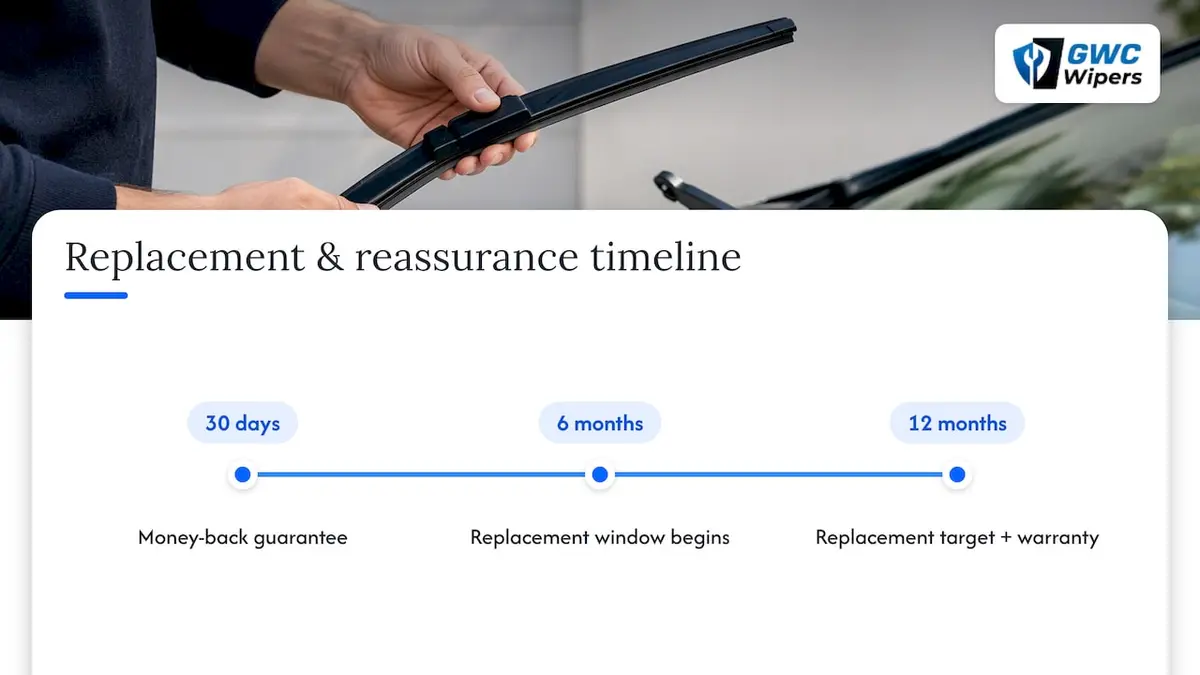
Many natural rubber wiper blades are designed with a target lifespan of six to 12 months, matching the general replacement guidance drivers hear from motoring bodies. These blades are often backed by a 12-month warranty and a 30-day money-back guarantee to provide confidence in the purchase even before the blade has proven itself on your windscreen.
Fitment is where a lot of chatter and streaking problems actually start, not in the rubber compound. Vehicle-specific selectors can match blades to your make, model and year with preassembled adapters, which helps remove the loose-fit chatter that a universal blade can introduce. You can see how this plays out in practice on our natural rubber wiper blades page, or check our broader lifespan guidance in how long wipers actually last.
Which drivers should choose natural rubber
If you’re a value-focused driver who garages the car or parks under cover, natural rubber is the easy call: lower cost, excellent wipe quality, and a lifespan that matches the six to 12 month replacement window most drivers already follow.
If your vehicle lives outdoors in constant sun, the maths shifts. Silicone’s UV resistance buys you a longer service life, or you simply replace natural rubber blades more often to stay ahead of hardening. Neither path is wrong, they’re just different trade-offs between upfront cost and replacement frequency.
Most drivers fall somewhere in between, splitting time between a carport and open streets, and for that mixed-use profile either material performs well as long as you stick to the replacement schedule and check for the early warning signs: squeaking, skipping, streaking. The material matters less than the habit of replacing it on time.
— Faisal
GWC Wipers: get the right fit for your car
We built our business around one frustration every driver has felt: buying a wiper blade that’s almost right, then fighting with an adapter that doesn’t quite click into place. Our vehicle selector matches blades to your make, model and year so the fitment is correct the first time, and we back every blade with a 30-day money-back guarantee and a 12-month warranty.
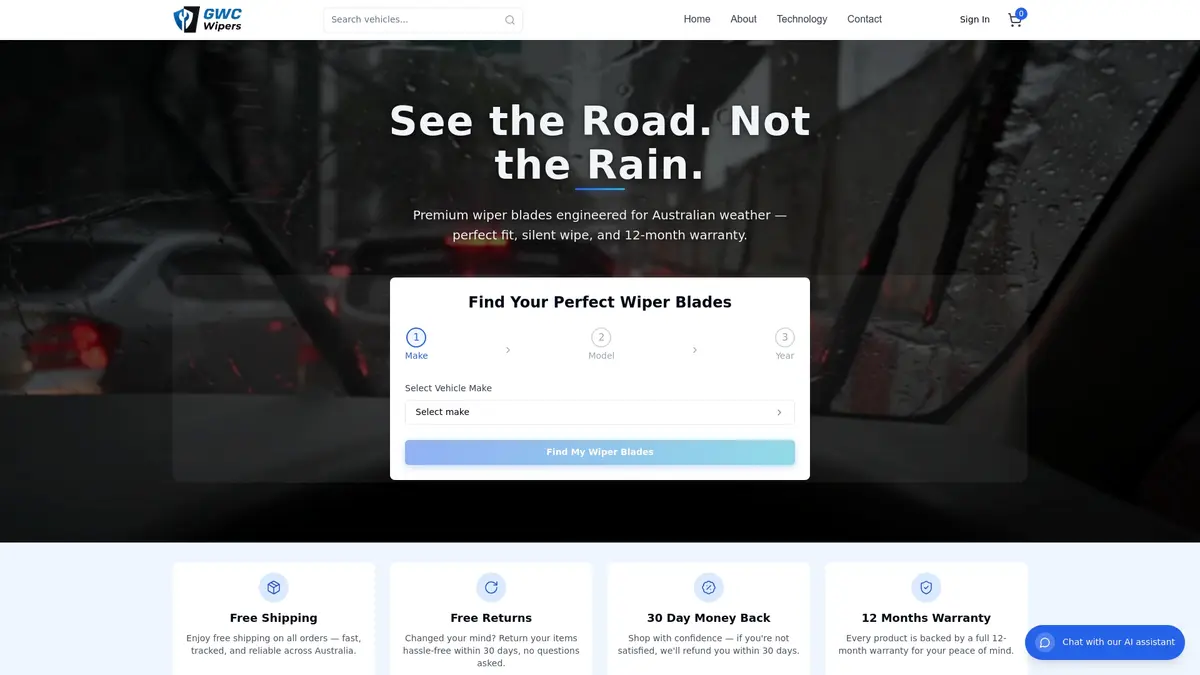
When ordering premium natural rubber wiper blades, customers can expect options that include vehicle-specific fitment with preassembled adapters for straightforward DIY installation, natural rubber blades engineered for a six to 12 month service life, and supportive purchasing policies such as free shipping options and satisfaction guarantees.
Check your Perfect Fit by make, model and year and find the right wiper blades for your car in a couple of clicks.
FAQ
What are the advantages and disadvantages of natural rubber?
Natural rubber gives you excellent initial wipe quality, quiet operation on most windscreens and a lower purchase price than silicone. Its main downside is sensitivity to UV and heat, which causes hardening and cracking faster than silicone when a vehicle sits in constant sun.
What’s the best material for windscreen wipers?
There’s no single best material: natural rubber suits drivers who garage their car and replace blades on schedule, while silicone suits vehicles that sit outdoors in heavy sun. Natural rubber offers better flexibility and lower cost, while silicone trades a higher price for longer UV resistance.
What are the disadvantages of silicone wiper blades?
Silicone costs more upfront than natural rubber, and its hydrophobic coating can cause initial streaking before it settles into normal performance. It also isn’t available in as many vehicle-specific fitments as natural rubber.
What are the advantages of natural rubber over synthetic rubber?
Natural rubber tends to stay softer and more flexible at everyday temperatures than synthetic compounds like EPDM, giving it an edge in initial wipe quality and quietness. It’s also generally the cheaper option, though it shares some sensitivity to heat and UV with other rubber compounds.
How often should I replace natural rubber wiper blades?
Most drivers should replace wiper blades every six to 12 months, or sooner if they squeak, skip or streak. Vehicles parked in constant sun may need replacement closer to the six-month end of that range.
Sources
- How to maintain your car in winter cold weather | RACV
- Silicone vs Rubber Wiper Blades: Which Is Worth It? - Roof Rack World
- How to change wiper blades | RACQ