
6–12 Month Lifespan: Natural Rubber Wiper Blades for Australian Drivers
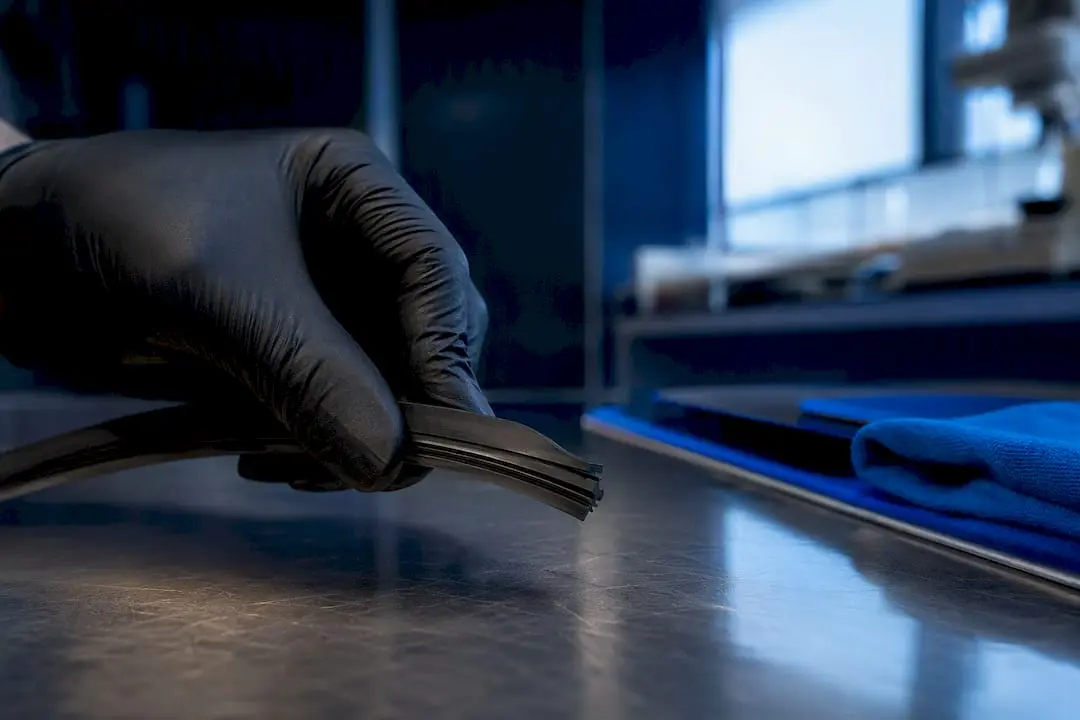
For most drivers, natural rubber wiper blades give you the best balance of wipe quality, quiet operation, and cost. They squeak less, hug curved glass better than most alternatives, and cost less upfront. The trade-off is a shorter working life under harsh UV and heat than silicone, though good formulations and regular maintenance close much of that gap.
TL;DR:
- Blades with a blend of natural rubber and EPDM synthetic rubber typically last longer by resisting UV and ozone cracking, especially with the correct formulation.
- Proper vulcanisation and manufacturing consistency are crucial to ensure even wear and a smooth wipe, which can be inferred from material specifications and warranties.
- Natural rubber blades generally last six months to a year but should be replaced sooner if they show signs of cracking, hardening, or streaking, especially under harsh conditions.
- Silicone blades resist heat and UV better and can last up to 18 months, but some marketed as silicone are only coated and may wear faster, making material verification important.
- Using a vehicle fitment tool ensures you select a properly fitting blade, and routine maintenance like cleaning the blade edge prolongs lifespan regardless of material.
Table of Contents
- What natural rubber wiper blades are made from
- The formulation details that actually predict how long a blade lasts
- Natural rubber vs synthetic blends vs silicone
- How long natural rubber blades last and how to keep them working
- Choosing the right blade for your car and driving conditions
- Where GWC Wipers fits the criteria above
- Is natural rubber actually the greener option?
- How manufacturing shapes the quality of the finished blade
- My honest take on picking between rubber and silicone
- Buying natural rubber blades without the guesswork
- Sources
- FAQ
What natural rubber wiper blades are made from
Natural rubber wiper blades start as latex, tapped from rubber trees and processed into a flexible polymer that moulds tightly against curved windscreens. That flexibility is what gives fresh natural rubber blades their clean, quiet wipe. Nothing else conforms to glass quite the same way when it’s new, which is why natural rubber offers excellent conformability that drivers notice the moment they fit a new set.
Raw latex on its own isn’t durable enough for a car. Manufacturers add a handful of ingredients to make it work on the road:
- Carbon black filler, which reinforces the rubber and helps it resist abrasion from grit and dust.
- Plasticisers, which keep the compound flexible across a wide temperature range instead of stiffening in the cold.
- Zinc oxide, used as an activator in the vulcanisation process that turns raw latex into a stable, wear-resistant rubber.
- Vulcanisation accelerators, which control how the rubber cures and directly affect how well it resists cracking later.
Not every blade on the shelf is pure natural rubber. Some are EPDM synthetic blends, others are silicone-coated rubber, where a thin silicone layer sits over a natural rubber core. That coating detail matters more than the marketing suggests, and it’s worth understanding before you compare products by price alone.
The formulation details that actually predict how long a blade lasts
Buried in the technical patents behind wiper rubber compounds is a straightforward lesson: how a blade is formulated matters more than what it’s called on the box. A Korean patent for wiper blade rubber composition sets out a specific approach, blending natural rubber with EPDM synthetic rubber in ratios between 85/15 and 65/35, combined with carbon black filler and carefully controlled vulcanisation agents.
The core insight from that formulation work is simple: adding even a modest share of EPDM to natural rubber, alongside the right filler load, measurably slows the ozone cracking and UV degradation that eventually turns a supple blade edge into a brittle one.
Formulation snapshot: the patent specifies roughly 40 to 50 parts of carbon black per hundred parts of rubber, alongside defined ranges for softening agents and cure accelerators, figures that translate directly into how well a blade resists cracking in an Australian summer.
Not every improvement requires synthetic blending, though. A separate approach, described in a patent for windscreen wiper blades using biosourced plasticisers, uses plant-derived softeners such as sunflower or canola oil in a vulcanised natural rubber compound. That method aims to keep the blade closer to pure natural rubber while still gaining weather resistance, an approach that matters if you’d rather avoid synthetic content but still want a blade that survives more than one season.
For you as a buyer, the practical takeaway is this: a product page that lists NR/EPDM ratios, filler content, or a specific vulcanisation approach is telling you something real about expected lifespan. A page that only says “premium rubber” isn’t.
Natural rubber vs synthetic blends vs silicone
Every wiper material trades off the same handful of things: how well it wipes when new, how long it survives Australian sun and heat, and what it costs you over a year rather than at the till. Here’s how the three main options actually stack up.
- Natural rubber: the best wipe quality straight out of the packet, quiet on the glass, and the cheapest to buy. It softens and eventually hardens faster under UV and ozone exposure than the alternatives.
- EPDM synthetic blends: not as supple when brand new, but the added polymer resists weathering meaningfully better. Industry sources report synthetic blends can extend service life by 20 to 40 percent over pure natural rubber under similar sun exposure, at a price between rubber and silicone.
- Silicone: a hydrophobic surface that beads water rather than just wiping it, and the strongest resistance to heat and UV of the three. It costs the most and, on some vehicles, delivers a slightly less refined wipe when brand new.
By the numbers: guides comparing the two mainstream materials put natural rubber’s typical service life at 6 to 12 months against silicone’s 12 to 18 months, while silicone blades usually cost 50 to 100 percent more upfront. Run the maths per month of use rather than per pack, and the gap between the two narrows considerably, sometimes to the point where natural rubber wins on value even with more frequent replacement.
One thing worth flagging before you pay a silicone premium: some “silicone” blades are actually natural rubber with a thin silicone coating over the top. That coating can wear away within weeks or months, leaving you with rubber’s shorter lifespan but silicone’s price tag. Check whether a blade is silicone through and through or just coated before you commit.

How long natural rubber blades last and how to keep them working
A natural rubber blade in reasonable condition typically lasts six months to a year, though harsh UV exposure, high ambient heat, and infrequent windscreen cleaning can shorten that considerably. Coastal salt air and dusty regional roads both accelerate wear on the blade edge faster than the same blade would degrade in a shaded inner-city car park.
A few habits stretch that lifespan noticeably, including using environmentally friendly maintenance methods that help protect the rubber’s integrity:
- Wipe the blade edge with a soft cloth and mild soapy water every few weeks to remove grit before it works its way into the rubber.
- Keep the windscreen clean, since a dirty screen forces the blade to drag over embedded dust and forms micro-abrasions over time. Consistent streak-free cleaning technique protects both the glass and the blade edge.
- Avoid harsh solvents on the blade or screen. Strong chemical cleaners can dry out rubber faster than sun exposure alone.
- Park in shade where you can, since direct sun is the single biggest accelerant of rubber ageing on a parked car.
- Lift blades off the glass during long stationary periods in extreme heat, which stops the rubber curing against hot glass in one fixed position.
Three signs tell you it’s time to replace rather than clean: visible streaking that doesn’t clear after a wipe, audible chattering across the glass, and any cracking or hardening you can feel along the blade edge with a fingernail. If a blade has silicone coating, the same signs apply, but check whether the coating has worn through first, since that alone can explain a sudden drop in performance.
Pro Tip: Run your finger along the blade edge monthly. If it feels stiff or slightly ridged rather than smooth and pliable, replacement is closer than the calendar suggests, regardless of how many months you’ve had the blade fitted.
Choosing the right blade for your car and driving conditions
Picking a wiper blade well comes down to a short list of priorities, in this order.
- Fitment first. The wrong attachment style won’t seat properly no matter how good the rubber compound is, so confirm your vehicle’s make, model, and year before anything else.
- Look for published material detail. A listing that states its NR/EPDM ratio or UV treatment method tells you more than any slogan about how the blade will hold up, a point borne out by buying guides that stress checking composition over marketing labels.
- Check the frame design. Some frames let you replace just the rubber insert, which is cheaper over time than replacing the whole assembly.
- Read the warranty and returns terms. A genuine fitment guarantee and a clear returns policy tell you a manufacturer stands behind its fit claims, not just its rubber claims.
- Reserve silicone or hybrid blends for extreme exposure. If your car sits outdoors in high UV year-round, such as an unshaded driveway in a hot climate, the extra durability can justify the higher price. For a garaged daily driver, it usually won’t.
Where GWC Wipers fits the criteria above
Com built its vehicle selector tool to solve the fitment problem first, matching blades to make, model, and year across more than 2,500 vehicle listings, before you even look at material options. Every listing, including pages such as the Alfa Romeo Giulietta wiper blades, pairs natural rubber construction with a stated fitment guarantee, a 12-month warranty, and a 30-day money-back window, the exact factors this guide flags as decision points rather than nice-to-haves.
That combination gives you a straightforward way to act on the checklist above without hunting through spec sheets. (Author credentials, customer testimonials, and internal durability testing for this range will be added as they become available.)
Is natural rubber actually the greener option?
Natural rubber starts life as a renewable crop, tapped from rubber trees rather than refined from petrochemicals the way most silicone and EPDM synthetic rubber are. That doesn’t automatically make it the lower-impact choice once you account for how wiper blades actually get used and replaced.
Because natural rubber blades typically need replacing roughly twice as often as silicone, you’ll likely send more units to landfill or recycling over a car’s lifetime with a natural rubber approach, even though each individual unit started from a renewable source. Silicone and EPDM blends, sourced from non-renewable inputs, generate their environmental cost upfront in manufacturing but potentially less waste over time thanks to the longer service life.
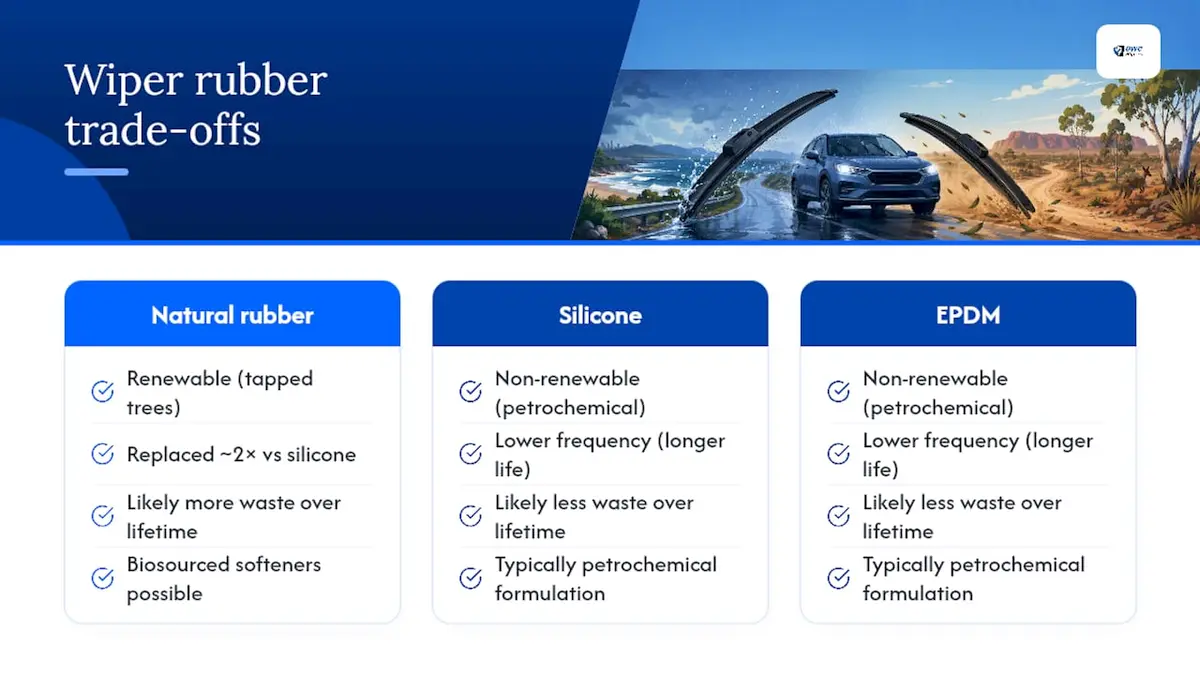
The biosourced plasticiser approach mentioned earlier offers a middle path worth watching. Formulating natural rubber with plant-derived softeners rather than petroleum-based ones keeps more of the supply chain renewable while still targeting better weather resistance, an approach aimed squarely at closing the durability gap without giving up the renewable-material advantage. It’s not yet the industry standard, but it points toward where wiper rubber formulation is heading.
For now, the honest answer is that neither material is a clean environmental winner. Your best lever as a buyer isn’t picking the “green” material label, it’s replacing blades only when they genuinely need it and disposing of old ones responsibly rather than over-buying on a fixed schedule.
How manufacturing shapes the quality of the finished blade
Vulcanisation is the step that turns soft, workable latex into a stable rubber that can survive months on a windscreen. Heat and curing agents cross-link the rubber’s molecular structure during this process, and how tightly that curing is controlled has a direct bearing on how consistent the finished blade feels along its entire length.
Poorly controlled vulcanisation leaves soft spots or inconsistent hardness across a blade, which shows up on the road as uneven wiping or chatter in specific spots rather than a clean, continuous sweep. This is where the formulation detail from the patent research earlier actually earns its keep. Carbon black content, plasticiser ratios, and accelerator levels aren’t abstract chemistry, they’re the variables that determine whether a blade cures evenly from end to end.
Extrusion shape matters too. The blade’s cross-section profile controls how evenly pressure distributes along the glass, which is why some manufacturers pair natural rubber compounds with segmented pressure distribution across the blade’s length rather than relying on a single spring bar. A well-extruded profile combined with a properly cured compound produces the smooth, chatter-free wipe that a good formulation alone can’t guarantee if the manufacturing process is inconsistent.
None of this is visible to you as a buyer standing in front of a product listing, which is exactly why fitment guarantees, warranty terms, and transparent material specs matter as proxies for manufacturing quality you can’t inspect directly.
My honest take on picking between rubber and silicone
My practical rule: choose natural rubber for everyday driving and replace it the moment the edge feels stiff rather than waiting for visible streaking. Save silicone for genuinely harsh, high-UV daily exposure where the extra cost buys real peace of mind. I keep a reminder to run a fingernail check monthly, it takes ten seconds and catches hardening before it shows up on the glass. Before buying anything, run your rego through a proper vehicle selector so fitment isn’t the thing that lets a good blade down.
— Faisal
Buying natural rubber blades without the guesswork
Com built its fitment tool so you never have to guess whether a blade will seat properly on your car. Enter your make, model, and year, and the vehicle selector matches you to the correct natural rubber blade from more than 2,500 vehicle listings, backed by a fitment guarantee that removes the risk of ordering the wrong attachment style.
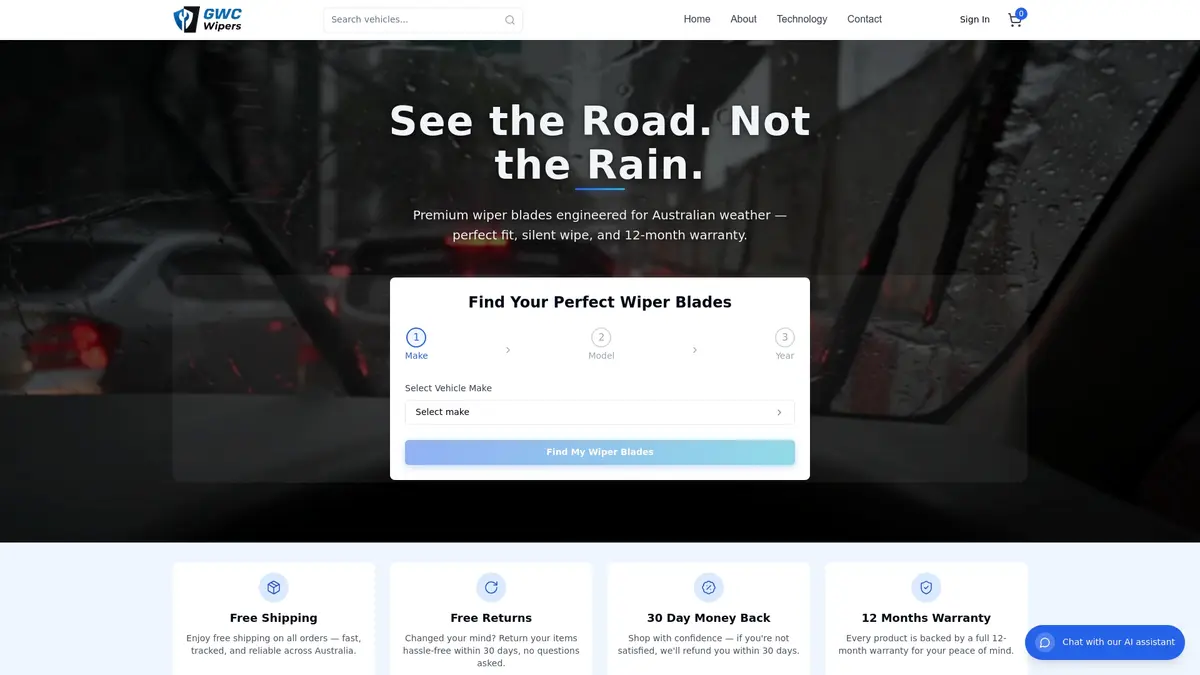
Many products ship with a warranty and a money-back guarantee, offering coverage if a blade underperforms in your driving conditions. Free shipping may apply across orders. If you’re driving a premium SUV, the Mercedes-Benz GLE-Class wiper blades page shows exactly how fitment and material details are laid out for your model. Search your own vehicle through the selector now and get the right blade fitted this weekend.
Sources
- Rubber composition for wiper blade - Patent KR-20040042288-A - PubChem
- Wiper blade for a windscreen wiper frame - Eureka | Patsnap (US20190176765A1)
- Wiper blade materials: Silicone vs rubber guide | Topex Wiper
- Silicone vs Rubber Wiper Blades: Which Is Worth It? | RoofRack
FAQ
Is silicone better than rubber for wiper blades?
Silicone typically lasts longer under UV and heat and repels water more effectively, but natural rubber usually wipes more quietly when new and costs less upfront. The better choice depends on your climate exposure and how often you’re happy to replace blades.
What are the disadvantages of silicone wiper blades?
Silicone blades cost 50 to 100 percent more than natural rubber upfront, and some products marketed as silicone are only a thin coating over rubber that wears off within months, reverting to rubber’s shorter lifespan.
What is the best material for windscreen wiper blades?
There’s no single best material for every driver. Natural rubber suits everyday, garaged vehicles well, while silicone or EPDM blends suit cars exposed to intense UV or extreme heat year-round.
What are the best natural rubber wipers for Australian conditions?
Look for blades that publish their material composition and UV treatment rather than relying on marketing terms alone, paired with a fitment guarantee for your specific vehicle. Com’s vehicle selector matches natural rubber blades to your make, model, and year with a 12-month warranty included.
How often should I replace natural rubber wiper blades?
Most natural rubber blades need replacing every 6 to 12 months, though intense sun, heat, or infrequent cleaning can shorten that. Check for streaking, chatter, or a hardened edge rather than relying on the calendar alone.