
How long do wipers last: guide for Australian drivers
TL;DR:
- Most wiper blades should be replaced every year due to environmental and usage factors that accelerate wear. Australian conditions such as high UV, coastal salt, and dust shorten blade lifespan, making condition-based replacements essential. Regular inspections and proactive maintenance extend blade performance and ensure clear visibility in all weather.
Most wiper blades need regular replacement within about a year — and if yours are streaking, skipping, or squeaking right now, that’s your sign to act today. Here’s what to check immediately:
- Look at the rubber edge. Run your finger along the blade. If it feels stiff, cracked, or has visible splits, replace it.
- Run a wipe test. Spray washer fluid and watch the sweep. Streaking or juddering means the rubber has degraded.
- Listen. A squeaking or chattering blade is dragging rather than gliding — a clear sign of wear.
- Check the age. If you can’t remember the last time you replaced them, they’re likely overdue.
Australian motoring authorities including RAC and O’Brien AutoGlass consistently recommend replacing blades at the first sign of performance loss, not waiting for a scheduled service. GWC Wipers builds its blades specifically for Australian conditions, and the wiper blade replacement guidance below will help you decide whether yours need attention today.
Table of Contents
- How long do wipers last for most Australian drivers?
- What shortens wiper blade life in Australia?
- How to tell when your wipers need replacing
- When should you replace wiper blades in Australia?
- Simple maintenance that extends blade life
- Do expensive wipers last longer?
- How to replace wiper blades yourself
- How GWC Wipers are built for Australian conditions
- Key takeaways
- The case for treating wipers like a safety item, not a consumable
- GWC Wipers: built for Australian roads, ready to ship today
- Useful sources
- FAQ
How long do wipers last for most Australian drivers?
A common recommended replacement interval cited in Australian motoring guides and retailers is within a year. In practice, that range reflects real variations: a driver in coastal Darwin or outback Queensland will often see blades degrade sooner, while someone in temperate Hobart or inner Melbourne may get a longer service life.
The key variable is environment, not just time. Intense UV exposure hardens and cracks rubber faster than almost anything else. Add coastal salt air, red dust, or bushfire smoke, and the degradation accelerates further. A blade that performs well in a European climate for 18 months may be borderline useless in Cairns after five.
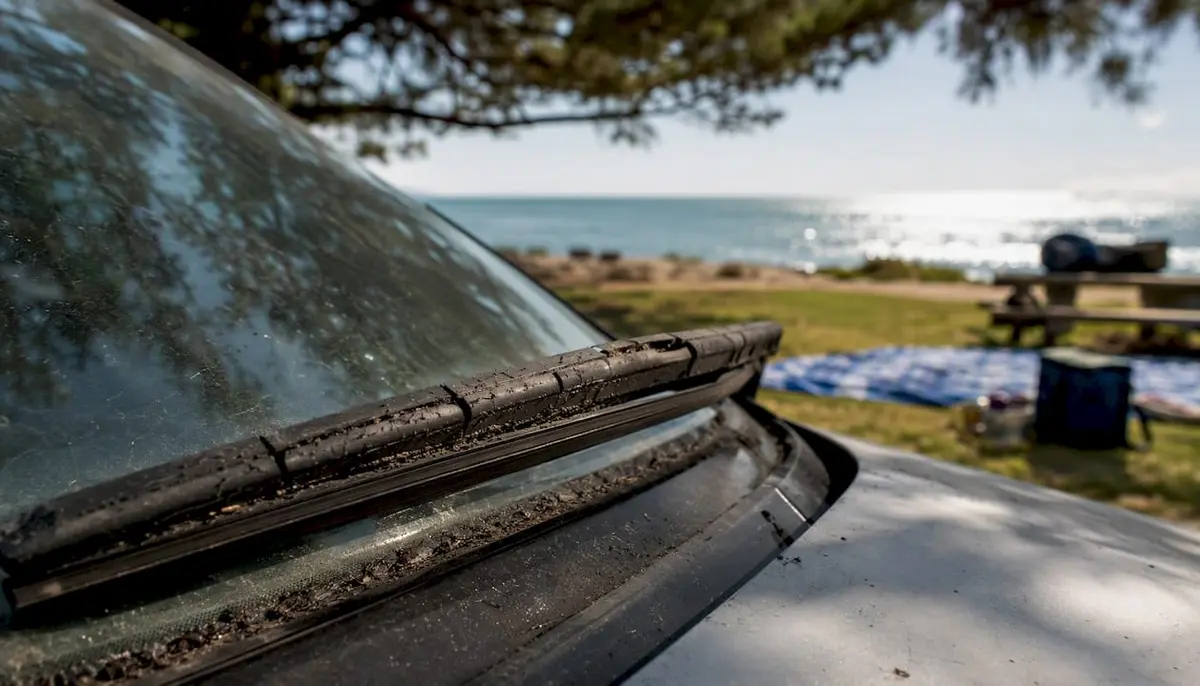
Some Australian guides allow up to 12–18 months in milder areas, but that upper limit applies only where UV and particulate exposure are genuinely low. For most Australian drivers, about a year is a maximum replacement period, not a recommended target.
Pro Tip: Set a phone reminder every six months — once in autumn before the wet season, once in spring before the heat builds. That habit catches most problems before they affect visibility.
What shortens wiper blade life in Australia?
Australian conditions are genuinely harder on wiper blades than most other climates. Understanding what causes wear helps you predict when your blades will need attention.
Environmental factors:
- UV radiation and heat. Australia’s UV index is among the highest in the world. Prolonged sun exposure hardens the rubber compound, causing it to crack and lose flexibility. Blades parked in direct sun daily degrade noticeably faster.
- Coastal salt air. Salt accelerates corrosion in the wiper arm and frame, and can cause the rubber to dry out and split prematurely.
- Bush dust and pollen. Fine particulates act as an abrasive between the blade and the glass, wearing down the rubber edge with every sweep. Kalamunda Toyota’s service team notes that tree sap, pollen and smoke haze are common local accelerants of blade wear.
- Bushfire smoke and ash. Ash particles are particularly abrasive and can score both the rubber and the glass surface.
Usage factors:
- Wiping a dry screen. Running blades without water causes immediate friction damage to the rubber edge. Even a brief dry wipe shortens blade life.
- High-frequency use. Motorway driving in heavy rain puts more cycles on a blade in an hour than suburban use does in a week.
- Infrequent use. Blades that sit unused for months in direct sun can harden and deform, then perform poorly when you actually need them.
Equipment and fitment factors:
- Blade material. Conventional rubber degrades faster than silicone or coated compounds under UV and heat.
- Beam vs conventional design. Conventional frames can trap grit and corrode, affecting even pressure distribution. Beam blades maintain contact across the full arc.
- Poor fitment or a damaged windscreen. A blade that doesn’t sit flush, or a screen with chips and pitting, creates uneven wear and reduces effective blade life.
How to tell when your wipers need replacing
The most reliable indicator is performance, not age. Streaking, juddering, squeaking and visible rubber damage are the four symptoms that consistently signal a blade is past its useful life. Worn blades can also scratch the windscreen if the rubber has worn away enough to expose the frame.
Here’s a one-minute check you can do right now:
- Lift the wiper arm away from the glass and support it — never let it snap back onto a dry screen.
- Run your finger along the rubber edge. Feel for cracks, stiffness, tears, or a rounded (rather than sharp) edge.
- Check the frame. Look for corrosion, bent sections, or any part of the blade that isn’t sitting flat.
- Lower the arm gently and spray washer fluid. Watch the sweep pattern. Any streaking, skipping, or missed patches means the blade needs replacing.
- Listen during the sweep. A clean blade is quiet. Squeaking or chattering means the rubber is dragging.
Pro Tip: If you can see through a smear rather than a clear arc, your reaction time in heavy rain is already compromised. Replace immediately — don’t wait for the next service.
When should you replace wiper blades in Australia?
The two approaches — calendar-based and condition-based — work best together. Checking on a schedule catches problems before they affect safety; replacing on condition means you’re not discarding blades that still have life in them.
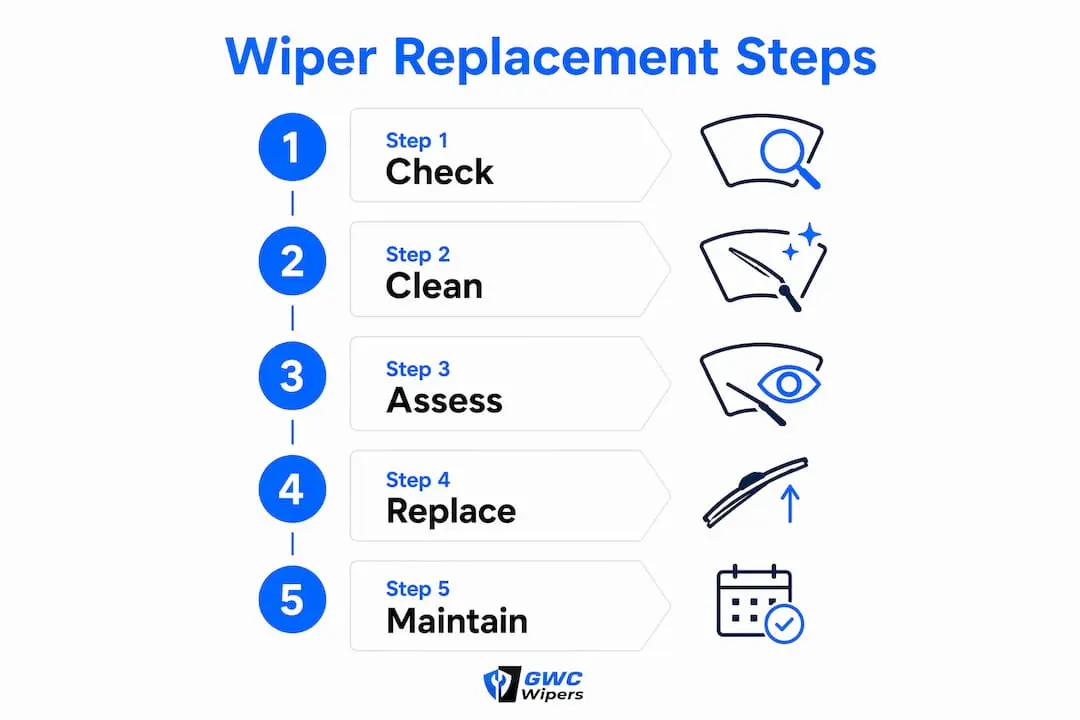
For most Australian drivers, a condition-based approach combined with a six-month check habit gives the best balance between safety and cost. The table below maps the Australian calendar to practical actions.
| Season / Trigger | Suggested action | Why |
|---|---|---|
| Autumn (March–May) | Check and clean blades | Pre-wet-season readiness; clear summer grit |
| Pre-wet season (northern QLD/NT) | Replace if any wear signs | Tropical downpours demand full performance |
| Spring (September–November) | Check and replace if needed | UV damage from summer builds through spring |
| Post-bushfire or smoke event | Replace immediately if ash exposure occurred | Ash is abrasive; rubber and glass may be scored |
| Before any long road trip | Check and replace if degraded | Pre-trip checks prevent visibility loss in remote areas |
| Any time streaking or noise appears | Replace without delay | Performance loss is the definitive trigger |
In high-UV or dusty inland regions, lean toward six-month replacements as a default. In milder southern areas, a 12-month cycle may be sufficient — but always defer to condition over calendar.
Simple maintenance that extends blade life
A short monthly routine can meaningfully extend the life of your blades and keep your windscreen clear between replacements. These wiper protection tips take less than five minutes.
- Wipe the rubber edge with a damp cloth. Remove road grime, insect residue, and dust from the blade surface. A clean blade glides; a dirty one drags.
- Clean the windscreen thoroughly. Grit on the glass is as damaging as grit on the blade. Use a quality glass cleaner and a microfibre cloth.
- Check arm tension. Press the blade flat against the glass. If it lifts or sits unevenly, the arm spring may be weakening and reducing contact pressure.
- Check blade seating. Confirm the blade is locked correctly onto the arm adaptor. A loose blade wears unevenly and can detach at speed.
- Park in shade where possible. UV is the single biggest accelerant of rubber degradation. A garage or shaded spot adds months to blade life.
For cleaning, water and a mild glass cleaner applied to a cloth are sufficient. Avoid aggressive solvents or petrol-based products on coated blades — they strip protective compounds from the rubber surface.
Pro Tip: RAC advises against wiping down new blades after installation. Many quality blades carry a graphite or silicone coating on the rubber that helps them glide smoothly from the first sweep. Wiping it off causes immediate chatter and accelerates early wear.
Do expensive wipers last longer?
Generally, yes — but the gap matters most in harsh conditions. The main variable is rubber compound. Conventional natural rubber degrades under UV and heat faster than silicone or silicone-coated compounds. Industry write-ups suggest silicone blades can last roughly twice as long as conventional rubber equivalents, with some ceramic-coated products claiming further longevity benefits.
The table below summarises typical lifespan expectations and warranty signals by blade type.
| Blade type | Typical lifespan | Warranty signal |
|---|---|---|
| Conventional rubber (standard frame) | 6–12 months | Usually none or 3–6 months |
| Beam / hybrid rubber | 9–15 months | Often 6–12 months |
| Silicone or silicone-coated beam | 12–24 months | Commonly 12 months or more |
Beyond longevity, premium blades also tend to perform better in heavy rain (cleaner wipe, less chatter), handle temperature extremes more reliably, and resist UV-induced hardening. For drivers in high-UV or coastal environments, premium blade materials often justify the price difference simply because degraded rubber is the primary failure mode in those conditions.
A 12-month warranty on a wiper blade is a meaningful signal. It tells you the manufacturer is confident the product will perform for at least that period under normal use. A blade with no warranty or a very short one is often a sign of lower-grade rubber.
How to replace wiper blades yourself
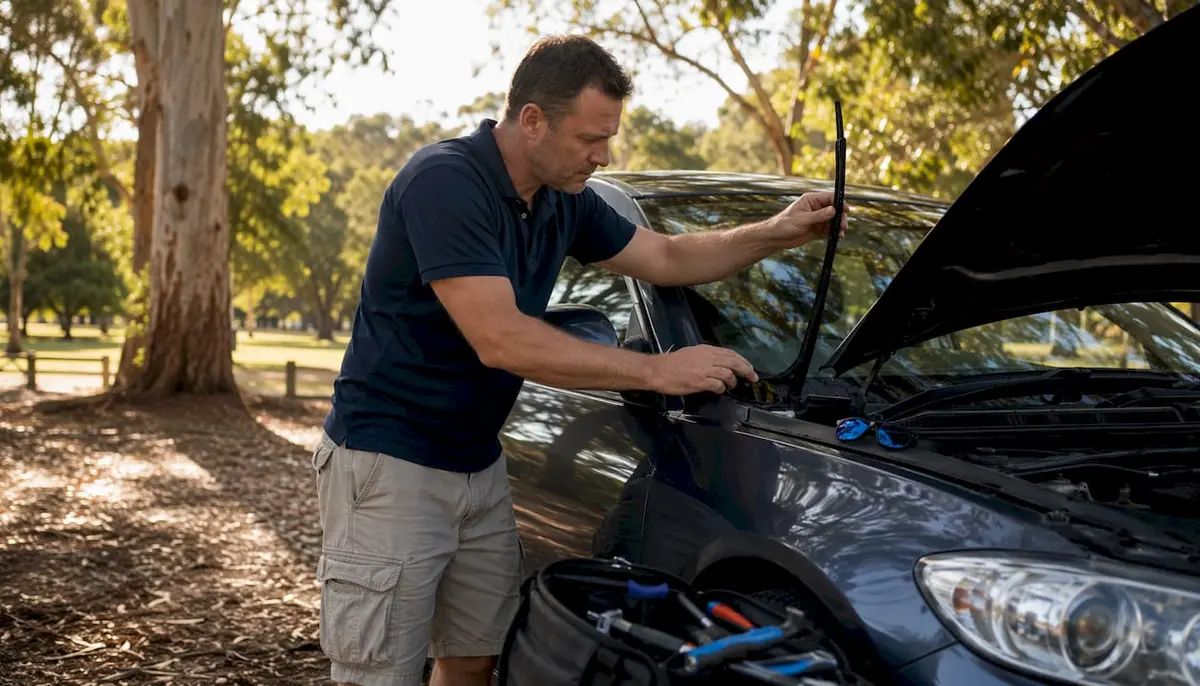
Replacing wiper blades is a straightforward DIY task that takes about ten minutes. Park the car, turn the engine off, and work on one blade at a time so you always have the other as a reference.
- Lift the wiper arm away from the glass and hold it upright. Support it carefully — if it snaps back without a blade fitted, it can crack the windscreen.
- Locate the release tab where the blade connects to the arm. Most modern blades use a hook-style adaptor with a small plastic tab or button.
- Press the tab and slide the blade off the hook. Note the orientation before removing it.
- Match the new blade’s adaptor to the arm fitting. GWC Wipers blades come with preassembled adaptors for over 2,500 vehicle models, so no separate assembly is needed.
- Clip the new blade onto the hook until you hear or feel it lock. Give it a gentle tug to confirm it’s seated.
- Lower the arm carefully back onto the glass.
- Repeat for the other blade, then run a sweep test with washer fluid.
After fitting, check for chatter during the first few sweeps — this usually means the blade isn’t seated correctly or the arm tension needs attention. If the blade lifts at speed, the arm spring may need replacement. For rear wipers, the same process applies, though some models integrate the washer nozzle into the blade assembly — check your owner’s manual before removing. For a detailed walkthrough, the step-by-step installation guide covers common arm types and adaptor configurations.
How GWC Wipers are built for Australian conditions
GWC Wipers designs and manufactures its blades specifically for the demands of Australian driving. The product range covers fitment for over 2,500 vehicle models, with a vehicle selector tool on the website that matches blades to your exact make, model, and year — removing the guesswork from fitment.
The blades use natural rubber compounds engineered to resist UV hardening and maintain flexibility across Australia’s temperature extremes, from alpine cold to outback heat. Segmented pressure distribution across the blade arc ensures consistent contact with the glass, which matters on curved windscreens where conventional frames often leave dry patches. The aerodynamic profile reduces lift at highway speeds, and corrosion-resistant materials in the frame address the coastal salt exposure that shortens the life of standard steel-framed blades.
Every purchase includes a 12-month warranty and a 30-day money-back guarantee, with free shipping Australia-wide. The fitment guarantee means that if the blade doesn’t fit your vehicle as specified, GWC Wipers will make it right.
Pro Tip: If you drive in a coastal or high-UV region, look for blades with UV-resistant rubber compounds and a corrosion-resistant frame. These two features address the two most common failure modes for Australian conditions — and GWC Wipers’ UV resistance design is built around exactly that.
Key takeaways
Most Australian drivers should replace wiper blades every 6–12 months, with condition always taking priority over the calendar — replace at the first sign of streaking, noise, or visible rubber damage.
| Point | Details |
|---|---|
| Typical lifespan | Replace every 6–12 months; lean toward six months in high-UV, dusty, or coastal areas. |
| Condition beats calendar | Streaking, skipping, squeaking, or cracked rubber are the definitive triggers — don’t wait for a scheduled service. |
| Seasonal checks | Inspect in autumn before wet weather and in spring after summer UV exposure; replace immediately after bushfire smoke events. |
| Premium materials last longer | Silicone and coated beam blades can last roughly twice as long as conventional rubber in harsh Australian conditions. |
| GWC Wipers fitment | Use the GWC Wipers vehicle selector to find the correct blade for your car, backed by a 12-month warranty and 30-day money-back guarantee. |
The case for treating wipers like a safety item, not a consumable
There’s a tendency among Australian drivers to treat wiper blades the way they treat windscreen washer fluid — something to top up when it runs out, not something to maintain proactively. That mindset is worth reconsidering.
The reality is that a degraded blade doesn’t just annoy you with streaks. It reduces your effective visibility in heavy rain to the point where stopping distances and hazard recognition are genuinely affected. In a country where summer storms can go from clear to zero-visibility in minutes, and where long regional drives mean there’s no option to pull over and wait it out, that matters.
The condition-based approach is the right one, but it only works if you actually check. A six-month habit — lift the arm, run your finger along the rubber, do a quick sweep test — takes less than two minutes and catches the vast majority of problems before they become a safety issue. Pair that with parking in shade where you can and avoiding dry-glass wipes, and most blades will comfortably reach their rated lifespan.
For drivers in high-UV or coastal regions, the investment in a silicone or premium beam blade is straightforward to justify. The longer service life offsets the higher upfront cost, and the performance in heavy rain is noticeably better from the first use.
GWC Wipers: built for Australian roads, ready to ship today
Clear visibility in Australian conditions requires more than a generic blade off a shelf. GWC Wipers offers premium wiper blades engineered for Australia’s UV intensity, coastal salt, and seasonal storms, with fitment confirmed for your exact vehicle before you order.

The vehicle selector at gwcwipers.com.au matches blades to your make, model, and year in seconds. Every order ships free across Australia, and every blade is backed by a 12-month warranty and a 30-day money-back guarantee — so there’s no risk in trying them. Whether you drive a Toyota or a European model, the right blade is listed and ready to go. Use the selector now, confirm your fitment, and have new blades at your door within days.
Useful sources
- Instant Windscreens — How Long Do Car Wiper Blades Last? — Australian replacement guide covering the 6–12 month rule and condition-based triggers.
- RAC WA — How to Change Your Windscreen Wipers — Practical inspection and installation guidance from one of Australia’s leading motoring organisations, including the caution about factory blade coatings.
- O’Brien AutoGlass — 5 Signs You Need to Replace Your Windscreen Wipers — Clear diagnostic guide covering streaking, juddering, squeaking and glass-scratch risk.
- Kalamunda Toyota — Signs It Is Time to Replace Wiper Blades — Local dealership perspective on Australian microclimates, including bush dust, pollen, and smoke haze.
- GWC Wipers — Vehicle Selector and Product Range — Fitment tool covering over 2,500 vehicle models, with warranty and purchase information for Australian drivers.
FAQ
How often should you replace wiper blades in Australia?
Most Australian drivers should replace wiper blades every 6–12 months. In high-UV, dusty, or coastal regions, leaning toward six months is the safer approach.
Do expensive wiper blades last longer?
Yes, in most cases. Silicone and premium beam blades can last roughly twice as long as conventional rubber — that means up to 12–24 months of use under typical Australian conditions if properly cared for, with harsh climates demanding more frequent checks.
How do you tell if your wiper blades need replacing?
The clearest signs are streaking, skipping, squeaking, or visible cracks in the rubber. Run your finger along the blade edge — if it feels stiff or has splits, replace it regardless of age.
Can worn wiper blades damage your windscreen?
Yes. Once the rubber wears down enough to expose the blade frame, the metal or hard plastic can scratch the glass surface. Replace blades at the first sign of performance loss to avoid this.
What’s the best way to make wiper blades last longer?
Park in shade to reduce UV exposure, never run blades on a dry screen, and clean the rubber edge monthly with a damp cloth. Avoid wiping down new blades after fitting, as many carry a factory coating that aids smooth operation from the first use.