
Rear wiper blade role on Toyota wagons explained

TL;DR:
- The rear wiper on Toyota wagons is a vital safety component that clears grime and water from the upright rear window. Regular replacement every 6–12 months and proper maintenance are essential to preserve rear visibility and comply with Australian road safety laws. Using correct, high-quality blades suited for the vehicle’s design and weather conditions improves safety and prolongs wiper performance.
The rear wiper blade on Toyota wagons is defined as the primary safety component responsible for clearing water, road grime, and debris from the upright rear window during adverse weather and reversing manoeuvres. Most Toyota wagon owners treat it as an afterthought. That is a mistake with real consequences. Australian roads deliver everything from tropical downpours to red dust storms, and a compromised rear window is a genuine hazard. Per 2026 replacement guidelines, rear wiper blades should be replaced every 6–12 months, or sooner when streaking or squeaking appears.
Why do Toyota wagons specifically need a rear wiper blade?
Wagons have upright rear windows that create an aerodynamic dead zone directly behind the vehicle. That dead zone acts like a vacuum, pulling in road spray, exhaust soot, and fine debris from the road surface. The result is a rear window that collects grime far faster than any other glass surface on the car.
Sedans behave very differently. Their sloped rear windows use airflow to naturally deflect water and light debris, which is why many sedans are manufactured without rear wipers at all. Toyota wagons, like hatchbacks and SUVs, do not benefit from that self-clearing effect. The physics simply do not work in their favour.
The practical impact on safety is direct. A dirty rear window reduces your ability to judge distance when reversing, spot approaching vehicles when changing lanes, and react to hazards in traffic. These are not minor inconveniences. They are conditions that increase accident risk in measurable ways.
Key reasons Toyota wagons accumulate rear window contamination faster than other body styles:
- The upright rear glass sits perpendicular to airflow, catching spray rather than deflecting it.
- Low-pressure air behind the wagon draws road grime upward onto the glass.
- Exhaust outlets on many wagon models sit close to the rear, depositing soot directly onto the lower glass.
- Tyre spray from the rear wheels hits the lower section of the window on wet roads.
- Dust and fine particles settle on the flat surface during dry conditions, creating a film that smears badly when wet.
How does rear wiper blade design differ from front wipers on Toyota wagons?
Rear wiper blades are not simply shorter versions of front blades. Rear blades differ from front wipers in size, rigidity, rubber composition, and attachment design, each adapted specifically for the rear window environment. Understanding those differences helps you maintain the system correctly and choose the right replacement.
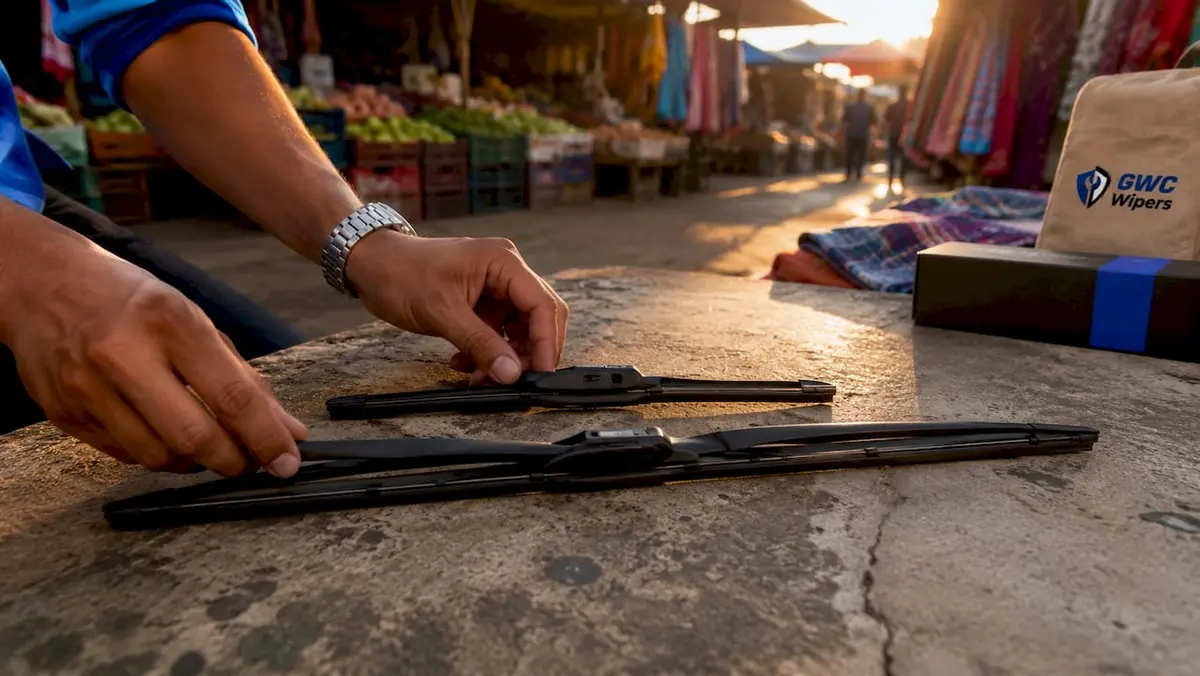
Front wiper blades carry aerodynamic spoilers. Those spoilers press the blade against the windscreen at highway speeds, counteracting wind lift. Rear wipers have no spoilers because wind pressure at the rear of a moving wagon is minimal. Instead, rear blades use a more rigid frame with higher downward pressure to clear the heavier grime that accumulates on upright rear glass.
The wiper arm design on Toyota wagons also reflects the rear window’s unique demands. The role of wiper arm design in Toyota vehicles is to position the blade correctly across the glass arc and deliver consistent contact pressure. Rear arms are typically shorter and use a different pivot angle than front arms, matched to the specific curvature and size of the rear window on each model. Forcing a front blade onto a rear arm, or using a generic blade not matched to your Toyota wagon’s specifications, reduces coverage and risks damaging the arm mechanism.
Rear wiper motors are lighter duty than front motors and designed for intermittent use only. They are not built to run continuously or to push through heavy loads. This is a critical distinction for maintenance.
Pro Tip: Never operate your rear wiper on a window covered in thick mud, dried salt, or heavy debris. The motor is not rated for that load. Clear the glass manually first, then use the wiper to finish the job.
What are the best maintenance practices for Toyota wagon rear wiper blades?
Rear wiper maintenance is straightforward, but most Toyota wagon owners skip steps that matter. Following a consistent routine protects the motor, preserves the glass, and keeps your rear visibility reliable year-round.
Replace your rear wiper blade on a clear schedule. Worn rear wiper blades should be replaced every 6–12 months, or immediately when you notice streaking, squeaking, or shuddering. Those symptoms mean the rubber has hardened, cracked, or lost its edge. A blade in that condition does not clear water. It smears it.
Follow these steps to maintain your Toyota wagon’s rear wiper system properly:
- Inspect the blade monthly. Run your finger along the rubber edge. If it feels stiff, cracked, or uneven, replacement is overdue.
- Clean the rear glass before activating the wiper. Running a rear wiper on dry or lightly wet glass causes abrasive damage from road grit, producing micro-scratches that degrade visibility over time.
- Clear heavy debris manually. Remove mud, leaves, or thick dust with a damp cloth before switching the wiper on. This protects the motor from overload.
- Check the wiper arm tension. A loose arm reduces blade contact pressure and leaves uncleared strips across the glass. If the arm feels slack, have it inspected.
- Use the rear washer jet before wiping. Most Toyota wagons have a single small jet spray at the rear. Activate it first to wet the glass and lift grit before the blade moves.
- Replace with the correct blade size. Toyota wagons require model-specific mounting hardware and blade dimensions. Using the wrong size leaves uncovered areas and risks arm damage.
Pro Tip: In summer, park with the rear wiper lifted slightly off the glass if possible. Prolonged contact with hot glass accelerates rubber degradation, especially in Australian heat.
Signs that your rear wiper blade needs immediate replacement include visible rubber splitting, a blade that skips or chatters across the glass, persistent smearing even after cleaning, and any squealing noise during operation. Do not delay on these. A blade showing those symptoms provides no meaningful visibility improvement in rain.
How does a well-maintained rear wiper improve safety and compliance in Australia?
Australian road safety regulations focus on a vehicle’s ability to maintain clear driver visibility. Australian regulations treat a non-functioning rear wiper as a roadworthiness issue, meaning a vehicle with a faulty or missing rear wiper system can be deemed unroadworthy and unsafe to operate legally.
The consequences extend beyond a roadworthiness certificate. Operating a vehicle with impaired rear visibility increases your exposure in insurance claims. If a rear-end collision or reversing incident occurs and your rear wiper was non-functional, an insurer may argue that impaired visibility contributed to the incident. That argument can affect claim outcomes.
Maintaining rear wiper functionality is a low-cost, proactive measure that prevents legal complications and enhances overall driving safety across Australia’s diverse climates. A blade that costs under $30 to replace can prevent a roadworthiness failure, an insurance dispute, or a collision that costs far more.
The safety case is equally direct. Compromised visibility from worn wipers increases accident risk during reversing and lane changes. Those two manoeuvres account for a significant share of low-speed collisions in Australian car parks and suburban streets. A clear rear window is not a luxury. It is a functional safety requirement.
Wiper blade performance testing confirms that blades losing contact pressure or rubber integrity fail to meet the clearing standards needed for safe operation. Keeping your rear wiper in good condition is the simplest way to stay on the right side of both the law and your insurer.
How to select the right replacement rear wiper blade for Toyota wagons?
Choosing the correct replacement rear wiper blade for your Toyota wagon requires matching three things: blade size, mounting type, and rubber compound. Getting any one of these wrong means the blade either will not fit, will not clear properly, or will degrade faster than it should.
Correct blade size and fitment are critical for Toyota wagons. Generic blades designed for front wipers are incompatible with rear arms. The mounting hooks, pivot angles, and blade lengths differ between front and rear systems. Always confirm your Toyota wagon’s specific rear blade size before purchasing.
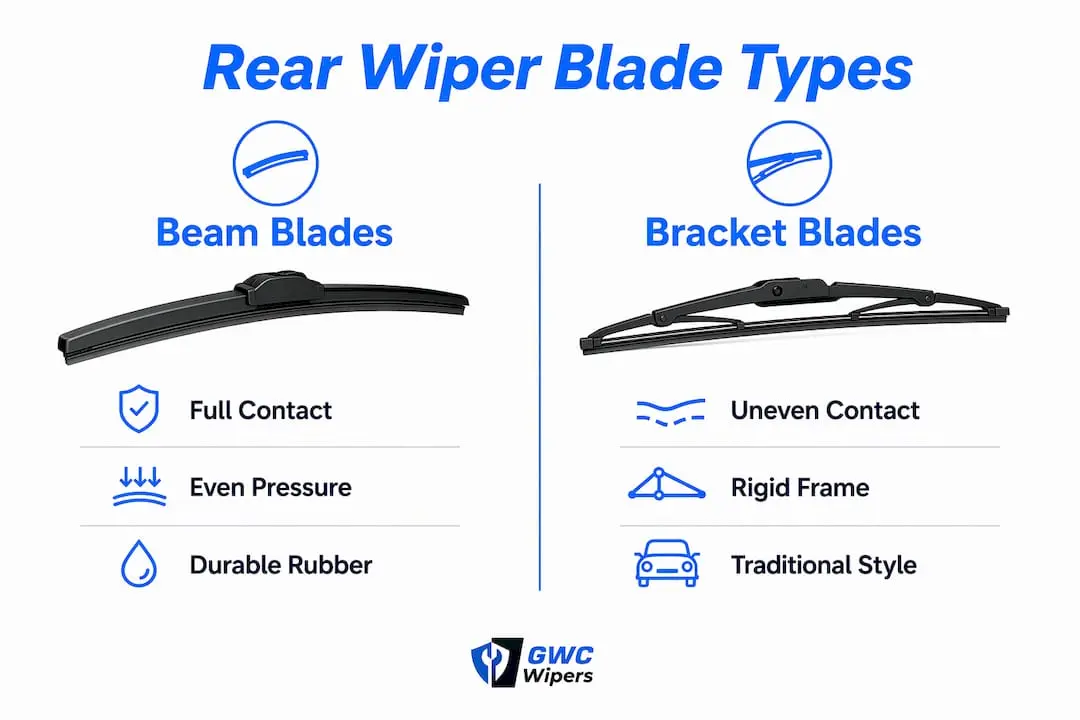
The choice between beam blades and traditional bracket blades matters for rear wiper performance. Beam blades offer superior contact across the full blade length because they flex to match the glass curvature without a rigid frame. Traditional bracket blades use pressure points along the frame, which can leave gaps on curved glass. For Australian conditions, beam blades deliver more consistent clearing in heavy rain and are less prone to clogging with debris.
| Feature | Beam blade | Traditional bracket blade |
|---|---|---|
| Glass contact | Full-length, even pressure | Pressure point contact |
| Performance in heavy rain | High | Moderate |
| Debris resistance | Better | Lower |
| Fit for curved rear glass | Excellent | Variable |
| Typical durability | Longer | Shorter |
| Suited to Australian heat | Yes, with quality rubber | Depends on rubber grade |
Rubber compound choice matters in Australia’s climate. Natural rubber degrades faster under UV exposure and extreme heat. Blades using synthetic or silicone-blended rubber last longer through Australian summers and maintain flexibility in cold southern winters. OEM or quality aftermarket parts are the right choice for Toyota wagons. They are matched to the arm design and tested for the glass geometry of your specific model.
Key takeaways
The rear wiper blade on Toyota wagons is a safety-critical component that requires correct sizing, regular replacement every 6–12 months, and proper use to maintain rear visibility and legal roadworthiness in Australia.
| Point | Details |
|---|---|
| Wagons need rear wipers by design | Upright rear windows create aerodynamic dead zones that collect water, soot, and debris. |
| Replace every 6–12 months | Streaking, squeaking, or shuddering means the blade has failed and must be replaced immediately. |
| Never wipe dry or debris-covered glass | Activating the wiper on dirty dry glass causes micro-scratches that permanently degrade visibility. |
| Match blade to your Toyota model | Incorrect size or mounting type reduces coverage and risks damaging the wiper arm mechanism. |
| Beam blades outperform bracket blades | Beam blades deliver full-length contact and better durability across Australian weather conditions. |
What I have learned from watching Toyota wagon owners neglect their rear wipers
Rear wiper neglect is the most consistent maintenance gap I see among wagon owners. The front wipers get attention because drivers see them working every time it rains. The rear wiper is out of sight, so it stays out of mind until something goes wrong.
The most common mistake I see is owners activating the rear wiper on a glass surface caked in dried mud or dust. The motor strains, the blade skips, and the glass ends up scratched. That damage is permanent. A 30-second manual wipe with a damp cloth before switching the wiper on would have prevented all of it.
Timing replacements is simpler than most people think. I replace rear blades at the same time as front blades, once every 12 months at minimum. That way nothing gets forgotten. If the blade shows wear signs before that point, I replace it immediately rather than waiting for the scheduled interval.
The legal angle is one that genuinely surprises Toyota wagon owners when I raise it. A non-functional rear wiper is not just an inconvenience. It is a roadworthiness issue in Australia. The cost of a replacement blade is trivial compared to a failed vehicle inspection or a complicated insurance claim after a reversing incident.
Proactive rear wiper maintenance is one of the lowest-effort, highest-return habits you can build as a Toyota wagon owner. Do not wait for the blade to fail completely. Check it monthly, replace it on schedule, and protect the glass every time you use it.
— Faisal
Premium rear wiper blades for your Toyota wagon, ready to order
Your Toyota wagon deserves a rear wiper blade that fits perfectly and performs reliably through every Australian season.
Com stocks premium rear wiper blades matched to Toyota wagon models, built with durable rubber compounds suited to Australian heat, UV exposure, and heavy rain. Every blade comes with a 12-month warranty, free shipping across Australia, and a 30-day money-back guarantee. Use the vehicle selector at GWC Wipers to find the exact blade for your make, model, and year in seconds. If you drive another wagon or SUV in the household, Com also carries premium wiper blades for a wide range of vehicles, all with the same fit guarantee and Australian-focused performance standards.
FAQ
What is the role of the rear wiper blade on Toyota wagons?
The rear wiper blade clears water, road spray, and debris from the upright rear window, maintaining safe visibility during rain and reversing. Toyota wagons require rear wipers because their vertical rear glass creates an aerodynamic dead zone that collects grime.
How often should I replace the rear wiper blade on my Toyota wagon?
Replace the rear wiper blade every 6–12 months, or immediately when you notice streaking, squeaking, or shuddering. Worn blades smear rather than clear, reducing rear visibility in wet conditions.
Can I use a front wiper blade on my Toyota wagon’s rear arm?
No. Front wiper blades use different mounting hooks, lengths, and pressure profiles that are incompatible with rear wiper arms on Toyota wagons. Using the wrong blade reduces coverage and risks damaging the arm mechanism.
Is a faulty rear wiper blade a legal issue in Australia?
Yes. Australian regulations treat a non-functioning rear wiper as a roadworthiness concern. A vehicle with a faulty rear wiper system can be deemed unroadworthy and may affect insurance outcomes in the event of a collision.
Are beam blades better than traditional bracket blades for Toyota wagon rear wipers?
Beam blades deliver full-length contact pressure across curved rear glass and resist debris clogging better than traditional bracket blades. For Australian conditions, beam blades with quality synthetic rubber offer longer service life and more consistent clearing performance.