
Role of rear wiper on Mazda hatchbacks: what Aussie owners need to know
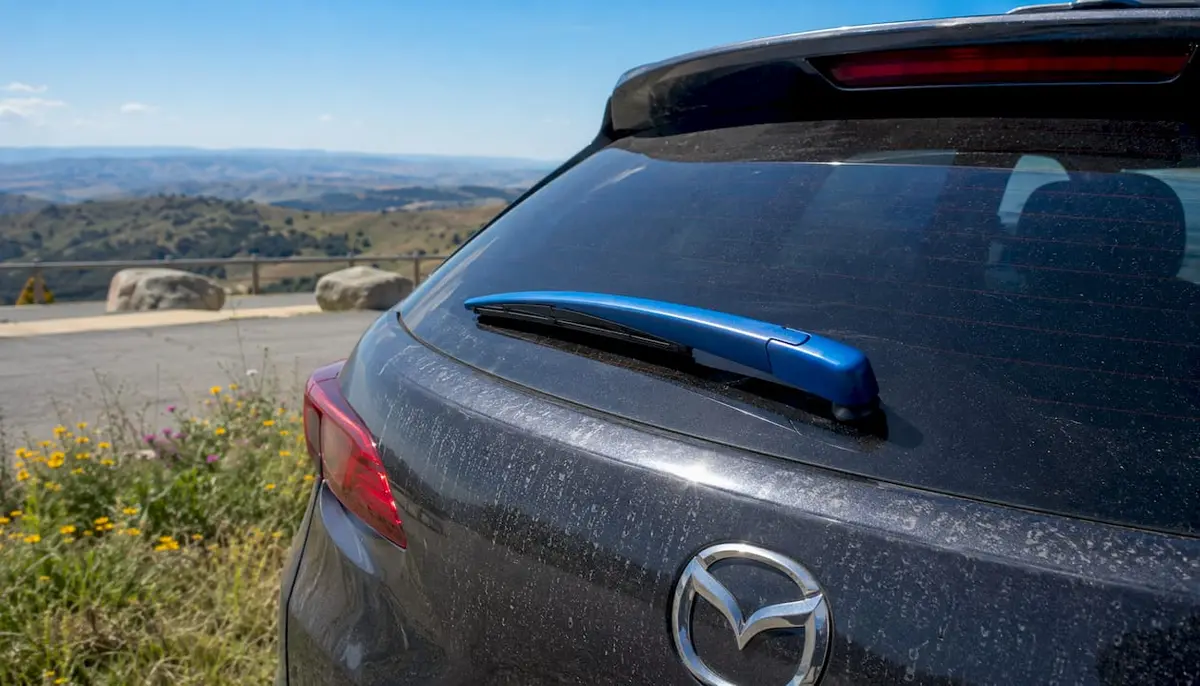
The rear wiper on a Mazda hatchback does one job with real safety consequences: it clears tyre spray, road grime and rain from the near-vertical rear glass so you can see what is behind you. If yours is streaking, squeaking or leaving dry patches, it needs replacing now, not next service.
Here is what you need to know at a glance:
- What it does: clears spray, dirt and washer fluid residue from the rear window to restore rear visibility for reversing, lane changes and monitoring traffic behind you.
- Safety role: a dirty rear window reduces your ability to judge following distances and spot hazards, especially in wet Australian conditions.
- Warning signs: streaking, skipping, squeaking, cracked or frayed rubber, or blade lifting at speed.
- Replacement action: wiper blades for Mazda are available with a vehicle fitment tool to confirm the correct size and connector type before you order.
Table of Contents
- Why does a Mazda hatchback need a rear wiper when sedans do not?
- How the rear wiper protects your visibility on the road
- When should you replace your Mazda hatchback’s rear wiper?
- How to choose the right rear wiper for your Mazda hatchback
- How to replace a rear wiper on a Mazda hatchback yourself
- A simple monthly routine that extends rear blade life
- Key takeaways
- A note on getting fitment right
- GWC Wipers: the Australian option for Mazda rear blades
- Useful sources
- FAQ
Why does a Mazda hatchback need a rear wiper when sedans do not?
The answer is aerodynamics, and it is more straightforward than it sounds. A sedan’s sloping boot lid guides airflow smoothly over the rear glass, which naturally carries away water and light debris. A Mazda hatchback’s near-vertical tailgate breaks that airflow sharply.
When air travelling over the roofline hits the upright rear glass, it separates and creates a low-pressure zone directly behind the car. That vacuum effect actively pulls in tyre spray, dust and road grime, depositing it straight onto the rear window. The swirling air does not flow across the glass the way it does on a sedan, so it cannot self-clean.
| Feature | Sedan | Mazda hatchback |
|---|---|---|
| Rear glass angle | Steeply sloped | Near-vertical |
| Airflow over rear glass | Smooth, self-cleaning | Turbulent, creates low-pressure zone |
| Dirt accumulation | Low | High |
| Rear wiper needed? | Rarely | Yes |
The short tailgate on models like the Mazda 2 and Mazda 3 makes this effect more pronounced. There is simply less distance between the rear wheels and the glass, so spray reaches the window faster and in greater volume.
How the rear wiper protects your visibility on the road
A rear wiper is essential for maintaining clear sightlines in wet, dusty or debris-prone conditions. The situations where it matters most are the ones where you least want to be guessing.
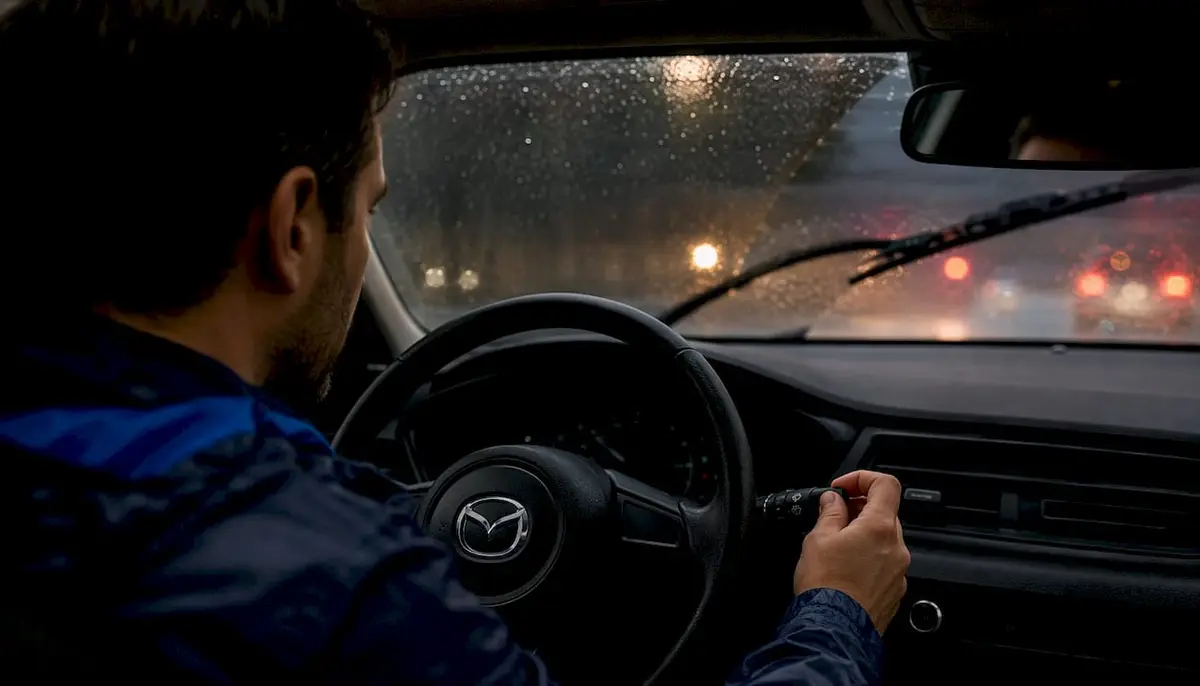
Reversing out of a driveway or car park relies on your rear view. Lane changes on a wet freeway require you to judge the speed and distance of following vehicles accurately. Monitoring traffic in stop-start conditions, particularly in rain, depends on a clear rear window. In each of these situations, a smeared or obscured rear window is a genuine hazard.
Pro Tip: A rear wiper complements your reversing camera, it does not replace it. Cameras can still show a clear image when the lens is clean, but your rearview mirror view depends entirely on the rear glass. Keep both in good condition.
Worn rubber that exposes the metal or plastic wiper frame can cause micro-scratches that permanently reduce glass clarity. That kind of damage is irreversible without glass replacement, so a $20–$40 blade swap is always the better option.
When should you replace your Mazda hatchback’s rear wiper?
Most wiper blades have a limited lifespan and Australian conditions generally shorten their useful life. UV exposure, heat, dust and coastal salt all degrade rubber faster than mild climates do.
Warning signs to watch for
- Streaking: the blade leaves lines of water rather than clearing cleanly.
- Skipping: the blade judders or bounces across the glass instead of gliding.
- Squeaking: a high-pitched noise on wet glass usually means the rubber edge has hardened or cracked.
- Visible cracking or fraying: inspect the rubber edge; any splitting means the blade is overdue for replacement.
- Blade lifting at speed: the blade loses contact with the glass on the highway, leaving a blind spot.
- Glass micro-abrasions: fine scratches appearing on the rear window indicate the frame is making contact.
Recommended inspection intervals for Australia
| Condition | Inspection frequency | Typical replacement |
|---|---|---|
| Urban/suburban driving | Every 6 months | 6–12 months |
| Dusty or outback regions | Every 3 months | 6 months or sooner |
| Coastal (salt exposure) | Every 3 months | 6 months or sooner |
| High-UV inland areas | Every 3 months | 6 months or sooner |
In dusty or high-UV regional areas, inspect rear blades every three months because dust behaves like sandpaper on rubber and UV degrades the compound faster than most drivers expect.
How to choose the right rear wiper for your Mazda hatchback
Correct fitment matters more than price. A blade that does not match your arm connector or is the wrong length will skip, leave gaps, or simply not attach securely. Getting this right before you order saves a return trip.
Fitment checklist
- Measure the blade length: rear blades are typically shorter than front blades; check your owner’s manual or use a fitment tool.
- Confirm the connector type: Mazda hatchbacks use different arm styles across model years; hook, pinch-tab and bayonet connectors are all common.
- Check model and year: a Mazda 2 wiper blade differs from a Mazda 3 or MX-30 rear blade in both length and connector.
- Verify warranty and returns: a 12-month warranty and 30-day money-back guarantee are the minimum you should expect from a quality Australian supplier.
Which blade type suits Australian conditions?
Beam and hybrid blade designs distribute pressure more evenly across curved glass and generally outperform older framed blades in longevity and wet-weather performance. For Australian drivers dealing with heat, UV and heavy summer downpours, silicone rubber compounds also hold up better than standard rubber over time. The extra cost is worth it if you want to avoid replacing the blade twice a year.
Pro Tip: Use the GWC Wipers vehicle selector tool to confirm the exact rear blade size and connector for your Mazda model and year before purchasing. Guessing the size is the most common cause of fitment problems.
How to replace a rear wiper on a Mazda hatchback yourself
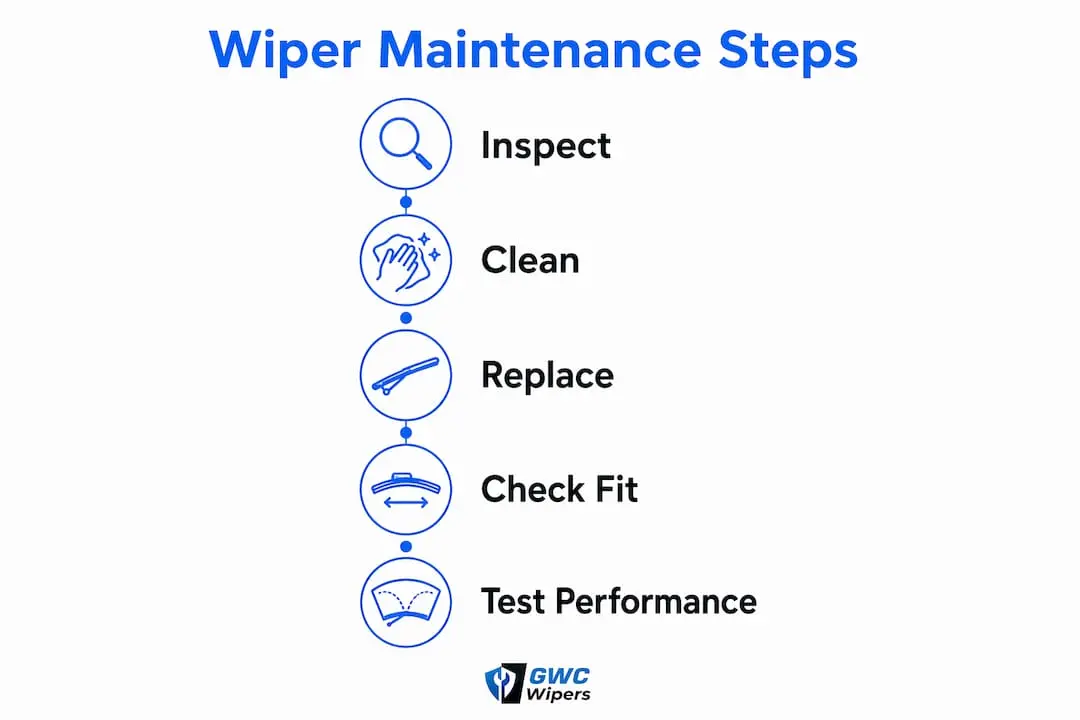
Replacing the rear blade is a straightforward task most owners can complete in 5–15 minutes with no tools required.
- Park on a flat surface and switch off the ignition. Make sure the wiper arm is in its resting position.
- Lift the wiper arm away from the glass. Hold it firmly; do not let it snap back onto bare glass.
- Locate the release tab or button on the blade connector and press or lift it to detach the old blade.
- Slide the old blade off the arm and set it aside.
- Align the new blade with the connector arm and press firmly until you hear a click, confirming a secure fit.
- Gently lower the arm back onto the glass and activate the rear wiper briefly to confirm smooth, even operation.
Cost guidance in Australia varies depending on the type and quality of the wiper blade. If the wiper arm is stiff, corroded or the connection feels seized, do not force it. Take the car to a local fitter to avoid snapping the arm, which is a far more expensive repair.
A simple monthly routine that extends rear blade life
Monthly cleaning is the single most effective habit for extending blade life. Use a damp cloth with mild soap, wipe along the full length of the rubber edge, rinse with clean water and test the blade on a wet window. This prevents the sandpaper effect caused by trapped road grit grinding against the glass every time the wiper runs.
For drivers in dusty inland regions or near the coast, inspect blades every three months rather than waiting for a visible sign of failure. Salt and fine dust accelerate rubber degradation in ways that are not always obvious until the blade is already scratching the glass.
Keeping your rear window clean also reduces the workload on the blade. A wiper running over a heavily soiled window wears faster than one clearing light rain. Checking your window condition regularly is a simple habit that pays off in blade longevity.
Pro Tip: Never run the rear wiper on a dry window. Always activate the washer fluid first, or wait for rain. Running a dry blade drags grit across the glass and accelerates both rubber wear and micro-scratching.
Key takeaways
The rear wiper on a Mazda hatchback is a safety component, not an optional extra. Aerodynamic turbulence deposits grime on vertical rear glass that only a wiper can clear.
| Point | Details |
|---|---|
| Why hatchbacks need one | Near-vertical rear glass creates a low-pressure zone that pulls tyre spray and dust onto the window. |
| Top warning signs | Streaking, skipping, squeaking, cracked rubber, or visible micro-scratches on the glass. |
| Replacement interval | 6–12 months for urban driving; in dusty, coastal, or high-UV regions, inspect every 3 months and replace closer to the six-month mark. |
| Choosing the right blade | Confirm blade length, connector type and model year before ordering; beam or silicone blades suit Australian conditions best. |
| GWC Wipers fitment tool | Use the vehicle selector at GWC Wipers to find the correct rear blade for your Mazda with a 12-month warranty and free shipping. |
A note on getting fitment right
Fitting Mazda rear blades is something I think about a lot, because the most common complaint I hear from Mazda owners is that they bought the wrong size or the wrong connector type. The Mazda 2, Mazda 3 and MX-30 all have different rear arm configurations, and assuming they are interchangeable is a mistake that costs time and money.
My honest view is that the aerodynamic explanation matters because it changes how you think about maintenance. This is not a component that wears out because of bad luck. It wears out because it is doing real work every time it rains, every time you drive on a dusty road, and every time the sun bakes the rubber in a hot car park. Treating it like a consumable with a predictable service interval, rather than waiting for it to fail visibly, is the approach that keeps your rear visibility reliable.
If you are unsure about the correct blade for your Mazda, use the fitment tool or reach out to the GWC Wipers support team. The 12-month warranty and 30-day money-back guarantee mean there is no risk in ordering online.
GWC Wipers: the Australian option for Mazda rear blades
Clear rear visibility starts with the right blade, fitted correctly and built for Australian conditions. GWC Wipers designs and supplies premium wiper blades specifically for the heat, UV and variable rainfall Australian drivers deal with year-round.
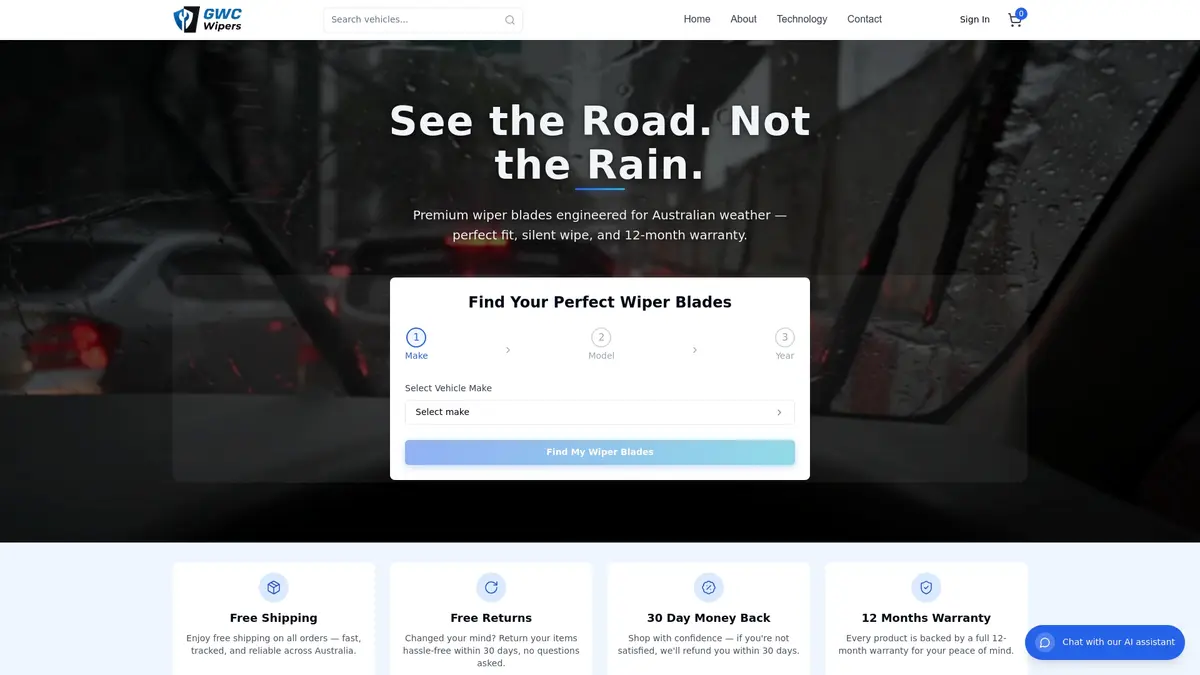
Use the Mazda wiper blade selector to find the exact rear blade for your model and year in seconds. Every order includes free shipping across Australia, a 12-month warranty and a 30-day money-back guarantee. Beam and silicone options are available for owners who want longer service life in harsh conditions.
If you drive a Mazda 2, Mazda 3, MX-30 or an older model like the Mazda 323, the fitment tool confirms the correct size and connector before you add to cart. No guessing, no returns. Visit the Mazda fitment page now and have the right blade on your door within days.
Useful sources
- Why Do Hatchbacks Have a Rear Wiper? — Zsearch — aerodynamic explanation of low-pressure zones and rear glass fouling (background reference).
- How to Replace a Rear Windscreen Wiper — Car Windscreen Repairs Australia — Australian DIY replacement guidance and warning signs.
- How Long Do Car Wiper Blades Last? — Instant Windscreens Australia — Australian replacement intervals, blade types and maintenance advice.
- GWC Wipers Mazda fitment pages — model-specific rear blade sizing and connector confirmation for Australian Mazda owners.
This article is general information for Australian vehicle owners. For advice specific to your vehicle or local road conditions, consult your owner’s manual or a qualified automotive technician.
FAQ
Why do Mazda hatchbacks have a rear wiper but sedans do not?
Mazda hatchbacks have near-vertical rear glass that creates a low-pressure zone, drawing tyre spray and dirt onto the window. Sedans have sloped boot lids that guide airflow over the glass, naturally keeping it cleaner.
How often should I replace the rear wiper on my Mazda?
Most rear blades last 6–12 months, but if you drive in dusty, coastal, or high-UV regions in Australia, inspect rear blades every three months and plan to replace them closer to the six-month mark.
What are the signs my Mazda rear wiper needs replacing?
Streaking, skipping, squeaking, visible rubber cracking or fraying, and blade lifting at speed are all clear indicators the blade needs replacing promptly to avoid glass micro-scratches.
Can I replace my Mazda rear wiper blade myself?
Yes. The job typically takes 5–15 minutes and requires no tools. Press the release tab, slide off the old blade, align the new one and press until it clicks. GWC Wipers includes fitment guidance with every order.
Which blade type is best for Australian conditions?
Beam and silicone blades outperform standard framed rubber blades in heat, UV and heavy rain. They distribute pressure more evenly across curved rear glass and last longer in harsh Australian climates.