
Snow-resistant wiper blades: What Aussie drivers need

TL;DR:
- Snow-resistant wiper blades stay flexible and maintain contact in icy Australian conditions.
- Types include beam (frameless), booted (conventional), and silicone blades, each suited for different climates.
- Choosing quality brands like Trico, ANCO, Trapo, and Rain-X ensures durability and optimal performance.
Most Australian drivers assume snow-resistant wiper blades are a product designed for overseas markets, somewhere cold and perpetually icy. But if you’ve ever driven through the Snowy Mountains, the Victorian Alps, or even experienced a surprise frost in Canberra, you’ll know that assumption can leave you in a genuinely dangerous situation. Poor visibility in icy conditions is one of the fastest ways to lose control of your vehicle. Understanding what snow-resistant wiper blades are, how they work, and which type suits your driving needs could make a real difference to your safety on Australian roads.
Table of Contents
- What is a snow-resistant wiper blade?
- Types of snow-resistant wiper blades explained
- Leading snow-resistant wiper blade brands in Australia
- Installation and care tips for snow-resistant wiper blades
- A local perspective: What most Aussie drivers miss about snow-resistant wiper blades
- Find your perfect snow-resistant wiper blades with GWC Wipers
- Frequently asked questions
Key Takeaways
| Point | Details |
|---|---|
| Snow-resistant blade benefits | These blades dramatically reduce ice buildup and improve winter visibility for Australian drivers. |
| Best blade types | Frameless beam and silicone designs offer the best snow-resistance and all-round performance. |
| Longevity matters | Silicone snow-resistant blades last up to twice as long as regular rubber blades. |
| Proper fit and care | Correct installation and routine maintenance maximise your investment and safety. |
What is a snow-resistant wiper blade?
A snow-resistant wiper blade is a wiper specifically engineered to maintain reliable contact with your windscreen in freezing, icy, and snowy conditions. Standard wiper blades are built for rain and general weather, but when temperatures drop and ice forms, they can stiffen, skip across the glass, and leave dangerous streaks across your line of sight.
Snow-resistant blades solve this problem through a combination of weather-resistant materials, specialised construction, and designs that prevent ice from building up on the blade itself. The result is a wiper that stays flexible, maintains firm contact with the glass, and clears your windscreen consistently even when conditions are at their worst.
Here are the main construction differences that set snow-resistant blades apart from standard options:
- Beam (frameless) designs: No exposed metal joints or brackets, which means there are no gaps for ice to accumulate. The blade applies pressure evenly across the entire windscreen surface.
- Rubber sheaths (booted blades): A protective rubber cover encases the metal frame of a conventional blade, shielding moving parts from ice and freezing debris.
- Reinforced wiper arms: Stronger spring tension ensures the blade maintains contact even when snow or ice adds weight and resistance.
- Advanced rubber or silicone compounds: Specially formulated materials that stay pliable at low temperatures, preventing the cracking and stiffening that causes streaks.
For drivers who rely on heavy-duty wiper blades in tough conditions, understanding these construction differences is the first step in choosing a blade that genuinely performs.
“Beam designs excel in snow resistance due to no exposed joints for ice accumulation, providing even pressure across the windscreen surface.”
The practical benefit is clear. When a standard blade stiffens in the cold, it loses contact with the glass and creates blind spots. A snow-resistant blade, by contrast, keeps wiping cleanly and reliably, giving you the visibility you need to drive safely.
Types of snow-resistant wiper blades explained
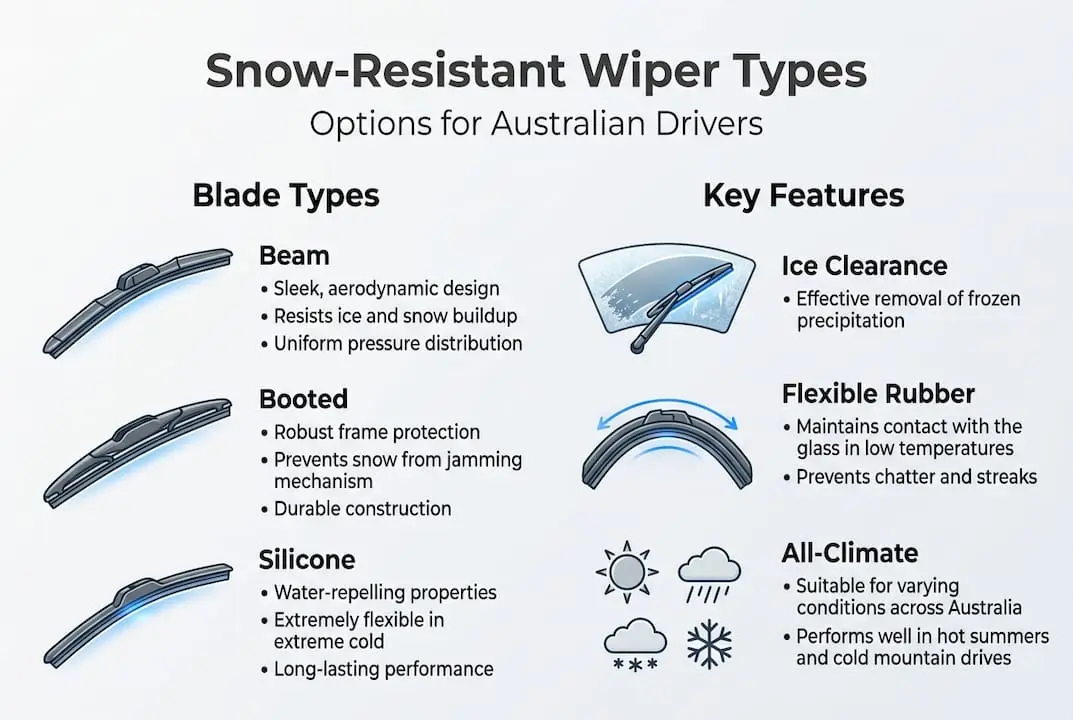
Now you know what defines snow-resistant, let’s compare the main types available. There are three primary categories worth understanding: beam (frameless), conventional winter (booted), and silicone blades. Each has distinct advantages depending on your driving environment and budget.
Beam blades are frameless and rely on a pre-tensioned steel or composite spine to press the rubber evenly against the glass. Because there are no exposed joints, ice has nowhere to accumulate. They’re aerodynamic, quiet, and perform exceptionally well in both heavy rain and snow.
Booted (conventional winter) blades are traditional framed blades wrapped in a protective rubber sheath. The sheath keeps ice away from the metal frame and pivot points. They’re widely available and cost-effective, though the sheath can crack over time in extreme UV exposure, which is a real concern in Australia.
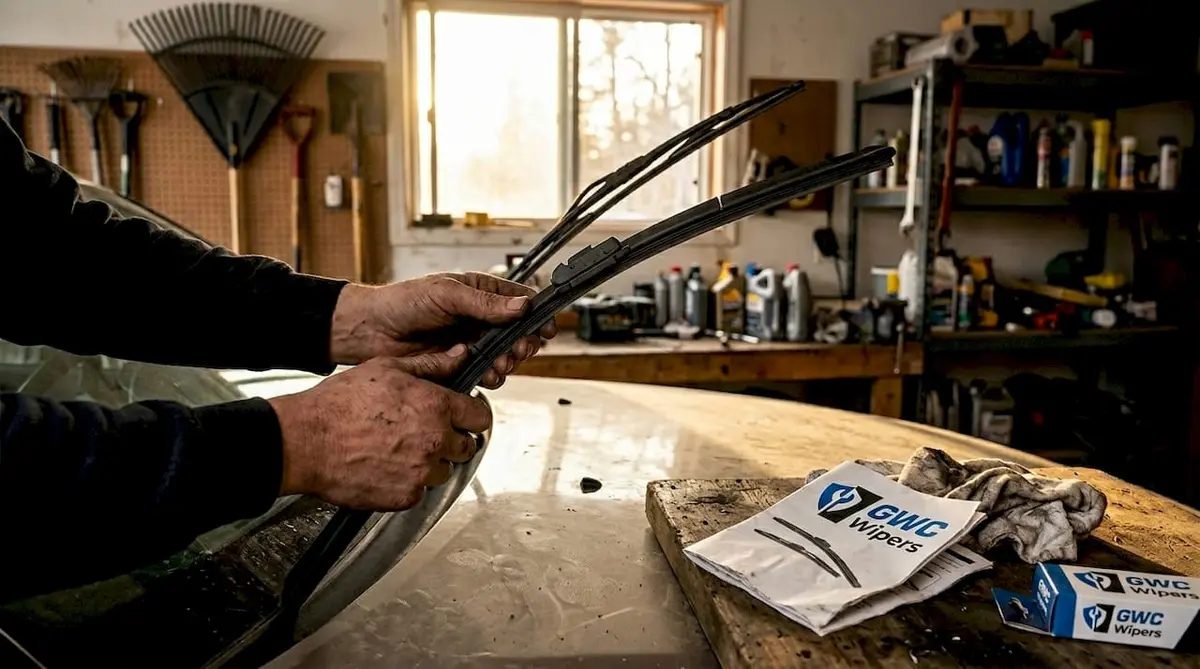
Silicone blades are increasingly the preferred choice for Australian conditions. Silicone compounds remain flexible at extremely low temperatures, and they deposit a fine hydrophobic coating on the glass with every wipe, which actively repels water and reduces ice adhesion. Silicone blades last 18-24 months compared to rubber’s 6-12 months, and they resist freezing to the glass far more effectively than standard rubber.
| Blade type | Best for | Pros | Cons |
|---|---|---|---|
| Beam (frameless) | Alpine and mixed conditions | Even pressure, no ice build-up, aerodynamic | Higher upfront cost |
| Booted (conventional) | Moderate cold and ice | Affordable, widely available | Sheath can degrade in UV heat |
| Silicone | Year-round Australian use | Longest lifespan, hydrophobic, flexible in cold | Premium price point |
For drivers in regions with variable Australian weather and wiper performance challenges, silicone beam blades offer the best of both worlds: snow resistance in alpine areas and superior durability through hot, UV-intense summers.
Pro Tip: If you live in a coastal city but regularly drive to ski fields or alpine areas during winter, a silicone beam blade gives you reliable performance across both environments without needing to swap blades seasonally.
Leading snow-resistant wiper blade brands in Australia
Once you know what type you need, the next challenge is choosing a reliable brand you can source locally. Several reputable brands offer quality snow-resistant solutions suited to Australian vehicles and driving conditions.
Brands like Trico, ANCO, Trapo, and Rain-X are well regarded in this space. Trico’s Chill and ICE range uses either rubber boot protection or an armoured beam design specifically engineered to prevent ice build-up. ANCO winter blades use a protective sheath system. Trapo and Rain-X both offer silicone beam options that perform strongly in mixed Australian climates.
| Brand | Blade type | Key feature | Price range | Availability |
|---|---|---|---|---|
| Trico | Booted or armoured beam | Ice prevention, strong fit guarantee | Mid to premium | Trico distributors, auto stores |
| ANCO | Booted conventional | Sheath protection, reliable in moderate cold | Budget to mid | Auto parts retailers |
| Trapo | Silicone beam | Hydrophobic coating, long lifespan | Mid to premium | Online, select retailers |
| Rain-X | Silicone beam | Water repellency, aerodynamic design | Mid to premium | Auto stores, online |
When choosing a brand, a few factors matter beyond price alone:
- Fit compatibility: A blade that doesn’t fit your vehicle’s wiper arm correctly will underperform regardless of its quality. Always check compatibility with your make, model, and year.
- Warranty and support: Reputable brands back their products with warranties. This matters especially for premium blades where you’re making a longer-term investment.
- Availability of replacement parts: Some brands offer refill rubbers, which reduces long-term cost.
For a detailed look at how different blades compare on noise and smoothness, the quiet wiper blades comparison guide is worth reading alongside this one. And if you’re unsure how often you should be replacing your blades regardless of type, the regular blade replacement guide covers the key indicators clearly.
Installation and care tips for snow-resistant wiper blades
Now that you’ve identified the right blade, let’s ensure you install and maintain it for maximum longevity. Proper installation takes only a few minutes and makes a significant difference to performance.
- Lift the wiper arm carefully away from the windscreen and lock it in the raised position. Never let the arm snap back without a blade fitted, as this can crack the glass.
- Identify the connector type on your wiper arm. Most Australian vehicles use a hook-style connector, but some use pinch-tab or pin-style fittings. Check your vehicle manual if unsure.
- Press the release tab on the old blade and slide it off the arm. Note the direction of attachment before removing it.
- Align the new blade with the connector and slide it into place until you hear or feel a firm click. Give it a gentle tug to confirm it’s secure.
- Lower the arm gently back onto the windscreen and test the blade through a full wipe cycle with washer fluid.
For a full walkthrough, the wiper blade installation steps guide covers every connector type in detail.
Pro Tip: Before winter arrives, run your fingers along the rubber edge of each blade. If you feel any nicks, hardness, or uneven texture, replace the blade before the cold sets in. A compromised blade will fail faster in freezing conditions.
For ongoing care, clear ice from your windscreen before activating the wipers. Running blades across a frozen windscreen accelerates wear dramatically. Pre-treating your glass with a hydrophobic spray also reduces ice adhesion and takes pressure off the blades during frosty mornings.
Winter booted blades edge ahead in extreme ice build-up scenarios according to some guides, but beam and silicone options are generally preferred for their versatility, quieter operation, and reduced maintenance needs. The premium cost is offset by a lifespan roughly twice that of standard rubber blades.
Replace your blades when you notice streaking, chattering, or patchy clearing. In alpine or high-frost areas, inspect blades at the start and end of each winter season as a minimum.
A local perspective: What most Aussie drivers miss about snow-resistant wiper blades
Here’s something we see regularly: a driver heads up to the snow fields for a long weekend, confident their standard all-season blades will handle the conditions. By the second morning, those blades are stiff, streaking, and leaving a thin film of ice across the windscreen. The trip back down the mountain becomes genuinely stressful.
The logic that snow-resistant blades are unnecessary in Australia breaks down the moment you leave the coast. Alpine regions, the tablelands of New South Wales, and elevated parts of Victoria and Tasmania all experience conditions that standard blades simply aren’t built for. Even a single overnight frost in Canberra can stiffen a standard rubber blade enough to cause issues the next morning.
What most drivers also miss is that the benefits of choosing premium blades extend well beyond snow. Silicone and beam blades outperform standard rubber in heavy rain, intense UV, and high-heat conditions too. You’re not just buying a snow blade. You’re buying a blade that handles everything Australian weather throws at it, across every season. That’s a genuinely worthwhile investment for any driver who takes road safety seriously.
Find your perfect snow-resistant wiper blades with GWC Wipers
Ready to upgrade your blades before winter catches you off guard? At GWC Wipers, we make it straightforward to find the right snow-resistant blade for your vehicle.
Use our vehicle selector tool to match blades to your exact make and model, whether you drive a Mercedes-Benz or a Toyota. Every blade in our Australian wiper blade range comes with a perfect fit guarantee, free shipping across Australia, a 12-month warranty, and a 30-day money-back guarantee. Our detailed installation guides mean you can fit your new blades at home with confidence. Don’t wait for the first frost to find out your blades aren’t up to the job.
Frequently asked questions
Do I need snow-resistant wiper blades if I mostly drive in warmer Australian regions?
Snow-resistant blades offer enhanced durability and performance during rain, hail, and sudden cold snaps, making them a smart choice even outside regular snow zones. Beam designs provide even pressure and superior wiping performance in all weather conditions.
How long do snow-resistant silicone wiper blades last compared to regular rubber blades?
Silicone blades last 18 to 24 months on average, while standard rubber blades typically need replacing every 6 to 12 months, making silicone the more cost-effective choice over time.
What signs show that I should replace my snow-resistant wiper blades?
Replace your blades if you notice streaking, noisy wiping, or patchy clearing across the windscreen, particularly after heavy frost or repeated ice exposure.
Can I install snow-resistant blades myself or should I get a professional?
Most drivers can install snow-resistant blades at home using simple tools and a step-by-step guide, though professional assistance is always available if you’d prefer expert help.