
How Australian weather impacts your wiper blades: 6-month guide

TL;DR:
- Australian climate causes faster wiper blade wear from rain, dust, salt air, and UV exposure.
- Signs of degradation include streaking, skipping, squeaking, cracks, or uneven wiping.
- Using silicone or high-grade rubber with proper design extends blade life in harsh conditions.
Most Australian drivers assume wiper blades wear out at roughly the same rate everywhere. That assumption can cost you your visibility when it matters most. Australia’s climate is one of the most demanding on the planet for automotive components, and your wiper blades bear the brunt of it. Heavy rain and frequent storms wear blades faster through constant use, while dust, sand, salt air, and intense UV exposure attack the rubber and metal from every angle. This guide walks you through how each climate factor affects your blades, how to spot the warning signs early, and how to choose and maintain the right set for wherever you drive in Australia.
Table of Contents
- How Australian weather challenges your wiper blades
- Identifying signs of weather-worn wiper blades
- Choosing wiper blades built for Australian weather
- Maintenance tips for peak wiper blade performance
- The real secret to safe driving in Australia’s wild weather
- Find the perfect wiper blades for your car
- Frequently asked questions
Key Takeaways
| Point | Details |
|---|---|
| Weather shortens blade life | Australian conditions like rain, sun and salt mean wiper blades wear out much faster than many drivers realise. |
| Watch for signs of wear | Streaking, skipping and squeaking signal it’s time for inspection or replacement. |
| Fit matters as much as material | Choosing the right blade type and material for your climate and car ensures clearer vision. |
| Simple maintenance saves money | Regular cleaning and timely replacement mean safer driving and fewer surprises. |
How Australian weather challenges your wiper blades
With the big-picture challenge introduced, let’s look closely at how different parts of Australia present unique hurdles for your car’s wipers. The truth is, a driver in Cairns faces completely different blade wear patterns than someone commuting in Perth or heading outback from Alice Springs. Understanding your region’s specific conditions is the first step to keeping your windscreen clear.
Frequent, heavy rainfall in Queensland, New South Wales, and Victoria means your blades are working hard for extended periods. Constant use accelerates rubber fatigue, causing the wiping edge to soften and lose its firm contact with the glass. The more hours your blades spend sweeping water, the faster the rubber compound degrades.
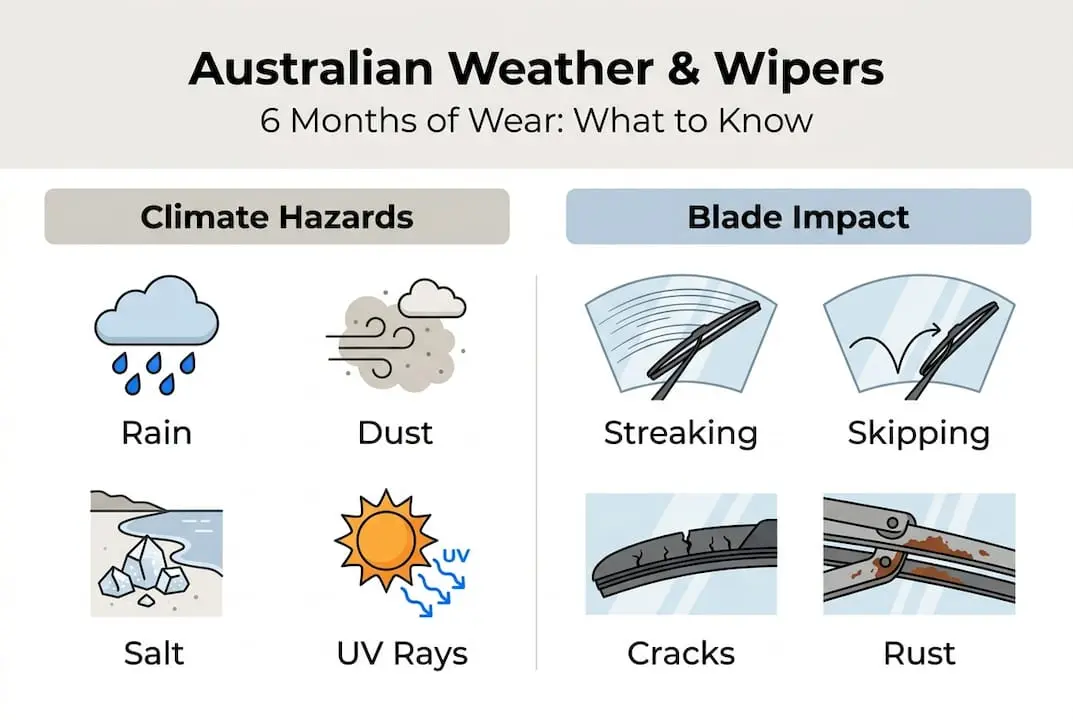
In inland and outback regions, the threat is abrasion. Fine dust particles and sand carried by wind settle on your windscreen and act like sandpaper every time your blades move across the glass. This grinds down the rubber edge unevenly, leading to patchy clearing and permanent streaking. Dust and sand in these areas act as abrasives that shorten blade life significantly faster than rain alone.
Coastal drivers face a different problem. Salt-laden air carried inland from the ocean settles on every exposed metal surface, including the steel or aluminium frames of your wiper blades. Over time, this causes corrosion that weakens the frame’s tension, reduces blade pressure on the glass, and stiffens the rubber compound. A blade that cannot maintain even pressure across its full length will leave dry patches and smears.
Then there is UV exposure. Australia records some of the highest UV index levels in the world, and prolonged sun exposure dries out rubber rapidly. This is why blades left parked in direct sunlight for weeks can crack and harden well before they would in a cooler, cloudier climate. Investing in heavy-duty wipers for Australia is especially important for drivers in sun-intense regions like Western Australia and South Australia.
| Climate factor | Primary region | Effect on blades |
|---|---|---|
| Heavy rainfall | QLD, NSW, VIC | Accelerated rubber fatigue |
| Dust and sand | Outback, inland areas | Abrasive wear on rubber edge |
| Salt air | Coastal areas | Frame corrosion, rubber stiffening |
| High UV exposure | WA, SA, NT | Cracking, hardening, brittleness |
Key threats to wiper blade lifespan in Australia include:
- Prolonged wet seasons that keep blades in constant motion
- Gritty road spray from unsealed outback roads
- Salt deposits that build up on blade frames over weeks
- Summer temperatures that push bitumen and cabin surfaces well above 60°C
Identifying signs of weather-worn wiper blades
Now that you know how weather beats up on your blades, it is essential to spot the warning signs before they become a hazard. The good news is that your blades communicate clearly when they are struggling. You just need to know what to look and listen for.
Streaking is the most common symptom. If your blades leave parallel lines of water across your windscreen rather than clearing it cleanly, the rubber edge has worn unevenly or hardened. This is particularly common after a long, hot summer when UV exposure has dried the rubber compound. Streaking is not just annoying; it reduces your effective field of vision significantly during heavy rain.
Skipping is another clear signal. This happens when the blade bounces or chatters across the glass instead of gliding smoothly. It usually indicates that the rubber has lost flexibility and can no longer conform to the curve of your windscreen. Skipping blades create blind spots in your field of view at the worst possible moments.
Squeaking points to a different issue. When blades squeak, it often means the rubber is too stiff or the blade is not sitting at the correct angle on the glass. Salt deposits and UV hardening both contribute to this. Signs of degradation such as streaking, skipping, and squeaking are clear indicators that replacement is overdue, especially after exposure to harsh Aussie sun.
Visible cracks or splits in the rubber are the most urgent warning sign. Run your finger lightly along the wiping edge. If you feel nicks, tears, or hard sections, the blade cannot form a proper seal with the glass and needs replacing immediately.
Visibility is a safety issue, not a comfort issue. A blade that streaks or skips during a sudden downpour gives you far less reaction time than a clean windscreen does.
Pro Tip: Check your wiper replacement frequency against your region’s climate. In harsh conditions, inspect blades every three months and replace them every six months, rather than waiting for the standard twelve-month mark.
Other signs worth watching for include:
- Smearing that worsens rather than improves after a few swipes
- Uneven pressure where one side of the blade clears better than the other
- Visible rust or corrosion on the blade frame
- Rubber that peels away from the blade structure
Choosing wiper blades built for Australian weather
After spotting the warning signs, how do you ensure your next set of blades lasts longer in the Aussie climate? The answer comes down to three factors: material, design, and fit.
Material is where most drivers make the wrong choice. Standard natural rubber blades are fine for mild, temperate climates, but they degrade quickly under Australian UV levels and salt exposure. Silicone blades resist UV hardening far better and maintain flexibility across a wider temperature range. High-grade rubber compounds with UV inhibitors are the next best option. Both outperform standard rubber in the conditions most Australians drive through regularly. Understanding the premium wiper blades benefits helps you see why the price difference is worth it over the long term.
Design matters more than most people realise. Traditional bracket-style blades have multiple metal contact points that collect dust, grit, and salt. Beam blades use a single curved piece of material with no exposed metal frame, which means fewer points for corrosion and more even pressure distribution across the glass. Hybrid blades combine an aerodynamic shell with an internal frame, offering good debris resistance without sacrificing pressure consistency. For most Australian conditions, beam or hybrid designs outperform traditional bracket blades.
- Identify your climate zone: coastal, tropical, outback, or temperate.
- Choose silicone or UV-resistant high-grade rubber for the material.
- Select beam or hybrid design for better debris and corrosion resistance.
- Match the blade to your vehicle’s exact make, model, and year for a perfect fit.
- For coastal drivers, prioritise blades with anti-corrosion frames or fully frameless designs.
Fit is non-negotiable. A blade that does not sit correctly on your windscreen cannot maintain the right pressure or angle, regardless of how good the material is. OEM-fit wiper blades are designed to match your vehicle’s exact specifications, ensuring consistent contact and reliable clearing in all conditions.
| Blade type | Best suited for | Key advantage |
|---|---|---|
| Silicone beam | High UV, coastal areas | UV resistance, no frame corrosion |
| Hybrid | Outback, mixed conditions | Debris resistance, even pressure |
| High-grade rubber | Temperate, urban areas | Cost-effective, reliable performance |
Pro Tip: Replace every 6 months in harsh Australian sun rather than waiting for visible failure. Prevention is far cheaper than a cracked windscreen caused by a worn blade dragging grit across the glass.
Maintenance tips for peak wiper blade performance
Finding durable blades is just the first step. Maintaining them ensures you get the safest, longest life possible from every set.
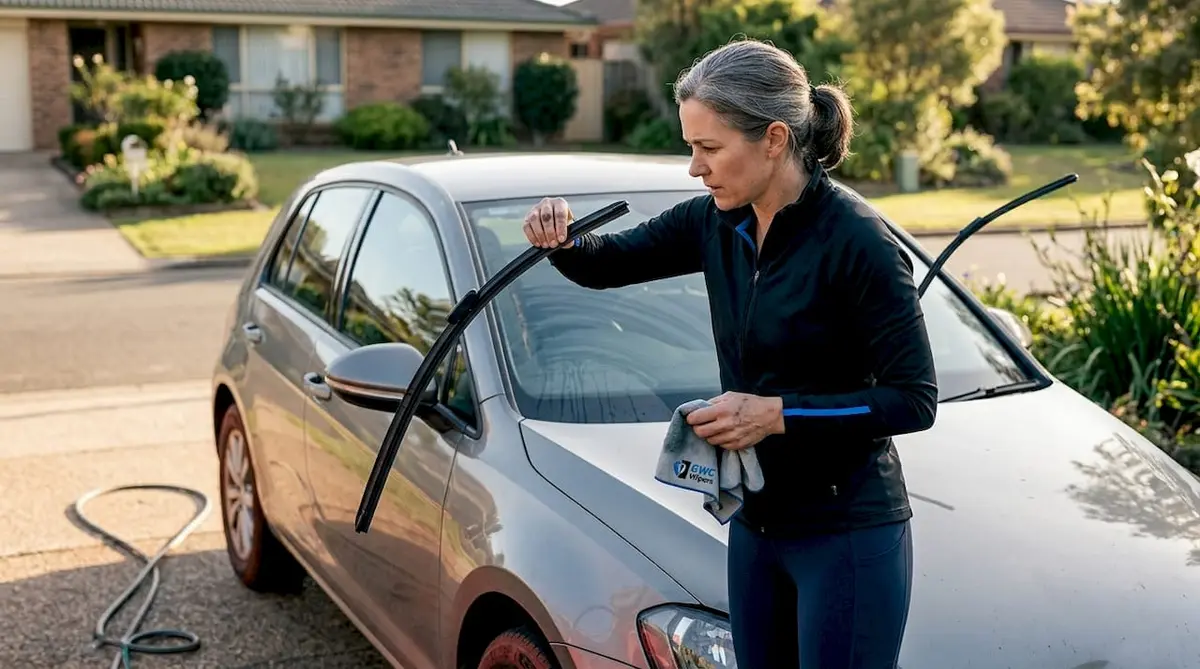
The single most effective maintenance habit is regular cleaning. Wipe your blades down with a damp cloth and a small amount of mild detergent every few weeks. This removes accumulated dust, road grime, insect residue, and salt deposits before they have a chance to harden into the rubber. Clean blades also clear your windscreen more effectively, which means less strain on the rubber edge during each wipe cycle.
Inspection is equally important. Dust and sand from outback and coastal environments embed themselves into the rubber over time, causing microscopic cuts that grow into larger tears. A quick visual check every three months catches these issues early. Run your finger along the rubber edge to feel for stiffness, splits, or nicks that are not always visible to the eye.
Follow these steps for a consistent maintenance routine:
- Clean blade rubber with a damp cloth and mild detergent every two to four weeks.
- Inspect the rubber edge and frame for cracks, corrosion, or uneven wear every three months.
- Lift the blades away from the windscreen when parked in direct sunlight for extended periods to reduce heat contact.
- Replace both blades at the same time, even if only one shows visible wear, to ensure balanced clearing.
- After replacing, test the blades with your washer fluid before driving in rain.
Additional habits that extend blade life include:
- Clearing ice, frost, or heavy debris from the windscreen before activating the wipers
- Avoiding dry wiping, which drags grit across the glass and rubber
- Parking in shade or using a windscreen sunshade to reduce UV exposure
- Checking that your washer fluid reservoir is full, since dry wipes accelerate rubber wear
Understanding wiper blade quality helps you appreciate why these small habits make a meaningful difference. And when it is time to replace, using a tool to choose the right wiper blade size for your vehicle ensures you never end up with a blade that fits poorly and wears unevenly.
The real secret to safe driving in Australia’s wild weather
Most Aussie drivers treat wiper blades as an afterthought. They replace them when something goes wrong, usually in the middle of a downpour, rather than as part of a planned maintenance schedule. That reactive approach is where the real risk lies.
Our climate does not give you much warning. A summer storm in Brisbane or a sudden dust squall on the Nullarbor can reduce visibility to near zero in seconds. In those moments, the condition of your wiper blades is the difference between a clear view and a dangerous guess.
The uncomfortable truth is that the cheapest replacement blades often cost you more in the long run. They degrade faster in UV and salt, require more frequent replacement, and are more likely to fail at the worst possible time. Investing in quality materials and replacing them on a climate-appropriate schedule is not overcaution. It is straightforward road safety.
We believe regular wiper blade replacement on a six-month cycle in harsh conditions is one of the simplest, most underrated safety upgrades any Australian driver can make. It costs less than a tank of fuel and protects far more than you might expect.
Find the perfect wiper blades for your car
You now have the knowledge to protect your visibility in any Australian condition. The next step is finding blades that are actually built for it.
At GWC Wipers, our blades are designed and tested specifically for Australian extremes, from tropical downpours to outback dust storms and coastal salt air. Our premium wiper blade technology uses advanced silicone and high-grade rubber compounds with UV-resistant formulations to keep your windscreen clear season after season. Whether you drive a Toyota or a Mercedes-Benz GLE-Class, our vehicle selector matches you to the perfect fit in seconds. Every order includes free shipping across Australia, a 12-month warranty, and a 30-day money-back guarantee.
Frequently asked questions
How often should I replace my wiper blades in Australia?
In harsh Australian climates, replace your blades every six months or at the first signs of streaking, skipping, or noise rather than waiting for the standard twelve-month mark.
Does coastal weather in Australia affect wiper blade life?
Yes. Salt air corrodes metal frames and stiffens rubber compounds, which shortens blade life considerably for drivers near the coast.
What are the best materials for wiper blades in hot climates?
Silicone and high-grade rubber with UV inhibitors perform significantly better than standard rubber in Australia’s heat, resisting the cracking and hardening that UV exposure causes over time.
How do I know if my wiper blades need replacing?
Look and listen for streaking, skipping, or squeaking during use, and run your finger along the rubber edge to feel for cracks, splits, or hardened sections that signal it is time for a new set.