
The role of noise reduction in wipers explained
TL;DR:
- Wiper noise often signals pressure distribution issues or mechanical inefficiencies rather than worn rubber alone.
- Modern materials like graphene composites and aerodynamic designs significantly reduce noise and improve durability for Australian driving conditions.
That persistent squeal every time your wipers sweep across the windscreen is more than an annoyance. Understanding the role of noise reduction in wipers can genuinely change how you drive, what you buy, and how long your blades last. Most drivers assume the noise means the rubber has worn out. The reality is far more layered than that, involving aerodynamics, material science, mechanical design, and even how your car’s electrical system responds to blade resistance. This article breaks down every factor worth knowing, so you can make a more informed decision next time you’re at the shops.
Table of Contents
- Key takeaways
- What causes noise in windshield wipers
- Noise reduction technologies in modern wiper blades
- Practical impact of quiet wipers on driving comfort
- Maintenance practices to keep wiper noise low
- Comparing blade types by noise performance
- My honest take on wiper noise
- Find premium quiet wiper blades at GWC Wipers
- FAQ
Key takeaways
| Point | Details |
|---|---|
| Noise signals more than worn rubber | Wiper noise often indicates pressure distribution problems or mechanical inefficiencies, not just blade degradation. |
| Modern materials reduce noise significantly | Silicone lubricants and graphene composites improve durability by 25–30% while actively damping operational noise. |
| Blade type affects noise levels | Beam and hybrid blades conform better to curved windscreens, delivering quieter, more uniform performance than conventional frames. |
| Australian conditions demand more frequent care | High UV exposure and heat accelerate rubber wear, requiring earlier replacement or more regular cleaning to keep noise low. |
| Maintenance extends quiet performance | Cleaning blades and glass with isopropyl alcohol can extend functional blade life by up to two months in harsh conditions. |
What causes noise in windshield wipers
Most drivers reach for a replacement set the moment their wipers start chattering or squealing. That instinct is understandable, but it skips over several important causes that have nothing to do with rubber degradation.
The most common culprit is friction between the blade edge and the glass surface. When that contact is uneven, even slightly, the rubber drags rather than glides. This produces the distinctive squeal that most Australians have heard on a wet Wednesday morning. Noise often signals system-level inefficiencies such as improper pressure distribution or increased motor drag, not just worn rubber components.
Aerodynamic drag plays a larger role than most people expect. At highway speeds, wind lift pulls the blade away from the glass, which disrupts even contact and introduces a fluttering noise. The geometry of the wiper arm and the angle at which it connects to the blade also affects how evenly pressure is distributed across the full sweep.
Environmental factors compound these mechanical issues considerably:
- Dirt and grime accumulation on the blade edge or windscreen creates micro-abrasions that cause skipping and noise.
- UV exposure in Australia’s climate degrades rubber compounds faster, causing cracking and uneven contact with the glass surface.
- Tree sap, road film, and wax residue leave invisible layers on the glass that increase friction significantly.
- Temperature extremes cause rubber to harden in winter or soften and deform in summer heat, both of which affect the quality of the wipe stroke.
Pro Tip: If your wipers squeak immediately after installation, the problem is almost certainly the glass, not the blade. Clean the windscreen thoroughly with a dedicated glass cleaner before assuming the new blades are faulty.
Noise reduction technologies in modern wiper blades
Wiper engineering has advanced considerably beyond a strip of rubber on a metal frame. Today’s premium blades incorporate a range of technologies specifically designed to address the causes of noise, not just the symptoms.
Silicone-based lubricants and graphene composites represent some of the most significant material gains in recent years. Graphene-enhanced rubber is notably more resistant to UV degradation and maintains its flexibility across a wider temperature range, both of which directly reduce noise over the blade’s lifetime. These advanced materials improve durability by 25 to 30 percent compared to standard compounds.
Aerodynamic design has also matured considerably. CFD-guided refinements reduce drag and airflow noise by 10 to 15 percent, which becomes particularly noticeable at highway speeds. The spoiler shapes built into modern blades are not cosmetic. They are calculated to keep the blade pressed firmly against the glass even when wind resistance tries to lift it away.
On the mechanical side, optimised linkage geometries reduce motor torque demand by up to 18 percent. Less torque demand means less mechanical stress throughout the wiper system, which translates directly to smoother, quieter operation.
Smart sensing is arguably the most forward-looking development. Tesla’s hybrid sensing system combines camera vision with real-time feedback from the wiper motor, monitoring electrical power consumption to detect glass condition and adjust wiper speed accordingly. This eliminates the erratic, noisy wiping behaviour that comes from running blades on a near-dry windscreen.
| Technology | Noise reduction mechanism | Benefit for Australian drivers |
|---|---|---|
| Silicone and graphene composites | Reduces friction and maintains blade flexibility | Handles UV degradation and temperature extremes better |
| CFD aerodynamic design | Minimises wind lift and airflow turbulence | Quieter performance on highways and in strong winds |
| Optimised linkage geometry | Reduces motor torque and mechanical vibration | Smoother, longer-lasting wiper operation |
| Smart motor sensing | Adjusts speed to actual glass conditions | Prevents dry wiping noise and blade wear |
| Beam and hybrid blade design | Distributes pressure evenly across curved glass | Consistent contact reduces chatter and skipping |
Pro Tip: When comparing blades, look for mention of aerodynamic spoilers or beam construction in the product description. These features indicate the manufacturer has invested in quiet wiper technology rather than simply producing a standard rubber strip.
Practical impact of quiet wipers on driving comfort
The benefits of silent wipers extend well beyond personal comfort. There is a meaningful connection between reduced wiper noise and driving safety, particularly during the heavy rainfall events common across Queensland, Victoria, and coastal New South Wales.
Driver distraction and fatigue are real consequences of persistent wiper noise. Research into cabin acoustics consistently shows that repetitive mechanical sounds increase cognitive load, making it harder to concentrate on the road ahead. Quieter wipers remove that background interference, letting you focus on traffic and conditions rather than filtering out an annoying squeal.

There is also a confidence factor. When your blades are running quietly and smoothly, you can trust that they are maintaining consistent glass contact. That trust matters when you are driving through a downpour on the Hume Highway. Noisy, chattering blades create doubt about whether your vision is actually clear, which adds unnecessary stress.
The impact of quiet wipers on perceived vehicle quality should not be underestimated either. Premium blades are a relatively inexpensive upgrade, yet they change how the entire cabin feels during wet weather driving. That shift in refinement is disproportionately large compared to the cost involved.
Consider these real-world benefits:
- Reduced fatigue on long drives through consistent, noise-free wiping during multi-hour regional trips.
- Better weather confidence when visibility is already compromised by heavy rain or spray from trucks.
- Extended blade lifespan because quieter blades are operating with proper contact, not grinding unevenly against the glass.
- Fewer distracting micro-adjustments from the driver trying to compensate mentally for interrupted vision.
Maintenance practices to keep wiper noise low
Even the best blades will get noisy if they are not maintained properly. Understanding how Australian conditions affect your wipers helps you build a care routine that keeps performance consistent.
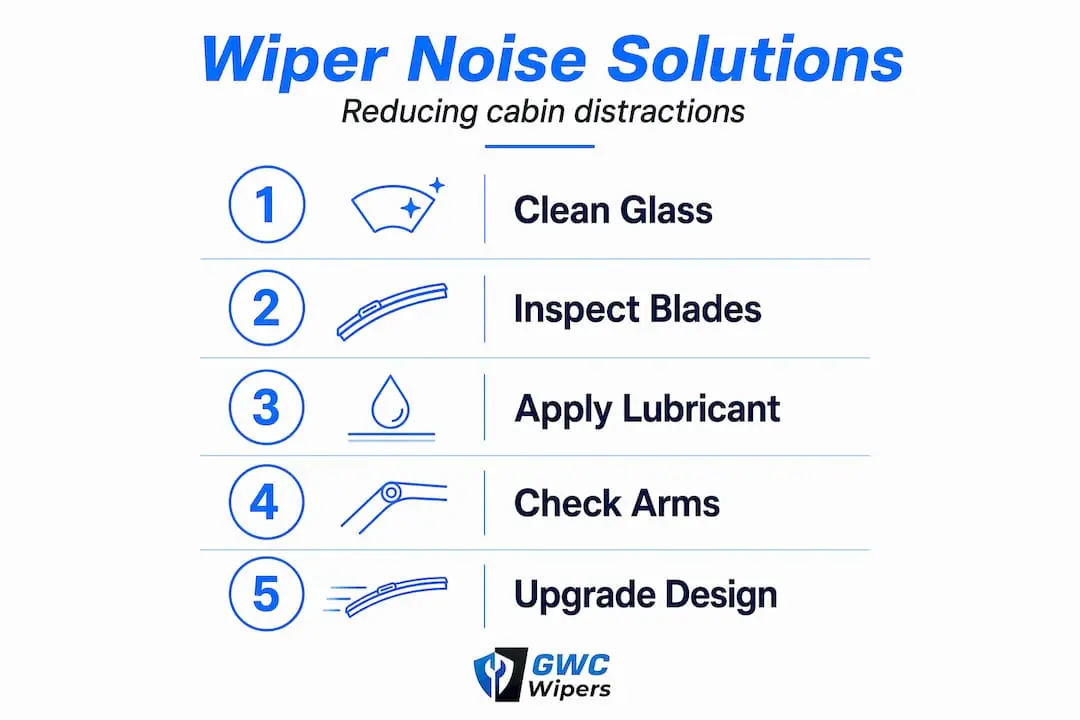
Wiper blades should be replaced every six to twelve months, with earlier replacement warranted in harsher conditions. Australia’s high UV and heat accelerate rubber degradation, meaning many Australian drivers should sit closer to the six-month mark rather than stretching toward twelve. If you hear chattering, slapping, or squealing before that interval is up, act sooner rather than waiting for visibility to suffer.
Here is a practical maintenance routine to follow:
- Inspect the blade edge monthly. Run your finger along the rubber lip and feel for cracks, stiffening, or rounded edges. Any of these will cause noise before they cause visible streaking.
- Clean the windscreen with a glass-specific cleaner. Removing wax, road film, and tree sap from the glass surface eliminates a major source of friction-based noise.
- Wipe blade edges with isopropyl alcohol. This removes oily residues that cause skipping. Proper cleaning with isopropyl alcohol can extend functional blade life by up to two months in harsh conditions.
- Check wiper arm pressure. Lift each arm away from the glass and release it. It should snap back firmly. A weak spring means insufficient contact pressure and eventual noise.
- Confirm correct installation after any blade change. A blade seated at even a slightly wrong angle will produce noise immediately. Consult a step-by-step installation guide if you are unsure about fitment.
Cleaning grime and wax buildup from the windscreen with mechanical scraping or glass polish can instantly reduce squeaking noise, often preventing premature blade replacement entirely. This single step is probably the most underused noise fix available.
Pro Tip: Keep a small bottle of isopropyl alcohol in your glove box. A quick wipe of the blade edges during a service station stop can restore quiet operation and buy you another few weeks before a replacement is necessary.
Comparing blade types by noise performance
Not all wiper blades are equally quiet, and the design differences between blade types are the main reason why. Understanding these differences helps you choose the right blade for your vehicle and your conditions.
Beam and hybrid wiper blades conform better to modern curved windscreens, maintaining uniform pressure and reducing noise compared to conventional framed blades. This matters because most contemporary Australian vehicles, from the Toyota RAV4 to the Mazda CX-5, have significantly curved screens that older blade designs simply cannot track evenly.
| Blade type | Noise performance | Lifespan | Cost | Best for |
|---|---|---|---|---|
| Conventional framed | Moderate to high noise | 6 to 12 months | Low | Older vehicles with flat screens |
| Beam (bracketless) | Low noise | 12 to 18 months | Medium to high | Modern curved windscreens |
| Hybrid | Low to very low noise | 12 to 18 months | Medium | All-round performance in varied climates |
| Winter blade | Low noise in cold | 6 to 12 months | Medium | Snow and ice conditions |
Premium beam and hybrid blades offer superior pressure uniformity and aerodynamic form, leading to quieter operation under the complex windscreen shapes common in modern vehicles. For Australian drivers dealing with variable conditions from tropical downpours in Darwin to mountain fog in the Snowy Highlands, hybrid blades represent the most practical balance of noise performance and durability.
A few additional considerations worth keeping in mind:
- Winter blades use a rubber boot to protect the frame from ice and snow, which also reduces airflow noise around the arm structure.
- Conventional framed blades are cheaper upfront but generate more pressure variation across the sweep, which produces more chatter over time.
- For a guide to wiper types covering the full range of design differences, external resources can supplement your research before purchasing.
For model-specific recommendations, exploring options filtered by your vehicle’s make and year will give you the most reliable fitment and noise performance outcome.
My honest take on wiper noise
I’ve spent years looking at what drives people to buy new wiper blades, and I can tell you that noise is consistently underestimated as a reason to upgrade. Most people wait until their visibility is genuinely compromised before acting. By then, they’ve already been driving with poor blade contact for weeks.
What I’ve learned from watching this pattern is that noise is the earliest warning sign the system offers you. It’s telling you something is wrong with contact, pressure, or material condition well before streaking begins. Treating noise as a diagnostic signal, rather than a minor irritation, changes how you approach maintenance entirely.
I’ve also seen the misdiagnosis problem repeatedly. A driver replaces the blades, the noise continues, and they assume they bought faulty blades. In most cases, the windscreen was contaminated. The new blades were fine. A proper glass clean would have resolved the original noise without any blade replacement at all.
The future I see for wiper systems is genuinely exciting. Smart sensing systems that monitor motor power draw to detect blade condition in real time will eventually be standard across most vehicle categories. When that happens, noise-related blade failure will become far less common.
My practical advice is simple. Choose a beam or hybrid blade suited to your vehicle’s windscreen profile, clean your glass properly every time you change blades, and treat any new squeak or chatter as a signal worth investigating immediately rather than ignoring.
— Faisal
Find premium quiet wiper blades at GWC Wipers
GWC Wipers designs and supplies premium wiper blades built specifically for Australian conditions, from the UV intensity of outback summers to the heavy rainfall of coastal storm seasons.

Whether you drive a Toyota, Mercedes-Benz, or Mitsubishi, GWC Wipers offers model-specific blade options with aerodynamic spoiler designs and advanced rubber compounds that deliver noticeably quieter performance. Browse wiper blades for Toyota or Mercedes-Benz wiper options to find blades engineered for your exact vehicle. Every purchase comes with free shipping across Australia, a 12-month warranty, and a 30-day money-back guarantee. If you are unsure about installation, detailed DIY guides are included with every order. Choosing noise-reducing wipers has never been more straightforward.
FAQ
What causes wipers to squeak on a clean windscreen?
Squeaking on a clean windscreen is usually caused by residual wax, silicone spray, or road film on the glass surface. Cleaning the windscreen thoroughly with isopropyl alcohol typically resolves the issue without replacing the blades.
How often should wiper blades be replaced in Australia?
Australian drivers should replace wiper blades every six to twelve months, with the shorter interval applying in areas with high UV exposure and heat. Early signs include squeaking, chattering, and poor glass contact.
Are beam blades genuinely quieter than conventional blades?
Yes. Beam blades conform more closely to modern curved windscreens and distribute pressure more evenly across the full sweep, which directly reduces the chatter and skipping noise that framed blades commonly produce.
Can wiper noise indicate a mechanical problem beyond the blade itself?
Yes. Persistent noise can signal issues with wiper arm spring tension, linkage geometry, or motor torque. Noise indicates system-level inefficiencies that may require more than a blade swap to resolve properly.
Do hybrid blades perform better in Australian conditions than conventional blades?
Hybrid blades offer a practical advantage for Australian drivers because they combine the pressure uniformity of beam blades with a protective outer shell that handles UV exposure, heat, and debris more effectively than either conventional or standard beam designs alone.