
3 Ways to Choose Wiper Blades That Actually Fit Your Vehicle
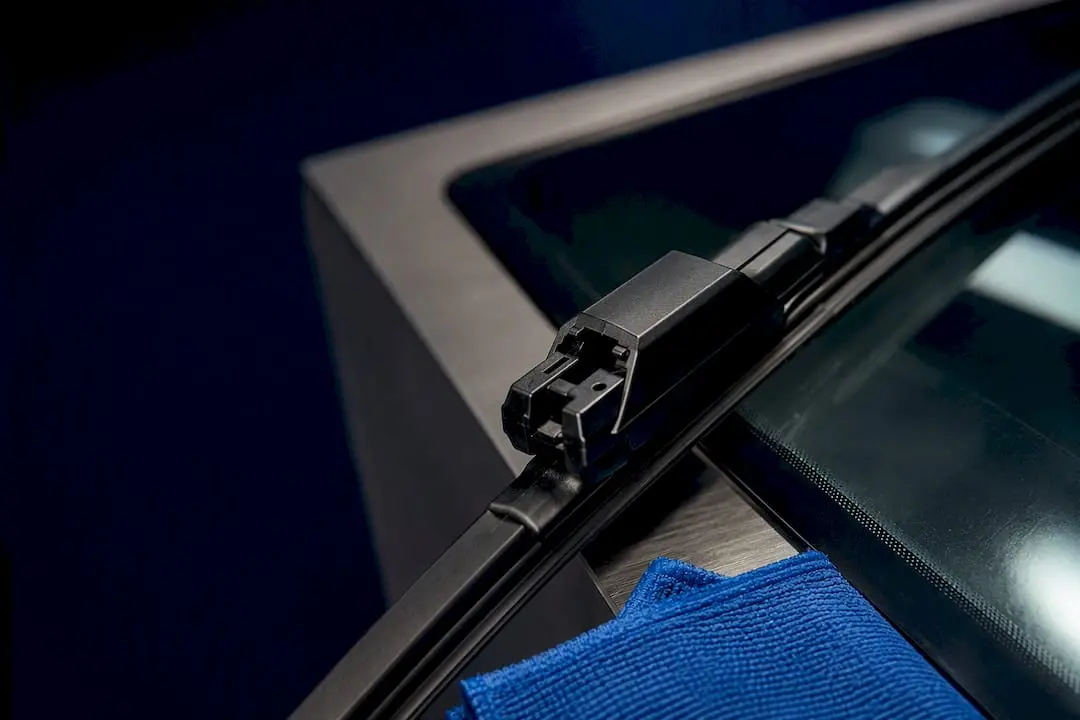
Order blades that match your exact vehicle fitment and connector type first. Everything else is secondary. Beam or silicone blades give you the best all-round wet-weather performance, while natural rubber is a fine budget option for milder climates. Before you buy anything, check your owner’s manual or an online fitment tool, measure your existing blades, and identify your arm’s connector type.
TL;DR:
- Matching your vehicle’s exact size and connector type is crucial to avoid fitment issues, with measurements and VIN-based tools providing reliable accuracy.
- Beam blades offer superior performance at highway speeds and in heavy rain, especially when paired with UV-resistant silicone for durability in harsh sun conditions.
- Natural rubber blades are budget-friendly but typically need replacement every 6 to 12 months, whereas silicone can last up to three years with proper maintenance.
- Installing new blades correctly involves ensuring they seat with a clear click and avoiding mixing new and old blades, as uneven pressure causes streaks or damage.
- Using vehicle-specific wiper sets reduces guesswork and ensures the correct sweep length, connector, and fit, making replacements straightforward and reliable.
Table of Contents
- How to choose wiper blades: finding the correct size
- Which wiper blade connector type do you have?
- Conventional, hybrid or beam: which blade type wins?
- Best wiper blades for rain, sun and highway driving
- How to install wiper blades without damaging your car
- When to replace your wiper blades
- How Com helps you get fitment right the first time
- An honest recommendation on what most drivers should buy
- Find your exact fit and order with confidence
- Sources
- FAQ
How to choose wiper blades: finding the correct size
Getting the size wrong is the single most common wiper mistake, and it’s entirely avoidable. Three reliable methods will get you there.
- Owner’s manual: Most manufacturers list OEM blade lengths for driver and passenger sides in the maintenance section, and this is the fastest source of truth.
- Measure the old blade: Lift the wiper arm carefully, lay the blade flat, and measure tip to tip with a tape measure. Record the length to the nearest half-inch, and round up rather than down if you’re between sizes.
- Use a VIN or vehicle selector: Consulting a fitment database removes the guesswork entirely, since it matches your exact model and year.
Driver and passenger blades are often different lengths. That’s normal. Windscreen curvature and wiper arm geometry mean the two sides rarely sweep the same arc, so always verify both sizes separately rather than assuming a matching pair.
Which wiper blade connector type do you have?
Your blade won’t sit right if the adapter doesn’t match the arm, so check this before you check anything else.
- J-hook: A curved hook shape at the end of the arm, common on older sedans and hatchbacks.
- Pinch-tab: A small button or lever you squeeze to release the blade, standard on many newer vehicles.
- Side-pin: A small pin protruding from the side of the arm, more common on European models.
- Top-lock: A locking mechanism at the top of the blade, often seen on premium beam-style wipers.
Inspect the arm and the old blade closely before removing anything. Don’t force or bend the arm to get a better look. Once fitted, listen for a clear click and give the blade a gentle tug. If it moves or wobbles, it isn’t seated properly.
Pro Tip: Photograph the connection point before removing your old blade. It takes ten seconds and saves a frustrating guessing game when you’re comparing adapter shapes at the shop or ordering online.
Conventional, hybrid or beam: which blade type wins?
Blade construction affects how well it hugs your windscreen and how long it lasts, and the differences are bigger than most drivers expect.
- Conventional (framed) blades use a metal frame with multiple pressure points along the rubber edge. They’re the cheapest option, but the frame can ice up in cold weather and the multi-point pressure isn’t as even on curved glass.
- Hybrid blades combine a frame with an aerodynamic cover, giving better wind resistance at speed than conventional blades while still costing less than a full beam design.
- Beam blades are frameless, with a curved spring inside the rubber that flexes to match your windscreen’s curve. Beam blades typically apply more uniform pressure across the whole sweep, which matters most on modern curved windscreens.
On materials: natural rubber is the cheapest and softest but degrades fastest under UV. Halogenated rubber and EPDM variants resist heat and ozone better. Silicone costs more upfront but often lasts two to four times longer than basic rubber and sheds water more effectively. Spend more on silicone or beam if you drive daily in harsh sun or heavy rain; rubber is perfectly acceptable if your car sits in a garage and only sees occasional showers.
Best wiper blades for rain, sun and highway driving
The right blade depends less on your budget and more on what your windscreen actually deals with each week.
- Heavy rain and highway speed: Beam blades hold their shape better at speed and clear water more evenly, reducing the streaking and lift you get from framed blades on the motorway.
- Coastal or high-UV regions: Sun exposure breaks down rubber compounds fast. Silicone resists UV degradation far better than natural rubber, and on a two to three year horizon it often works out cheaper because you’re replacing it less often.
- Everyday mixed conditions: Hybrid blades are a sensible middle ground if you get some sun, some rain, and don’t want to think about it twice a year.
- Cold climates with snow or ice: Look for a winter-specific blade with a rubber boot covering the frame, which stops ice building up inside the mechanism and freezing the blade solid.
Whatever you choose, UV-resistant rubber compounds make a genuine difference if your car spends most of its life parked outside.
How to install wiper blades without damaging your car
Installation is straightforward once you know your connector type, but a few small mistakes cause most of the returns retailers see.
- Lay a towel across the bonnet, then lift both arms to their upright service position.
- Release the old blade according to its connector type (press the tab, pull the pin, or slide the hook free).
- Slot the new adapter into place and lower the blade until you hear it click.
- Give it a firm but gentle pull to confirm it’s locked, then lower the arm slowly back onto the glass.
- Spray the windscreen and run the wipers at a couple of speeds to check the sweep is clean and even.
Watch for a small unswept strip near the edges. That’s usually a sign the blade length or fitment is wrong, not a faulty product. Check the sweep doesn’t strike the pillars or bonnet, and never mix a new blade with an old one on the same car. It throws off pressure balance across the windscreen.
Pro Tip: If the arm ever slips and hits the glass directly during installation, stop and check for chips before continuing. Bare wiper arms hitting a windscreen at speed can crack it.
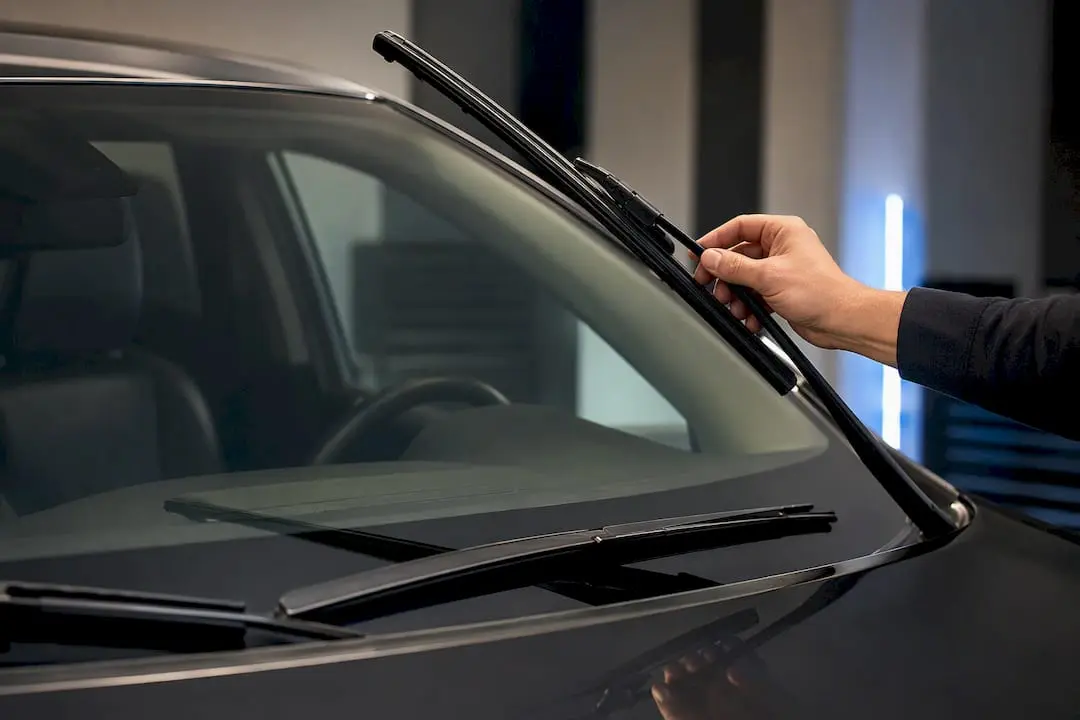
When to replace your wiper blades
Streaking, skipping, chatter, and a scraping sound are all signs your blades are done, regardless of how long they’ve been on. Visible cracking or a lifted rubber edge means replace them now, not next month.
- Natural rubber wiper blades usually require replacement roughly every 6 to 12 months.
- Quality hybrid or halogenated rubber blades tend to last between one and two years.
- Silicone blades generally have a longer lifespan, often lasting up to three years depending on sun exposure and use.
A little maintenance extends all of these. Keeping your windscreen genuinely clean stops grit from wearing down the rubber edge, and wiping the blade with a soft cloth every few weeks removes the road film that causes chatter. Parking in shade when you can slows UV breakdown too.
How Com helps you get fitment right the first time
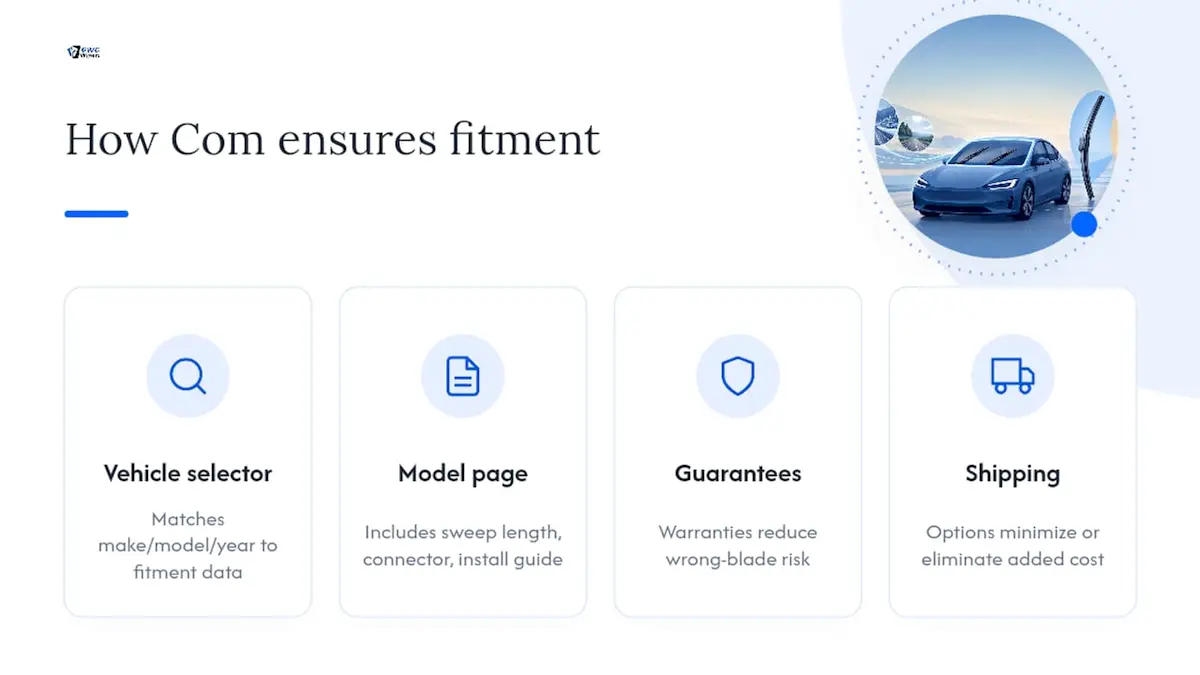
Guessing at wiper sizes is how most people end up with the wrong blade twice. A vehicle selector that matches your make, model, and year against fitment data for many vehicles can help ensure you order the right size and connector before you even open the box. Every model page includes the sweep length, connector type, and an install guide specific to that fitment.
With guarantees and warranties in place, buying the wrong blade isn’t the risk it used to be. Shipping options that minimize or eliminate added cost make it easier to get the right product rather than guessing at a general auto shop.
An honest recommendation on what most drivers should buy
For most commuters, a quality hybrid or beam blade in a halogenated rubber compound covers the bases without overspending. Rural drivers doing long highway stretches benefit most from beam blades for their stability at speed, while anyone parking outside under harsh sun should treat silicone as the sensible long-term buy, not a luxury. Whatever you land on, check your fitment carefully and always replace both blades together. Uneven wear on one side puts extra strain on the wiper motor.
— Faisal
Find your exact fit and order with confidence
Once you know your size, connector, and preferred blade type, the fastest path forward is ordering a set built for your exact vehicle rather than a generic universal fit. Com’s Volvo XC70 2008-2016 (Mark 2) Complete Wiper Blade Set is a good example of what a model-specific listing looks like. The correct sweep length, connector, and both driver and passenger blades are already matched to that generation, so there’s nothing left to double-check. Owners of the earlier model will find the same clarity with the Volvo XC70 2003-2004 (Mark 1) Wiper Blades, fitted to that specific arm and connector setup rather than a one-size-fits-most guess.
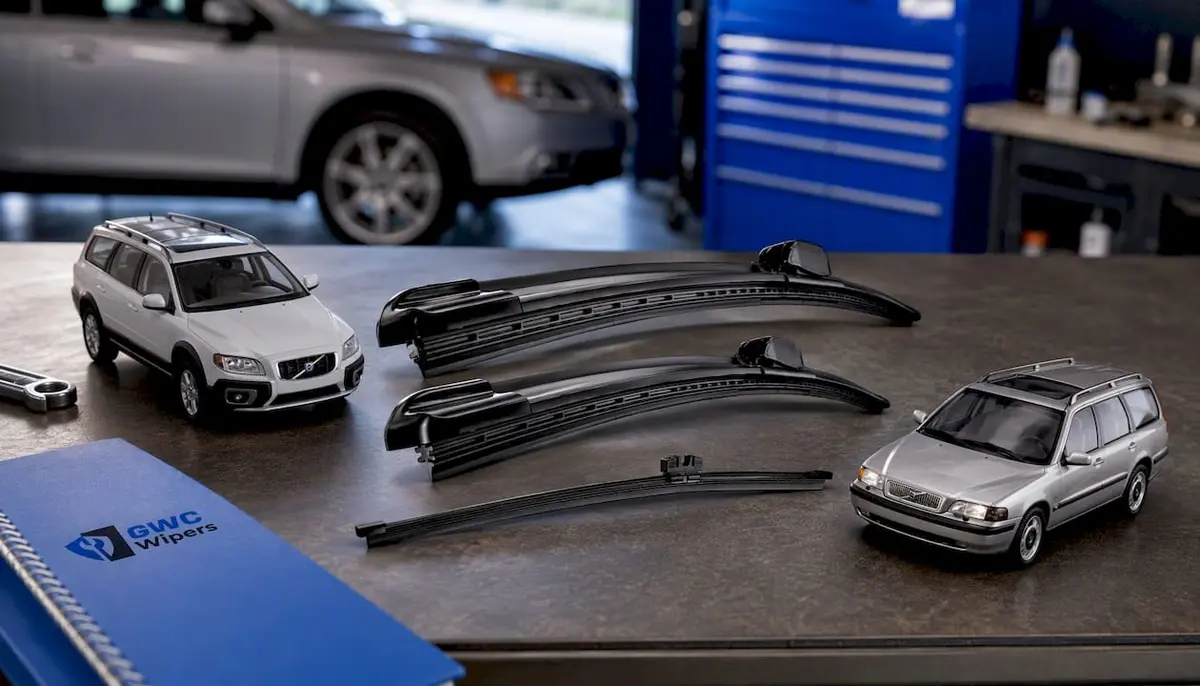
If your vehicle isn’t a Volvo XC70, the same principle applies. Run your rego or vehicle details through the vehicle selector tool to pull up your exact model page, confirm the fitment, and order with the 30-day money-back guarantee and 12-month warranty backing the purchase.
Sources
For deeper technical detail, see Consumer Reports’ wiper blade buying guide and the construction breakdown at Wipersized.
- Consumer Reports Wiper blades buying guide
- Wipersized blog types of wiper blades
- TopExWiper types of windshield wiper blades (2026)
- EngineerSkill what size windscreen wipers do I need?
FAQ
How do I know what wiper blades I need for my car?
Check your owner’s manual for the OEM size, measure your existing blades tip to tip, or run your vehicle details through an online fitment tool. Confirm the connector type (J-hook, pinch-tab, side-pin, or top-lock) at the same time, since size alone won’t guarantee a proper fit.
Can you use a 17 inch wiper blade instead of a 16 inch?
No. A blade even one inch too long can strike the windscreen pillar, bonnet lip, or the opposite blade during its sweep, and one too short leaves unwiped glass at the edge. Always match the exact size specified for your vehicle and side.
What are the best wiper blades for rain in Australia?
Beam blades generally perform best in heavy rain and at highway speed, since their flexible spring design maintains even pressure across a curved windscreen better than framed blades. Pair that with a UV-resistant compound if your car spends time parked in strong sun.
Which type of wiper blade is best overall?
Beam blades are widely considered the best all-round option for modern curved windscreens, offering more even pressure and less chatter than conventional framed blades. For material, silicone lasts longest and resists UV best, while natural rubber remains the lowest-cost choice for mild climates.