
What is a micro edge wiper blade? Your 2026 guide
TL;DR:
- Micro edge wiper blades feature natural rubber edges, enclosed springs, and corrosion-resistant steel frames for streak-free, quiet performance in all weather. Proper fitment, including measuring blade length and verifying connector type, is crucial for optimal operation and longevity. These premium blades outperform standard designs, offering better visibility, noise reduction, and durability, making them ideal for Australian driving conditions.
A micro edge wiper blade is a premium conventional wiper featuring a precision-cut natural rubber wiping edge, fully enclosed metal tension springs, and a corrosion-resistant steel frame engineered for streak-free, quiet performance across all weather conditions. The term “micro edge” is most closely associated with Bosch’s MicroEdge product line, which represents the benchmark for this blade category. Understanding what separates these blades from standard designs helps you make a smarter purchase decision, whether you drive through Sydney downpours, Melbourne hail, or the dry heat of outback Queensland.
How does a micro edge wiper blade differ from conventional blades?
Conventional bracket-style wiper blades use a series of metal pressure points distributed along a rubber strip to maintain contact with the windscreen. This design works adequately at low speeds and in moderate rain, but the uneven pressure distribution causes streaking, noise, and accelerated rubber wear. The exposed metal framework is also vulnerable to corrosion in coastal or high-humidity environments, which is a real concern across much of Australia.
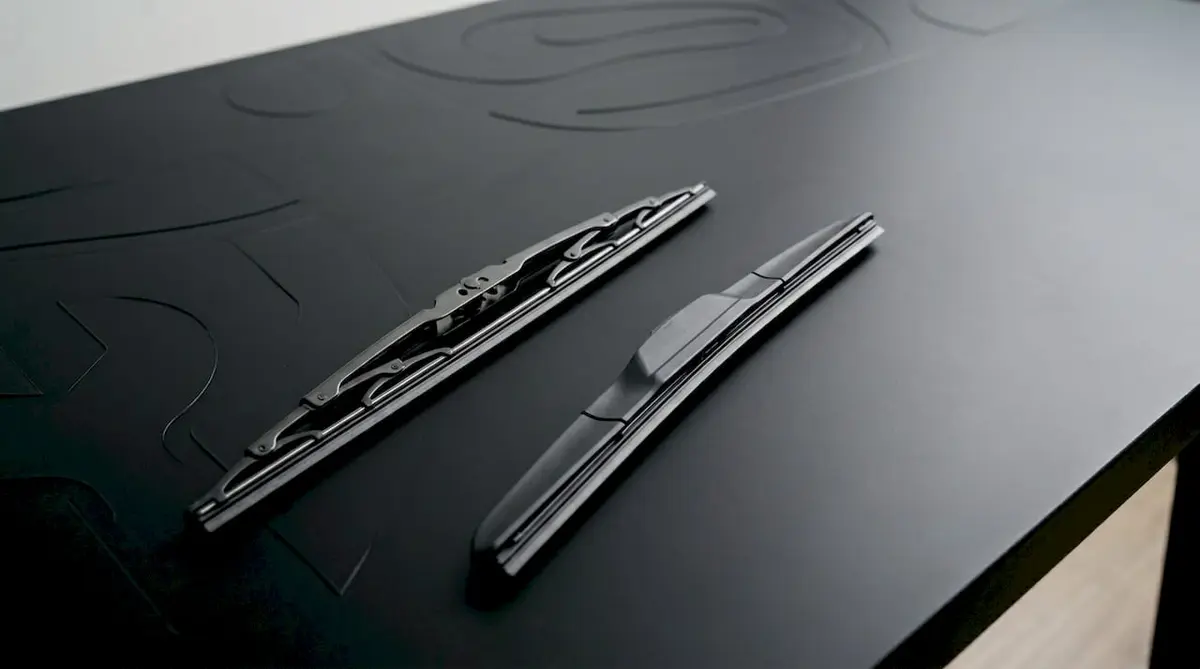
A micro edge blade addresses these weaknesses through three specific engineering choices. Bosch MicroEdge blades feature fully enclosed metal tension springs, a precision-cut natural rubber wiping edge, and a zinc-coated steel frame with dedicated corrosion protection. The enclosed springs maintain consistent pressure across the entire blade length, which is what produces the clean, single-pass wipe that drivers notice immediately.
Beam-style blades, which are the other common premium option, use a curved frameless design to distribute pressure. They perform well in heavy snow and ice because there is no frame to clog, but they typically cost more and can lift at highway speeds without an aerodynamic spoiler. Micro edge blades sit between conventional and beam designs: they retain a frame for structural rigidity while upgrading the rubber and spring quality to deliver performance closer to a beam blade.
| Feature | Conventional blade | Micro edge blade | Beam blade |
|---|---|---|---|
| Frame type | Exposed metal bracket | Enclosed zinc-coated steel | Frameless |
| Rubber quality | Standard moulded rubber | Precision-cut natural rubber | Silicone or natural rubber |
| Pressure distribution | Multiple contact points | Enclosed spring, even pressure | Curved pre-tension |
| Noise level | Moderate to high | Low | Low |
| Corrosion resistance | Low | High (zinc coating) | N/A |
| Price range | Budget | Mid-range | Premium |
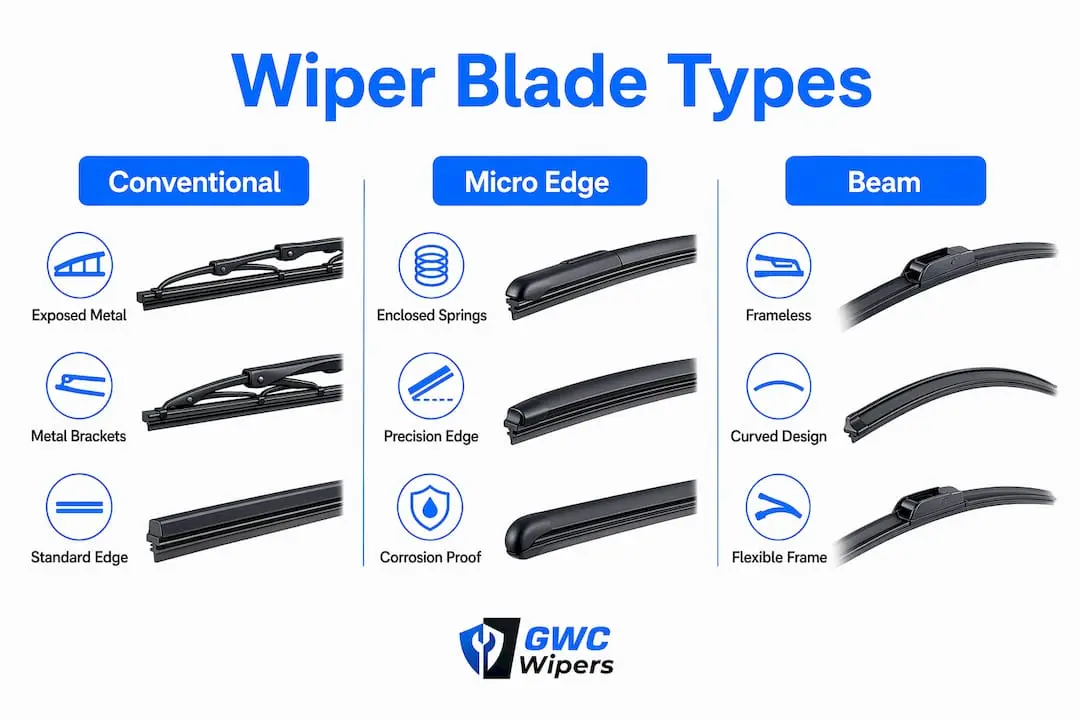
The comparison makes clear that micro edge blades deliver a meaningful performance upgrade over standard conventional blades without the premium price of a full beam blade.
What are the key benefits of micro edge wiper blades for drivers?
The benefits of micro edge wiper blades are most obvious in conditions where standard blades fail. In heavy rain, the precision-cut rubber edge maintains full contact with the glass, eliminating the smearing and skipping that reduces visibility at critical moments. At highway speeds, the enclosed spring design resists wind lift better than open-frame conventional blades, keeping the wipe consistent above 100 km/h.
Here is a summary of the core advantages:
- Streak-free wiping in rain, mist, and light drizzle due to the precision-cut rubber edge
- Quiet operation from the enclosed spring mechanism, reducing cabin noise on long drives
- Corrosion resistance from the zinc-coated steel frame, extending service life in coastal and humid climates
- Sleek, low-profile design that complements modern vehicle styling
- No-adapter installation with systems like Bosch DirectConnect, compatible with over 90% of vehicle applications
- Durable performance under harsh Australian weather, from UV exposure to sudden temperature changes
The quiet operation point deserves more attention than it usually gets. Wiper noise is a genuine distraction on long drives, and the chattering of a worn or poorly fitted conventional blade adds fatigue over time. Micro edge blades eliminate this almost entirely when correctly fitted.
Customer reviews of Bosch MicroEdge blades consistently praise streak-free, noiseless operation and note the robust build quality as a standout feature. That feedback aligns with what the engineering delivers in practice.
Pro Tip: Before purchasing, confirm whether your wiper arm uses a U-hook, side pin, or bayonet connector. Micro edge blades like the Bosch MicroEdge DirectConnect are designed to fit most arms without adapters, but verifying your connector type first saves you a return trip to the shop.
How to choose the right micro edge blade for your vehicle
Getting the right fit is where many drivers go wrong, and the consequences range from poor wiping performance to a blade that physically strikes the wiper arm stop. Measuring your blade length before ordering is the single most reliable way to avoid fitment problems. Do not assume the replacement blade matches your current one without checking, particularly if the car has had previous non-OEM blades fitted.
Follow these steps to select and fit a micro edge blade correctly:
- Measure both blades separately. The driver and passenger blades are often different lengths. Measure from tip to tip along the rubber element, not the overall frame.
- Identify your wiper arm connector type. Common types in Australian vehicles include U-hook (the most widespread), side pin, and bayonet. Check your owner’s manual or use a vehicle selector tool.
- Cross-reference with a fitment guide. Use a wiper blade size guide to confirm the correct blade length for your make, model, and year.
- Check arm stop clearance. Connector mismatch is a hidden install pitfall. Even when a blade claims over 90% compatibility, the slight variation in arm geometry on some vehicles can cause the blade to hit the arm stop, compromising both performance and the arm itself.
- Follow the manufacturer installation guide. Proper installation includes verifying the connector is fully locked, the blade sits flat against the glass, and there is no lateral movement when the arm is at rest.
The connector mismatch issue is more common than most product listings acknowledge. Experts recommend verifying connector style and physical geometry rather than relying solely on vehicle-compatibility widgets, which can return false positives when arm designs vary within the same model year.
Pro Tip: If you are unsure about your connector type, take a photo of your wiper arm before removing the old blade. The connector shape is clearly visible and makes it easy to match against a compatibility chart without guessing.
What do micro edge wiper blade reviews actually say?
Real-world feedback on micro edge wiper blades is largely positive, with drivers consistently highlighting two qualities above all others: wiping clarity and noise reduction. The Bosch MicroEdge range draws particular praise for its streak-free performance in heavy rain and its noticeably quieter operation compared to the standard blades it replaces.
“Installed these on my daily driver and the difference was immediate. No streaking, no noise, and the fit was perfect first go. Well worth the upgrade from the factory blades.”
That experience reflects the majority of verified reviews. Drivers who report issues almost always trace them back to one of two causes: incorrect blade length or a connector mismatch. Neither is a product defect. Both are fitment errors that the right pre-purchase checks prevent entirely.
Lifespan is the one area where expectations need calibrating. Micro edge blades with natural rubber edges perform best for 12 to 18 months under typical Australian conditions. UV exposure and ozone degradation accelerate rubber hardening, particularly in Queensland and Western Australia. Replacing blades annually, or at the first sign of streaking, keeps performance at the level you paid for. Bosch’s reputation in the wiper blade category is well established, and the MicroEdge line reflects that engineering heritage. For Australian drivers, the combination of corrosion-resistant materials and consistent pressure delivery makes this blade type a reliable choice across the country’s varied climates.
Key takeaways
Micro edge wiper blades deliver superior streak-free visibility, quiet operation, and long service life through precision-cut natural rubber, enclosed tension springs, and a zinc-coated steel frame, provided you confirm blade length and connector type before fitting.
| Point | Details |
|---|---|
| Core construction | Precision-cut natural rubber edge and enclosed springs produce even pressure and quiet wiping. |
| Performance advantage | Micro edge blades outperform conventional bracket blades in streak reduction and noise at highway speeds. |
| Fitment is critical | Measure both blade lengths and confirm your arm connector type before ordering to avoid installation failures. |
| Connector mismatch risk | Even blades claiming 90% compatibility can hit the arm stop if connector geometry does not match your vehicle. |
| Replacement frequency | Replace micro edge blades every 12 to 18 months, or sooner in high-UV Australian climates. |
Why I think most drivers underestimate the connector question
I have tested and reviewed wiper blades across a wide range of Australian vehicles, from older Holden Commodores to current-generation Toyota RAV4s and Mercedes-Benz C-Class models. The performance difference between a quality micro edge blade and a standard conventional blade is real and noticeable from the first rainy drive. What surprises most drivers is not the wiping quality. It is how often a technically correct blade fails to fit properly because of connector geometry.
The “over 90% compatibility” claim that appears on many micro edge blade listings is accurate in terms of arm type, but it does not account for the subtle variation in arm stop position across model years. I have seen this catch out experienced mechanics, not just first-time DIYers. My advice is to treat the connector check as non-negotiable, not optional.
On maintenance, the single most effective thing you can do to extend blade life in Australia is to lift your blades off the glass when the car is parked in direct sun. Heat accelerates rubber hardening faster than any other factor. A blade that lasts 18 months in a shaded garage may need replacing after 10 months if it sits on a hot windscreen every day. Buying from a supplier who offers a fitment guarantee and local support also matters. If something is wrong with the fit, you want a straightforward resolution, not a lengthy international returns process.
— Faisal
Find the right micro edge wiper blade for your car at GWC Wipers
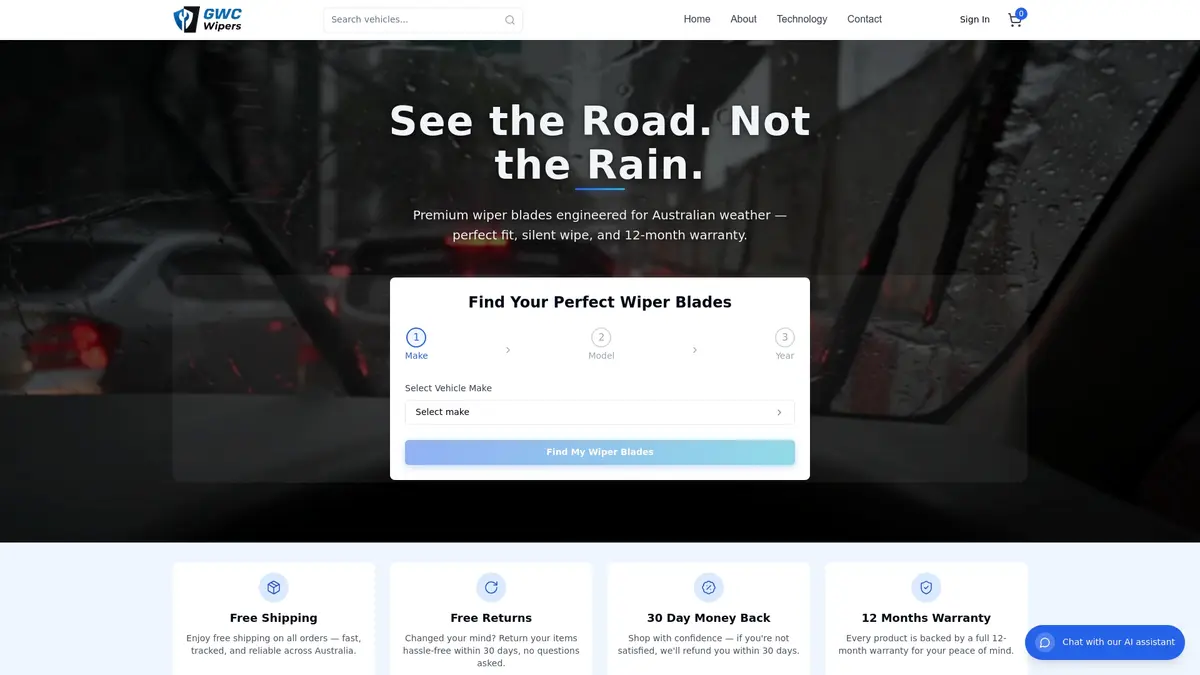
GWC Wipers stocks a range of premium wiper blades suited to Australian vehicles and conditions, with a vehicle selector tool that matches blades to your exact make, model, and year. Every purchase includes free shipping across Australia, a 12-month warranty, and a 30-day money-back guarantee, so you are covered if the fit is not right.
Whether you drive a Toyota or a Mercedes-Benz, GWC Wipers has a blade to match. Browse Toyota wiper blades or explore the full range of Mercedes-Benz wiper blades to find the correct fit for your vehicle. If you need guidance before purchasing, the GWC Wipers support team is ready to help you get the right blade the first time.
FAQ
What is a micro edge wiper blade?
A micro edge wiper blade is a conventional-style wiper featuring a precision-cut natural rubber edge, enclosed metal tension springs, and a corrosion-resistant steel frame. Bosch’s MicroEdge range is the most widely recognised product in this category.
How long do micro edge wiper blades last?
Micro edge blades typically last 12 to 18 months under normal conditions. In high-UV Australian climates, particularly in Queensland and Western Australia, rubber hardening can shorten this to around 10 to 12 months.
Are micro edge blades better than beam blades?
Micro edge blades offer better corrosion resistance and are generally more affordable than beam blades. Beam blades have an advantage in heavy snow and ice, but for Australian conditions, micro edge blades provide reliable all-weather performance at a lower price point.
How do I install micro edge wiper blades correctly?
Confirm your connector type and measure both blade lengths before fitting. Lock the connector fully, check the blade sits flat against the glass, and confirm there is no contact with the arm stop.
Where can I buy micro edge wiper blades in Australia?
GWC Wipers supplies premium wiper blades for a wide range of Australian vehicles, with free shipping nationwide and a fitment guarantee. Use the vehicle selector tool on the GWC Wipers website to find the correct blade for your car.