
What is streak-free wiping: a guide for car owners
TL;DR:
- Streak-free wiping involves cleaning glass with proper materials and motions to prevent residue.
- Proper technique, water purity, and tool choice are vital to avoid mineral deposits and chemical residue.
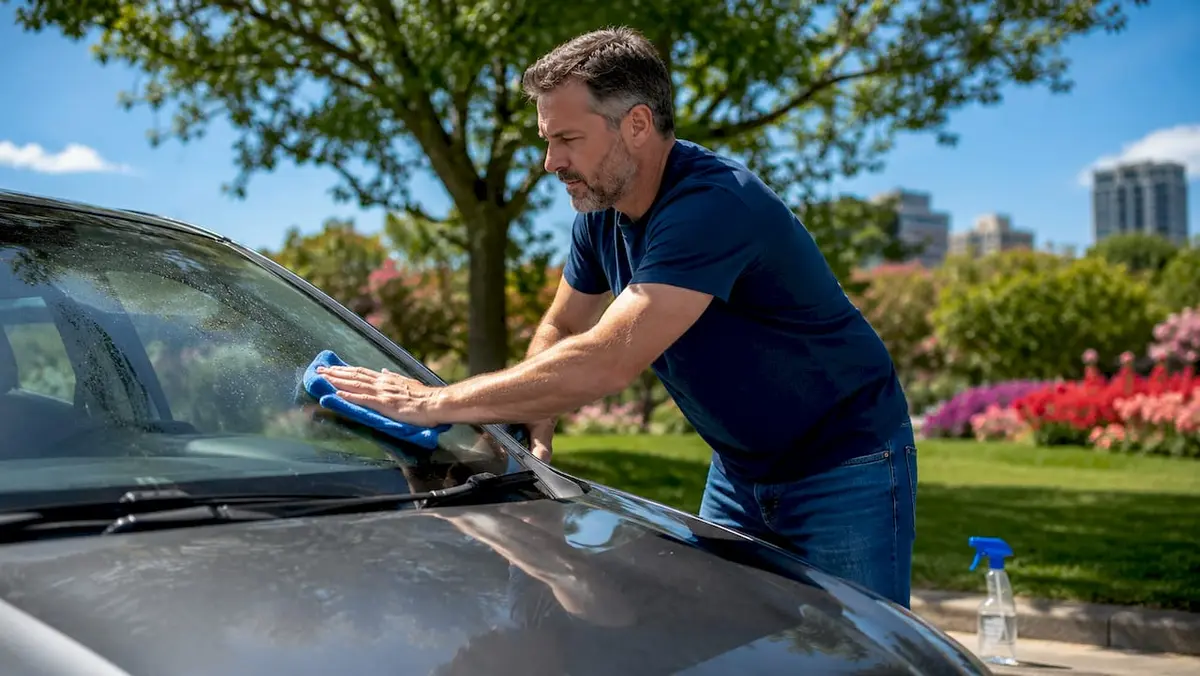
Streak-free wiping is defined as the technique of cleaning glass and similar surfaces to produce a clear, smear-free finish by using correct materials, solutions, and wiping motions. On automotive glass, this matters more than most drivers realise. Streaky windshields scatter light, increase glare, and raise driver fatigue, especially in low-sun conditions common across Australia. The frustration of finishing a clean only to find fresh smears is almost always caused by mineral deposits, residue from the wrong cleaner, or poor wiping technique. Getting it right is not complicated, but it does require understanding why streaks form in the first place.
Why do streaks form on glass surfaces?
Streaks are mineral deposits, not dirt. Calcium and magnesium crystals left behind when tap water evaporates on hydrophilic glass are the primary cause of the haze most drivers mistake for soap residue. Glass naturally attracts water molecules across its surface, which means any dissolved minerals in that water get spread widely before they dry and crystallise. The result is a thin, uneven film that catches light at an angle and looks worse the lower the sun sits.
The chemistry of your cleaner matters just as much as the water. Non-volatile additives like sodium EDTA found in generic window cleaners crystallise on the glass surface as the solution dries, leaving white residue that no amount of buffing removes cleanly. Professional glass cleaning avoids this by using deionised or reverse osmosis water with a conductivity of less than 10–15 microsiemens per centimetre. That level of purity leaves nothing behind when the water evaporates.
Inside your car, the problem compounds. Off-gassing from dashboard plastics and interior trim deposits a thin oily film on the inside of the windshield, especially in summer heat. This film bonds with cleaning residue and creates a persistent cloudy haze that ordinary wiping spreads rather than removes. Understanding both the exterior mineral problem and the interior chemical problem is the foundation of effective streak-free cleaning.
| Water type | Residue left on glass | Streak likelihood |
|---|---|---|
| Tap water (hard) | Calcium and magnesium deposits | High |
| Tap water (soft) | Reduced minerals, some residue | Moderate |
| Distilled water | Minimal residue | Low |
| Deionised water | Effectively zero residue | Very low |
| Reverse osmosis water | Effectively zero residue | Very low |
Pro Tip: Fill a small spray bottle with distilled water from the supermarket for your car glass cleaning kit. It costs almost nothing and removes the single biggest cause of streaks immediately.
What materials and tools work best for streak-free results?
The cloth you use determines the outcome more than the cleaner you choose. Microfibre cloths are the industry standard for streak-free wiping because their split fibres trap particles rather than push them across the surface. Paper towels leave lint and can scratch coated glass. Standard cotton cloths spread residue and generate static. Low-quality cloths and vigorous scrubbing create static electricity on the glass that attracts airborne dust and lint immediately after wiping, reversing the clean before you have even stepped back.
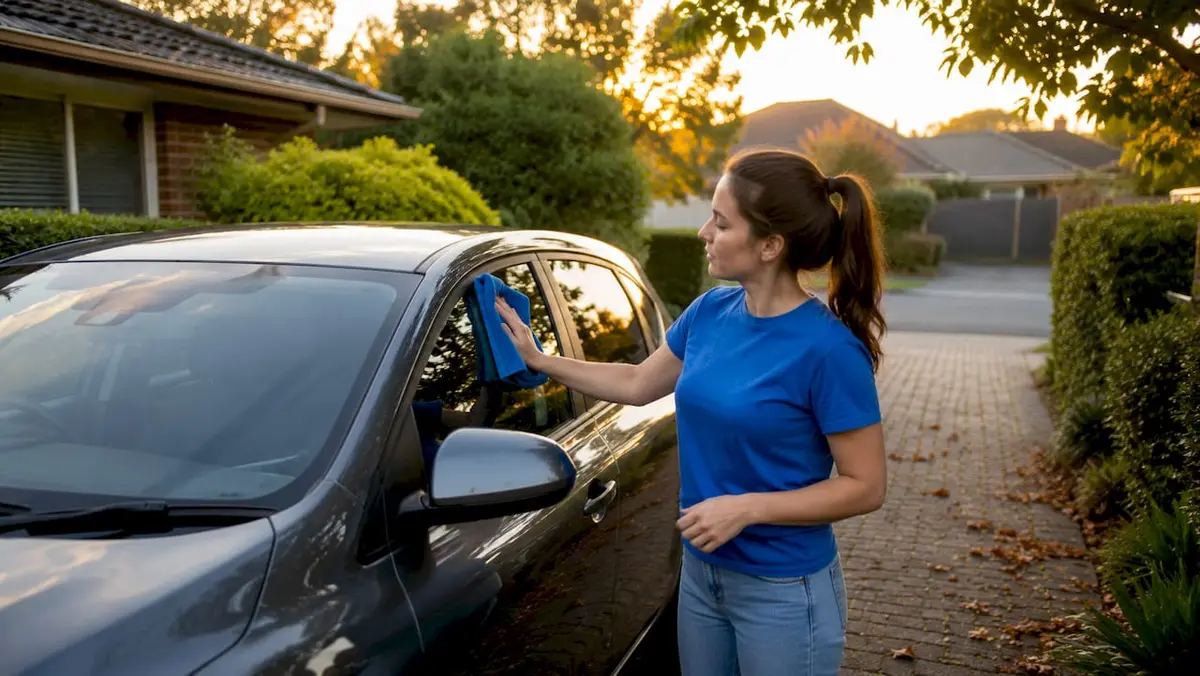
The two-towel system is the most reliable method for achieving a streak-free finish. Use one damp microfibre cloth to apply the cleaner and lift contamination, then follow immediately with a dry microfibre cloth to buff the surface before any residue can dry. This separation of tasks is what professional detailers use, and it works because the dry cloth removes the moisture carrying dissolved minerals before evaporation can deposit them.
Cleaner selection is the third variable. Ammonia-based cleaners are common but ammonia permanently damages anti-reflective and solar glazing coatings found on many modern vehicles. Automotive-specific, ammonia-free cleaners are the safe choice. A reliable homemade option is one part white vinegar to ten parts distilled water, which dissolves mineral deposits without damaging coatings or leaving residue.
Do’s and don’ts for streak-free materials:
- Do use dedicated microfibre cloths washed without fabric softener (softener coats the fibres and reduces absorption)
- Do use automotive-specific or ammonia-free glass cleaners
- Do keep one cloth for cleaning and a separate cloth for buffing
- Do use distilled or deionised water when mixing your own solution
- Don’t use paper towels, newspaper, or standard cotton rags on automotive glass
- Don’t use household glass cleaners containing ammonia on tinted or coated windows
- Don’t reuse a dirty cloth, as contamination transfers straight back onto the glass
Pro Tip: Wash your microfibre cloths separately from other laundry and skip the fabric softener entirely. A contaminated cloth is the most common reason a careful cleaning job still ends in streaks.
Which wiping techniques produce the clearest finish?
Technique is where most drivers go wrong, even when they have the right products. Circular wiping motions spread contamination in an expanding pattern and leave overlapping smear rings. The correct motion is a zigzag or S-pattern, working from the top of the glass downward. This controls the direction of any residue flow and prevents you from wiping over areas you have already cleaned.
Timing and environment matter more than most guides acknowledge. Cleaning glass in direct sunlight causes the cleaner to evaporate before you can buff it, leaving concentrated mineral deposits exactly where you sprayed. Cloudy conditions or working in the shade give you the time needed to complete each pass before the surface dries. This single change eliminates a large proportion of streak problems without changing any product.
The amount of cleaner you apply also affects the result. Excess spray takes longer to evaporate and increases the mineral load left on the glass. Two to three short bursts on a section of glass is enough. More product does not mean a better clean. It means more residue to manage.
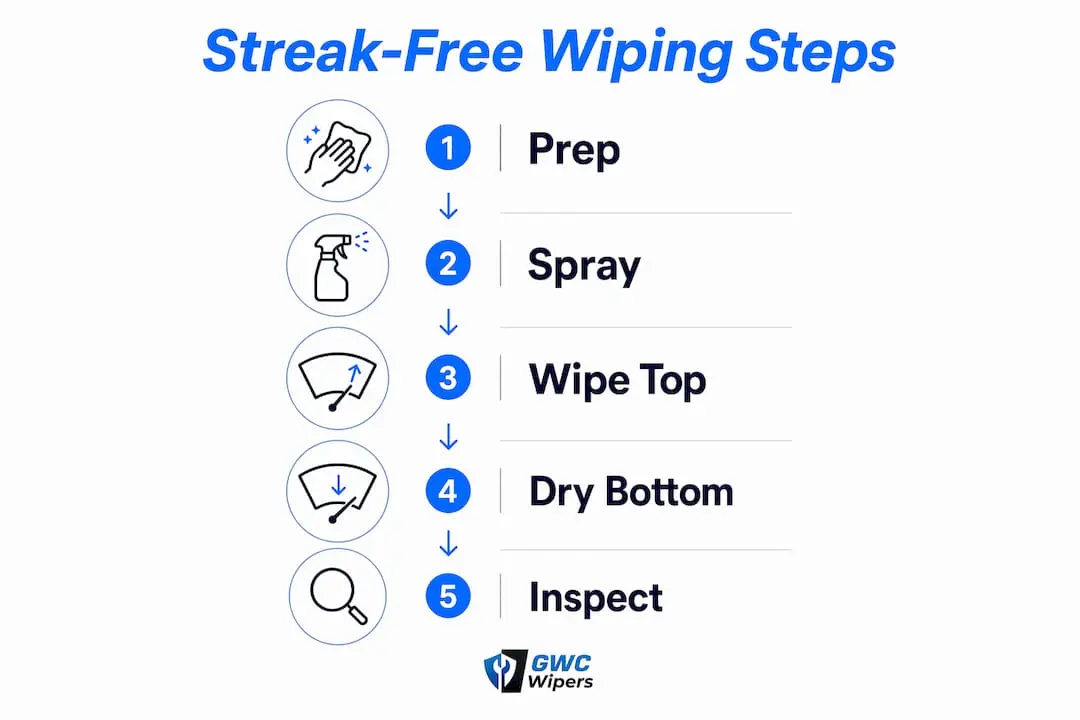
Step-by-step streak-free wiping technique:
- Park in shade or wait for overcast conditions before starting.
- Wipe away loose dust with a dry microfibre cloth before applying any liquid.
- Apply two to three short bursts of ammonia-free cleaner to one section of glass.
- Wipe in a zigzag or S-pattern from top to bottom using your damp cleaning cloth.
- Wipe the edge of the cloth between passes to avoid redepositing lifted contamination.
- Immediately follow with a dry buffing cloth using the same top-to-bottom motion.
- Check the glass at an angle against the light to catch any remaining haze before moving to the next section.
Working in sections rather than spraying the entire windshield at once gives you control over drying time. Interior glass benefits from the same method, with particular attention to the dashboard side where off-gassing residue accumulates fastest.
How do you troubleshoot and maintain streak-free surfaces over time?
Persistent streaks after a careful clean usually point to one of three causes: a dirty cloth, a worn wiper blade, or environmental contamination that requires more than a standard clean. Identifying which one applies saves time and avoids the frustration of repeating the same ineffective process.
Wiper blades are a direct cause of streaking on automotive glass. A blade with a cracked, hardened, or split rubber edge does not maintain full contact with the glass. It skips, chatters, and deposits a film of water mixed with road grime in uneven arcs. If your windshield streaks during rain despite a recent manual clean, the blade is the likely culprit. Checking and replacing worn wiper blades is a maintenance step that directly affects visibility and safety. Modern coated glass also requires care. Strong ammonia cleaners cause irreversible damage to anti-reflective and solar glazing coatings, so checking your cleaner’s formulation before use protects the glass long term.
Cleaning frequency depends on your environment. Drivers in coastal areas deal with salt spray that accelerates mineral build-up. Drivers in dusty inland regions face abrasive contamination that scratches glass if wiped dry. A fortnightly clean with the correct technique and products keeps most Australian windshields clear without excessive effort.
| Common problem | Likely cause | Corrective action |
|---|---|---|
| Streaks after every clean | Tap water or dirty cloth | Switch to distilled water; wash cloths without softener |
| Haze that won’t lift | Ammonia cleaner damage or off-gassing residue | Use automotive-specific cleaner; clean interior glass separately |
| Streaks during rain | Worn or cracked wiper blade | Inspect and replace wiper blades |
| Lint left on glass | Paper towels or low-quality cloths | Switch to dedicated microfibre cloths |
| Streaks return quickly | Static from poor-quality cloth | Use high-grade microfibre; avoid vigorous scrubbing |
Regular glass polishing with a dedicated automotive glass polish removes light scratches and mineral etching that cleaning alone cannot address. This is worth doing once or twice a year on vehicles that see heavy use or harsh conditions. Pairing clean glass with well-maintained wiper blades gives you the best possible visibility in every condition.
Key takeaways
Streak-free wiping requires deionised or distilled water, ammonia-free cleaners, dedicated microfibre cloths, and a top-to-bottom S-pattern technique applied in shade.
| Point | Details |
|---|---|
| Streaks are mineral deposits | Calcium and magnesium from tap water evaporation cause most streaks, not dirt or soap. |
| Water purity is the foundation | Distilled or deionised water eliminates the primary source of residue on glass. |
| Two cloths beat one | Use a damp cloth to clean and a dry cloth to buff before the surface dries. |
| Technique overrides products | A zigzag motion in shade prevents premature drying and smear spreading. |
| Wiper blades affect the result | Worn blades streak glass during rain regardless of how well you clean the windshield. |
What I’ve learned from years of watching drivers fight streaks
Most streak problems I see come down to technique, not the product in the bottle. Drivers spend money on premium cleaners and then wipe in circles in direct sunlight with a cloth that has been through the washing machine with fabric softener. The result is predictable. The cleaner gets the blame, but the cloth and the motion are the real issues.
The insight that changes everything for most people is treating the inside and outside of the windshield as two separate cleaning jobs. The interior haze from off-gassing plastics needs a different approach to the exterior mineral deposits from rain and road spray. Combining them into one rushed wipe creates a smeared mixture of both problems. Taking two minutes to do each surface separately produces a result that lasts weeks rather than days.
Wiper blade condition is the variable that gets overlooked most often. A clean windshield with a degraded blade will streak again the first time it rains. Checking the blade edge costs nothing and takes thirty seconds. For Australian drivers dealing with UV exposure and temperature extremes, blade rubber degrades faster than in milder climates. Replacing blades before they fail keeps your visibility reliable year-round, not just on dry days.
Patience and consistency matter more than any single product. The drivers who maintain genuinely clear glass are the ones who follow a repeatable process with quality tools, not the ones who buy the most expensive cleaner.
— Faisal
Premium wiper blades for a truly streak-free windshield
Achieving a streak-free windshield is only half the job if your wiper blades are leaving smears every time it rains. A quality blade with full rubber contact across the glass is what keeps your view clear between manual cleans.
GWC Wipers supplies premium automotive wiper blades matched to your specific vehicle make, model, and year. Whether you drive a Mercedes-Benz or a Volvo, GWC Wipers offers a perfect fit guarantee, free shipping across Australia, and a 12-month warranty. Use the vehicle selector at gwcwipers.com.au to find the right blade for your car and get back to genuinely clear visibility in every condition.
FAQ
What is streak-free wiping?
Streak-free wiping is the method of cleaning glass surfaces using correct tools, solutions, and motions to produce a clear, smear-free finish with no visible mineral deposits or residue.
What causes streaks when cleaning glass?
Streaks are caused by mineral deposits from tap water evaporation, non-volatile cleaner residue that crystallises on the surface, and contaminated or low-quality cloths that spread rather than lift contamination.
Why does streak-free visibility matter for drivers?
Streaky windshields scatter light and increase glare, raising driver fatigue and reducing reaction time, particularly in low-sun or wet conditions common across Australia.
How do I achieve streak-free results on my car windshield?
Use distilled or deionised water, an ammonia-free automotive cleaner, two separate microfibre cloths, and wipe in a top-to-bottom zigzag pattern while working in the shade.
When should I replace my wiper blades to prevent streaking?
Replace wiper blades as soon as they skip, chatter, or leave arcs of residue during rain. In Australian conditions, UV exposure and heat degrade blade rubber faster than in cooler climates, so annual replacement is a reliable baseline.