
Ways to protect windshield wipers: 9 proven tips

TL;DR:
- Proper windshield wiper maintenance extends blade life by up to 100%, especially under Australia’s harsh conditions. Regular cleaning, correct usage, weather-appropriate materials, and timely replacements are essential for optimal performance. Using silicone blades and protecting them from UV damage significantly enhances longevity across different climates.
Protecting your windshield wipers is defined as the set of maintenance habits, material choices, and usage practices that preserve blade rubber, maintain contact pressure, and prevent premature failure. Most Australian drivers replace their wipers far too early simply because they skip basic care. Consistent monthly maintenance can extend standard wiper blade lifespan by 30% to 100%, pushing blades well beyond the typical 6–12 month window. The ways to protect windshield wipers covered in this guide apply directly to Australia’s demanding conditions, from the UV-intense summers of Queensland to the icy mornings of the Victorian highlands.
1. clean your blades every one to two weeks
Regular cleaning is the single most effective wiper longevity improvement tip you can adopt. Dirt, road grime, and oxidised rubber build up on the blade edge and act like sandpaper against your windscreen. Clean blades every 1–2 weeks using a diluted vinegar solution (3 parts water to 1 part white vinegar) or a mild dish soap on a clean microfibre cloth.
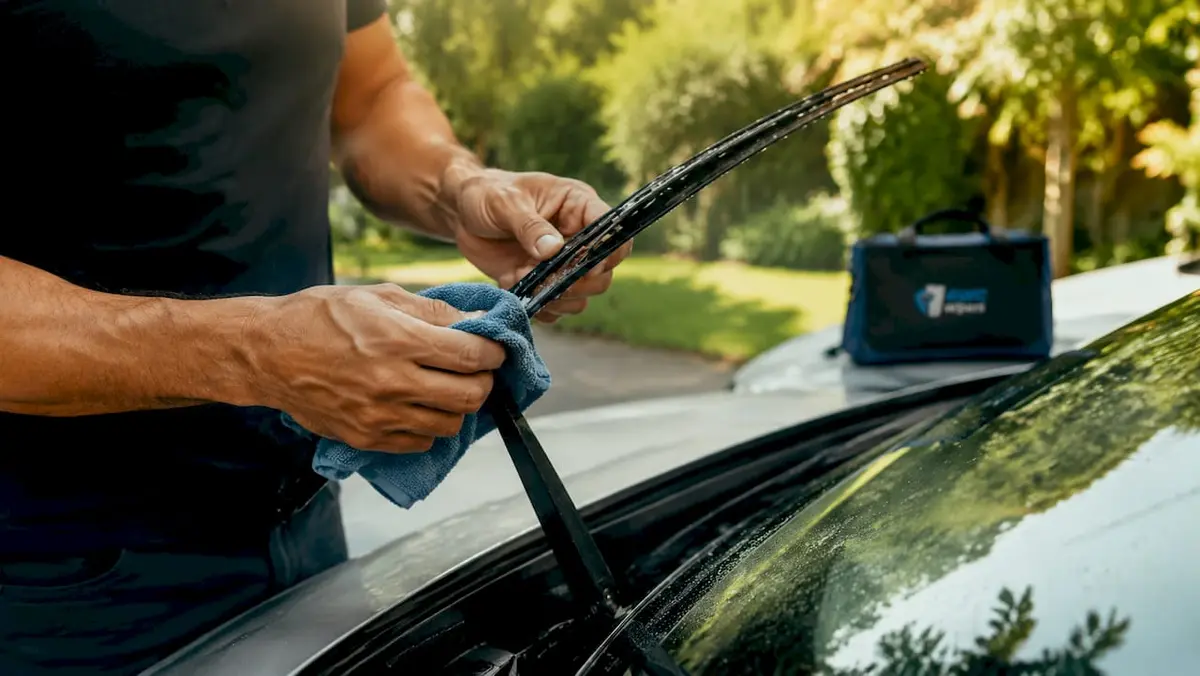
Wipe firmly along the full length of the blade, then rinse with clean water. You will often see black residue on the cloth. That is oxidised rubber and road grime, and removing it regularly restores rubber flexibility until the blade reaches the end of its mechanical life.
Pro Tip: Increase your cleaning frequency to every week during heavy rain seasons or after driving on unsealed roads. Abrasive dust from gravel tracks accelerates blade wear faster than most drivers realise.
2. always use washer fluid before activating your wipers
Running wipers on a dry windscreen is one of the fastest ways to destroy a blade. The rubber edge drags across glass without lubrication, causing micro-tears and accelerating wear on both the blade and the glass surface. Activating washer fluid first creates a thin lubricating layer that lets the blade glide cleanly.
Plain water is not a reliable substitute. In cold conditions, water freezes in the reservoir and nozzles, and it lacks the detergent properties needed to lift road film. Use a quality automotive washer fluid rated for your climate. In alpine areas or during winter travel in southern states, choose a fluid with a freeze-resistant formula.
3. avoid household cleaners on blades and glass
Many drivers reach for whatever spray is nearby when cleaning their windscreen. This is a mistake. Household cleaners with moisturisers or fragrances leave a residue on the glass that causes hazy reflections and wiper smearing. Products like Windex with ammonia can also degrade rubber compounds over time.
Stick to automotive-grade glass cleaners or the vinegar solution mentioned above. For stubborn wax or silicone buildup on the glass itself, a clay bar treatment removes contaminants that regular cleaners miss. A clean windshield dramatically improves wiper performance and reduces unnecessary blade changes because streaking is often caused by glass contamination, not worn blades.
4. protect blades from UV and heat in summer
Australia’s UV intensity is among the highest in the world, and it degrades wiper blade rubber faster than almost any other factor. Blades in hot, high-UV regions may last only 6 months, compared to up to 12 months in moderate climates. This is the core challenge for any guide to summer wiper maintenance in Australia.
Park in shade or a covered car park whenever possible. If you park outdoors regularly, a windscreen sunshade protects the rubber from direct UV exposure during the hottest part of the day. For drivers in Darwin, Cairns, or outback regions, this single habit can double the life of a standard rubber blade.
Pro Tip: Lift your blades away from the glass on extremely hot days only if you do it rarely. Frequent lifting weakens the wiper arm spring over time. A windscreen cover is a better long-term solution.
5. handle ice and frost correctly
Incorrect de-icing is one of the most damaging things you can do to your wipers. Never pour hot water on a frozen windscreen. The rapid temperature change can crack the glass and cause rubber blades to split. The correct sequence is to run the defroster first, apply a deicer spray, then use a plastic ice scraper on the glass before activating the wipers.
Never use your wipers to clear ice or compacted snow. The motor and blade arm are not designed for that load, and the rubber edge tears against ice crystals. In areas like the Snowy Mountains or Tasmania, a dedicated windscreen frost cover overnight eliminates the problem entirely and removes the need for scraping.
- Use a plastic scraper, not a metal one, to avoid scratching the glass
- Apply deicer spray to nozzles if they are frozen before use
- Fit winter-grade washer fluid rated to at least minus 10 degrees Celsius for southern states
6. choose the right blade material for your climate
Blade material directly determines how long your wipers last and how well they perform across seasons. The table below compares the three main types available in Australia.
| Blade Type | Typical Lifespan | UV Resistance | Cold Flexibility | Relative Cost |
|---|---|---|---|---|
| Standard rubber | 6–12 months | Low | Moderate | Low |
| Silicone rubber | 12–24 months | High | High | Medium to high |
| Winter-specific silicone | 12–18 months | Moderate | Very high | Medium to high |
Winter-specific wiper blades use silicone rubber that stays flexible and resists stiffening in cold temperatures better than standard rubber. For most Australian drivers outside alpine regions, a quality silicone blade offers the best balance of UV resistance and all-season performance. You can explore the types of windshield wipers in detail to match the right design to your driving conditions.
For a deeper look at how Australian weather impacts blade durability across different regions, GWC Wipers has a dedicated six-month guide that breaks down seasonal effects state by state.
7. follow correct usage habits every drive
How you operate your wipers matters as much as how you maintain them. These habits reduce mechanical wear and protect both the blade and the glass.
- Activate washer fluid before every wipe cycle, not just when the screen is visibly dirty.
- Clean your windscreen with an automotive glass cleaner at least once a week to remove abrasive grit before it gets dragged across the glass by the blade.
- Use an ice scraper for frost and snow. Never use the wiper motor to push ice off the screen.
- Check wiper arm tension every three months by lifting the arm gently. It should spring back firmly. A loose arm means uneven blade pressure and streaking.
- Avoid petroleum-based lubricants like WD-40 on any wiper component. Petroleum oils cause rubber to swell and degrade. Use a silicone-based lubricant on pivot points only if needed.
Pro Tip: After washing your car, always dry the wiper blades with a clean cloth before driving. Soap residue left on the blade causes smearing on the first few wipe cycles and can attract dust that accelerates wear.
8. inspect blades regularly and know when to replace them
Routine inspection is a core part of any wiper maintenance tutorial. Catching early signs of wear prevents the blade from scratching your windscreen, which costs far more to repair than a set of replacement blades.
Watch for these signs that replacement is due:
- Streaking or smearing that persists after cleaning the glass and blade
- Skipping or chattering across the screen, indicating the rubber edge has hardened or torn
- Visible cracks or splits in the rubber, especially after a hot summer
- Lifting at speed, where the blade loses contact with the glass above 80 km/h due to reduced arm spring tension
If cleaning fails to stop skipping or chatter, the blade has reached the end of its mechanical life and needs replacing. Fitting new blades is straightforward with the right guide. GWC Wipers provides a clear step-by-step installation guide that covers most popular Australian vehicle makes and models.
For guidance on replacement timing specific to Australian driving conditions, including how climate zone affects the recommended schedule, that resource is worth bookmarking.
9. integrate wiper care into your broader vehicle maintenance routine
Wiper care works best when it is part of a regular vehicle maintenance schedule, not an afterthought. Pair your blade inspection with your monthly tyre pressure check or your quarterly oil check. This makes it easy to remember and ensures nothing is missed.
Check your washer fluid reservoir at every fuel stop during summer. High temperatures increase evaporation and usage. Replace blades before the wet season in northern Australia, typically in october or november, so you are not caught with degraded blades when the monsoon arrives. In southern states, replace before the first cold snap in april or may to avoid frozen or stiff blades on frosty mornings.
Key takeaways
Protecting windshield wipers requires consistent cleaning, correct usage habits, weather-appropriate materials, and timely replacement to maximise blade lifespan and maintain safe visibility.
| Point | Details |
|---|---|
| Clean blades every 1–2 weeks | Use diluted vinegar or mild soap to remove grime and restore rubber flexibility. |
| Always use washer fluid first | Running wipers on a dry screen tears rubber and scratches glass. |
| Choose silicone blades in hot climates | Silicone resists UV degradation and lasts up to twice as long as standard rubber. |
| Never use wipers on ice or snow | Use a plastic scraper and defroster first to avoid motor and blade damage. |
| Replace at first sign of skipping | Persistent chatter after cleaning means the blade has reached its mechanical end. |
What i have learned after years of watching wipers fail too soon
Most wiper failures I have seen are entirely preventable. The number one mistake Australian drivers make is running their wipers on a dusty or dry screen, usually in a hurry to clear morning dew or a light film of red dust. That single habit destroys a blade faster than a full wet season of heavy rain.
The second mistake is treating all blade types as interchangeable. A standard rubber blade on a car parked outdoors in Brisbane will be cracked and hardened within six months. The same car fitted with a quality silicone blade, parked in the same spot, will still be performing cleanly at twelve months. The material choice is not a premium upgrade. It is the correct choice for the climate.
What I find most useful is pairing wiper care with something you already do. Check the blades when you check your tyre pressures. Clean them when you wash the car. It takes two minutes and it removes the guesswork entirely. Wiper care does not need to be a separate task. It just needs to be a consistent one.
The drivers who get the most from their blades are not doing anything complicated. They are using the right fluid, parking in shade when they can, and replacing blades before they fail rather than after. That is the whole system.
— Faisal
Find the right blades for your vehicle at GWC wipers
If you are ready to put these wiper blade longevity methods into practice, starting with the right blade makes everything easier. GWC Wipers stocks premium wiper blades built for Australian conditions, with silicone and all-weather options available for a wide range of makes and models.

Use the vehicle selector on the GWC Wipers website to find a perfect-fit blade for your car by make, model, and year. Whether you drive a Toyota, a Mitsubishi, or a European model, every blade comes with a 12-month warranty, free shipping across Australia, and a 30-day money-back guarantee. Explore the full range of premium wiper technology and see why thousands of Australian drivers trust GWC Wipers for reliable, long-lasting performance in every season.
FAQ
How often should i clean my windshield wiper blades?
Clean your wiper blades every 1–2 weeks using a diluted vinegar solution or mild soap. Increase frequency to weekly during heavy rain seasons or after driving on unsealed roads.
Does parking in the sun really damage wiper blades?
Yes. UV exposure is the biggest longevity factor in hot climates, and blades in high-UV regions can fail in as little as six months. Parking in shade or using a windscreen sunshade significantly slows rubber degradation.
Can i use wd-40 on my wiper blades or arms?
No. Petroleum-based products like WD-40 cause rubber to swell and break down. Use a silicone-based lubricant on pivot points only if lubrication is needed.
What is the difference between rubber and silicone wiper blades?
Silicone blades last up to twice as long as standard rubber blades, resist UV damage better, and maintain flexibility in cold temperatures. They cost more upfront but deliver better value over time for Australian conditions.
How do i know when my wiper blades need replacing?
Replace your blades when you notice persistent streaking, skipping, or chattering after cleaning, or when you can see visible cracks in the rubber. These signs indicate the blade can no longer make consistent contact with the glass.