
Why windscreen clarity is vital for australian drivers
TL;DR:
- Windscreen clarity is essential for vehicle safety, as damage and dirt increase accident risk and impair ADAS system performance. Regular maintenance, timely repairs, and using quality replacement glass help preserve optical quality, structural integrity, and driver comfort, especially in harsh Australian conditions. Proper care of wipers and prompt attention to chips prevent optical deterioration and ensure optimal safety features.
Windscreen clarity is defined as the optical quality, cleanliness, and damage-free condition of your vehicle’s windscreen glass, and it is one of the most direct determinants of road safety. A compromised windscreen does not just look bad. It increases your accident risk, strains your eyes, and can disable the advanced driver-assistance systems (ADAS) that modern vehicles depend on. The National Highway Traffic Safety Administration (NHTSA) and Australian road safety bodies consistently link poor visibility to preventable crashes. Understanding why windscreen clarity is vital means understanding how a single pane of glass affects everything from your reaction time to your car’s structural integrity.
Why windscreen clarity is vital: safety and accident risk
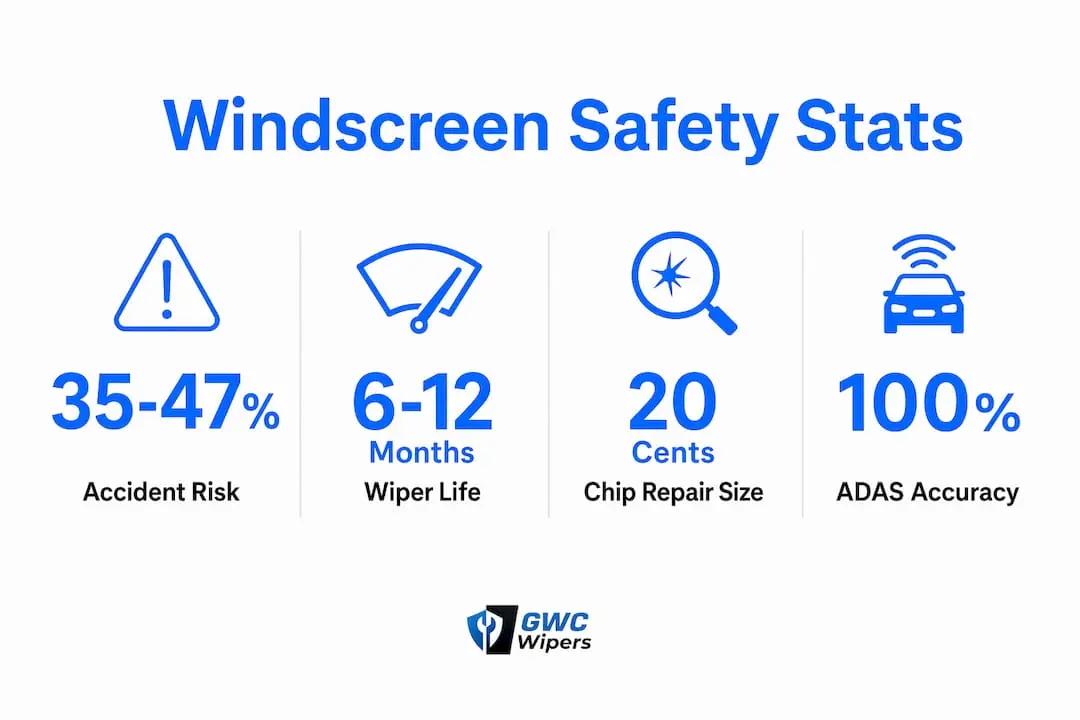
A cracked or scratched windscreen is not a cosmetic problem. Cracked windscreens increase accident risk by 35–47% during peak sun glare hours due to visual distortion and temporary blindness. That figure represents a near-doubling of your crash probability during the most common driving hours of the day.
The physics behind this are straightforward. When sunlight strikes a crack or deep scratch, the glass scatters light across your field of vision. At highway speeds, drivers can be effectively blind for 2–8 seconds, covering 175–235 feet before vision returns. That is the length of more than half a football field travelled without seeing the road.
The table below shows how windscreen condition directly compares across key safety measures:
| Safety Factor | Intact Windscreen | Damaged Windscreen |
|---|---|---|
| Accident risk during glare | Baseline | 35–47% higher |
| Blind distance at highway speed | Near zero | Up to 235 feet |
| Light scattering and haze | Minimal | Significant |
| Safety inspection result | Pass | Likely fail |
Australian safety standards add a legal dimension to this. Damage within the driver’s swept area of approximately 290mm centred on the steering wheel is considered critical for visibility. Scratches or chips larger than 10mm in this zone commonly fail roadworthiness inspections. This is not an arbitrary threshold. It reflects the direct line between glass condition and your ability to see and react.
“A windscreen in poor condition does not just reduce what you see. It actively distorts it, turning familiar roads into unpredictable hazards.”
How does windscreen condition affect driver comfort and eye strain?
The impact of a degraded windscreen on driver comfort is real, but it builds slowly. Gradual micro-scratches and haze cause increased glare and eye strain, leading to a condition called “acclimatised fatigue” where drivers adapt to worsening visibility without noticing it. You stop seeing the problem because you have adjusted to it. That adjustment comes at a cost.

Windscreen optical defects scatter light, worsening glare and making distance and speed judgement harder. This increases mental effort and accident likelihood, particularly during low-sun conditions in the morning and late afternoon, which are common across Australian cities like Brisbane, Perth, and Adelaide for much of the year.
Drivers with degraded windscreens commonly experience:
- Persistent squinting during morning and afternoon drives
- Faster eye fatigue on long regional routes
- Difficulty judging the speed and distance of oncoming vehicles at night
- Increased mental effort to maintain lane position in wet or glare-heavy conditions
- Headaches after extended drives, particularly on sunny days
The AAA links glare issues to driver fatigue and reduced alertness, especially on long or night drives. Fatigue and reduced alertness are two of the leading contributors to serious road accidents in Australia.
Pro Tip: If you find yourself squinting more than usual during your morning commute, or if oncoming headlights seem unusually harsh at night, your windscreen may be the cause rather than your eyes. A simple wipe-down with a quality glass cleaner will confirm whether the issue is surface residue or deeper glass degradation.
What role does windscreen clarity play in ADAS performance?
Advanced driver-assistance systems, known as ADAS, are now standard in most new Australian vehicles. These systems include lane departure warnings, automatic emergency braking, pedestrian detection, and adaptive cruise control. Every one of these features depends on cameras and sensors mounted behind or through the windscreen. ADAS cameras require clear, undistorted windscreens to function accurately, and minor scratches or haze reduce detection capabilities.
The reason is optical. A camera reading lane markings through a hazy or scratched windscreen receives a degraded image. The system’s algorithms then work with incomplete data. The result can be a missed pedestrian detection, a delayed emergency braking response, or a false lane departure alert that startles the driver at the wrong moment.
Minor optical distortions in windscreen glass can cause significant safety issues by impairing both human vision and camera systems in modern vehicles. This is not a theoretical concern. Automotive technicians who work on ADAS-equipped vehicles report that even a poorly fitted replacement windscreen can throw off sensor calibration.
Proper ADAS calibration requires replacement glass to match original specifications exactly. Otherwise, sensor errors and accidents may occur. High-quality OEM replacement windscreens deliver correct fit, optical clarity, and proper ADAS recalibration, compared to lower-quality aftermarket glass that may introduce distortion the system was never designed to compensate for.
“Fitting a substandard replacement windscreen to an ADAS-equipped vehicle is like replacing a camera lens with one of the wrong focal length. The hardware still runs, but the output is unreliable.”
Pro Tip: If your vehicle has ADAS features and you need a windscreen replacement, always request OEM-specification glass and confirm that a full ADAS recalibration is included in the service. Skipping recalibration after replacement is one of the most common and costly mistakes Australian drivers make.
How does the windscreen contribute to vehicle structural integrity?
Most drivers think of the windscreen purely as a window. It is also a structural component. Windscreens contribute approximately 30% of vehicle structural rigidity and are critical for proper airbag deployment and rollover safety. A weakened windscreen changes how your car behaves in a crash.
Here is how windscreen damage affects structural safety in sequence:
- A crack or chip weakens the glass bond. The windscreen is bonded to the vehicle frame with polyurethane adhesive. Damage disrupts the integrity of this bond over time.
- Reduced rigidity increases cabin deformation risk. In a rollover, the roof relies partly on the windscreen for support. A compromised screen offers less resistance.
- Airbag deployment is affected. The passenger-side airbag deploys against the windscreen to redirect toward the occupant. A weakened screen may flex or fail during this process, reducing airbag effectiveness.
- Injury risk increases. Damaged or weakened glass compromises this structural role, increasing injury risk in accidents, particularly in side and rollover impacts.
This is why a chip or crack that seems minor on a Monday morning can become a serious safety liability by Friday. Glass damage does not stay static. Temperature changes, vibration from driving, and UV exposure all cause existing damage to spread.
What steps should australian drivers take to maintain windscreen clarity?
Maintaining a clear windscreen in Australian conditions requires more than an occasional wipe-down. The combination of intense UV exposure, red dust in regional areas, heavy summer downpours, and winter frost in southern states creates a demanding environment for glass and wiper blades alike.
Proper cleaning and maintenance, including using high-quality cleaning agents and replacing wiper blades on time, reduces haze and prolongs clarity. Incorrect maintenance accelerates deterioration of optical quality. Using household glass cleaners that contain ammonia, for example, can damage tinted glass and degrade rubber wiper blades over time.
The table below compares common maintenance approaches:
| Maintenance Option | Effect on Clarity | Recommended? |
|---|---|---|
| Ammonia-based glass cleaner | Damages tinting and rubber | No |
| Automotive-specific glass cleaner | Removes residue without damage | Yes |
| Worn rubber wiper blades | Leaves streaks and micro-scratches | Replace immediately |
| Silicone wiper blades | Cleaner wipe, longer lifespan | Yes, for most conditions |
| OEM-fit wiper blades | Correct pressure and coverage | Yes, preferred option |
Wiper blade condition is directly tied to glass clarity. A worn blade does not just streak. It drags grit across the glass surface, creating the micro-scratches that cause haze and glare over time. Understanding wiper blade quality and its effect on visibility is one of the most practical steps you can take to protect your windscreen.
For chip and crack repair, the general rule is straightforward. A chip smaller than a 20-cent coin and outside the driver’s direct line of sight can often be repaired. Anything larger, or anything within the swept zone, warrants professional assessment and likely full replacement.
Pro Tip: In Australian summer, park in shade wherever possible. Direct UV exposure accelerates rubber wiper blade degradation and can cause existing chips to expand as the glass heats and contracts. A simple habit like this extends both your wiper blade and windscreen lifespan significantly.
Key takeaways
Clear windscreen glass is the single most cost-effective safety investment an Australian driver can make, protecting vision, ADAS function, and vehicle structure simultaneously.
| Point | Details |
|---|---|
| Accident risk from damage | Cracked windscreens increase crash risk by 35–47% during sun glare hours. |
| ADAS depends on glass quality | Haze and scratches reduce camera accuracy, impairing lane and pedestrian detection. |
| Structural role of windscreen | The windscreen provides up to 30% of vehicle rigidity, affecting airbag and rollover safety. |
| Acclimatised fatigue is real | Drivers adapt to gradual clarity loss without noticing, increasing eye strain and mental load. |
| Maintenance prevents deterioration | Quality wiper blades and correct cleaning products protect optical clarity over time. |
The maintenance habit most drivers get wrong
Drivers frequently underestimate the importance of windscreen clarity until something forces the issue, whether that is a failed roadworthy inspection, a near-miss during morning glare, or a technician pointing out that their ADAS system has been operating on degraded data for months.
In my experience, the most common mistake is treating windscreen care as reactive rather than routine. Drivers replace wiper blades only when they stop working, clean the glass only when it is visibly dirty, and ignore chips until they spread into cracks. By that point, the damage to both the glass and the vehicle’s safety systems has already accumulated.
The ADAS issue is the one that concerns me most. I have spoken with technicians who have found ADAS cameras operating with significant calibration errors after a windscreen replacement that used non-OEM glass. The driver had no idea. The system appeared to function normally. But the detection thresholds were off, and the safety net they were relying on was not performing as designed.
The good news is that prevention is straightforward. Replace your wiper blades before they streak. Use the right cleaning products. Get chips repaired promptly. And if your vehicle has ADAS, treat the windscreen as part of that system, not just a piece of glass in front of it. The visibility checklist for Aussie weather is a practical starting point if you want a structured approach to this.
— Faisal
Keep your windscreen clear with the right wiper blades
Your windscreen’s clarity depends heavily on the quality of the wiper blades clearing it every time it rains. A worn or poorly fitted blade leaves streaks, deposits residue, and gradually scratches the glass surface, contributing to the haze and glare that compromise your vision and your ADAS systems.
At GWC Wipers, we design and supply premium wiper blades built specifically for Australian conditions, from tropical downpours in Queensland to dusty outback roads and cold southern winters. Every blade is OEM-fit, meaning correct pressure distribution and full glass coverage for your specific vehicle. Browse our full range of wiper blades by make to find the right fit, or explore options for specific models like the Alfa Romeo Giulietta. Free shipping across Australia, a 12-month warranty, and a 30-day money-back guarantee are included with every order.
FAQ
What is windscreen clarity and why does it matter?
Windscreen clarity refers to the optical quality, cleanliness, and damage-free condition of your vehicle’s windscreen glass. It matters because distortion, haze, and cracks directly increase accident risk, eye strain, and ADAS system errors.
How does a cracked windscreen increase accident risk?
Cracks scatter sunlight across your field of vision, causing temporary blindness lasting 2–8 seconds. At highway speeds, that translates to travelling up to 235 feet without clear sight of the road.
Can a dirty or scratched windscreen affect my car’s safety systems?
Yes. ADAS cameras mounted behind the windscreen rely on clear, undistorted glass to detect lanes, pedestrians, and road signs. Haze, scratches, or optical distortion reduce detection accuracy and can cause system errors.
How often should australian drivers replace their wiper blades?
Most manufacturers recommend replacing wiper blades every 6–12 months. In harsh Australian conditions, including UV exposure and heavy dust, replacement closer to every 6 months protects both blade performance and glass clarity.
What size chip or crack requires professional windscreen repair?
A chip smaller than a 20-cent coin and outside the driver’s direct line of sight can often be repaired. Any damage larger than 10mm within the wiper-swept zone typically fails Australian roadworthy standards and requires professional assessment.