
Car visibility checklist: crystal clear views in Aussie weather

TL;DR:
- Regularly inspect and maintain wiper blades, headlights, and windscreen for optimal safety.
- Silicone beam-style wipers offer the best durability and performance in harsh Australian conditions.
- Proactive, routine checks and DIY replacements ensure clear visibility and reduce crash risk.
Clear visibility is one of the most critical safety factors for any driver on Australian roads. Whether you’re navigating a sudden summer downpour in Brisbane, a dusty outback highway in Western Australia, or a frosty winter morning in the Victorian highlands, your windshield wipers play a crucial role in keeping your line of sight clear. Vision-related crashes are heavily linked to poor wiper performance, and the good news is that most visibility problems are entirely preventable. This checklist walks you through every key step, from choosing the right blade type to DIY installation, so you can drive with confidence in any Aussie weather.
Table of Contents
- Essential car visibility checklist for Australian roads
- Choosing high-performance wiper blades for Australian conditions
- Wiper blade comparison: longevity, performance, and cost
- How to install and maintain your wipers for peak visibility
- A fresh perspective: why visibility isn’t just about wipers
- Find your perfect wiper blades for reliable visibility
- Frequently asked questions
Key Takeaways
| Point | Details |
|---|---|
| Integrated visibility matters | Combining wiper, light, glass, and fluid checks equals safer driving than focusing on blades alone. |
| Silicone blades outperform | Silicone wipers retain flexibility and last years, making them best for Australia’s heat and UV. |
| Simple monthly maintenance | Cleaning and quick checks each month help prevent vision issues and costly repairs. |
| DIY installation is easy | Most wiper blades can be replaced without tools in just a few minutes by following safe steps. |
| Premium blades deliver value | Beam and silicone blades cost more upfront but offer better visibility and durability long term. |
Essential car visibility checklist for Australian roads
Maintaining clear visibility starts well before you turn the key. A thorough, routine check of your vehicle’s visibility systems takes less than ten minutes and can genuinely save your life. Many drivers focus solely on wiper blades, but a complete approach covers several interconnected areas.
Here are the core items every Australian driver should inspect regularly:
- Windscreen and mirrors: Wipe down all glass surfaces inside and out. Grime, road film, and sunscreen residue build up faster than you’d expect, especially in summer.
- Headlights: Check that all lights are functioning and that the lenses are clear, not yellowed or fogged. Cloudy headlights can reduce output by up to 80%.
- Wiper blades: Look for visible cracks, torn rubber, bent frames, streaking, or squeaking during operation. Any of these signals it’s time to act.
- Washer fluid: Top up your reservoir regularly. Running dry mid-wipe can smear grit across your windscreen and cause scratches.
- Windscreen integrity: Inspect for chips or cracks, particularly after highway driving. Even a small chip can spider under temperature stress and compromise structural integrity.
The importance of wiper replacement cannot be overstated. According to a comprehensive visibility checklist from RACV, drivers should routinely service headlights, check wiper blades for dirt, cracks, streaks, and squeaks, ensure washer fluid is full, and inspect for windscreen chips. These steps together form the foundation of safe driving visibility.
One often overlooked tip: clean the inside of your windscreen. Interior fogging is frequently caused by a greasy film on the glass, not just humidity. A clean interior surface dramatically reduces glare at night and improves defogger performance.
With the basics covered, let’s look closer at wiper blade choices for ultimate visibility.
Choosing high-performance wiper blades for Australian conditions
Not all wiper blades are created equal, and Australian conditions are particularly demanding. Intense UV radiation, extreme heat, heavy seasonal rain, and the occasional hailstorm put wiper blades through a punishing cycle. Choosing the right type upfront saves you money and, more importantly, keeps you safe.
Beam-style blades are widely regarded as the premium option. Unlike traditional framed blades, beam blades use a single curved piece of material that distributes pressure evenly across the entire windscreen. This means no pressure points, no streaks, and no lifting at highway speeds. Brands like Bosch Aerotwin and Rain-X Latitude are well-known examples. For drivers who regularly travel at speed or face heavy downpours, beam blades are the clear frontrunner.
Silicone blades offer outstanding durability in the Australian climate. Silicone retains its flexibility even after prolonged UV exposure, unlike rubber which hardens and cracks. A 2026 AAAA study on blade materials found that silicone blades maintain over 90% flexibility after UV exposure, while rubber blades degrade significantly faster under the same conditions. Drivers in Queensland, the Northern Territory, and Western Australia, where UV degradation is most severe, benefit most from silicone.
Traditional rubber blades are the budget-friendly choice. They perform adequately in mild conditions and are widely available. However, they typically need replacing every 6 to 12 months, making them less economical over time in harsh climates.
Understanding how Australian weather impacts wipers is key to making the right call. For a detailed breakdown of silicone vs rubber wipers in local conditions, the evidence consistently favours silicone or beam silicone combinations.
“Prioritise beam silicone blades for Aussie extremes. They handle UV, heat, and heavy rain better than any other option on the market.”
Pro Tip: Clean your wiper blades monthly with a damp cloth and mild soapy water. This simple habit removes road grime and extends blade life considerably, especially during dry periods when blades sit idle in direct sun.
Exploring local wiper brand benefits can also help you find blades specifically engineered for Australian road and weather conditions rather than generic international designs.
Now that you’ve seen the top blade types, it’s helpful to know how they stack up side by side.
Wiper blade comparison: longevity, performance, and cost
Choosing the right blade is easier when you can compare the key factors directly. The table below summarises how silicone, rubber, and hybrid blades perform across the criteria that matter most to Australian drivers.
| Feature | Silicone | Rubber | Hybrid |
|---|---|---|---|
| Lifespan | 2 to 5 years | 6 to 12 months | 12 to 24 months |
| UV resistance | Excellent | Poor | Good |
| Heat tolerance | Excellent | Fair | Good |
| Heavy rain performance | Excellent | Good | Very good |
| Highway speed stability | Excellent | Fair | Good |
| Initial cost | Higher | Lower | Moderate |
| Long-term value | Best | Lowest | Good |
According to silicone blade longevity data, silicone blades last 2 to 5 years compared to rubber’s 6 to 12 months, and beam-style blades consistently perform best in high-speed rain scenarios. That longevity gap means silicone can actually cost less per year of use, even with a higher upfront price.
For wiper blade performance testing insights, independent assessments confirm that beam-style silicone blades outperform standard rubber across virtually every Australian weather scenario.
Key performance considerations for Australian drivers:
- UV degradation is the primary killer of rubber blades in northern states. Silicone resists this far better.
- Beam blades eliminate the uneven pressure that causes streaking at highway speeds, a common issue with framed rubber blades.
- Hybrid blades offer a middle ground, with an aerodynamic shell protecting the rubber element from UV and debris. A solid choice for drivers in more temperate southern regions.
- Total cost of ownership matters. Replacing rubber blades twice a year adds up quickly compared to a quality silicone set that lasts several years.
For top-rated options, tested windshield wiper blades reviewed by automotive experts consistently highlight beam and silicone designs as the best performers in demanding conditions.
Having compared the technical features, let’s move on to the practical maintenance and replacement steps.
How to install and maintain your wipers for peak visibility
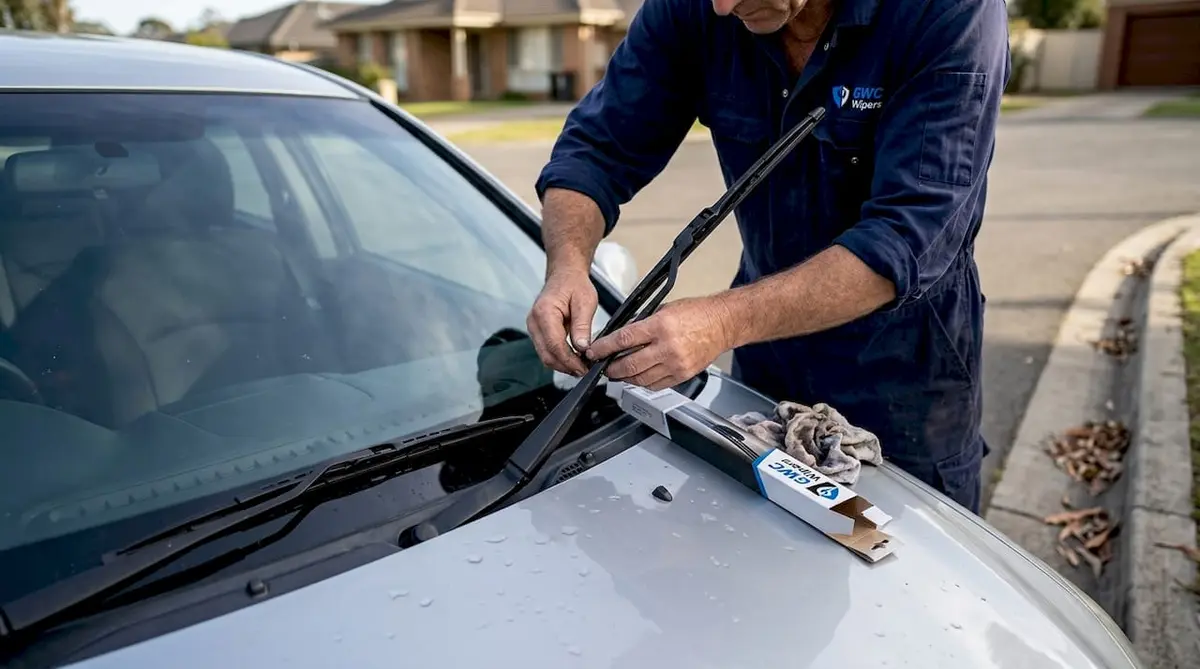
Replacing your wiper blades is one of the easiest DIY car maintenance tasks you can do. No tools are required, and the whole job takes around 2 to 5 minutes per blade. Here’s how to do it safely and correctly.
Step-by-step wiper blade replacement:
- Park your vehicle safely on a flat surface and turn off the ignition.
- Lift the wiper arm away from the windscreen. Place a folded towel on the glass beneath the arm in case it springs back accidentally.
- Locate the release tab or button where the blade connects to the arm. Press or slide it to release the old blade.
- Slide the old blade off the hook or pin connector.
- Align the new blade with the arm connector and click it firmly into place. You should hear a clear click.
- Gently lower the arm back onto the windscreen.
- Repeat for the other side. Always replace both blades at the same time.
- Test both blades with your washer fluid before driving.
This DIY wiper replacement process requires no tools and takes just minutes, making it one of the most accessible maintenance tasks for any driver. For a visual walkthrough, our DIY wiper install guide and step-by-step wiper installation resources cover every connector type.
Pro Tip: Always place a folded towel on your windscreen before lifting the wiper arm. If the arm snaps back without a blade attached, it can crack or chip the glass.
“DIY wiper replacement is straightforward, but protect your glass and always replace both sides. Mismatched blades create uneven wiping and reduce safety.”
Monthly maintenance tips:
- Clean blades with warm soapy water and a soft cloth. Never wipe dry blades across glass as this accelerates wear.
- In winter or hail-prone areas, lift your blades off the windscreen when parked. This prevents them from freezing to the glass or being damaged by ice.
- If your vehicle has ADAS (Advanced Driver Assistance Systems) sensors near the windscreen, be careful not to disrupt the sensor zone during installation. Check your owner’s manual for guidance.
- Inspect blades after any major storm or dusty drive, as debris can nick the rubber edge and cause streaking.
For broader regular vehicle checks, Western Australia’s Department of Transport recommends including wiper inspection as part of your routine pre-drive safety check.
Now that you’re equipped with both selection and maintenance strategies, here’s our expert take that challenges common beliefs.
A fresh perspective: why visibility isn’t just about wipers
Here’s something the wiper blade industry doesn’t always say loudly enough: buying the best blade on the market won’t protect you if the rest of your visibility system is neglected. We see it regularly. A driver invests in premium silicone beam blades, then drives at night with yellowed headlights and a greasy windscreen interior. The wipers are doing their job, but visibility is still dangerously compromised.
The reality is that optimal visibility demands an integrated approach: wipers, lights, clean glass, and full washer fluid working together. Poor wipers are linked to 90% of vision-related crashes, but that statistic only holds when the rest of the system is functioning.
The most common mistake we observe is reactive maintenance. Drivers wait until they can barely see through a rainstorm before replacing blades. By then, the degraded rubber may have already scratched the windscreen surface, creating permanent glare distortion. Regular, proactive checks prevent this entirely.
We believe the regular replacement habit matters more than any single product choice. A monthly five-minute inspection of your entire visibility system, wipers, glass, lights, and fluid, will do more for your safety than any premium blade alone. Think of it as a system, not a single component.
Find your perfect wiper blades for reliable visibility
At GWC Wipers, we’ve engineered our range specifically for Australian conditions, from the tropical north to the alpine south. Whether you drive a compact city car or a heavy-duty ute, we have a blade that fits perfectly and performs reliably.
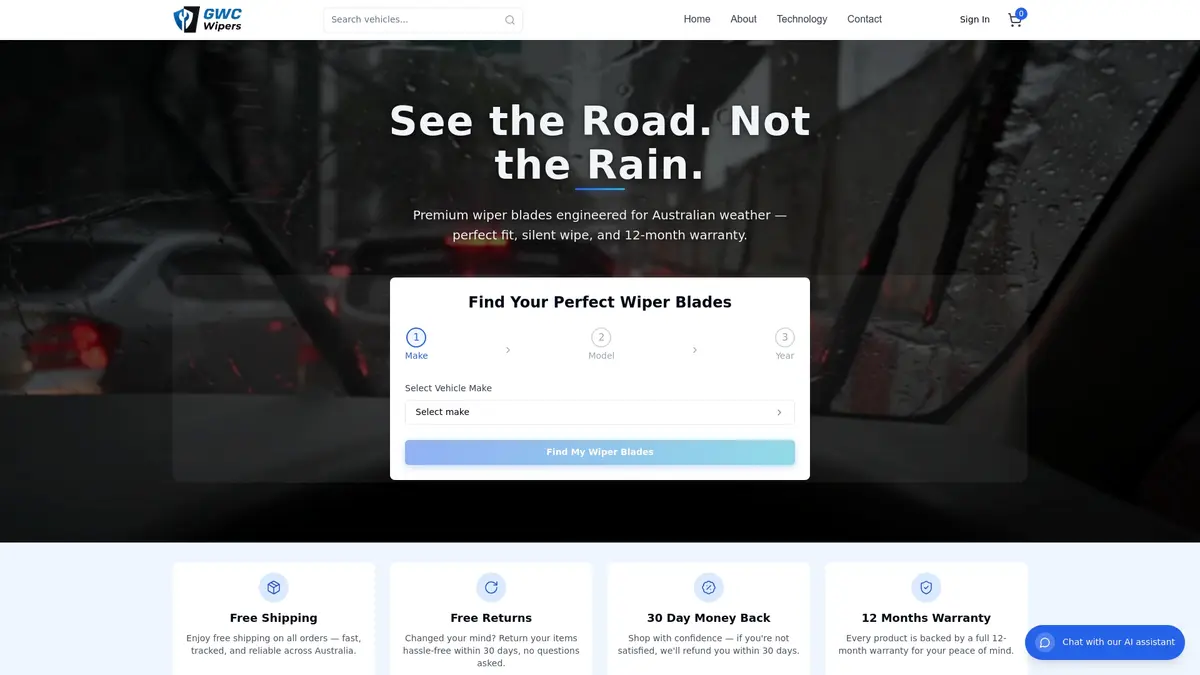
Our vehicle selector makes it easy to find the exact blade for your make, model, and year. Browse options like Giulietta wiper blades or Ford Laser wiper blades for a guaranteed perfect fit. Want to understand what goes into our blades? Explore our premium wiper blade technology page for a full breakdown of materials and design. Every order includes free shipping across Australia, a 30-day money-back guarantee, and a 12-month warranty, so you can upgrade your visibility with complete confidence.
Frequently asked questions
How often should you replace wiper blades in Australia?
Most experts recommend replacing blades every 6 to 12 months, particularly in regions with intense sun or heavy seasonal rain. Silicone blades can last longer with proper care.
What are signs your wiper blades need replacement?
Streaks, squeaking, cracked rubber, smeared water, and reduced visibility in rain are all clear indicators. The RACV lists these warning signs as reliable cues to install new blades without delay.
Which wiper blade material lasts longest for Aussie conditions?
Silicone blades last 2 to 5 years and retain over 90% flexibility after UV exposure, making them the most durable choice for harsh Australian climates compared to rubber’s 6 to 12 months.
Is it safe to install wiper blades yourself?
Yes, DIY installation is safe, requires no tools, and takes just 2 to 5 minutes. Protect your glass with a towel, follow step-by-step guides, and always replace both blades at the same time.