
Honda windshield wiper replacement: Australian guide
TL;DR:
- Worn wiper blades can impair visibility during rain and should be replaced promptly. Proper replacement involves matching blade sizes, using the right tools, and handling the blades carefully to prevent windshield damage. OEM blades offer the best fit, but replacing rubber inserts is a cost-effective alternative for maintaining performance on Honda vehicles.
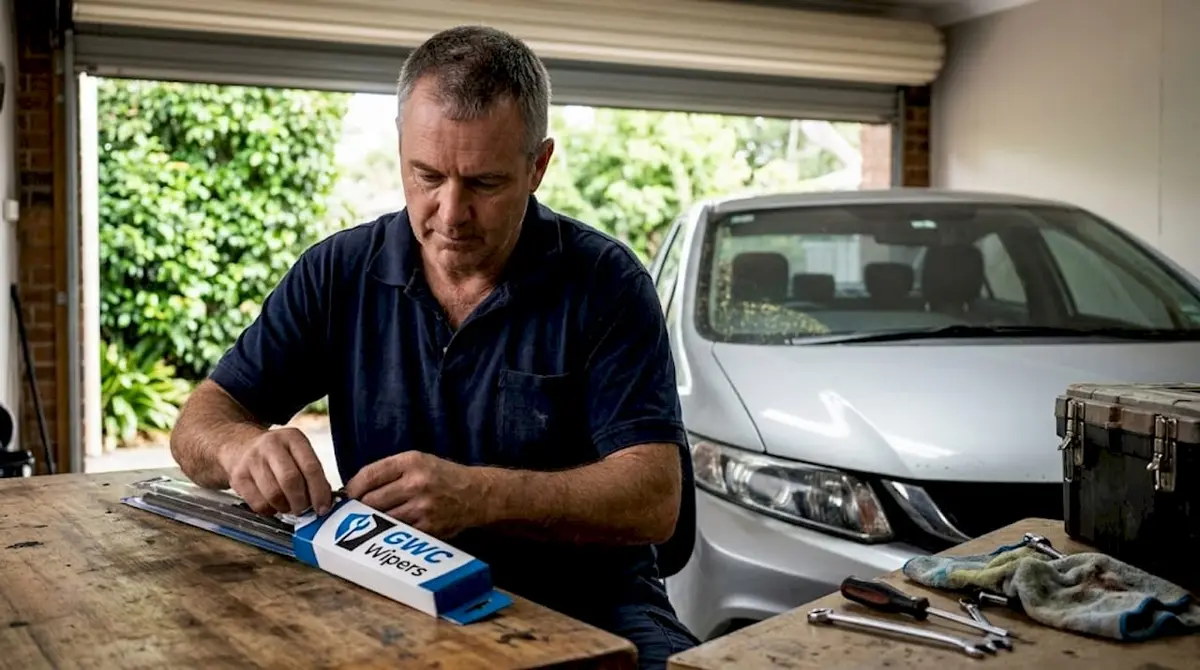
Worn wiper blades are one of those problems that sneaks up on you. One day your Honda is clearing rain perfectly, and the next you’re squinting through streaks during a sudden Sydney downpour or a Melbourne thunderstorm. Honda windshield wiper replacement is a straightforward task that most drivers can handle at home in under fifteen minutes. Yet many Honda owners put it off, unsure about blade sizes, connector types, or whether to buy OEM or aftermarket. This guide walks you through everything, from what to buy to how to fit it safely and correctly.
Table of Contents
- Key takeaways
- What you need before starting Honda windshield wiper replacement
- How to remove and install new wiper blades
- Troubleshooting after you replace Honda wipers
- Choosing the right blades for your Honda
- My honest take on Honda wiper maintenance
- Get the right Honda blades from GWC Wipers
- FAQ
Key takeaways
| Point | Details |
|---|---|
| Match blade sizes precisely | Driver and passenger sides use different lengths; check your model’s specifications before buying. |
| Use wiper service mode where available | Some Honda models like the Civic allow a service mode that makes blade access safer and easier. |
| OEM blades offer the best fit | Honda OEM blades are shaped to match your windshield’s exact contour, reducing streaks and noise. |
| Replacing inserts saves money | Changing the rubber insert while keeping the OEM frame is a cost-effective maintenance option. |
| Test after every replacement | Run wipers with washer fluid after installation to check for streaking, chatter, or poor seating. |
What you need before starting Honda windshield wiper replacement
Good preparation makes the whole job quicker and protects your windshield from accidental damage. Getting everything together before you lift a single wiper arm is time well spent.
Tools and materials
You do not need a workshop full of specialised tools. Here is what to gather:
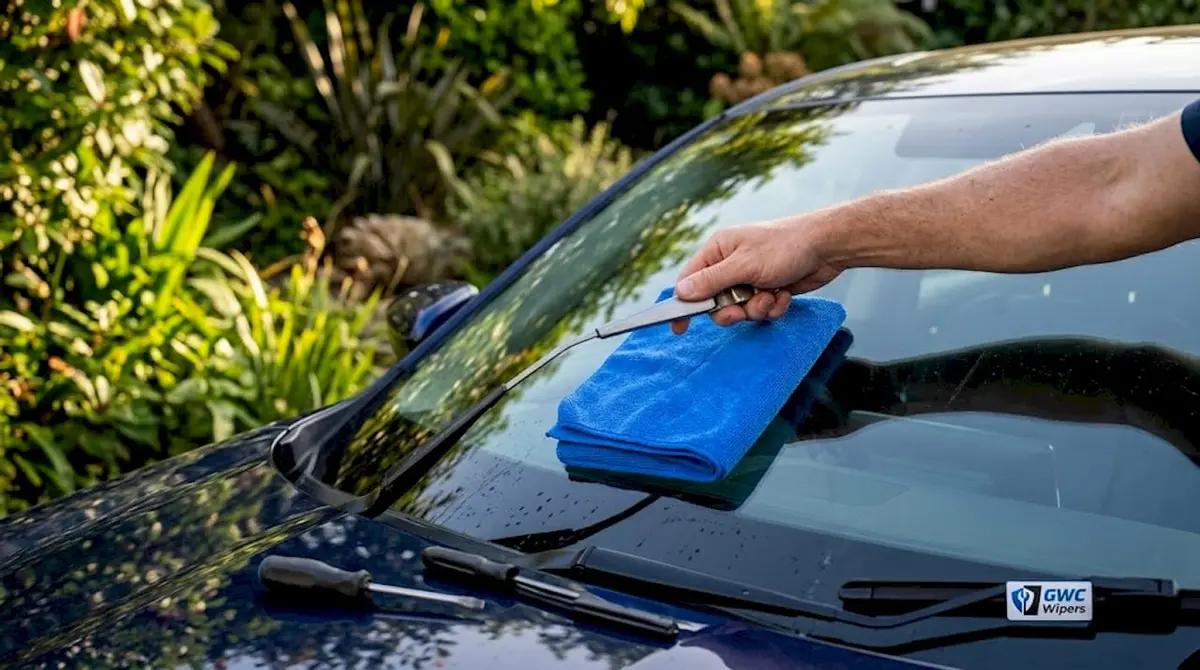
- A microfibre towel (to rest the wiper arm on and protect your bonnet)
- Safety glasses
- A small flathead screwdriver (useful for releasing tab clips on some Honda connectors)
- Nitrile gloves (to keep oils from your hands off the new rubber)
- Your new wiper blades, already confirmed as the correct size
Getting the right blade sizes
Blade sizes vary between the driver and passenger sides and must match your specific Honda model. A common mistake is buying two blades of the same length. The Honda Civic, for example, uses a 26-inch blade on the driver’s side and an 18-inch blade on the passenger side. The Honda Accord uses a 26-inch driver blade paired with a 19-inch passenger blade. Always confirm the sizes for your exact model year before purchasing.
| Honda model | Driver side | Passenger side |
|---|---|---|
| Civic (2016 onwards) | 26 inches | 18 inches |
| Accord (2014 onwards) | 26 inches | 19 inches |
| CR-V (2017 onwards) | 26 inches | 16 inches |
Pro Tip: Use the vehicle selector tool on GWC Wipers to confirm the exact blade sizes for your Honda make, model, and year. It takes ten seconds and removes any guesswork.
OEM vs aftermarket blades
OEM Honda blades are designed to match the windshield contour for reliable wiping and a secure fit. Mismatched third-party assemblies can cause uneven contact, lift at highway speeds, and annoying chatter. Aftermarket blades from reputable brands can perform just as well, but only when they are specifically designed for your Honda’s windshield profile. Buying cheap universal blades rarely ends well.
Wiper blade prices range significantly from budget options to premium OEM pricing, with quality blades typically costing considerably more than basic replacements. For Australian conditions where UV exposure and heat degrade rubber quickly, spending a little more on a durable blade is worth it.
How to remove and install new wiper blades
With the right blades in hand, the actual replacement process is simple. Follow these steps carefully to avoid cracking your windshield or springing a wiper arm back under tension.
-
Park your Honda on a flat surface and turn off the ignition. For Honda Civic models, activating service mode by holding the wiper stalk in the wash position while turning on the ignition moves the arms to a mid-screen position, making blade access much easier and safer.
-
Lift the wiper arm away from the windshield. Lift it slowly and stop it in the raised position. Place your folded microfibre towel flat on the windshield glass beneath the arm. If the arm drops without a blade attached, it can crack the glass under spring tension.
-
Locate the connector tab on the old blade. Most Honda models use a J-hook style connector. There is a small plastic tab where the blade meets the arm. Press or push this tab while sliding the blade downward toward the windshield to disengage it from the hook.
-
Remove the old blade completely. Once the tab releases, slide the blade off the hook. The arm stays raised while you work. Set the old blade aside and do not let the arm drop.
-
Unpack the new blade and confirm the connector type. Most quality aftermarket blades come with multiple adapter options. If your Honda Civic or CR-V uses a standard J-hook, attach or confirm the J-hook adapter is in place on the new blade before you try to fit it.
-
Hook the new blade onto the arm. Line up the J-hook slot on the new blade with the hook on the wiper arm. Slide the blade upward onto the hook until you hear or feel a firm click. A loose connection here will cause the blade to fly off at speed.
-
Lower the arm gently back onto the windshield. Never let it snap back under its own spring force. Guide it down with your hand.
-
Repeat the process for the passenger side. Remember that the passenger blade is a different and shorter size, so do not mix them up.
Pro Tip: If the tab on the old blade feels stiff or stuck, use the small flathead screwdriver to gently press the release tab rather than forcing it with your thumb. Forcing it can break the clip and leave pieces of plastic on your bonnet.
Safety guidelines from Honda owner’s manuals consistently recommend supporting the wiper arm during replacement to avoid injury or windshield damage. This is one step many DIYers skip and regret.
Troubleshooting after you replace Honda wipers
Even a correctly fitted blade can behave oddly in the first few wipe cycles. Here is how to sort out the most common issues.
Testing your new blades
After installation, run your wipers with washer fluid and a clean glass surface to help the new rubber seat properly. New blades sometimes have a light manufacturing film on the rubber edge that causes streaking in the first few cycles. A wipe down with a microfibre cloth and a small amount of glass cleaner on the blade edge usually resolves this quickly.
Check for these signs of a problem after installation:
- Streaking: The blade is leaving water lines rather than clearing cleanly. This usually means the rubber edge is dirty or the blade is not making full contact with the glass.
- Chattering or skipping: The blade is bouncing across the glass. This can mean the wiper arm tension is too low, the blade is the wrong size, or the connector is not fully locked.
- Smearing: Dirty washer fluid or a contaminated blade edge. Clean the blade with a cloth before retesting.
- Poor parking position: The blade stops in the wrong position. This points to a fitment issue with the adapter or an arm that needs adjustment.
Re-seating or adjusting blades
If your blade chatters, lift the arm again and press the connector firmly until it clicks. Sometimes the J-hook is sitting at a slight angle and just needs repositioning. If streaking persists after cleaning, the blade itself may be damaged or the wrong profile for your windshield.
Replacing only the rubber insert rather than the full blade assembly is a smart way to keep costs down while maintaining OEM frame quality. Many Honda owners do this successfully, particularly when the frame is still in good condition after the first or second replacement cycle.
In Australian conditions, wiper rubber degrades faster than in cooler climates. Prolonged UV exposure during summer and rapid temperature changes in alpine areas both accelerate this process. Checking your blades every six months rather than waiting for obvious failure is a practical habit that costs nothing.
Choosing the right blades for your Honda
Not all replacement blades are equal, and the differences matter more than most people realise.
OEM vs aftermarket: the honest comparison
OEM Honda blades come pre-shaped to the exact curvature of your windshield. Proper fit to the windshield curvature directly affects wiping efficiency and noise levels. A blade that fits a flat windshield will not sit correctly on a more curved glass profile, and you will notice this every time it rains.
Premium aftermarket blades from reputable manufacturers can match or exceed OEM performance when they are specifically profiled for your Honda model. The key phrase is “specifically profiled.” Generic blades that claim to fit everything rarely deliver the contact consistency of a purpose-built option. You can read more about wiper blade types to understand how beam blades, bracket blades, and hybrid options each perform differently.
Inserts vs full blade replacement
Replacing only the rubber insert rather than the entire assembly is a genuinely practical option when your OEM frame is undamaged. Honda owners on forums consistently report this as a cost-effective approach that preserves the original fit while refreshing wiping performance. Inserts are typically cheaper than full blades and generate less plastic waste.
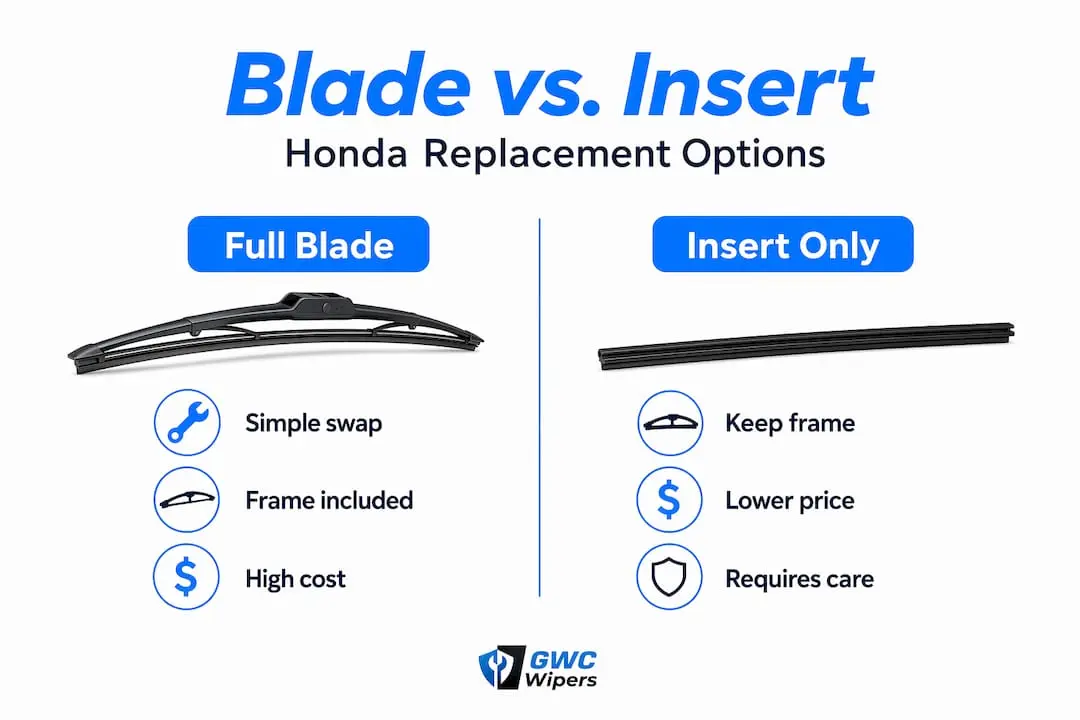
That said, if the frame itself is cracked, bent, or corroded, a full blade replacement is the better call. A damaged frame will transfer uneven pressure to the rubber and no insert will fix that.
Seasonal considerations for Australian drivers
Australia does not have a single climate. If you drive in the Snowy Mountains, snowfield blades with a rubber boot covering the frame arm offer better performance in icy conditions. For most Australian drivers in coastal or inland regions, an all-season silicone blade is the most durable choice. Silicone resists UV degradation and heat far better than standard EPDM rubber, which makes it a strong option for drivers in Queensland, Western Australia, and the Northern Territory where summer temperatures are extreme.
For Honda CR-V owners who frequently switch between city and regional driving, investing in quality CR-V compatible blades that handle both highway buffeting and heavy urban rain is worth the extra cost.
My honest take on Honda wiper maintenance
I have seen the same mistakes come up repeatedly when it comes to Honda wiper blade installation. The most common one is buying blades based on price alone without confirming the windshield profile compatibility. A five-dollar blade that skips across your glass in a summer storm is not a saving. It is a liability.
My strong preference is for OEM blades on the first replacement cycle, particularly for newer Honda Civics and CR-Vs where the windshield curvature is more pronounced. The factory blade sits flush, moves quietly, and clears efficiently. Once you have seen how that performs, you have a benchmark for evaluating any aftermarket blade you try afterwards.
On the cost side, I do think the insert replacement approach is underused. Most drivers do not realise that the rubber can be swapped out while the frame stays on the car. I have done this on my own Honda and the result is essentially the same wiping performance for a fraction of the price. The frame just needs to be structurally sound.
The one piece of advice I give every Honda owner is this: do not wait until you can see the smearing to act. In Australia, where a dry week can be followed by a violent afternoon storm with zero notice, your wipers need to be ready before the rain arrives. Checking them every six months takes two minutes and keeps your line of sight clear when conditions demand it.
— Faisal
Get the right Honda blades from GWC Wipers
If you are ready to replace your Honda wipers and want blades that are guaranteed to fit, GWC Wipers has you covered.
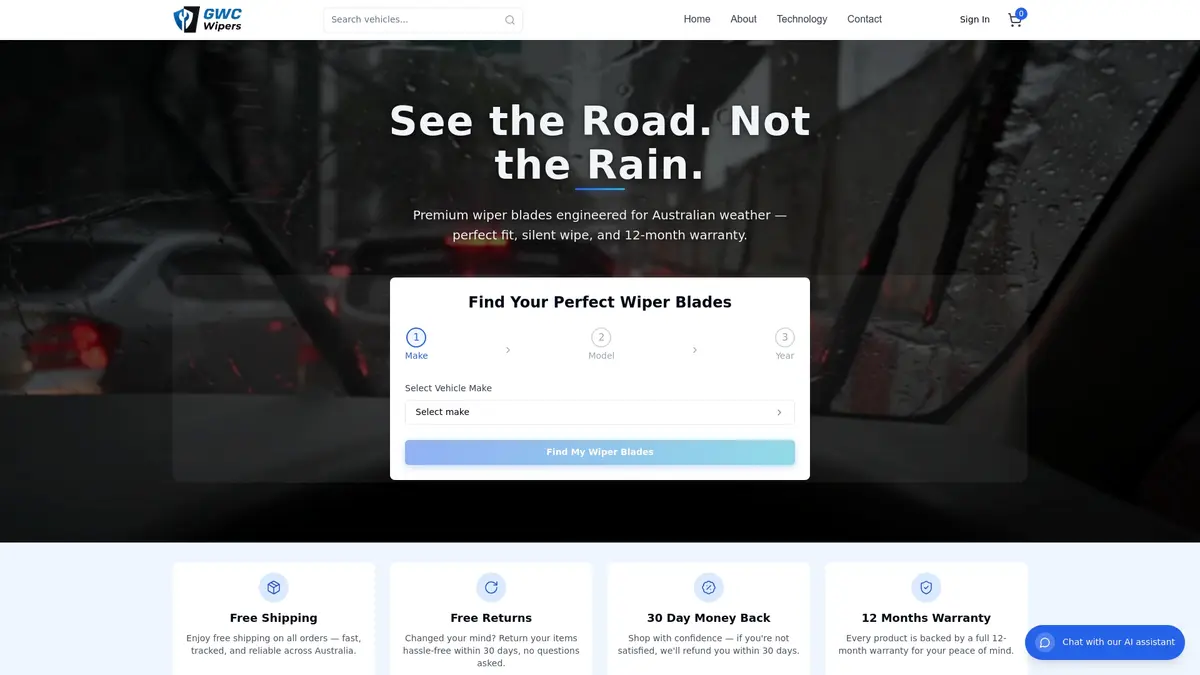
GWC Wipers is an Australian company that designs and manufactures wiper blades specifically for Australian weather conditions, from coastal humidity to inland heat. Their range covers the Honda Civic, CR-V, Accord, and more, with a vehicle selector tool that confirms the exact blade size for your model and year. Every order comes with free shipping across Australia, a 12-month warranty, and a 30-day money-back guarantee. Browse the full range of Honda wiper blades and find the right fit for your vehicle today.
FAQ
What size wiper blades does my Honda Civic need?
The Honda Civic typically uses a 26-inch blade on the driver’s side and an 18-inch blade on the passenger side, though sizes can vary by model year. Always confirm your exact year using a vehicle selector tool before purchasing.
How do I know when to replace my Honda wiper blades?
If your wipers are leaving streaks, skipping, smearing, or making a chattering noise on wet glass, the rubber edge has worn and replacement is needed. In Australian conditions, checking every six months is a reliable maintenance schedule.
Can I replace just the rubber insert instead of the full blade?
Yes. Replacing the rubber insert while keeping the OEM frame is a cost-effective option that many Honda owners use successfully. It only makes sense if the frame itself is undamaged and structurally sound.
How do I prevent the wiper arm from cracking my windshield during replacement?
Place a folded microfibre towel on the windshield beneath the raised arm before you remove the blade. Honda’s own manual advises always cushioning the arm to avoid damage if it falls during replacement.
Are Honda Civic and Honda CR-V wiper blades interchangeable?
No. The Honda Civic and CR-V use different blade sizes and profiles. Using the wrong blade can result in poor contact, streaking, and potential damage to the wiper arm mechanism. Always confirm compatibility for your specific model using a tool like the one at GWC Wipers Civic page.