
Changing wipers for multiple models: your complete guide
TL;DR:
- Replacing wiper blades requires selecting the correct size, connection type, and blade style for each vehicle. Proper preparations, including tools and understanding arm types, ensure a successful fit and clear vision. Regular maintenance and timely replacement extend blade lifespan and safe driving in Australian conditions.
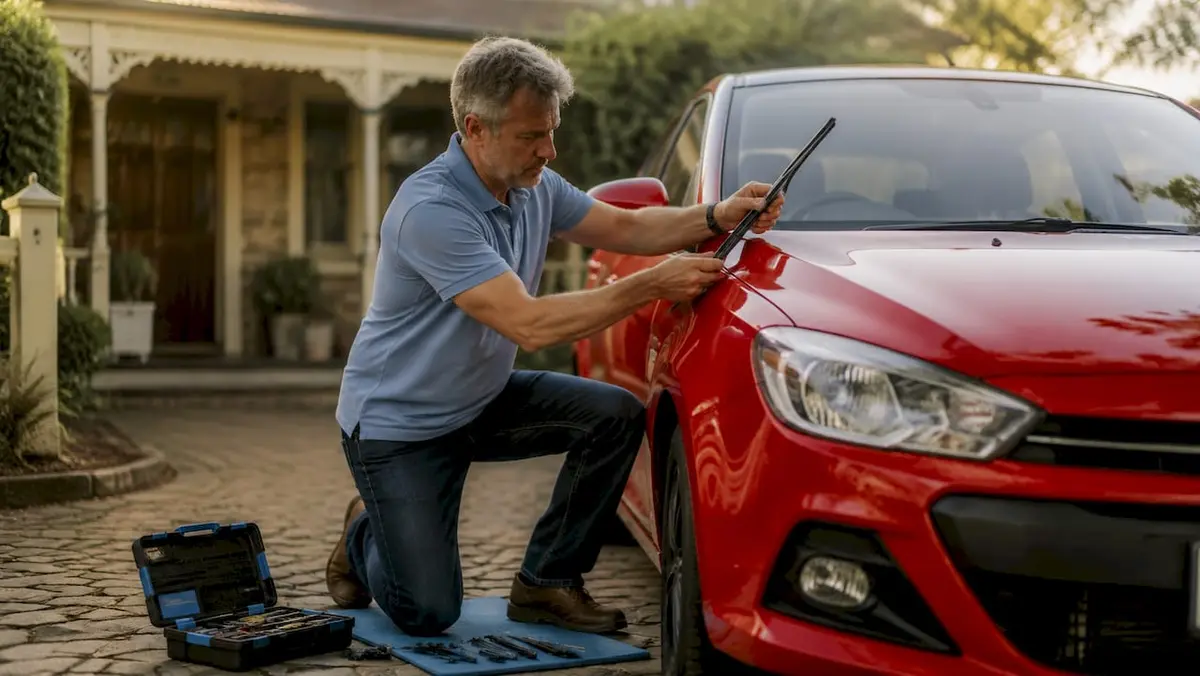
Wiper blade replacement is defined as the process of removing worn blades and fitting correctly sized, properly adapted replacements to restore full windscreen clearing. Changing wipers for multiple models requires more than grabbing the nearest blade off a shelf. Each vehicle uses a specific arm connection type, blade curvature, and driver/passenger length combination. Get any of those wrong and you risk streaking, skipping, or worse, windscreen scratching from hardened rubber dragging across glass. This guide walks you through every step, from tools and adapter selection to fitting and testing, so you get it right the first time regardless of what you drive.
What tools and preparation do you need for changing wipers for multiple models?
Good preparation cuts installation time in half and prevents the most common errors. Before you lift a wiper arm, gather everything you need.
Tools and supplies checklist:
- New wiper blades in the correct driver and passenger lengths for your specific make, model, and year
- A multi-fit adapter kit (quality kits cover 95–99% vehicle compatibility, reducing fitment errors significantly)
- A flathead screwdriver for releasing stubborn clips
- A clean microfibre cloth and glass cleaner
- Your vehicle owner’s manual or a fitment database lookup
Understanding wiper arm connection types
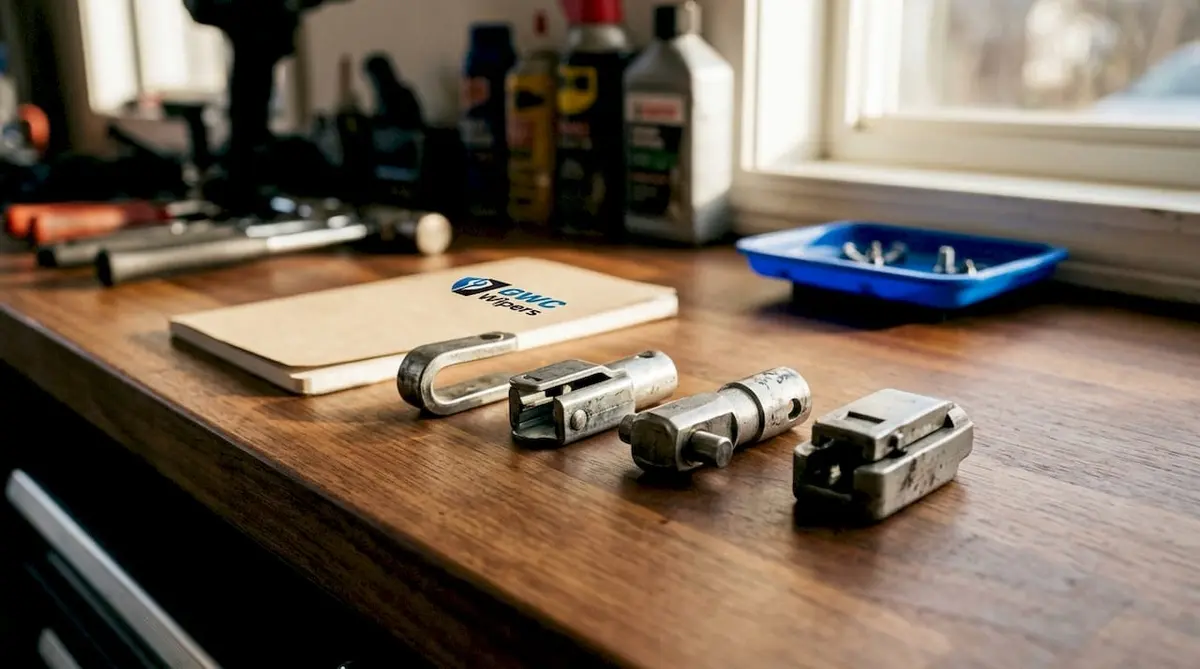
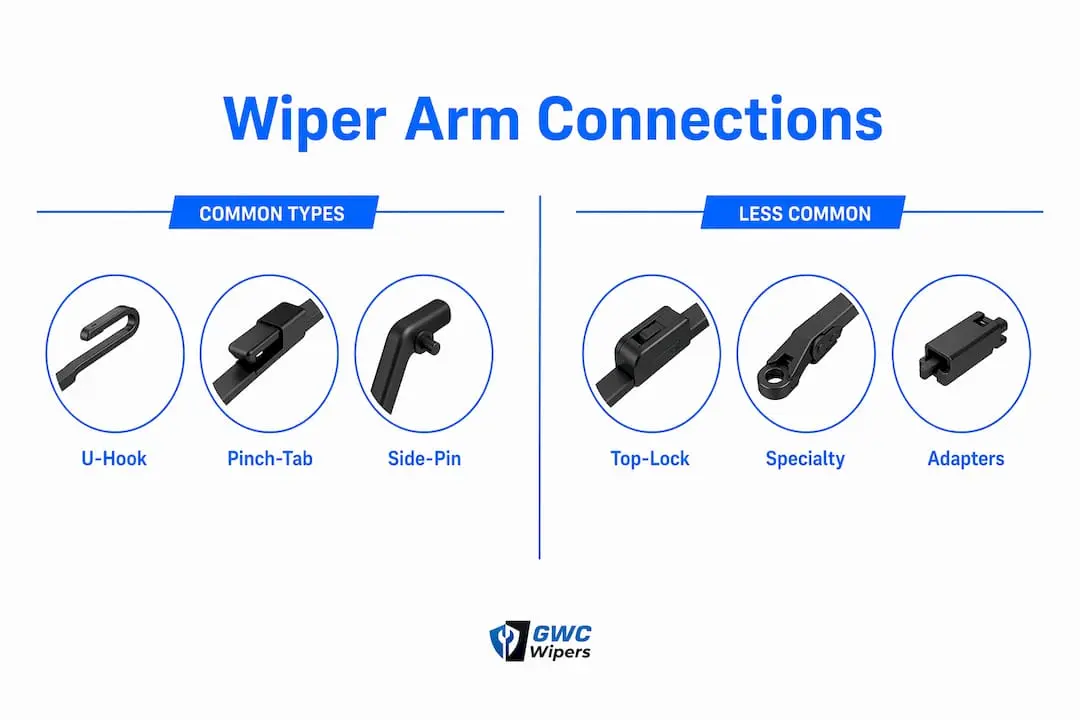
Four primary connection types exist across the Australian vehicle fleet: U-Hook (the most common at around 70%), pinch-tab (roughly 15%), side-pin (around 8%), and top-lock or pin (around 7%). Knowing which type your vehicle uses before you buy blades saves a wasted trip. Fitting a blade with the wrong adapter causes it to sit loose, lock incorrectly, or fail to make full contact with the glass.
Verifying blade sizes
Driver and passenger blades are almost always different lengths. Vehicle-specific fitment matters because even a 10mm size difference causes incomplete clearing and streaking across the windscreen. Check your owner’s manual, the sticker inside the driver’s door jamb, or use an online fitment tool before purchasing.
Pre-installation precautions
Park on a flat surface and switch off the ignition. Lay a folded towel over the base of the windscreen before raising the wiper arms. If a spring-loaded arm snaps back without a blade attached, it can crack the glass.
Pro Tip: Always replace both blades at the same time. If one is worn enough to need changing, the other is close behind, and mismatched blades create uneven visibility.
How do you remove old wiper blades from different arm types?
Removing old blades without damaging the arm or windscreen is straightforward once you know the mechanism. The steps vary slightly by connection type, but the core process is the same.
-
Lift the wiper arm away from the windscreen until it locks in the raised position. Support it gently. Never let it fall unsupported onto the glass.
-
Locate the release tab or clip. On U-Hook arms, you will see a small plastic tab where the blade meets the hook. On pinch-tab connections, squeeze both sides of the connector simultaneously. Side-pin types have a sliding lock you press inward, while top-lock blades release by pressing a button on the top of the connector.
-
Rotate and slide the blade free. For U-Hook types, pivot the blade roughly 90 degrees so the hook clears the slot, then slide it downward off the arm. For pinch-tab and side-pin types, the blade slides straight off once the clip is released.
-
Inspect the wiper arm itself. Check for corrosion, bending, or weak spring tension every time you change blades. A damaged arm will prevent even a brand-new blade from performing correctly.
-
Clean the arm connector. Wipe away any grit, rubber residue, or corrosion from the hook or pin before fitting the new blade. A clean connection point means a secure lock.
-
Lower the arm gently onto the towel while you prepare the new blade. Do not leave it raised and unattended.
Common removal pitfalls to avoid
Forcing a blade off without releasing the clip is the most frequent mistake. It bends the adapter or cracks the plastic housing, which then causes the new blade to sit at an angle. On older vehicles, the U-Hook can be corroded into the blade connector. A small amount of penetrating lubricant on the joint, left for two minutes, frees it without force.
Pro Tip: Take a photo of the old blade and its connection point before removal. That reference image makes adapter selection for the new blade much faster, especially if you are working across a fleet or multiple household vehicles.
How do you select and fit new wiper blades across different vehicle models?
Selecting the right blade is where multi-model wiper installation gets specific. Three variables determine compatibility: length, rubber type, and blade style.
Choosing the right blade style and material
Three blade styles suit different vehicles and conditions. Conventional framed blades work on older or flat windscreens. Beam blades use a single curved piece of spring steel with no external frame, making them well suited to modern curved windscreens and vehicles with advanced driver assistance systems (ADAS). Hybrid blades combine a protective shell with an internal spring for all-weather durability.
Beam and hybrid blades perform better on modern curved windscreens and last longer than conventional framed types. Silicone rubber blades offer an added advantage: they repel water naturally through a hydrophobic coating they deposit on the glass over time, and they can last twice as long as standard rubber blades. For Australian drivers dealing with UV exposure, dust, and sudden heavy rain, silicone is the more durable choice. You can read more about blade types for Australian conditions to match your climate zone.
Installing the correct adapter
Multi-fit blade kits include a set of adapters covering the major connection types. Match the adapter to your arm type before attempting to fit the blade.
- Select the correct adapter from the kit by comparing it to your arm connection. Most kits include a small diagram or numbered guide.
- Clip the adapter onto the blade connector. You will hear or feel a click when it seats correctly.
- Hook the blade onto the arm. For U-Hook arms, slide the hook into the adapter slot, then rotate the blade back to the parallel position until it clicks. For pinch-tab and side-pin types, slide the blade onto the arm until the locking tab engages.
- Check the lock. Give the blade a firm but gentle tug away from the arm. It should not move. If it does, the adapter is not fully seated.
- Lower the arm slowly onto the windscreen. Do not let it snap down.
| Blade style | Best suited to | Key advantage |
|---|---|---|
| Conventional framed | Older, flat windscreens | Low cost, widely available |
| Beam | Modern curved windscreens, ADAS vehicles | No frame to clog with ice or debris |
| Hybrid | All-weather, mixed conditions | Protective shell with beam-style contact |
| Silicone rubber | High UV, coastal, dusty regions | Longer lifespan, hydrophobic glass coating |
Testing after installation
Test new blade contact at low speed using washer fluid or light rain before driving at highway speeds. Watch for even, streak-free coverage across the full sweep arc. Any skipping or missed patches at low speed will be worse at 100 km/h.
Pro Tip: Run the wipers on the slowest setting first. If you hear a chattering noise, the blade is not lying flat. Lift the arm, reseat the adapter, and test again before driving.
How do you troubleshoot and maintain wipers across different vehicles?
Even a correctly fitted blade can underperform if the windscreen or arm is in poor condition. These are the most common issues and how to fix them.
Streaking is caused by a dirty windscreen, a worn rubber edge, or a blade that is slightly the wrong length. Clean the glass with a dedicated glass cleaner and wipe the rubber blade edge with a damp cloth. If streaking continues, the blade length is likely off by more than the acceptable margin.
Skipping or chattering usually means the blade is not lying flat against the glass. This happens when the adapter is not fully locked, the arm spring tension is too low, or the blade curvature does not match the windscreen. Check the adapter first, then inspect the arm spring.
Smearing after rain points to a contaminated windscreen, often from road film, wax overspray, or silicone tyre dressing. Clean the glass thoroughly with a glass-safe degreaser before concluding the blade is at fault.
When to replace the whole blade versus just the rubber refill
Full blade replacement is generally the better choice, particularly if the frame is bent or the blade curvature no longer matches the windscreen. Rubber refills are fiddly to fit correctly and less reliable on modern curved glass. The cost difference rarely justifies the extra effort and risk of poor contact.
Replacement intervals for Australian conditions
Most wiper blades last 6–12 months, but Australian conditions compress that range. Drivers in Queensland, Western Australia, or coastal regions should plan for replacement closer to every six months due to UV degradation and salt air. Vehicles parked outdoors in direct sun age rubber faster than garage-kept cars. RACQ experts recommend checking wipers before every wet season, not just when streaking becomes obvious. Pairing your wiper checks with a broader preventive vehicle maintenance schedule keeps the whole car in better shape.
Maintenance habits that extend blade life:
- Lift blades off the glass during extended periods of direct sun or when the vehicle is parked outdoors overnight in summer
- Never use wipers to clear dry dust or debris. Spray washer fluid first
- Clean blade rubber with a damp cloth every month to remove road grime
- Inspect wiper arms for corrosion or reduced spring tension at every blade change
Key takeaways
Correct adapter selection and vehicle-specific sizing are the two factors that determine whether a wiper blade replacement succeeds or fails across any vehicle model.
| Point | Details |
|---|---|
| Know your connection type | Identify U-Hook, pinch-tab, side-pin, or top-lock before buying blades to avoid fitment errors. |
| Match blade length exactly | Driver and passenger blades differ; even a 10mm mismatch causes streaking and incomplete clearing. |
| Choose silicone for durability | Silicone blades last twice as long as rubber and deposit a hydrophobic coating on the glass. |
| Replace blades every 6–12 months | Australian UV and coastal conditions shorten blade life; check before each wet season. |
| Test at low speed first | Run wipers on the slowest setting after installation to confirm even, streak-free coverage. |
Why I think most drivers replace wipers the hard way
Most wiper replacement guides treat every vehicle the same. That is the core problem. After years of working with Australian drivers across a range of makes and models, the single biggest source of frustration I see is people buying blades by length alone, then discovering the adapter does not match their arm type. The blade fits loosely, chatters at speed, and gets returned. The fix is simple: identify the connection type first, then select the blade.
The second thing I have noticed is that drivers in regional and outback areas consistently underestimate how quickly UV and heat destroy rubber. A blade that looks fine in june can be cracked and hardened by october. I recommend checking blade condition at the start of spring and again before the wet season, not just when you notice streaking in heavy rain. By the time streaking is obvious, the rubber has already been dragging grit across your glass for weeks.
The third point that rarely gets enough attention is arm condition. A new blade on a corroded or weak-spring arm will never perform well. Inspect the arm every time you change blades. If the spring does not hold the blade firmly against the glass at highway speeds, replace the arm too. It is a small cost compared to a scratched windscreen from a dragging blade.
— Faisal
Get the right wiper blades for your vehicle at Com
Com takes the guesswork out of wiper blade selection for Australian drivers. The vehicle selector tool at GWC Wipers matches your exact make, model, and year to the correct blade lengths and connection types, so you order with confidence.
Whether you drive a Toyota or a Mercedes-Benz GLE-Class, Com stocks premium silicone and hybrid blades built for Australian conditions, from coastal humidity to outback heat. Every order includes free shipping across Australia, a 12-month warranty, and a 30-day money-back guarantee. If you need guidance on how often to replace your blades based on your location and driving conditions, the Com blog has you covered with region-specific advice.
FAQ
How do I know which wiper blade size fits my car?
Check your owner’s manual or use an online fitment tool with your vehicle’s make, model, and year. Driver and passenger blades are almost always different lengths, so verify both before ordering.
What is the most common wiper arm connection type?
The U-Hook connection is the most common, found on approximately 70% of vehicles. Pinch-tab, side-pin, and top-lock types make up the remainder, so always confirm your arm type before selecting a blade.
How often should I replace wiper blades in Australia?
Most blades last 6–12 months, but drivers in high-UV or coastal regions like Queensland and Western Australia should replace them closer to every six months due to accelerated rubber degradation.
Can I fit the same blade to both sides of my windscreen?
No. The driver and passenger sides require different blade lengths on almost every vehicle. Fitting the wrong length leaves part of the windscreen uncleared and can cause the blade to overshoot the glass edge.
Do I need to replace the wiper arm when I change the blades?
Not always, but inspect the arm for corrosion, bending, or weak spring tension every time you change blades. A damaged arm prevents even a new blade from maintaining proper contact with the glass.