
Stop Wiper Streaks in Minutes: Clean Wiper Blades and Glass in Australia

Wipe the rubber edge with a microfibre dampened in washer fluid or mild soapy water, running the cloth along the full length until no dark residue transfers. This clears most streaking within minutes, though grime from wax or tree sap may need diluted vinegar or a quick pass of isopropyl alcohol. Lift the arm gently away from the glass and lower it back down with care once the blade is clean.
TL;DR:
- Regularly clean wiper blades with a damp microfibre cloth and washer fluid or mild soap to remove grime and prevent streaking.
- Avoid using petroleum-based lubricants like WD-40, which degrade rubber, and always check blades for cracks or hardened edges that require replacement.
- Cleaning is effective only on good-condition blades; if streaks persist in the same spot after cleaning, replace the blade rather than attempt further cleaning.
- Preventive measures include checking blades monthly, avoiding parking under trees, and not using wipers on dry glass or to clear ice, to extend blade lifespan.
- For persistent issues, selecting a vehicle-specific replacement blade from trusted brands ensures proper fit and performance, especially in challenging weather conditions.
Table of Contents
- What you need for cleaning windshield wipers safely
- How do you clean wiper blades step by step?
- Why cleaning the windscreen matters just as much
- When does a wiper blade need replacing instead of cleaning?
- Preventive habits that keep wipers cleaner for longer
- How GWC Wipers helps when cleaning isn’t enough
- A technician’s take on the mistakes that wreck wiper blades
- Ready to replace? Find your exact fit fast
- Sources
- FAQ
What you need for cleaning windshield wipers safely
You don’t need anything from a specialist shop. Washer fluid, a mild dish soap solution, or diluted white vinegar will shift most of the grime that builds up on a wiper blade, and these agents also feature in GWC Wipers’ guidance on why wipers fail prematurely. For waxy or silicone residue that won’t budge, a light dab of isopropyl alcohol works, but keep contact brief. Soaking the rubber for too long dries it out.
Gather these before you start:
- A microfibre cloth or clean disposable shop towel
- A small bucket of warm water with a few drops of dish soap
- A spray bottle for washer fluid or diluted vinegar (roughly one part vinegar to three parts water)
- A soft brush for the pivot area, and gloves if you’re using vinegar or alcohol
Avoid petrol, bleach, and strong solvents. They strip the rubber’s protective coating and shorten its life fast. Steer clear of ammonia based cleaners near tinted glass, and keep vinegar off your paintwork. It’s fine on rubber but can dull clear coat and cause etching on painted panels if it drips and sits.
How do you clean wiper blades step by step?
This is the routine we recommend to every driver who asks us how to clean wiper blades properly, and it works the same whether you’re clearing pollen off a Volvo or road grime off a ute.
- Lift the arm. Pull the wiper arm away from the windscreen until it locks upright. Some cars lock blades flat when the ignition is off, so briefly cycle the wipers with the ignition in accessory mode, then switch off once the blade sits upright and unlocked.
- Wrap the cloth around the rubber. Fold a microfibre cloth over the blade edge like a taco and run it along the full length, applying light pressure.
- Repeat until clean. Keep wiping until the cloth comes away without dark streaks. This usually takes three or four passes per blade.
- Treat stubborn spots. If a patch of wax or sap won’t shift, dab a little isopropyl alcohol on the cloth and work it in for a few seconds rather than soaking the rubber.
- Lower the arm carefully. Guide it back down by hand instead of letting it snap onto the glass. A dropped arm can crack the windscreen or bend the frame.
- Test with washer fluid. Run the wipers once with fluid on the glass. If streaks remain in the same spot, the rubber itself may be damaged rather than dirty.
Pro Tip: Never run wipers on dry glass to check your work. Dry friction is what glazes and cracks rubber in the first place, so always spray washer fluid or water first.
Keep vinegar away from any nearby paint while you work, and go gently on the arm’s spring mechanism. Forcing it past its natural stop point is the easiest way to snap a wiper arm during a routine clean.
Why cleaning the windscreen matters just as much
A spotless blade can still leave streaks if the glass underneath is contaminated. Wax from a drive through car wash, silicone from detailing sprays, road film, and squashed bugs all sit on the windscreen and drag against the rubber edge no matter how clean that edge is. Chemical Guys notes that a contaminated windscreen is a common cause of streaking even when the blades themselves are in good condition, which is why cleaning both surfaces together gets far better results than treating the blade alone.
The quick routine mirrors the blade clean:
- Spray the glass with washer fluid or a diluted vinegar mix.
- Wipe with a microfibre in overlapping strokes, working top to bottom.
- Buff dry with a second clean cloth to avoid new streaks from residual moisture.
If your windscreen fogs up with a slick film every time it rains, a dedicated glass cleaner or a streak-free glass cleaning method will lift stubborn traffic film that plain water can’t. A hydrophobic coating applied afterwards helps rain to bead and roll rather than smear.
When does a wiper blade need replacing instead of cleaning?
Cleaning fixes contamination. It won’t fix a blade that’s physically worn out, and knowing the difference saves you from repeating the same clean every week for no result.
Lift each blade and check the rubber edge for cracks, splits, or peeling along the contact strip. Run your finger along it. Any nicks or a hardened, glazed feel mean the edge can no longer seal against the glass. On the performance side, watch for a streak that reappears in exactly the same spot after cleaning, chattering or skipping across the glass, or a squeak that wasn’t there before. If a streak persists in the same location after a proper clean, the rubber is likely nicked or warped and cleaning won’t resolve it.
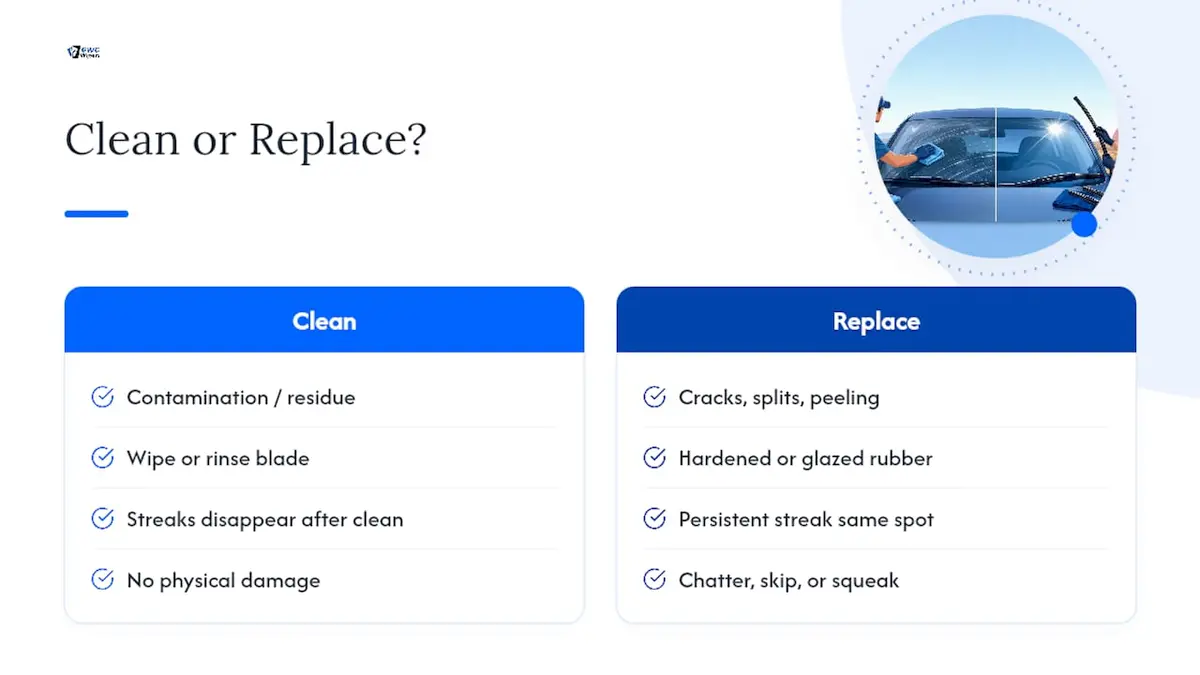
As a rule of thumb, most wiper blades need replacing every six to 12 months, and harsh sun, heavy use, or frequent contact with sap and grit will shorten their lifespan. Many technicians also recommend replacing both blades together to ensure consistent wiping performance, as mismatched wear can cause uneven contact across the glass.
If you decide replacement is the answer, removal is usually a matter of releasing a small tab or clip where the blade meets the arm, then sliding the old one off and clicking the new one into place. GWC Wipers’ installation guides walk through the exact steps for your specific model.
Preventive habits that keep wipers cleaner for longer
A quick check every one to two months, and always before a long drive, catches wear before it becomes a wet weather emergency. Avoid parking under trees where sap and bird droppings land directly on the blades, and clear leaves or grit off the windscreen before switching the wipers on. Running blades over dried leaves or ice scratches the rubber edge almost instantly.
- Check blades monthly and again before any long trip
- Brush debris off the glass before your first wipe, not during it
- Avoid using wipers to scrape ice, frost, or heavy dust
Extreme heat softens and ages rubber faster, which is worth knowing if you park outdoors through summer, and UV exposure is one of the biggest hidden causes of blade failure in hot climates. A hydrophobic glass treatment reduces how much grime sticks to the windscreen in the first place, meaning less for the blade to drag through.
Pro Tip: Before any long trip, run the wipers with washer fluid on dry glass parked in the driveway first. It’s the fastest way to catch a bad streak before you’re relying on visibility in the rain.
How GWC Wipers helps when cleaning isn’t enough
Sometimes a blade is past saving, and that’s where a vehicle-specific fitment matters more than most drivers realise. GWC Wipers’ selector tool matches your make, model, and year to the correct blade set, backed by a 12 month warranty and a 30 day money back guarantee if the fit isn’t right. Every product page links to a detailed installation guide, so swapping a worn blade takes a few minutes rather than a trip to a mechanic. If your climate runs hot or wet for long stretches, our guide on how Australian weather affects wiper life over a typical six month cycle explains what shortens blades faster than average.

A technician’s take on the mistakes that wreck wiper blades
Most damage I see isn’t from bad cleaning, it’s from skipped steps. Running wipers on dry glass to “test” them, forcing an arm past its natural stop, or spraying vinegar without checking the wind direction near paintwork are the three habits that turn a five minute clean into a repair bill. My one non negotiable before any long trip: clean, test with fluid, and watch the pass across the glass before you leave the driveway. If it streaks the same way twice, that’s not a cleaning problem anymore.
— Faisal
Ready to replace? Find your exact fit fast
If cleaning hasn’t fixed a persistent streak or chatter, the fastest fix is a fitment guaranteed replacement rather than another round of scrubbing. Our company offers blades designed for Australian conditions, featuring natural rubber compounds and segmented pressure distribution that maintains contact across the glass surface.
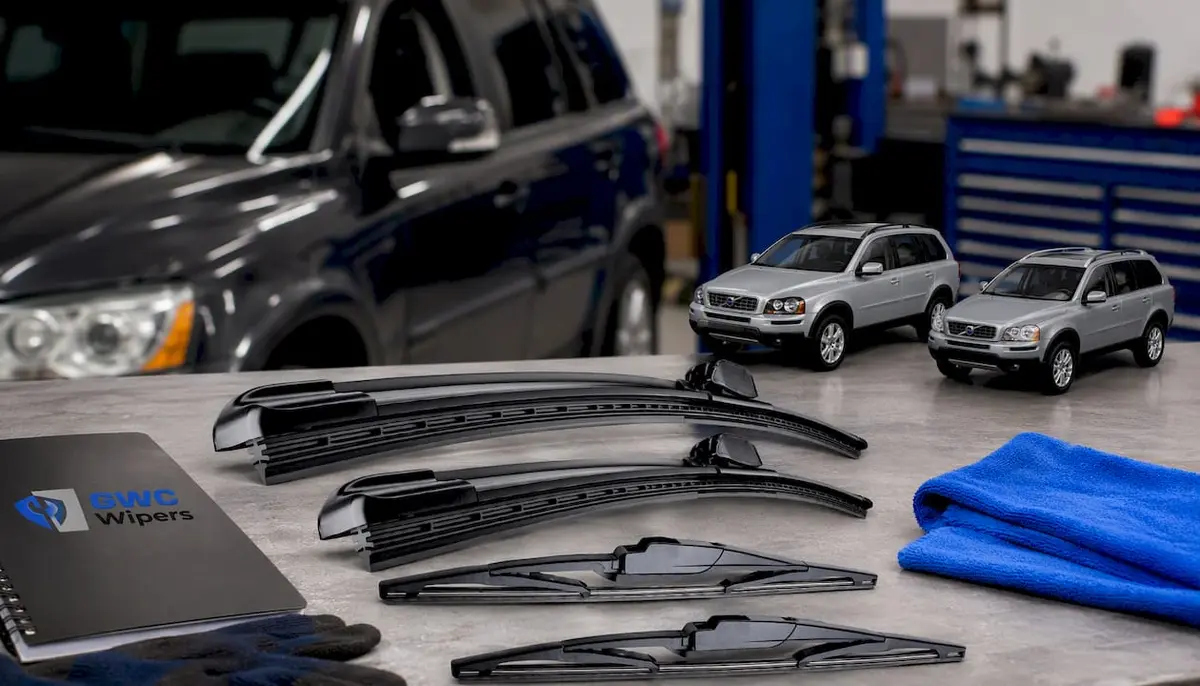
If you drive a Volvo XC90 from the Mk I facelift era, we carry both common fitments: the 2007 to 2010 SUV complete wiper blade set and the 2011 to 2014 SUV complete wiper blade set. Both ship free across Australia, come preassembled with the correct adapters, and are backed by our 12 month warranty. Head to the vehicle selector to check your own make and model, and you’ll have the right blade set ordered inside a couple of minutes.
Sources
- How to Clean Windshield Wipers: 11 Steps (with Pictures) - wikiHow
- How To Clean Windshield Wipers For Better Visibility | Chemical Guys
- How to check and replace your wiper blades - Expert Advice | RAC Drive
FAQ
What is the best way to clean windshield wiper blades?
Wipe the rubber edge with a microfibre cloth dampened in washer fluid or a mild soapy water solution, running it along the full length until no residue transfers.
Is WD-40 good for cleaning wiper blades?
No. WD-40 and similar petroleum based lubricants soften and degrade wiper rubber, so stick to washer fluid, mild soap, diluted vinegar, or a light dab of isopropyl alcohol for stubborn spots.
What is the best thing to clean car wiper blades with?
A clean microfibre cloth paired with washer fluid or diluted white vinegar handles most grime, while isopropyl alcohol works best on stubborn wax or silicone residue.
How do you rejuvenate windshield wipers?
Cleaning restores performance when the rubber is simply dirty, but it can’t fix a cracked, split, or hardened edge. If streaking persists in the same spot after cleaning, the blade needs replacing rather than rejuvenating, and GWC Wipers’ vehicle selector can find the correct fitment fast.