
What is a graphite coated wiper? Your complete guide
TL;DR:
- Graphite coated wipers use a thin carbon layer to reduce friction and extend their lifespan in moderate climates. They perform best in temperate conditions, providing quieter operation, better water clearance, and lower maintenance costs. In cold or extreme environments, silicone blades outperform graphite-coated wipers due to better flexibility and longer durability.
A graphite coated wiper is a rubber wiper blade treated with a thin carbon-based layer that reduces friction against the windshield and protects the rubber edge from wear. The industry term is “graphite-coated natural rubber blade,” and you will find it used across both aftermarket and OEM products worldwide. This guide covers how the coating works, its real-world benefits, where it falls short, and how to choose the right blade for Australian conditions. Whether you drive a Toyota Corolla through Sydney traffic or manage a commercial fleet across regional Queensland, understanding this technology helps you make a better buying decision.
How does graphite coating reduce friction and extend blade life?
Graphite coating works because of the molecular structure of carbon. Graphite atoms arrange in flat, layered sheets that slide over each other with very little resistance. When applied to a rubber wiper blade, this layer sits between the rubber edge and the glass, acting as a permanent lubricant.
The friction reduction is significant. Uncoated rubber blades produce a friction coefficient of 0.7–1.0 against glass, while graphite-coated blades drop that figure to 0.3–0.5. That represents a 35–50% reduction in friction, which directly translates to less heat, less rubber degradation, and a quieter wipe.
Graphite also acts as a sacrificial barrier against ozone and UV damage. It degrades gradually over time, absorbing environmental stress before the rubber underneath is exposed.
This protective function matters more than most drivers realise. Australian conditions combine intense UV exposure, ozone, and wide temperature swings. Without a protective layer, bare rubber oxidises and cracks within months. The graphite coating delays that process, preserving the blade’s wiping edge through more wet-dry cycles.
Edge sharpness retention is one of the clearest performance indicators. Graphite-coated natural rubber retains 78% of its original edge sharpness after 500 wet-dry cycles, compared to just 52% for uncoated rubber. That gap explains why coated blades wipe more cleanly for longer. For fleet operators, the cost impact is real. Fleets using graphite-coated refills report annual maintenance costs dropping from approximately $2,250 to $1,400, a saving of around 38%.
When do graphite coated wipers underperform?
Graphite coated wipers are not the right choice for every climate. In extreme cold, the graphite layer can harden and lose its lubricating properties. A rigid coating no longer reduces friction effectively, and the rubber beneath becomes less flexible, leading to streaking and skipping on the windshield.

Silicone blades last 12–24 months versus 6–9 months for graphite-coated rubber in freezing climates. That is a meaningful difference for drivers in alpine regions like the Snowy Mountains or Tasmania during winter. Silicone also bonds with the glass over time, creating a hydrophobic layer that repels water even between wiper strokes.
| Coating type | Typical lifespan | Best climate | Relative cost |
|---|---|---|---|
| Graphite on natural rubber | 6–9 months | Moderate, temperate | Low to mid |
| Silicone | 12–24 months | Extreme heat or cold | Mid to high |
| Teflon (PTFE) | 8–12 months | Moderate to warm | Mid |
Teflon coatings sit between graphite and silicone in both cost and durability. They resist heat well and maintain flexibility across a wider temperature range than graphite, but they do not match silicone’s lifespan in harsh conditions. For most Australian city drivers, graphite remains the practical choice. For drivers in extreme Aussie climates, silicone or Teflon coatings deserve serious consideration.
Pro Tip: If you drive in alpine or coastal areas with heavy salt air exposure, choose silicone-coated blades. Salt air accelerates rubber oxidation, and graphite’s sacrificial protection depletes faster in those conditions.
What are the practical benefits of graphite coated wipers?
Graphite coated wipers deliver four clear advantages for everyday Australian driving conditions.
- Quiet, smooth wiping. The low friction coefficient eliminates the chattering and squeaking that uncoated rubber blades produce, particularly on dry or lightly misted glass. This is one of the most commonly noted positives in graphite wipers reviews from fleet managers and private drivers alike.
- Consistent water clearing. The sharp, lubricated edge maintains full contact with the windshield across the entire wipe arc. Water is cleared in a single pass rather than leaving streaks or missed patches.
- Affordable running costs. Graphite-coated blades are widely available in the aftermarket at budget-friendly price points. For city vehicles that do not face extreme temperature swings, they deliver reliable performance without the premium cost of silicone.
- Reliable 6–8 month service life. In moderate climates, graphite-coated wipers last 6–8 months before performance noticeably drops. That aligns well with a twice-yearly replacement schedule, which most automotive professionals already recommend.
The uses of graphite wipers are broadest in temperate, urban environments. Sydney, Melbourne, Brisbane, and Perth all sit within the moderate climate band where graphite performs at its best. Vehicles that spend most of their time in stop-and-go city traffic benefit from the quiet operation and consistent clearing. Fleet vehicles, taxis, ride-share cars, and delivery vans are particularly well-suited to graphite-coated blades because the cost savings at scale are substantial.
Water shedding also improves noticeably. The lubricated edge maintains a tighter seal against the glass, reducing the micro-lifting that causes water to pass under the blade. In heavy rain, this means better visibility and less driver fatigue.
How to choose and maintain graphite coated wipers
Coating thickness is the single most important quality indicator when selecting a graphite coated wiper. Blades with a coating thinner than 8–10 microns wear through within months, exposing the bare rubber to UV and ozone damage prematurely. A minimum of 12–15 microns provides better durability, especially in harsher Australian conditions. Most reputable brands list coating specifications, so check before you buy.
The rubber base matters as much as the coating. Natural rubber achieves 320,000 wipe cycles before losing 50% of its coating, compared to 180,000–260,000 cycles for synthetic rubber blends. Natural rubber has more reactive double bonds that help the graphite layer adhere and last longer. When you see “natural rubber” listed in the product specifications, that is a meaningful quality signal, not just marketing language.
Follow these steps to get the most from your graphite coated blades:
- Inspect the blade edge monthly. Run a clean cloth along the rubber edge. If it comes away grey or black with graphite residue, the coating is wearing. This is normal. If the cloth picks up rubber particles or the edge feels rough, the blade needs replacing.
- Clean the windshield before fitting new blades. Road grime and old wiper fluid residue accelerate coating wear. A clean glass surface extends the life of the graphite layer.
- Lift blades off the glass in extreme heat. Parking in direct sun with blades resting on hot glass degrades both the rubber and the coating faster. Most modern vehicles have a service position for this purpose.
- Replace every 6–8 months regardless of visible wear. The graphite layer wears gradually and invisibly. By the time you see streaking, the coating has already been gone for weeks.
- Buy from reputable suppliers. Cheap, unbranded blades often use substandard graphite application. The coating may be too thin or unevenly applied, leading to early failure.
Pro Tip: When fitting new graphite-coated blades, wipe the windshield with isopropyl alcohol first. This removes silicone residue from old blades, which can cause new graphite blades to skip and chatter during the first few uses.
Key takeaways
Graphite coated wipers are the most cost-effective choice for moderate Australian climates, delivering 35–50% less friction, quieter operation, and a reliable 6–8 month service life when fitted with a quality 12–15 micron coating on a natural rubber base.
| Point | Details |
|---|---|
| Friction reduction | Graphite drops the friction coefficient from 0.7–1.0 to 0.3–0.5, reducing wear and noise. |
| Coating thickness matters | Choose blades with at least 12–15 microns of graphite for durability in Australian conditions. |
| Natural rubber base | Natural rubber holds graphite coating for up to 320,000 cycles versus 180,000–260,000 for synthetic blends. |
| Climate limitations | In extreme cold or alpine areas, silicone blades outperform graphite and last up to 24 months. |
| Replacement schedule | Replace graphite-coated blades every 6–8 months, before visible streaking appears. |
Why graphite wipers are misunderstood more than any other blade type
I have spoken with dozens of drivers who replaced their graphite-coated blades too early because they saw black residue on the windshield and assumed something was wrong. That residue is the graphite coating doing exactly what it is designed to do. It is wearing away gradually, protecting the rubber underneath. Trico engineering notes this clearly, yet the message rarely reaches the end driver.
The bigger misconception is treating graphite as a budget compromise. For most Australian drivers in temperate cities, graphite coated blades are the correct technical choice, not a cheaper substitute for silicone. Silicone makes sense in Hobart in july or in the Snowy Mountains. It does not add meaningful value for a Camry parked in suburban Adelaide.
What I find most interesting is how the aftermarket has moved. OEM fitments on vehicles from Toyota, Mercedes-Benz, and Volkswagen have used graphite-coated natural rubber blades as standard for years. That is not a cost-cutting decision by manufacturers. It is a performance decision based on the climate profiles of the majority of their customers. The aftermarket is now catching up, with hybrid blade designs incorporating graphite coatings on aerodynamic frames to combine low friction with better windshield contact at highway speeds.
My practical advice: match the coating to your climate, not your budget. If you drive in moderate conditions, a quality graphite blade on a natural rubber base is the right answer. Spend the extra money on coating thickness and base material quality, not on upgrading to silicone you do not need.
— Faisal
Quality graphite wiper blades for your vehicle at GWC Wipers
Finding the right graphite coated wiper for your specific vehicle does not need to be complicated. GWC Wipers stocks premium wiper blades built for Australian conditions, with options across a wide range of makes and models.
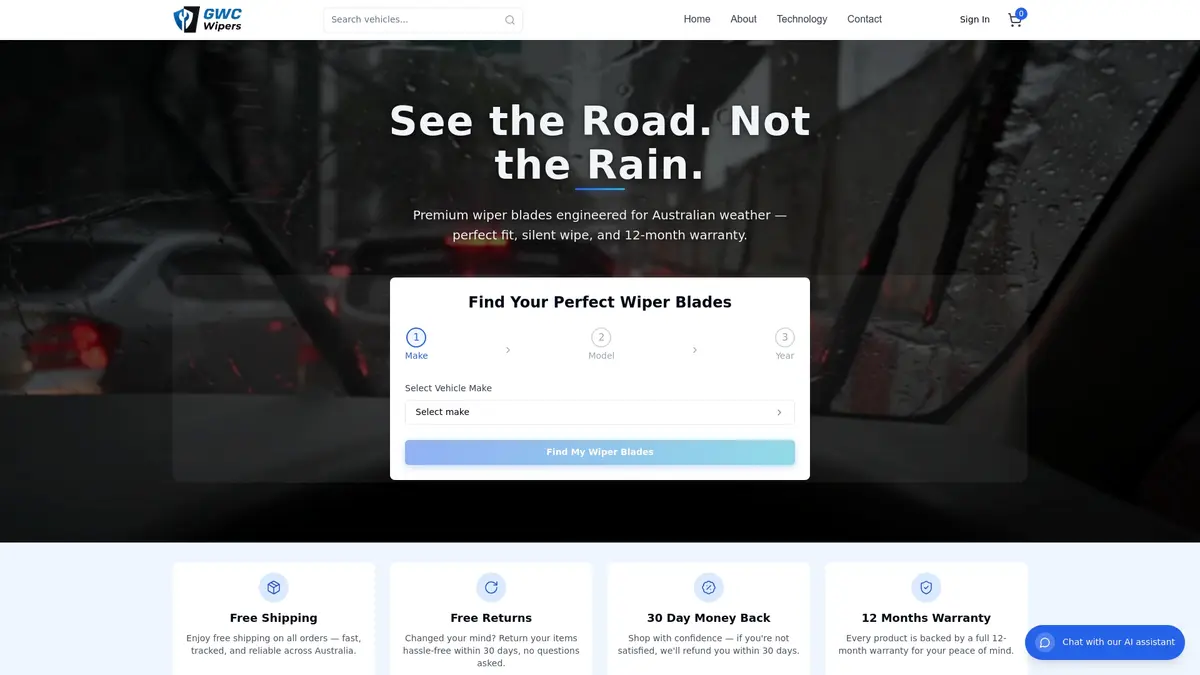
Use the vehicle selector on the GWC Wipers website to find an exact fit for your car by make, model, and year. Whether you drive a Toyota or a Mercedes-Benz, GWC Wipers carries blades built to handle everything from coastal humidity to outback heat. Every purchase includes free shipping across Australia, a 12-month warranty, and a 30-day money-back guarantee. If you need guidance on the right coating type for your climate, the GWC Wipers support team is based in Australia and ready to help.
FAQ
What is a graphite coated wiper blade?
A graphite coated wiper blade is a rubber blade treated with a thin carbon-based layer that reduces friction against the windshield and protects the rubber from UV and ozone damage. The coating lowers the friction coefficient from 0.7–1.0 to 0.3–0.5, producing a quieter, cleaner wipe.
How long do graphite coated wiper blades last?
Graphite coated wiper blades last 6–8 months in moderate climates under typical use. In extreme cold or harsh UV conditions, lifespan shortens, and silicone blades become the better option.
Are graphite wipers better than standard rubber wipers?
Graphite coated wipers outperform uncoated rubber blades in friction reduction, edge sharpness retention, and resistance to ozone damage. After 500 wet-dry cycles, graphite-coated rubber retains 78% of its original edge sharpness versus 52% for uncoated rubber.
When should I choose silicone over graphite coated wipers?
Choose silicone blades when you drive in freezing temperatures or alpine regions. Silicone lasts 12–24 months in those conditions and maintains flexibility in the cold, where graphite coatings can harden and lose effectiveness.
Does the black residue from graphite wipers mean the blade is failing?
No. Black residue on the windshield is the graphite coating wearing away gradually, which is a normal part of its function. The coating acts as a sacrificial barrier, and its gradual wear protects the rubber underneath rather than indicating immediate blade failure.