
Independent wiper blade review criteria explained
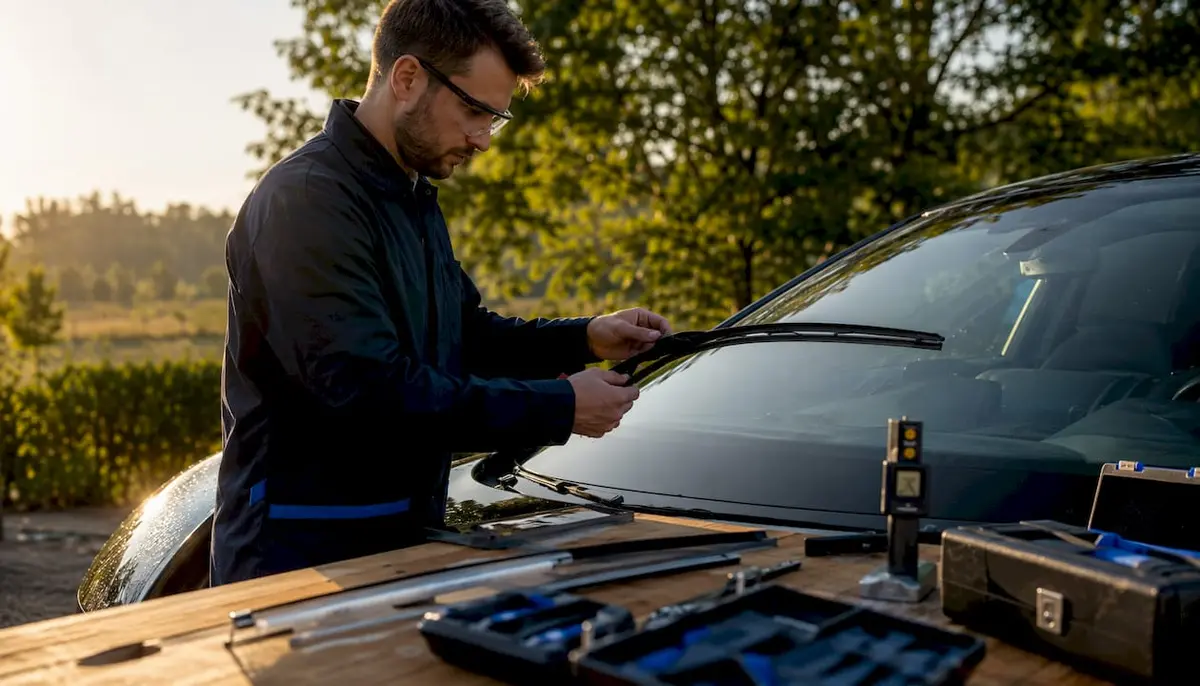
Independent wiper blade review criteria are the measurable performance, durability, and fitment tests that labs and reviewers use to judge whether a blade clears your windscreen safely and reliably. When you know what those criteria are, you can read any review with confidence and filter out the ones that do not hold up.
The core elements reviewers score:
- Wipe quality — streaking, smearing, and skipping across the glass
- Water clearance — volume removed per sweep at varying speeds and angles
- Durability — cycle counts to measurable degradation and material ageing
- Fitment accuracy — connector type, adapter coverage, and vehicle-specific attachment
- Noise and chatter — micro-skip at intermittent wipe and audible vibration
- Cold and ice behaviour — performance after freeze-thaw conditioning
- Certification compliance — OEM specification, Australian Design Rule (ADR), and TÜV marks
Named testing authorities that appear most often in credible reviews include ACE Laboratories (ISO/IEC 17025 accredited), the Australian Design Rule framework, and TÜV Rheinland or TÜV SÜD certification programmes. When reading review scores, prioritise fitment first, then wipe quality, then durability data. A blade that scores brilliantly on wipe quality but does not attach correctly to your vehicle arm is useless.
Table of Contents
- What performance metrics do independent reviewers actually measure?
- How do labs test durability and lifecycle performance?
- Do blade materials and formats change what a review should prioritise?
- Why does fitment matter as much as wipe quality in a review?
- What do OEM specs, ADR, and TÜV actually certify?
- What test environments do reviewers use, and do they match Australian conditions?
- How do you read composite review scores without being misled?
- How to spot a weak or biased wiper blade review
- Practical buyer checklist for Australian drivers
- How GWC Wipers tests blades for Australian conditions
- Key takeaways
- The real trade-offs reviewers weigh, and what they mean for you
- Wiper blades that fit your car, backed by Australian testing
- FAQ
- Useful sources and standards
What performance metrics do independent reviewers actually measure?
Wipe quality is the headline metric in most scoring frameworks, and for good reason: a blade that leaves streaks or skips across your line of sight is a safety risk, not just an annoyance. Reviewers assess it by grading the wipe on a 1–10 scale, where 1 is a near-opaque smear and 10 is optically clear glass. That grade is only meaningful when paired with standardised test conditions, which is why credible labs like ACE Laboratories combine the subjective grade with video capture and photometric delta-haze readings.
Water clearance measures how much water the blade removes per sweep at different vehicle speeds and wiper angles. At highway speed, aerodynamic lift reduces blade contact pressure, so a blade that scores well at 60 km/h may leave a persistent film at 110 km/h. Reviewers test this by running blades on rotating windscreen rigs or real vehicles at multiple speeds, then measuring the residual water film optically.
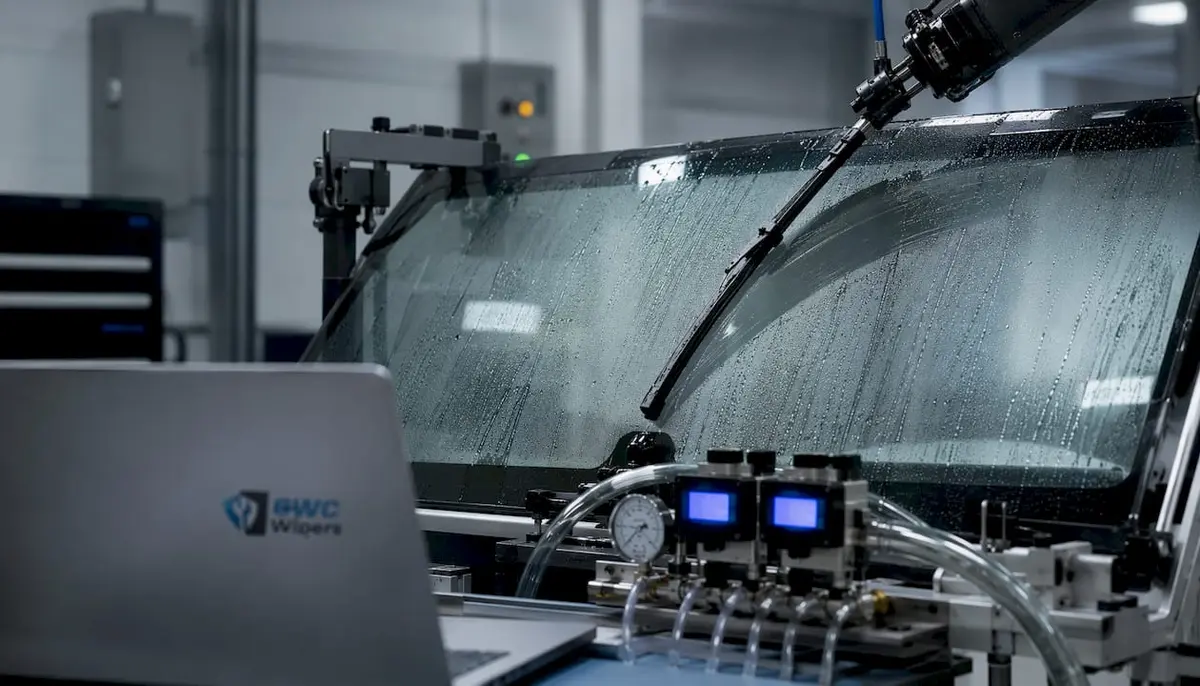
Contact pressure uniformity matters because uneven pressure creates localised streaks. Instrumented pressure maps reveal whether a blade distributes load evenly across its full length or concentrates it at the centre, leaving the outer edges barely touching the glass.
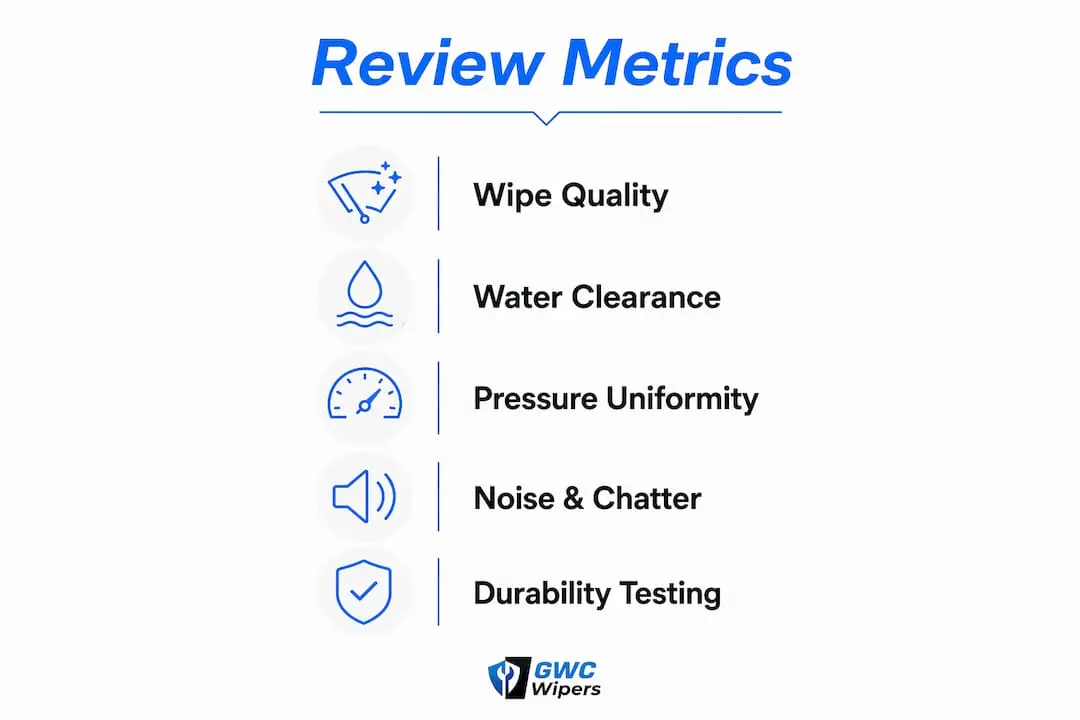
Secondary comfort metrics include noise and chatter (audible vibration during the sweep), smear under headlight glare (which is far more visible at night than in daylight tests), and micro-skip at intermittent wipe settings. These are scored separately from primary safety metrics and typically carry lower weighting.
The CarCareTruth scoring methodology blends wipe quality, durability, fitment, and environmental performance into a weighted composite, with wipe quality carrying approximately 35% of the quality subscore. Durability and fitment each receive substantial weight in the overall score.
| Metric | How it is measured | What a failing result looks like |
|---|---|---|
| Wipe quality | Subjective 1–10 grade + video capture + delta-haze | Visible streaks or smear across vision area A |
| Water clearance | Residual film measurement at multiple speeds | Persistent film at highway speed |
| Contact pressure | Instrumented pressure map across blade length | Localised streaks at blade ends |
| Noise/chatter | Audible assessment + accelerometer data | Persistent squeak or skip at any wipe speed |
| Smear under glare | Photometric haze reading under artificial headlight | Haze above threshold under low-angle light |
Pro Tip: A 1–10 wipe grade is only a reliable signal when the reviewer discloses the test windscreen geometry, the water flow rate, and the number of conditioning cycles run before the grade was recorded. Without those details, two reviewers can score the same blade a 7 and a 4 on different days and both be technically correct.
How do labs test durability and lifecycle performance?
Durability testing is where most consumer-level reviews fall short. A blade might wipe cleanly out of the box but degrade within three months under Australian UV and heat. Independent labs replicate that ageing in controlled conditions so you do not have to find out the hard way.
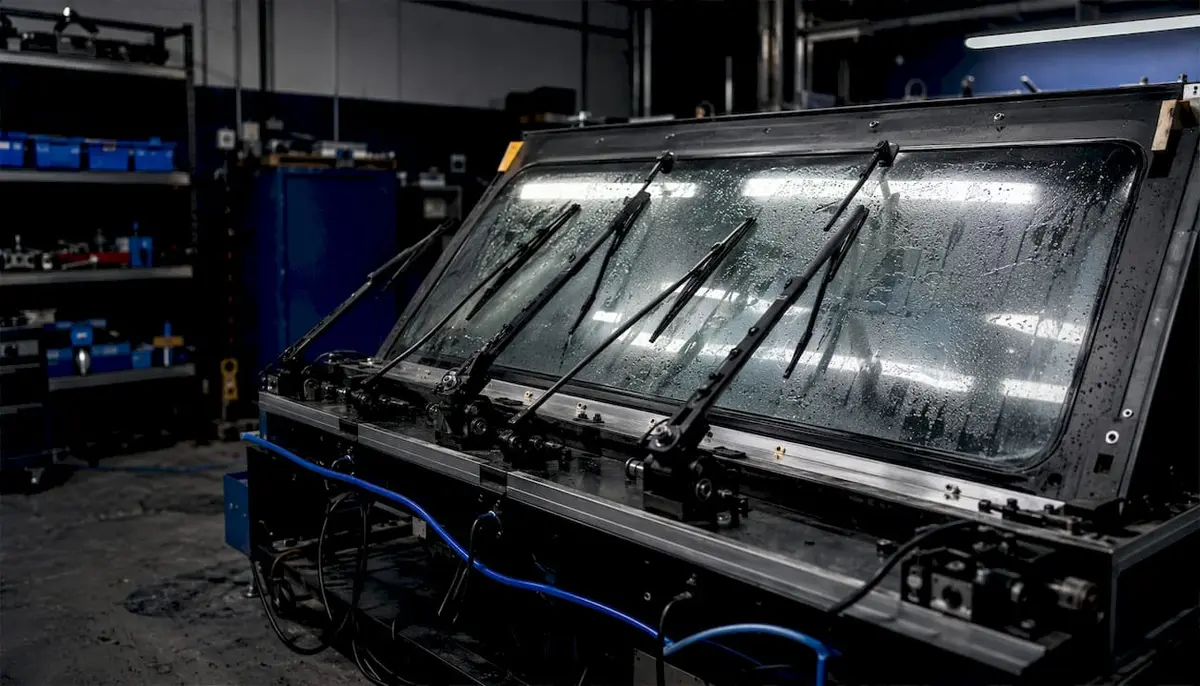
Accelerated durability cycling runs the blade through thousands to millions of wipe cycles on a standardised test rig. UNECE test documents specify sample mounting, spring-balance load calibration, cycle counts, periodic equipment checks, and delta-haze optical readings after fixed cycle intervals. A cycle count translates roughly to real-world months of use depending on your wipe frequency, so a reviewer quoting “500,000 cycles to measurable degradation” is giving you a meaningful lifespan signal.
Environmental ageing tests replicate what Australian summers actually do to rubber. QUV and Xenon arc weathering chambers expose the blade to concentrated UV radiation and moisture cycles. Ozone resistance tests check whether the rubber surface cracks under ozone concentrations typical of urban traffic. Elevated temperature soaks (often 70–80°C) replicate a blade sitting on a parked car in direct sun, and cold conditioning down to -20°C checks for stiffening and cracking at the other extreme.
Abrasion and contamination tests use road grime slurries, typically a mix of fine silica, carbon black, and water, applied to the test windscreen before cycling. Delta-haze readings before and after the contaminated cycles reveal how much the blade’s optical clearing degrades under realistic dirty-road conditions.
Durability lifespan ranges from community and lab data: EPDM synthetic rubber typically lasts 12–18 months, natural rubber often lasts several months, and silicone blades frequently retain performance for multiple years in community-confirmed data.
| Lab test type | What it replicates | Failure modes it reveals |
|---|---|---|
| Accelerated wipe cycling | Years of normal wipe use compressed into days | Edge fragmentation, rubber hardening, streaking onset |
| QUV/Xenon weathering | UV radiation and moisture exposure | Surface cracking, ozone degradation, discolouration |
| Elevated temperature soak | Parked-car heat in Australian summer | Rubber deformation, permanent set, loss of blade profile |
| Cold conditioning | Winter frost and freeze-thaw cycles | Stiffening, cracking, loss of contact pressure |
| Contamination slurry cycling | Road grime, dust, and insect residue | Delta-haze increase, optical degradation, smear onset |
Do blade materials and formats change what a review should prioritise?
Yes, significantly. The format and material of a blade determine which test results matter most, and a review that does not distinguish between a framed bracket blade and a beam blade is comparing fundamentally different engineering approaches.
Blade formats:
- Conventional framed bracket blades use a metal or plastic frame with multiple pressure points to hold the rubber against the glass. They are widely available and inexpensive, but the frame can collect ice and snow, reducing contact pressure in cold conditions. For most Australian urban drivers who rarely encounter frost, they remain a practical choice.
- Beam (bracketless) blades use a pre-tensioned spring steel or composite strip to distribute pressure continuously along the full blade length. They perform better in heavy rain and at highway speed because there are no frame pressure points to create uneven contact. They also resist ice build-up. The trade-off is a higher purchase price.
- Hybrid blades enclose a beam-style pressure element inside a protective shell, combining the even pressure distribution of a beam with some protection against debris and UV degradation. They suit Australian conditions well because the shell reduces UV-driven rubber ageing.
Material types and typical performance trade-offs:
- Natural rubber (latex): Soft, quiet wipe, good initial clarity. Degrades faster under UV and ozone, typically lasting 6–12 months in Australian conditions.
- EPDM synthetic rubber: More resistant to UV, ozone, and temperature extremes than natural rubber. Typical lifespan of 12–18 months. The most common material in mid-range blades.
- Silicone: Highest UV and temperature resistance, smoothest long-term wear profile, and often conditions the glass with a hydrophobic film over time. Community data puts lifespan at 24–36+ months. Higher upfront cost.
- Coated rubbers: EPDM or natural rubber with a graphite or PTFE coating to reduce friction and noise. The coating wears off over time, so early-life performance may be better than late-life performance.
Construction features reviewers flag as meaningful include segmented pressure distribution (multiple independent pressure zones along the blade), aerodynamic spoilers that counteract lift at speed, corrosion-resistant stainless steel or polymer spines, and factory-applied hydrophobic coatings. GWC Wipers’ blades incorporate advanced segmented pressure distribution and aerodynamic design specifically to address the high-speed and UV conditions common across Australia.
Pro Tip: When a review claims “silicone lasted longer,” check whether the reviewer ran tensile and elongation tests or relied solely on community longevity reports. Lab material data (hardness, tensile strength, elongation at break) predicts long-term wear more reliably than user impressions, which vary with climate, wipe frequency, and windscreen contamination.
Why does fitment matter as much as wipe quality in a review?
A blade with a perfect wipe score is worthless if it does not attach securely to your wiper arm. Fitment is a pass/fail criterion in most credible review frameworks: a mechanically incompatible blade receives an automatic fail regardless of its optical performance.
Common connector types reviewers check:
- Standard J-hook (the most common, fits most vehicles up to 2010)
- Pin-top (common on European vehicles)
- Pinch-tab (found on several Japanese models)
- Side-pin (used on some Ford and GM platforms)
- Top-lock (common on newer European vehicles)
- Manufacturer-specific adapters (Toyota, Honda, and others use proprietary fittings)
Reviewers confirm fitment by checking the included adapter set against the vehicle’s arm type, physically attaching the blade to the arm, and running a real-vehicle wipe test to confirm the blade seats flush and sweeps without rattle or lift. A blade that includes adapters for all six connector types but ships with poorly moulded plastic fittings that flex under load will still fail a fitment test.
Reviewer fitment verification sequence:
- Identify the vehicle’s wiper arm connector type from the owner’s manual or a fitment lookup tool.
- Match the blade’s included adapter to that connector type.
- Attach the blade to the arm and confirm it locks without play or rattle.
- Run the wiper at low and high speed and check for blade lift, chatter, or uneven contact.
- Inspect the sweep arc for full coverage of vision area A (at least 98% per EU type-approval standards).
- Repeat on both driver and passenger arms, as connector types sometimes differ.
You can replicate steps 1 through 4 at home. GWC Wipers’ step-by-step installation guide walks through each check with photographs, and the vehicle selector tool covers fitment for over 2,500 models so you can confirm the correct size and connector before you buy.
What do OEM specs, ADR, and TÜV actually certify?
Certifications appear on product pages and review summaries, but they do not all test the same things. Understanding what each standard covers helps you decide how much weight to give a certification claim.
OEM specification means the blade meets the dimensional, performance, and material tolerances set by the vehicle manufacturer for that model. An OEM-spec blade has been validated to fit the arm geometry and deliver the wipe performance the manufacturer designed for. It does not mean the blade was manufactured by the OEM; it means a third party has matched those tolerances. Reviewers treat OEM-spec compliance as a baseline fitment and performance signal, not a premium quality endorsement.
Australian Design Rules (ADR) set mandatory safety and functional requirements for vehicles sold in Australia, including wiper system performance. ADR 14/00 and related rules specify that wiper systems must clear defined vision areas at required sweep frequencies. Compliance evidence appears in vehicle type-approval documentation rather than on individual blade packaging, so a blade claiming “ADR compliant” should be able to point to the vehicle approval it was validated against. Reviewers look for this documentation rather than accepting the claim at face value.
TÜV Rheinland and TÜV SÜD are German technical inspection bodies that test products against defined standards and issue marks when those standards are met. For wiper blades, a TÜV mark typically indicates the product has been tested for durability, environmental resistance, and fitment under a defined protocol. The mark adds credibility because it involves third-party lab verification, but it does not replace a full independent wipe test on your specific vehicle.
| Standard | Typical test coverage | How reviewers treat it in scoring |
|---|---|---|
| OEM specification | Dimensional fit, wipe performance, material tolerances | Baseline fitment signal; confirms compatibility with vehicle design |
| ADR (Australian Design Rules) | Vision area coverage, sweep frequency, system durability | Regulatory compliance check; reviewers verify documentation |
| TÜV Rheinland / TÜV SÜD | Durability, environmental resistance, fitment | Third-party credibility marker; supports but does not replace independent wipe testing |
| ISO 9619 / KS R ISO 9619 | Wiping efficiency and environmental resistance | Formal test method reference; used by labs to standardise protocol |
Certifications validate manufacturing controls and specific test outcomes. They do not guarantee that a blade will perform on your windscreen geometry, in your climate, or after 18 months of Australian UV exposure. A credible independent review uses certifications as supporting evidence, not as a substitute for direct testing.
What test environments do reviewers use, and do they match Australian conditions?
Lab rigs and real-vehicle tests each have a role. The question worth asking when you read a review is whether the test conditions reflect the roads and weather you actually drive in.
Common test rigs:
- Sprayed water rigs that vary droplet size, flow rate, and angle to simulate light drizzle through to heavy rain
- Rotating windscreen rigs that spin a curved glass panel at controlled speeds while the blade sweeps
- Real vehicles driven on wet roads or through water curtains at defined speeds
Contamination slurries used in lab tests typically combine fine silica, carbon black, and water to replicate urban road grime. For Australian conditions, a well-designed protocol should also account for fine red dust (common in inland and regional areas), insect residue (a significant summer issue on country roads), and coastal salt spray. The Australasian Road Research Board (ARRB) is the local authority on road and environmental conditions relevant to vehicle safety research, and its work on Australian road surfaces and contamination profiles provides useful context for why standard European slurry recipes may underrepresent local conditions.
Temperature conditioning protocols run blades through hot soaks (replicating a parked car in direct summer sun) and cold cycles (freeze-thaw for alpine or southern regions). After conditioning, the blade is tested for wipe quality and contact pressure to confirm it has not permanently deformed.
| Test protocol | What it recreates | Why it matters to Australian drivers |
|---|---|---|
| Sprayed water rig (variable angle) | Rain intensity and angle variation | Replicates both coastal downpours and inland light rain |
| Contamination slurry cycling | Road grime and particulate build-up | Relevant to red dust roads and urban traffic film |
| Salt spray exposure | Coastal salt air corrosion | Checks spine and frame corrosion resistance for coastal drivers |
| Hot soak (70–80°C) | Parked-car summer heat | Predicts rubber deformation under Australian summer conditions |
| Freeze-thaw cycling | Alpine and southern winter frost | Confirms blade flexibility and contact pressure after cold |
Protocol disclosure is a quality signal in itself. A trustworthy review states the sample size, the number of repeat cycles, the water temperature and flow rate, and includes video or photographic evidence of the wipe result. Without those details, you cannot judge whether the test conditions match your driving environment.
How do you read composite review scores without being misled?
Most credible wiper blade reviews convert individual metric scores into a composite number. The problem is that two reviewers can weight the same metrics differently and produce opposite rankings for the same blade.
A typical weighting structure puts wipe quality as the dominant factor (often 35–50% of the composite), durability next (20–30%), fitment third (15–20%), and comfort metrics like noise last (10–15%). The CarCareTruth framework, for example, gives wipe quality approximately 35% of the quality subscore and combines community confirmation with specification checks for durability and fitment.
To normalise scores across different reviewers, check three things: whether the reviewer discloses metric weights, whether they state the number of test cycles before scoring, and whether they tested on more than one vehicle. A score from a single-vehicle test on a reviewer’s own car is a data point, not a benchmark.
| Raw metric score (out of 10) | Weight | Weighted score |
|---|---|---|
| Fitment | 20% | — |
| Noise: 6 | 15% | — |
Red flags in score presentation:
- No sample-size disclosure (how many blades tested, how many vehicles)
- Manufacturer-funded testing without independent lab oversight
- Absent vehicle-geometry caveats (scores presented as universal when they were recorded on one windscreen curvature)
- Composite scores with no metric weight breakdown
- Durability scores based on fewer than 100,000 wipe cycles
How to spot a weak or biased wiper blade review
Not every review that calls itself “independent” is. Commercial relationships, small sample sizes, and inconsistent test conditions can all skew results without the reviewer disclosing any of it.
The most common pitfalls are small sample sizes (testing one or two blades of a model rather than a statistically meaningful batch), single-vehicle tests that do not account for windscreen curvature variation, and undisclosed product loans or advertising relationships with the brands being reviewed. A reviewer who received free product from a manufacturer and does not disclose that relationship has a conflict of interest, even if the test itself was conducted honestly.
Selective data presentation is subtler. A reviewer might publish only the metrics where a blade performed well and omit the contamination slurry results where it failed. Inconsistent test windscreen geometry, where one blade is tested on a flat glass panel and another on a curved OEM windscreen, produces scores that cannot be compared.
Red-flag phrases and practices to watch for:
- “Best overall” with no methodology disclosure
- Scores presented without cycle counts or test conditions
- “Tested by our team” with no lab accreditation or protocol reference
- Review published by a site that sells the top-ranked blade
- No mention of fitment testing or connector compatibility
- Durability claims based solely on manufacturer specifications
Pro Tip: Three quick checks validate a review’s credibility: look for raw video footage of the wipe test (not just a photo of the blade), check whether cycle counts are stated, and confirm whether a third-party lab like ACE Laboratories was involved or whether the reviewer references a recognised protocol such as UNECE or ISO 9619.
Practical buyer checklist for Australian drivers
Use this checklist when reading reviews or shopping for replacement blades. It maps the technical criteria above to the decisions you actually need to make.
- Confirm connector type and blade size first. A blade that does not fit your arm is a non-starter. Use a fitment lookup tool (year, make, model) before reading any performance data. GWC Wipers’ vehicle selector covers over 2,500 models and confirms both driver and passenger blade sizes.
- Prioritise wipe quality scores from tests that disclose cycle counts. A score recorded after 50,000 conditioning cycles is more reliable than one recorded on a brand-new blade straight from the box.
- Check durability data against your climate. If you park outdoors in a hot, sunny location, silicone or hybrid blades with UV-resistant construction are worth the higher upfront cost. Community data puts silicone blade lifespan at 24–36+ months versus 6–12 months for natural rubber, which translates directly to replacement frequency and lifecycle cost.
- Prefer reviews that include vehicle-specific fitment testing, not just bench tests. A blade that attaches correctly and sweeps without lift on a real vehicle is a more reliable recommendation than one that only scored well on a rotating rig.
- Check for ADR, OEM-spec, or TÜV evidence where the product claims it. Ask for the documentation or the vehicle approval reference, not just the marketing claim.
- Match blade format to your conditions. Coastal drivers benefit from corrosion-resistant spines. Drivers in inland or regional areas with heavy dust should look for blades with sealed or protected frames. Occasional frost in alpine or southern regions favours beam or hybrid formats that do not collect ice in the frame.
- Use a 30-day trial period. No review fully replicates your windscreen geometry and local conditions. A money-back guarantee lets you confirm real-world fit and wipe quality before committing.
For Australian-specific guidance on blade types by climate and vehicle, GWC Wipers publishes detailed recommendations based on local weather patterns and vehicle fitment data.
How GWC Wipers tests blades for Australian conditions
GWC Wipers’ approach to wiper blade evaluation is built around the conditions Australian drivers actually face: intense UV radiation, summer heat, coastal salt air, and the fine particulate contamination common on regional roads. The testing emphasis reflects those priorities rather than replicating European lab protocols that were designed for cooler, wetter climates.
The core testing approach includes:
- Vehicle-specific fit checks across the brand’s catalogue of over 2,500 vehicle models, confirming connector compatibility and blade sizing for both driver and passenger arms
- Hot-soak and UV exposure testing calibrated to Australian summer conditions, checking for rubber deformation, surface cracking, and loss of contact pressure after extended heat exposure
- Real-vehicle rain testing on local roads, assessing wipe quality, noise, and water clearance under the rain intensities and road contamination profiles typical of Australian driving
- Photographic and video evidence of wipe results, used to validate wipe quality grades and document any streaking or smear onset
- Repeat cycle documentation to confirm that results are reproducible across multiple blade samples, not just a single unit
GWC Wipers backs its testing with concrete customer assurances: a 30-day money-back guarantee and a 12-month warranty, a fitment guarantee supported by the vehicle selector tool, and detailed installation guides that let you verify fit and wipe quality at home. The natural rubber construction and advanced segmented pressure distribution in GWC Wipers’ blades are designed to deliver consistent contact pressure across the full blade length, addressing the uneven-pressure streaking that is one of the most common failure modes in independent wiper blade reviews.
Key takeaways
Independent wiper blade review criteria combine fitment verification, wipe quality scoring under standardised conditions, and durability data from accelerated cycling to give you a reliable picture of how a blade will perform on your vehicle over time.
| Point | Details |
|---|---|
| Fitment comes first | A blade that does not attach correctly to your arm fails regardless of its wipe quality score. |
| Wipe quality needs context | A 1–10 wipe grade is only meaningful when the reviewer discloses cycle counts and test windscreen geometry. |
| Durability data predicts cost | Silicone blades last 24–36+ months versus 6–12 months for natural rubber, directly affecting replacement frequency. |
| Certifications support, not replace, testing | OEM spec, ADR, and TÜV marks validate specific tests but do not substitute for independent wipe and durability evaluation on your vehicle. |
| GWC Wipers for Australian fit | GWC Wipers’ vehicle selector and fitment guarantee confirm correct connector and size for over 2,500 models, backed by a 30-day return policy. |
The real trade-offs reviewers weigh, and what they mean for you
Most review summaries hand you a winner without explaining the trade-offs that went into the ranking. Those trade-offs matter because the blade that scored highest in a lab test may not be the right choice for your specific situation.
The core trade-offs reviewers weigh:
- Initial wipe quality vs long-term wear. A natural rubber blade often produces a quieter, smoother wipe in the first few months than an EPDM blade of equivalent price. But by month eight, the natural rubber has typically hardened and begun to streak, while the EPDM blade is still clearing cleanly. A review that only tests new blades will favour natural rubber; one that runs durability cycles will favour EPDM or silicone.
- Beam vs framed behaviour in frost. Beam blades distribute pressure more evenly and resist ice build-up in the frame, which matters in alpine or southern regions. For a Sydney or Brisbane driver who sees frost once a decade, the price premium for a beam blade may not be justified by the frost performance alone.
- Noise vs blade lifespan. Graphite-coated blades are often quieter than uncoated EPDM, but the coating wears off, and the blade becomes noisier as it ages. A reviewer who scores noise only on new blades will overrate coated options relative to their long-term performance.
Practical scenarios:
A daily commuter in a temperate city like Melbourne or Sydney should weight wipe quality and durability equally, with noise as a secondary consideration. A coastal driver in Queensland or Western Australia should prioritise corrosion-resistant spines and UV-stable materials above all else. An infrequent driver who parks outdoors should lean toward silicone for its UV resistance and long service life, even if the upfront cost is higher, because the blade will age in UV exposure whether or not it is being used.
Reviewers who document these trade-offs explicitly, rather than just publishing a composite score, are the ones worth trusting. Look for a methodology section that states which scenarios the test was designed to replicate, and align the review’s winner with your own driving profile before you buy.
Wiper blades that fit your car, backed by Australian testing
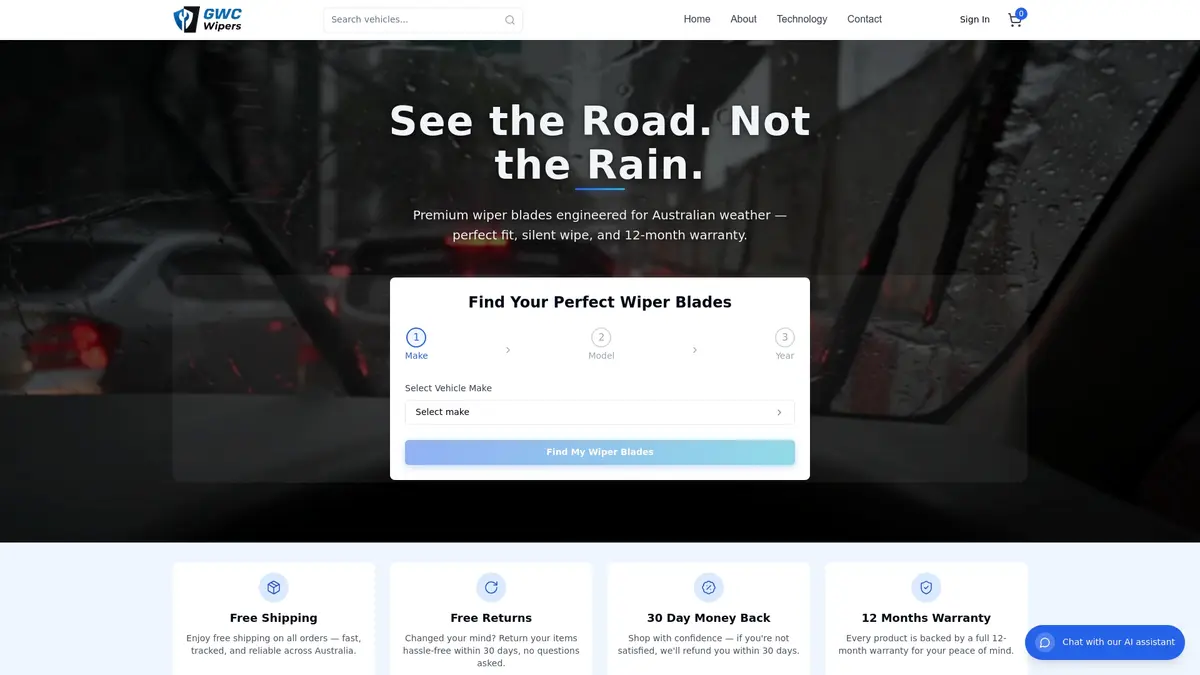
GWC Wipers designs and manufactures premium wiper blades specifically for Australian weather, from coastal humidity and UV intensity to inland dust and summer heat. Every blade in the range is built with natural rubber construction, advanced segmented pressure distribution, and aerodynamic design to maintain consistent contact pressure at highway speed.
The vehicle selector tool confirms the correct blade size and connector type for your year, make, and model across over 2,500 vehicles, so you are not guessing at fitment. Preassembled adapters and a detailed installation guide mean you can fit the blades yourself in minutes. Every order ships free across Australia, and if the blades do not perform as expected, the 30-day money-back guarantee and 12-month warranty mean you are not taking a risk.
Browse premium wiper blades for Toyota, Mercedes-Benz, and hundreds of other makes, or use the vehicle selector on the GWC Wipers homepage to find the right fit for your car today.
FAQ
What makes a wiper blade review truly independent?
A genuinely independent review discloses its test methodology, cycle counts, and sample size, and has no undisclosed commercial relationship with the brands being tested. Third-party lab involvement, such as ACE Laboratories (ISO/IEC 17025 accredited), adds a further layer of credibility.
How do you check wiper blade condition at home?
Lift the blade away from the windscreen and run your finger along the rubber edge to feel for splits, hardening, or fragmentation. A visual check for cracks, uneven wear, or deformed edges, combined with a slow wipe on a wet windscreen to look for streaking, covers the basics. A
with step-by-step visuals can help you identify edge deformities that are easy to miss.
What is a good quality wiper blade for Australian conditions?
A good quality blade for Australia combines UV-stable materials (EPDM or silicone), corrosion-resistant construction, and vehicle-specific fitment. Silicone blades typically last 24–36+ months in community data, making them a strong choice for drivers who park outdoors in high-UV environments. GWC Wipers’ range is designed and tested specifically for Australian weather, with a fitment guarantee across over 2,500 vehicle models.
What are the best wiper blades in Australia?
The best blade for your car depends on your vehicle’s connector type, your local climate, and how you use the car. Reviews from Roof Rack World advise prioritising correct fitment and manufacturer track record over headline review rankings, because windscreen geometry affects wipe performance more than most buyers expect.
How often should wiper blades be replaced?
Natural rubber blades typically need replacing every 6–12 months, EPDM blades every 12–18 months, and silicone blades can last 24–36+ months depending on UV exposure and wipe frequency. If you notice streaking, smearing, or chatter before those intervals, inspect the blade edge for hardening or fragmentation and replace earlier.
Useful sources and standards
These are the authoritative references worth consulting when you want to verify a review’s methodology or dig deeper into test protocols.
- UNECE wiper laboratory test document — specifies sample mounting, load calibration, cycle counts, and delta-haze optical measurement after abrasive aqueous suspension cycles. The primary reference for durability protocol specifics.
- ACE Laboratories wiper blade testing — ISO/IEC 17025 accredited lab that conducts initial wipe grades, durability cycling, physical property tests (hardness, tensile, elongation), and environmental weathering (ozone, QUV/Xenon). Use to verify whether a review’s lab partner meets accreditation standards.
- CarCareTruth windshield wiper scoring methodology — applied composite scoring framework that weights wipe quality, durability, fitment, and environment. Useful for understanding how community-confirmed scores are constructed.
- KS R ISO 9619 test method — formal standard for passenger car windscreen wiping system evaluation, covering wiping efficiency and environmental resistance. Referenced by labs to standardise protocol.
- GWC Wipers: blade types for Australian drivers — localised guidance on beam, framed, and hybrid blade formats for Australian climates, with fitment and manufacturing track record advice.
- GWC Wipers: wiper blade performance testing — practical testing context for Australian driving conditions, including all-weather performance, fitment guarantees, and warranty policies.
- Roof Rack World: best wiper blades guide — Australian buyer’s guide that emphasises fitment and manufacturer track record over headline review rankings.
For vehicle-specific fitment and a 30-day trial option, the GWC Wipers vehicle selector at gwcwipers.com.au is the practical starting point for Australian drivers.