
OE spec wiper blades: what they are and why they matter

TL;DR:
- OE spec wiper blades are manufactured to match your vehicle’s exact dimensions and connector types, ensuring a precise fit. They offer superior wiping performance and durability compared to universal aftermarket options, especially in challenging Australian conditions. Selecting the correct OE spec blades involves checking blade length, connector type, and windshield curvature, with proper installation and maintenance crucial for safety and long-lasting performance.
If you’ve ever searched for replacement wiper blades and wondered what “OE spec” actually means, you’re not alone. The term gets used regularly on parts sites and packaging, but it’s rarely explained clearly. Understanding what is OE spec wiper blades comes down to fitment precision. An incorrectly fitted blade can reduce visibility by up to 30% in wet conditions, which is a genuine safety risk on Australian roads. This article covers the definition, specifications, performance differences, and how to choose and maintain the right blades for your vehicle.
Table of Contents
- Key takeaways
- What OE spec wiper blades actually means
- Wiper blade specifications: what defines an OE fit
- OE spec versus aftermarket wipers
- How to select and install OE spec blades correctly
- Maintaining OE spec blades in Australian conditions
- My take: why OE spec is worth prioritising
- Get OE spec wiper blades with guaranteed fit
- FAQ
Key takeaways
| Point | Details |
|---|---|
| OE spec means exact fit | OE spec blades are engineered to match your vehicle’s precise dimensions, curvature, and connector type. |
| Specifications vary by model | Blade length, connector style, and aerodynamic profile differ across makes and models, so one size does not fit all. |
| OE outperforms generic blades | OE spec blades deliver quieter, streak-free wiping compared to universal aftermarket alternatives. |
| Replace in pairs | Replacing both blades at the same time maintains even wiping pressure and full windshield coverage. |
| Australian conditions matter | UV exposure, heat, and heavy rain in Australia accelerate blade wear, making regular inspection non-negotiable. |
What OE spec wiper blades actually means
The term “OE” stands for Original Equipment. OE spec wiper blades are blades manufactured to the exact specifications used when your vehicle was built at the factory. They match the precise blade length, connector mount, pressure distribution, and windshield curvature profile of your specific car make and model. Think of them as a tailor-made fit compared to an off-the-rack option.
It helps to understand the differences between three terms that often get confused:
- OE (Original Equipment): Blades built to factory specifications, sometimes by a third-party manufacturer but meeting the same standards. You may buy these through a parts retailer rather than a dealership.
- OEM (Original Equipment Manufacturer): Blades supplied by the same manufacturer that supplied the vehicle maker during production. These are typically sold through dealerships and carry the vehicle brand’s name.
- Aftermarket: Blades produced independently by third-party brands, which may or may not match your vehicle’s exact specifications. Quality varies considerably.
OE spec blades use high-quality rubber with graphite or silicone coatings for smooth, consistent wiping. Under normal driving conditions, you can expect a lifespan of around 12 to 18 months, though Australian climate extremes often shorten that. The key advantage of OE spec over standard aftermarket blades is not just material quality. It’s the precision engineering behind the fit.
Wiper blade specifications: what defines an OE fit
Over 80% of vehicles require specific blade dimensions and mounting styles to achieve correct fitment. Getting the right OE spec wiper means understanding a few key specification areas.
The process of identifying your correct OE spec blade breaks down into clear steps:
-
Blade length. Wiper blades typically range from 10 to 28 inches. The driver and passenger sides often use different lengths. A blade that is even two inches too long can strike the windshield frame or overlap with the other blade, causing damage and reduced coverage.
-
Connector type. This is where most people get caught out. Common connector styles include the J-Hook, Pinch-Tab, and Push-Button. Each suits different vehicles. A specific connector such as a 9x3mm Small J-Hook is not interchangeable with other styles without adapters, and adapter-dependent fitment introduces its own risks.
-
Blade type. Conventional blades use a metal frame with rubber. Beam blades are frameless and apply even pressure across the entire blade. Hybrid blades combine both designs. OE spec reflects whichever blade type your vehicle was designed for. Fitting a conventional blade to a car designed for a beam blade will affect wiping quality noticeably.
-
Windshield curvature. This is often overlooked. Mismatched curvature causes uneven pressure and streaking even when the blade length is technically correct. OE spec blades are profiled to follow your windshield’s specific arc, maintaining full contact from one end to the other.
A common misconception is that “universal fit” blades are a reasonable substitute for OE spec. Universal blades use adapters to fit multiple connector types, but those adapters can degrade over time, creating loose attachment and, in worst cases, blade detachment during operation. For correct blade dimensions, always refer to your specific vehicle’s requirements.
Pro Tip: Check your owner’s manual or use a vehicle-specific lookup tool before buying replacement blades. The manual lists the exact blade sizes for both driver and passenger sides, saving you a return trip to the parts shop.
OE spec versus aftermarket wipers
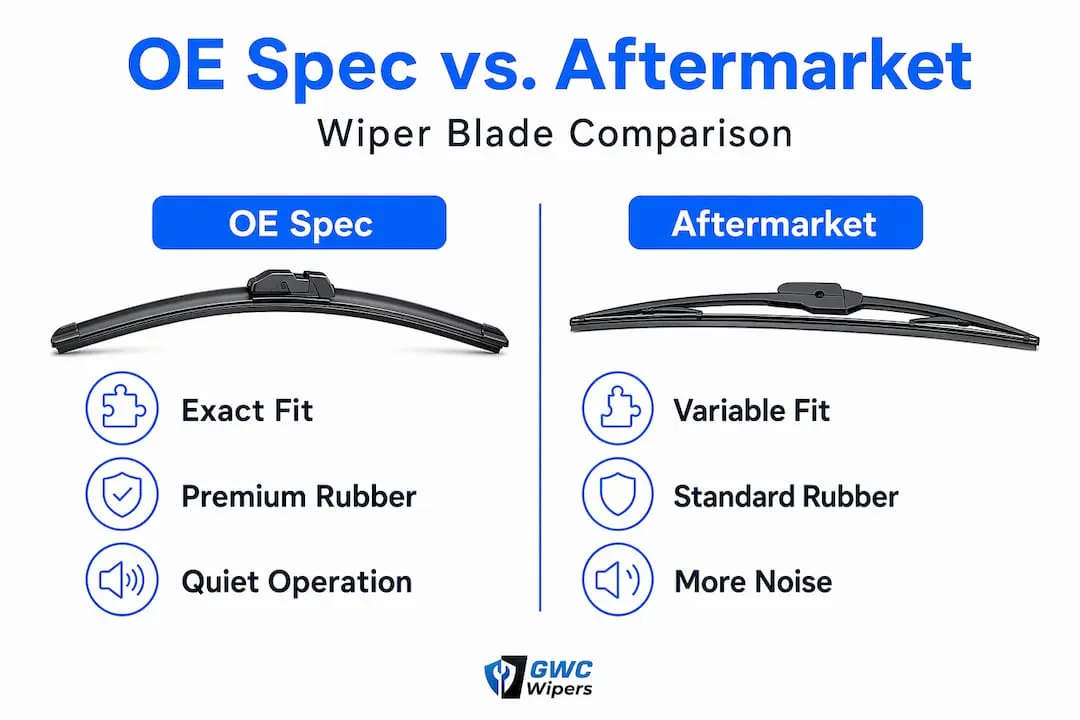
Understanding the real-world performance gap between OE spec and aftermarket blades helps you make a more confident purchase decision. OE blades are engineered with factory-calibrated wiping angles and curvature, which is why they deliver the quietest operation and most consistent wiping across the windshield surface.
Here’s how the three main categories compare:
| Attribute | OE spec | OEM | Aftermarket (generic) |
|---|---|---|---|
| Fitment precision | Exact match | Exact match | Variable, often adapter-dependent |
| Wiping performance | High | High | Moderate to low |
| Noise level | Quiet | Quiet | Often higher chatter |
| Material quality | Premium rubber/silicone | Premium | Variable |
| Lifespan | 12 to 18 months | 12 to 18 months | 6 to 12 months |
| Cost | Moderate | Higher (dealership) | Lower |

The strongest argument for OE spec blades comes down to reliability. Using blades designed for your vehicle delivers even pressure distribution and streak-free wiping that universal products struggle to replicate consistently.
That said, not every aftermarket blade is poor quality. Some premium aftermarket options use silicone compounds and are engineered carefully for common vehicle platforms. The risk with budget aftermarket blades comes in a few specific areas:
- Poor connector fit that rattles or loosens over time
- Rubber compounds that harden quickly in heat or UV exposure
- Blade profiles that don’t follow windshield curvature, leaving dry patches or streaks
For most Australian drivers who want reliability without dealership pricing, OE spec blades from a specialist supplier offer the best middle ground. OE and OEM blades are recommended for drivers who prioritise precision and long-lasting performance, particularly in variable weather.
How to select and install OE spec blades correctly
Getting the right blades is straightforward once you know what to look for. Here is a practical process to follow:
-
Find your vehicle’s specifications. Start with your owner’s manual. It lists blade sizes for both sides. If you don’t have the manual, a VIN lookup tool or a vehicle-specific fitment guide will give you the same information. For example, a 2017 Honda Civic uses a 26-inch driver blade and 18-inch passenger blade with a Small J-Hook connector. That level of detail matters.
-
Measure your current blades. With the ignition off and the wipers in the resting position, lift each arm away from the glass carefully. Measure from the pivot end to the tip of the rubber. Cross-check this against the specifications you found.
-
Check the product description carefully. When buying, look for phrases like “OE exact fit”, “vehicle-specific”, or “direct replacement”. These confirm the blade is designed to match your car without adapters. Avoid listings that describe the blade as “fits most vehicles” if you want reliable performance.
-
Install correctly and test. Attach the blade to the arm following the connector type’s specific locking mechanism. Once installed, run the wipers with washer fluid to confirm full, even contact across the glass. Listen for chatter or skipping, which signals misalignment.
-
Replace both blades at the same time. Replacing only one blade is a common mistake. If one blade is worn enough to replace, the other is typically at a similar stage. Mismatched blades create uneven clearing and reduced visibility in heavy rain.
Pro Tip: When installing new blades, avoid running them on a dry windshield. Always use washer fluid first. Running dry rubber on glass accelerates wear and can cause permanent streaking within the first few uses.
Also check the engine fitment process for guidance on cross-referencing vehicle parts using official VIN data, which applies equally well to confirming wiper blade compatibility.
Maintaining OE spec blades in Australian conditions
Australian driving conditions are particularly hard on wiper blades. Intense UV exposure, extreme summer heat, red dust from outback roads, and sudden heavy downpours all accelerate rubber degradation faster than the 12 to 18 month averages quoted for temperate climates.
Knowing when to inspect and replace your blades keeps you legal and safe:
- Streaking or smearing after a single wiper pass signals the rubber edge has hardened or torn.
- Chattering or skipping across the glass means the blade profile no longer matches your windshield’s curvature.
- Cracking or splitting in the rubber is visible when you lift the blade away from the glass. UV and heat cause this in Australian summers, sometimes within a single season.
- Poor clearing in rain even after cleaning the blade with a damp cloth means replacement is overdue.
For most Australian drivers, inspecting blades every six months and replacing them at least once a year is a practical routine. If you drive in regions with harsh summers or frequent dust exposure, every six months is more realistic. You can find specific guidance on replacement frequency in Australia to match your local conditions.
In Australia, roadworthy requirements include functional wipers in good condition. Driving with visibly damaged or non-functional blades can result in a failed vehicle inspection or a fine, depending on your state.
The maintenance steps themselves are simple. Clean your blades monthly with a damp cloth to remove grit and residue. Lift the arms off the glass when the car is parked in direct sun for extended periods. And never use the wipers to clear heavy frost or debris without washer fluid first.
My take: why OE spec is worth prioritising
Over the years, I’ve spoken with many car owners who replaced their blades with cheap universal options, had them chatter and streak through the first rainstorm, and then had to replace them again within a few months. The savings rarely hold up.
What I’ve found consistently is that the difference between a well-fitted OE spec blade and a budget universal one becomes obvious the moment it rains heavily. OE spec blades sit flush against the glass, clear cleanly in one pass, and stay quiet at highway speed. Aftermarket universals often skip at the edges, leave a film of water in the corners, and produce a low-level chatter that becomes genuinely irritating on long drives.
The mistake I see most often is treating wiper blades as a minor consumable where the cheapest option is fine. For something directly responsible for your visibility in the worst driving conditions, that logic doesn’t hold. Replacing both blades with OEM-fit blades once a year costs less than a tank of fuel and gives you confidence when a storm rolls in unexpectedly.
My honest advice: use the fitment tools available, get the right OE spec product for your car, and replace them before they fail rather than after.
— Faisal
Get OE spec wiper blades with guaranteed fit
If you’re ready to replace your blades with confidence, GWC Wipers stocks premium OE spec blades across a wide range of Australian vehicles, backed by a perfect fit guarantee and 12-month warranty.
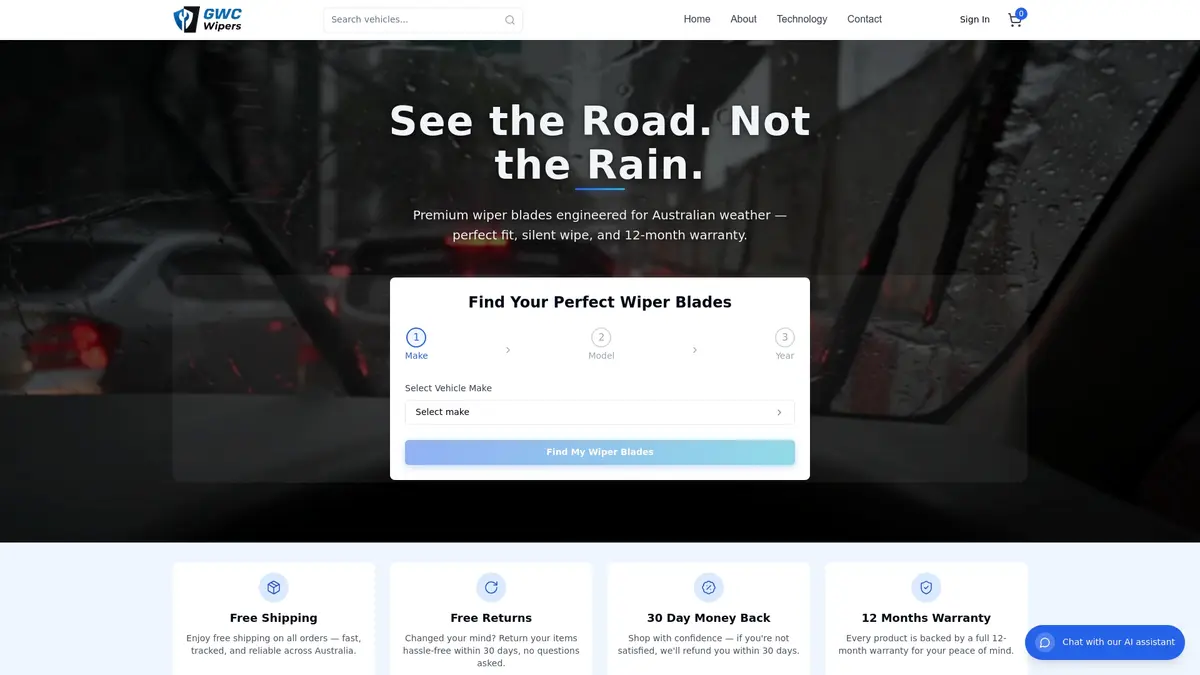
Using the vehicle selector on the GWC Wipers website, you can find the exact blade for your make, model, and year in under a minute. No guesswork, no adapters, no returns. Whether you drive a Mercedes-Benz and need GLE-Class wiper blades or you’re after replacement blades for a Ford Laser, GWC Wipers carries model-specific options with free shipping across Australia. Every order includes installation guidance so you can complete the replacement yourself in minutes. The GWC Wipers support team is also available for any fitment questions before you order.
FAQ
What does OE spec mean for wiper blades?
OE spec means the wiper blade is manufactured to the exact dimensions and connector specifications of your original factory-fitted blade. It ensures a precise fit without adapters and delivers the wiping performance your vehicle was designed for.
How do OE spec and aftermarket wiper blades differ?
OE spec blades are engineered to match your vehicle’s exact blade length, connector type, and windshield curvature, while aftermarket blades are produced to suit a broad range of vehicles and often rely on adapters. This difference affects wiping precision, noise, and durability.
How often should I replace OE spec wiper blades in Australia?
Most manufacturers recommend replacing wiper blades every 12 to 18 months, but Australian UV exposure and heat can shorten that to every six months, especially in regions with harsh summers or frequent dust.
Can I use universal wiper blades instead of OE spec?
Universal blades can work in the short term, but adapter-dependent fitment can degrade over time and create loose attachment or blade chatter. For reliable, long-term performance, OE spec blades that match your vehicle’s exact specifications are the better choice.
How do I find the right OE spec blade size for my car?
Check your owner’s manual for the driver and passenger blade lengths and connector type. You can also use a vehicle-specific fitment tool online by entering your car’s make, model, and year to find the exact OE spec replacement.