
Windshield care tips for fleets: your practical guide
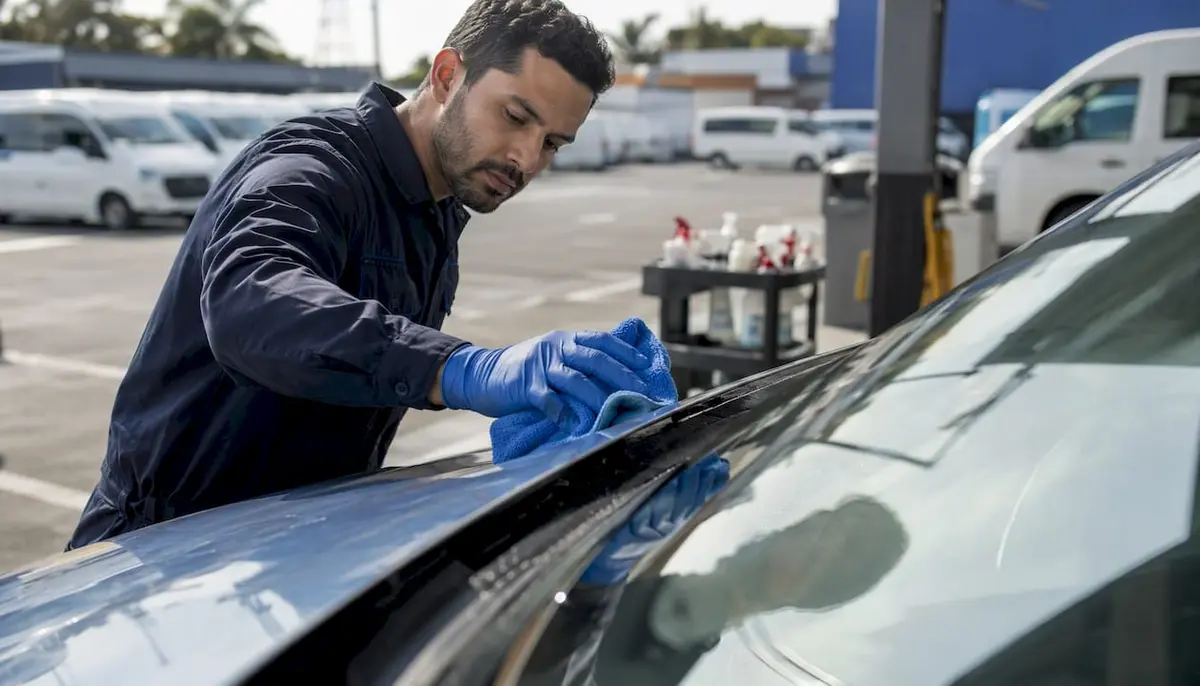
Six actions will cut most of your fleet’s windscreen-related downtime right now, in line with NHVR guidance on daily driver checks and scheduled repairs:
- Enforce a driver pre-shift scan. A 60-second visual check before every trip catches chips before they become cracks.
- Replace worn wiper blades proactively. Smearing or skipping blades are a compliance risk, not just an annoyance.
- Add windscreen fields to your DVIR. Drivers who must tick a box report damage faster and more consistently.
- Seal small chips within 48 hours. Resin repair is cheap; a full replacement is not.
- Use shade or bonded covers when parking overnight. Thermal shock from Australian sun accelerates crack propagation.
- Confirm your replacement glass carries a standards mark and that ADAS systems are recalibrated after any screen swap. Missing either step can trigger a defect notice at roadside inspection.
Key takeaways
Preventive windscreen care, built around daily driver checks and a structured repair schedule, is the most reliable way to reduce glass-related downtime and keep your fleet compliant with NHVR standards.
| Point | Details |
|---|---|
| Daily driver checks are the foundation | A 60-second pre-shift scan and DVIR entry catches most chips before they become cracks. |
| Replace wiper blades every several months, adjusting to fleet use and inspection findings. | High-use fleets should replace proactively; inspect monthly and after every regional run. |
| Repair chips within 48–72 hours | Small chips sealed promptly are repairable; delayed chips often require full replacement. |
| ADAS recalibration is mandatory after replacement | Any windscreen swap on a camera-equipped vehicle requires bracket refit and static or dynamic recalibration. |
| GWC Wipers for fleet supply | Vehicle-specific fitment across 2,500+ models, 12-month warranty, and free shipping Australia-wide. |
Table of Contents
- What do the best windshield care tips for fleets actually cover?
- How to clean fleet windscreens safely and how often
- How do you choose and maintain wiper blades for an Australian fleet?
- How do you build a proactive inspection routine to prevent windscreen damage?
- When should you repair a chip and when must you replace the windscreen?
- How do you build a windscreen care programme your whole fleet will follow?
- What Australian standards and legal requirements apply to fleet windscreens?
- Quick fixes for common windscreen visibility problems
- The case for preventive windscreen care over reactive replacement
- GWC Wipers keeps your fleet’s wiper blades sorted
- Sources
- FAQ
What do the best windshield care tips for fleets actually cover?
Fleet windscreen maintenance is the structured set of cleaning, inspection, repair, and replacement practices that keep every vehicle in your fleet compliant, safe, and on the road. The term “windshield care” is common in search, but in Australian fleet operations the recognised term is windscreen maintenance, and the two are used interchangeably throughout this guide.
Australia’s road conditions make this more demanding than it sounds. High UV intensity, loose gravel on regional highways, and sharp daily temperature swings mean chips spread faster on Australian vehicles than on those in milder climates. A fleet windscreen maintenance checklist built around daily driver scans, weekly supervisor audits, and monthly structural inspections measurably reduces defect notices and unplanned downtime.
How to clean fleet windscreens safely and how often
Clean outside glass weekly on high-mileage vehicles, monthly on the inside, and immediately after any dusty or heavily contaminated route.
Products and what to avoid
Use a pH-neutral glass cleaner or a low-alkali detergent mix diluted to the manufacturer’s ratio. Avoid ammonia-based products, household solvents, and abrasive polishes. Ammonia attacks the PVB interlayer in laminated glass over time and degrades rubber wiper lips, shortening blade life. Abrasive polishes etch the glass surface and create micro-scratches that scatter light at night.
Step-by-step two-cloth method
- Spray cleaner onto a clean microfibre cloth, never directly onto the glass.
- Wipe in overlapping horizontal passes, working top to bottom on the outside.
- Flip to a dry second cloth and buff immediately to prevent streaking.
- For trucks and high cabs, use a long-reach microfibre tool from a stable step stool. Never lean across the bonnet on a wet surface.
For the inside surface, the same two-cloth method applies. Cleaning the interior glass removes the oily film that causes glare on summer afternoons and at night, which is one of the most underrated visibility risks in fleet operations.
Pro Tip: Keep cab ventilation running while cleaning the inside. Aerosol cleaners sprayed directly into a sealed cab leave a fine mist that redeposits on the glass within days, recreating the haze you just removed. A dashboard cover also slows the off-gassing from plastics that forms the film in the first place.
- Clean outside glass after every dusty or dirt-road run, regardless of the weekly schedule.
- Use separate cloths for inside and outside to avoid cross-contaminating with road grime.
- Check washer fluid levels weekly; top up with a quality automotive washer concentrate, not plain water, which leaves mineral deposits.
How do you choose and maintain wiper blades for an Australian fleet?
Replace wiper blades proactively every 6–9 months in high-use fleets. Replace sooner if you see smearing, skipping, chatter, or visible rubber deterioration during any inspection.
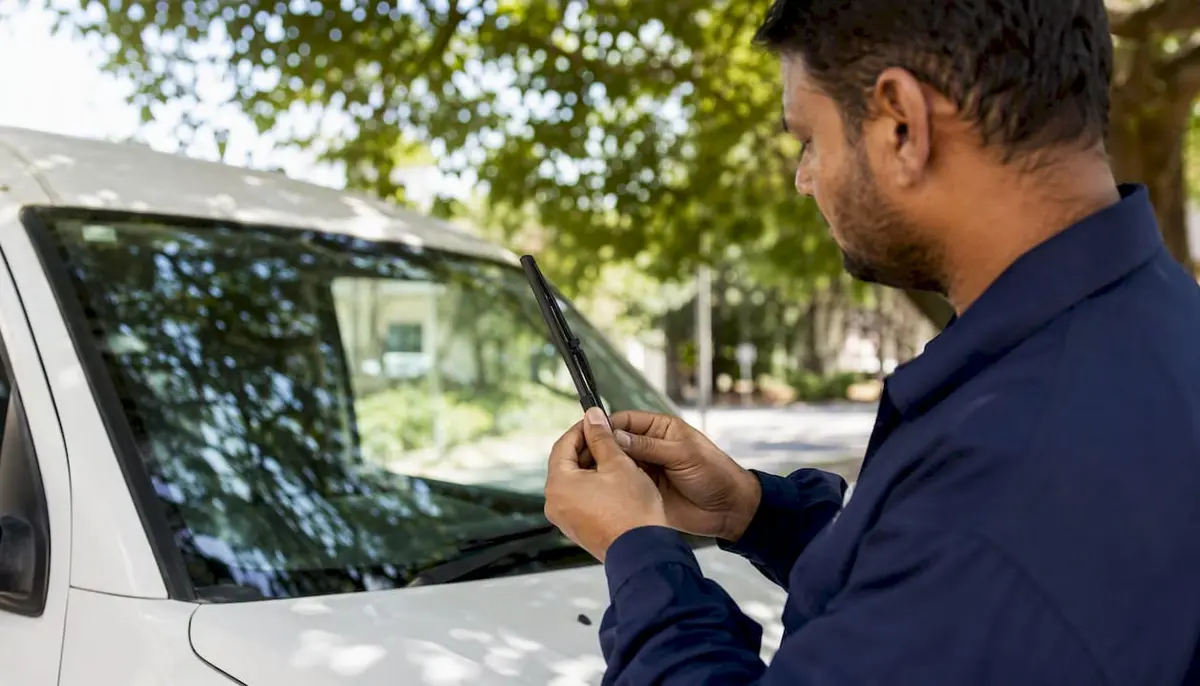
Inspection checklist
Before recording a blade as serviceable, check each of the following:
- Rubber condition: Run a finger along the wiper lip. Cracks, fraying, or hardening mean the blade is past its useful life.
- Sweep test: Activate wipers on a wet screen at all speeds. Any skip, chatter, or unwiped band is a fail.
- Frame and adapter: Check for corrosion on metal frames and confirm the adapter clip is secure. A loose adapter causes uneven pressure distribution across the blade.
- Blade profile: A beam-style blade should maintain consistent contact across its arc. A sagging centre means the internal spring has fatigued.
Replacement intervals by fleet profile
- Urban delivery vehicles (daily stop-start, frequent wiper use): replace every 6 months or at the start of each wet season.
- Long-haul highway vehicles (high-speed airflow, UV exposure, insects): replace every 6–9 months; inspect monthly.
- Mixed-use or regional vehicles (dust, gravel, temperature extremes): replace every 6 months; inspect after every long regional run.
What to look for when selecting blades
For fleet use, prioritise all-weather natural rubber construction, vehicle-specific fitment (not universal adapters that require adjustment), corrosion-resistant frames, and preassembled adapters that allow quick depot replacement without tools. ADAS-equipped vehicles need blades that clear the camera field of view without leaving a residual band. Understanding why durable wipers matter for fleets is a useful starting point if you are reviewing your current supplier.
GWC Wipers supplies blades with vehicle-specific fitment across more than 2,500 models, natural rubber construction for all-weather performance, and preassembled adapters for fast depot installation. For fleets running seasonal preparation checks, replacing blades before the wet season and verifying washer nozzle function at the same time is a practical two-minute addition to any scheduled service.
How do you build a proactive inspection routine to prevent windscreen damage?
A short driver pre-shift check combined with a weekly supervisor audit catches the majority of damage before it becomes a compliance issue or a replacement cost.
Driver pre-shift checklist (daily)
- Walk to the front of the vehicle and scan the full windscreen face-on for chips, cracks, or star fractures.
- Check wiper blades visually for obvious damage or detachment.
- Activate washers and wipers briefly to confirm fluid flow and blade contact.
- Note and photograph any new damage before departure; log it in the DVIR.
Weekly supervisor audit
- Measure any existing chips or cracks and compare to the previous week’s record.
- Check glass edges and corners for stress cracks, which spread faster than centre impacts.
- Inspect wiper blade condition using the sweep test described above.
- Confirm washer nozzle alignment and fluid level.
- Review DVIR entries for unreported or unresolved glass defects.
Operational prevention measures
Australia’s highways and climate conditions accelerate chip-to-crack progression. High UV, road gravel, and thermal swings mean a small chip on a Monday can become a crack requiring replacement by Friday. Practical steps that reduce impact risk include:
- Stagger convoy positions so following vehicles are not directly behind the lead truck’s tyre spray line.
- Reduce speed through roadworks and unsealed sections; gravel throw velocity drops sharply below 80 km/h.
- Maintain correct tyre pressures to reduce stone-flicking from under-inflated tyres.
- Use bonded covers or park in shade overnight, particularly in inland regions with large day-to-night temperature swings.
Pro Tip: On remote routes where a workshop is hours away, carry a temporary chip-sealing kit. Photograph the chip, apply the seal, and log the location and size. This keeps the vehicle operational and gives your repairer the documentation they need to confirm whether a full resin repair is still viable when the vehicle returns to depot.
When should you repair a chip and when must you replace the windscreen?
Repair small, shallow chips outside the primary vision area. Replace when a crack enters the wiper sweep zone, is notably long in critical areas, or when the damage penetrates both laminate layers.
Factors to assess before deciding
- Size and depth: A chip smaller than a 10-cent coin in a non-critical zone is generally repairable. Deeper impacts that reach the inner glass layer usually require replacement.
- Location: Damage within the driver’s primary line of sight, near ADAS camera mounts, or within 50 mm of the glass edge typically pushes the decision toward replacement.
- Contamination: Dirt or moisture in the chip reduces resin adhesion. If the chip has been open for more than 48 hours without sealing, assess carefully before committing to repair.
- Number of impacts: Multiple chips close together create stress concentrations that make the glass structurally unpredictable.
- Edge proximity: Edge cracks spread under normal driving vibration and thermal cycling; they almost always require replacement.
- ADAS mounts: For heavy vehicles, ADAS camera brackets bonded to the windscreen mean replacement requires bracket refit and static or dynamic recalibration. Factor that workshop time into your downtime estimate.
Regulatory reference: The NHVR National Heavy Vehicle Inspection Manual, Section 10 states that windscreens must be clean and free of damage that impairs the driver’s view. Minor repairs are acceptable provided they do not distort vision or reduce wiper effectiveness. Cracks in the primary vision area, loose glazing, or glass without a standards mark can result in a vehicle defect notice. AS 2366 sets the repair best-practice standard for laminated automotive glass in Australia.
Operational timing
- Seal small chips within 48–72 hours of discovery to maximise resin repair success.
- Schedule replacement at the next planned workshop slot for edge cracks or significant damage in key areas, provided the vehicle can be safely operated in the interim.
- Remove from service immediately if the crack is in the primary vision area or if the glass is loose.
How do you build a windscreen care programme your whole fleet will follow?
Embed windscreen tasks into your DVIR and CMMS with three simple KPIs: reporting compliance percentage, average repair turnaround time, and unplanned downtime caused by glass defects.
Sample maintenance schedule
| Frequency | Task | Owner | Time estimate |
|---|---|---|---|
| Daily | Driver pre-shift visual scan and DVIR entry | Driver | 2–3 minutes |
| Weekly | Supervisor audit: measure damage, sweep test, washer check | Fleet supervisor | 10 minutes per vehicle |
| Monthly | Detail clean inside and outside; photograph and measure all existing damage | Maintenance coordinator | 20 minutes per vehicle |
| Quarterly | Structural review: edge integrity, laminate condition, ADAS mount check | Qualified technician | 30 minutes per vehicle |
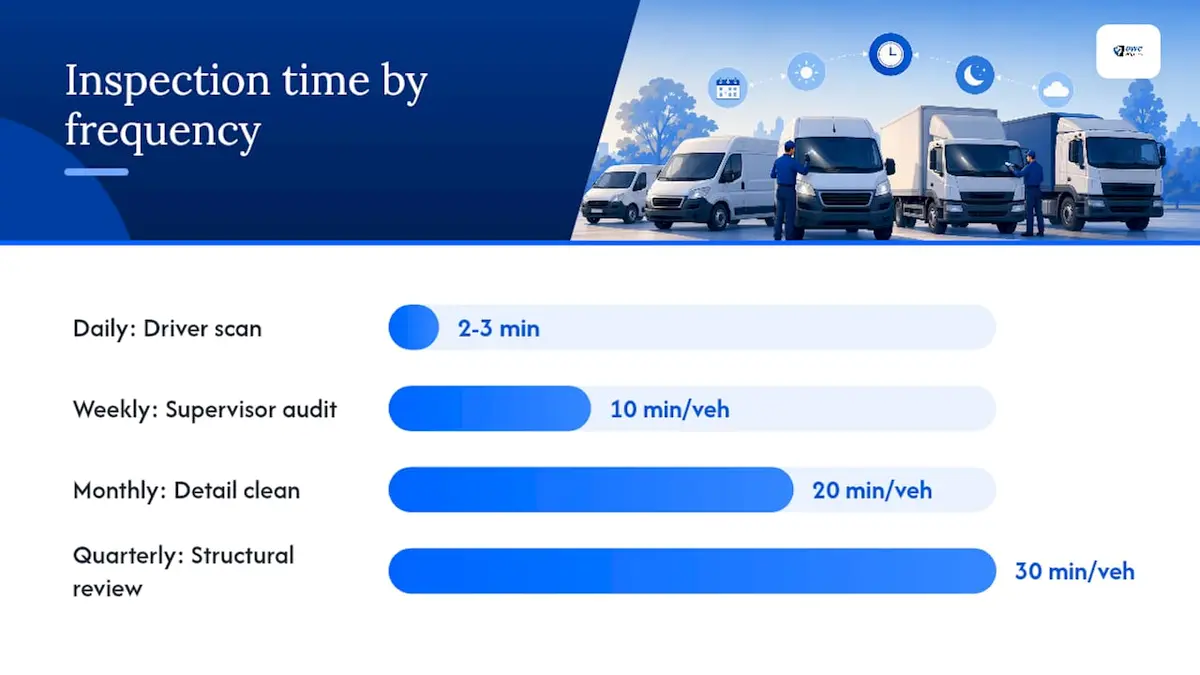
This schedule aligns with the daily, weekly, and monthly inspection cadence that fleet operators use to reduce defect notices and unplanned downtime.
Records to keep
- Dated photographs of all chips, cracks, and repairs.
- Repair receipts and resin repair certificates.
- ADAS recalibration certificates after any windscreen replacement.
- Wiper blade batch numbers and replacement dates.
- DVIR entries referencing glass condition.
Retain glass-related records for a minimum of three years to support roadside inspection disputes and insurance claims. A photo-first reporting protocol and immediate chip sealing also speeds insurance and compliance discussions considerably.
Scheduling repairs to minimise downtime
Slot glass repairs into existing planned maintenance windows wherever possible. Mobile repair services can attend depot for small chips, removing the need to take a vehicle off-route. For replacements requiring ADAS recalibration, book the vehicle into a workshop that can complete both tasks in a single visit. For broader outdoor vehicle maintenance workflow ideas that complement a windscreen programme, a structured depot checklist approach applies across multiple maintenance categories.
What Australian standards and legal requirements apply to fleet windscreens?
The most critical legal requirements are minimum light transmittance through the windscreen, fully operational wipers at all speeds, and standards marks on any replacement glass.
Key compliance points
- Light transmittance: Replacement glass must meet the minimum transmittance threshold for the vehicle class. The NHVR notes that light-transmittance meters carry a measurement tolerance of up to 5%, which inspectors take into account.
- Wiper operability: Wipers must function at all required speeds. A blade that smears or fails to clear the primary vision area is a defect.
- Standards marks: Replacement glass must bear a recognised standards mark. In Australia, the relevant references are AS 2080 (safety glazing for land vehicles) and UNECE Regulation 43, which is accepted under Australian Design Rule (ADR) provisions. Glass without a mark can result in a defect notice.
- Approved repairs: Repairs must not distort vision or reduce wiper effectiveness, per NHVR Section 10 criteria.
Practical compliance actions
- Measure transmittance where tinting or film has been applied, and keep the meter calibration record on file.
- Confirm wipers operate at all speeds during every weekly supervisor audit.
- Check that replacement glass supplied by your repairer carries a standards mark before installation.
- Retain ADAS recalibration certificates alongside the replacement glass invoice.
- Use commercial windscreen maintenance best practices as a reference when briefing drivers and depot staff on approved glass and wiper standards.
Quick fixes for common windscreen visibility problems
Triage any visibility problem in this order: check the blades first, then washer fluid and nozzles, then the glass surface itself.
Wiper chatter
- Activate wipers on a wet screen and listen for a rhythmic tapping or vibration.
- If chatter occurs, clean the blade lip with a damp cloth to remove road film.
- Check the blade arm tension by lifting the arm and releasing it; it should snap back firmly.
- If chatter persists after cleaning, the blade rubber has hardened and needs replacement.
Streaking
- Streaks usually mean a contaminated or worn blade lip, or a dirty glass surface.
- Clean the glass with the two-cloth method first. If streaks remain after a clean glass test, replace the blade.
- A single persistent streak in the same arc position often indicates a nick in the rubber edge.
Internal haze
- Apply the two-cloth interior cleaning method described in the cleaning section.
- If haze returns within days, check for aerosol products being used inside the cab and replace with a pump-spray glass cleaner applied to the cloth.
Washer nozzle issues
- Blocked nozzles: use a fine pin to clear the orifice, then test flow direction.
- Weak flow: check the reservoir level and pump operation; a failing pump is a workshop job.
When a quick fix is not enough
A quick clean or blade wipe is a temporary measure only. Book the vehicle for a scheduled service when you find an edge crack that has spread since the last inspection, when ADAS camera interference is suspected after a chip near the mount, or when washer pump failure cannot be resolved at depot.
The case for preventive windscreen care over reactive replacement
Preventive windscreen care consistently outperforms reactive replacement for fleet uptime and driver safety. The cost difference between a resin chip repair and a full windscreen replacement, including ADAS recalibration for modern vehicles, makes the argument straightforward. But the more common mistake is not skipping repairs; it is skipping the documentation.
Three patterns come up repeatedly in fleet operations. First, drivers notice a chip but do not report it because there is no clear process and they assume someone else will. Second, supervisors know about damage but delay booking a repair because the vehicle is needed on-route, and the chip becomes a crack that forces an unplanned replacement. Third, fleets replace a windscreen and return the vehicle to service without confirming ADAS recalibration, which creates a safety liability that does not show up until an incident.
The single procedural change that addresses all three is embedding glass condition as a mandatory DVIR field with a photo-upload requirement. When drivers must photograph and log damage before departure, reporting rates rise, supervisors have a timestamped record to act on, and the repair-booking decision becomes data-driven rather than discretionary.
*— Faisal
GWC Wipers keeps your fleet’s wiper blades sorted
Your fleet’s wiper blades are a consumable with a compliance function. GWC Wipers supplies vehicle-specific blades with a 12-month warranty, preassembled adapters for fast depot installation, and free shipping across Australia. Every blade is matched to your vehicle’s make, model, and year through the GWC vehicle selector, so there is no guesswork about fitment across a mixed fleet.
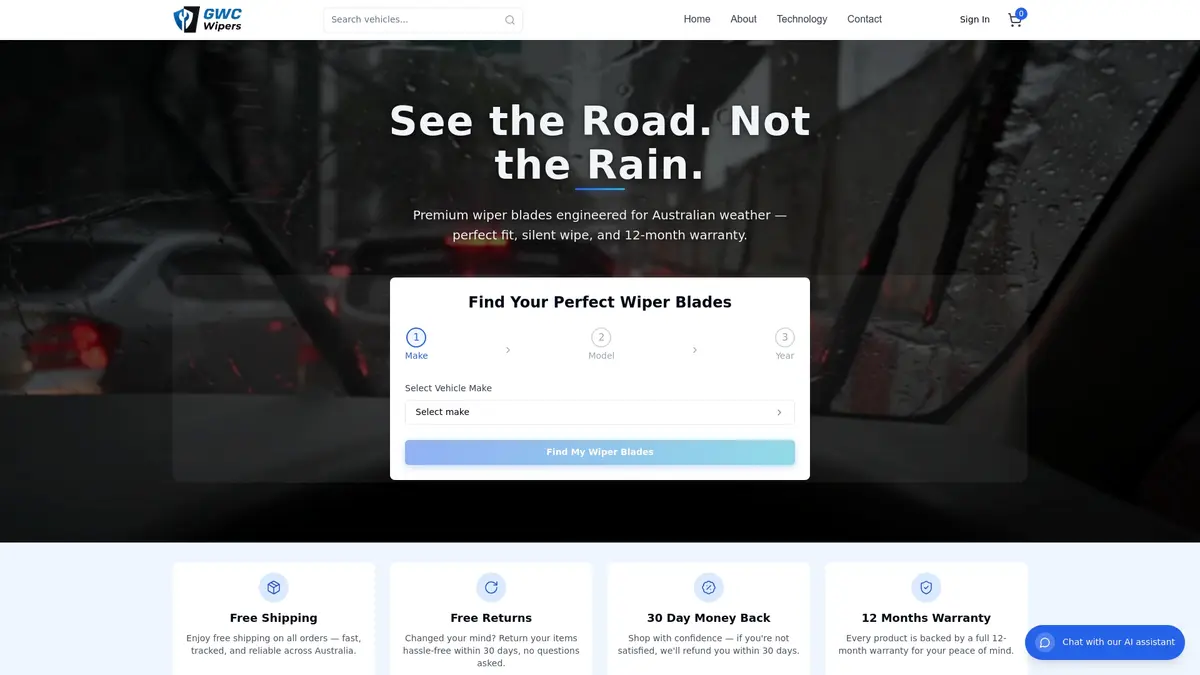
For fleet managers running Mercedes-Benz vehicles, the Mercedes-Benz wiper blade range covers the full model lineup with model-specific fitment and a fitment guarantee. Toyota operators can browse the Toyota wiper blade range for high-volume fleet coverage. GWC Wipers also backs every purchase with a 30-day money-back guarantee, so ordering for a new vehicle type in your fleet carries no risk. Use the vehicle selector at Gwcwipers to match part numbers before placing a bulk order, then check the role of warranties in fleet maintenance to understand how to document your wiper replacements for compliance records.
Sources
- Fleet windscreen maintenance checklist for Sydney trucks
- Commercial windscreen maintenance: a strategic guide for fleets
FAQ
How often should fleet windscreens be inspected?
Drivers should complete a visual scan before every shift and log findings in the DVIR. Supervisors should conduct a more detailed audit weekly, with a full structural review by a qualified technician each quarter.
Can a chipped windscreen be driven on?
A small chip outside the primary vision area can generally be driven on briefly, provided it is sealed within 48–72 hours and does not spread. Any crack in the driver’s direct line of sight or near the glass edge requires the vehicle to be assessed before further use.
Does WD-40 clean windscreens?
WD-40 is not a glass cleaner and should not be used on windscreens. It leaves an oily residue that smears under wipers, reduces visibility, and degrades rubber blade lips. Use a pH-neutral automotive glass cleaner instead.
What are the key pillars of a fleet windscreen maintenance programme?
An effective programme covers five areas: daily driver reporting, regular cleaning, scheduled wiper replacement, prompt chip repair, and compliant glass replacement with ADAS recalibration where required.
Does replacing a windscreen require ADAS recalibration?
Yes, on any vehicle with a camera or sensor mounted to the windscreen. Replacement disturbs the bracket alignment, and both static and dynamic recalibration are typically required before the vehicle returns to service.