
Winter windshield protection tips for cold weather driving
TL;DR:
- Proper winter windscreen protection involves using your climate control system correctly to clear fog faster and prevent frost buildup. Regularly cleaning the glass, inspecting wiper blades, and safely removing ice help maintain visibility and prevent damage. Consistent small habits, like using covers overnight and replacing filters, protect your windshield effectively throughout the cold season.
Winter windshield protection means using practical methods to prevent frost, ice, and fog from impairing your visibility and damaging your glass. In cold weather, moisture and temperature differences between the cabin and outside air cause condensation and frost to form rapidly on the windscreen. Getting these winter windshield protection tips right keeps you safe and prevents costly repairs. The good news is that most of the best methods cost nothing and take under five minutes. This guide covers every key step, from climate control technique to ice removal, wiper care, and crack prevention.
1. Use your climate control system correctly
Using your car’s A/C combined with the heater and fresh air intake is the fastest way to clear a fogged windscreen. The A/C dehumidifies the cabin air, the heater warms it, and together they push dry, warm air onto the glass. That combination clears fog far faster than heat alone.
Three settings matter most:
- Turn off air recirculation. Recirculated air stays humid. Fresh air from outside is drier and clears the screen more quickly.
- Direct all vents at the windscreen. Set the fan to maximum speed for the first few minutes, then reduce once the glass clears.
- Run the A/C weekly through winter. Regular use keeps the compressor seals lubricated and the system functional when you need it most.
A clogged cabin air filter restricts airflow even when the A/C and heater are both running at full power. Replace the filter at least once a year, or more often if you drive in dusty or high-pollen areas.
Pro Tip: If your windscreen fogs up again shortly after clearing, your cabin air filter is likely blocked. A new filter costs under $30 at most auto parts stores and takes ten minutes to fit.

2. Prevent windshield chips and cracks from spreading
Slowing crack spread depends on stabilising glass temperature and minimising vibration, not on attempting to fix the glass yourself. A small chip left untreated through winter will almost always become a full crack by spring.
- Cover chips with clear tape temporarily. Clear tape over small chips keeps moisture and grime out, slowing the spread. This is a short-term measure only. Book a professional repair as soon as possible.
- Never pour hot or cold water on the glass. Sudden temperature changes cause thermal shock. Pouring hot water on a cold windscreen is one of the most common causes of stress fractures in winter.
- Warm the glass gradually. Start the defroster on low, then increase the temperature slowly. Blasting full heat onto cold glass stresses any existing damage.
- Drive gently on rough roads. Body flex and vibrations from potholes or corrugated surfaces put pressure on chips and accelerate cracking.
- Park undercover when possible. Keeping the glass dry and shielded from overnight temperature drops reduces the rate at which small chips spread.
Pro Tip: Even a hard door slam transmits a pressure wave through the vehicle body. Physical shocks like door slams can cause small cracks to propagate rapidly under repeated stress. Close doors firmly but without force.
3. Clean your windscreen and wiper blades regularly
Clean glass and effective wipers work together. Many drivers underestimate the relationship between clean glass surfaces and wiper effectiveness in reducing winter visibility problems. Grime, oil film, and residue on the glass trap moisture and cause smearing that worsens in cold, wet conditions.
Follow this windshield care routine list each fortnight through winter:
- Clean the inside of the windscreen. Interior glass collects a film from off-gassing plastics and breath moisture. Use a microfibre cloth and a glass-specific cleaner, working in circular motions to remove residue.
- Clean the outside thoroughly. Road grime, insect residue, and salt deposits all contribute to streaking. A clean exterior surface also helps wiper blades glide without skipping.
- Inspect wiper blades for wear. Dirty or worn wiper blades increase streaking and reduce visibility, especially in cold or wet conditions. Check for splits, hardening, or uneven contact along the blade edge.
- Clean the blades themselves. Wipe each blade with a damp cloth to remove oil, dirt, and grime. A blade that looks intact can still smear if its wiping edge is contaminated.
- Use winter-rated washer fluid. Winter washer fluids contain freeze protection and cleaning agents suited to cold conditions. Standard fluid can freeze in the reservoir or on the glass, making visibility worse.
| Maintenance task | Frequency in winter |
|---|---|
| Clean interior glass | Every two weeks |
| Clean exterior glass | Weekly or after rain |
| Inspect wiper blades | Monthly |
| Clean wiper blades | Monthly |
| Top up winter washer fluid | As needed, check weekly |
Pro Tip: For streak-free wiping in cold weather, clean the glass before fitting new blades. A new blade on a dirty screen will streak from the first wipe.
4. Remove frost and ice safely
Proper ice removal protects both the glass and the wiper blades. Using approved ice scrapers and covers prevents physical damage and stress cracks that metal tools or hot water cause.
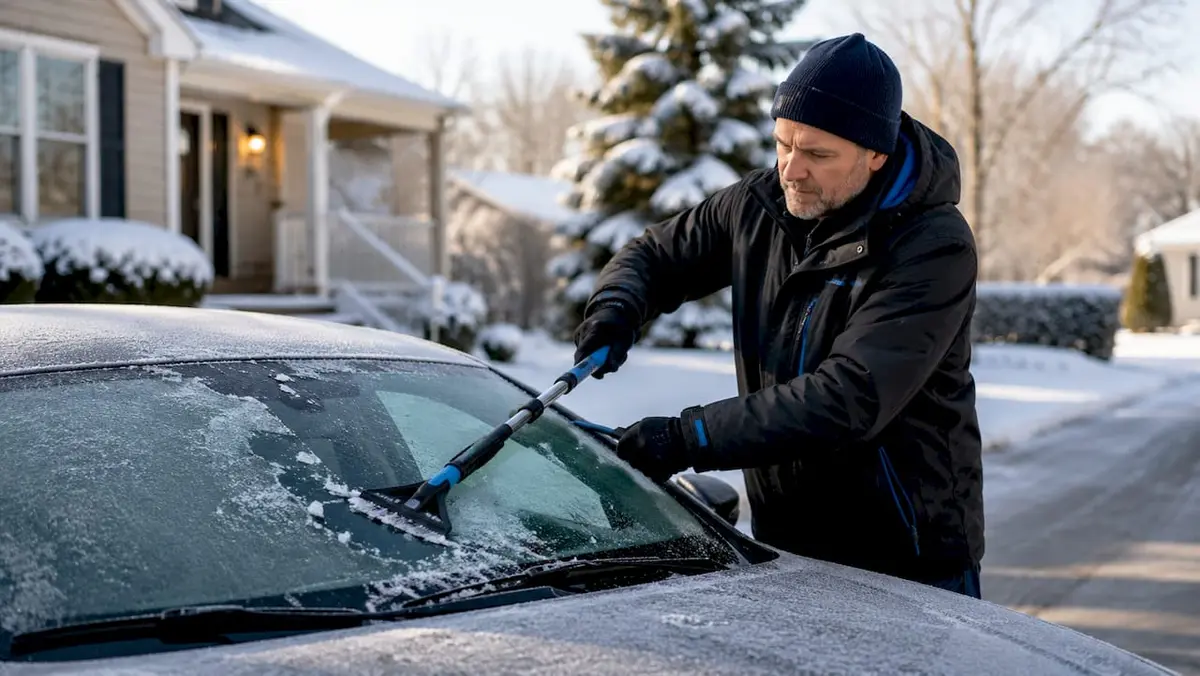
- Use a plastic ice scraper. Work from the edges toward the centre using firm, even strokes. Never use a metal tool, a key, or a credit card edge, as these scratch the glass.
- Never pour hot water on frozen glass. The sudden temperature change causes cracking. Even warm water carries risk on a very cold screen.
- Use a windscreen cover overnight. A dedicated frost cover, an old towel, or a sheet of cardboard placed under the wipers before bed prevents ice from bonding to the glass. Removal takes seconds in the morning.
- Park facing the sun. Morning sun on the windscreen reduces frost accumulation naturally and speeds up the defrost process without any effort from you.
- Run the defroster before you drive. Allow the system to warm the glass gradually for several minutes. This melts ice from the inside out without thermal shock, and it is far safer than scraping a partially frozen screen.
Pro Tip: Lift your wiper blades away from the glass before parking overnight. This prevents them from freezing to the screen and tearing the rubber when you try to use them in the morning. For more on handling frozen wipers, Com has a dedicated guide.
5. Additional precautions for winter windscreen care
A solid winter windshield care routine goes beyond the basics. These extra steps reduce the risk of damage and keep visibility sharp through the coldest months.
- Maintain extra following distance. Debris strikes from the vehicle ahead are a leading cause of windscreen chips. Increasing your gap at highway speeds gives you time to react and reduces the frequency of stone strikes.
- Apply an anti-fog product to the interior glass. Anti-fog coatings create a protective layer that prevents moisture from adhering to the glass. Apply to the inside surface after cleaning for best results.
- Avoid slamming doors. As noted earlier, pressure waves from hard door slams stress existing chips. This habit costs nothing to change and can prevent a chip from becoming a crack.
- Replace wiper blades suited for winter conditions. Worn or damaged wiper blades accelerate abrasion on the windscreen and create stress points that worsen in cold weather. Replace blades annually or at the first sign of streaking or skipping. For guidance on protecting your wiper blades through winter, Com’s resource covers nine proven methods.
- Check your winter car preparation checklist. Windscreen care sits alongside tyre pressure, battery health, and fluid levels as part of a complete winter vehicle routine.
Key takeaways
Consistent small actions across climate control, glass cleaning, crack prevention, and ice removal deliver the best winter windscreen protection and prevent expensive repairs.
| Point | Details |
|---|---|
| Use A/C and fresh air together | Dehumidify cabin air with A/C and heat simultaneously to clear fog fast. |
| Never use hot water on cold glass | Thermal shock from hot water is a leading cause of winter stress fractures. |
| Cover chips with clear tape | Temporary tape keeps moisture out and slows crack spread until professional repair. |
| Clean glass and blades together | Clean glass and fresh blades work as a system; one without the other still streaks. |
| Use a windscreen cover overnight | Overnight frost covers prevent ice bonding and protect wiper blades from freezing. |
What I’ve learned about winter windscreen care after years on the road
Most drivers treat windscreen care as reactive. They scrape ice when they see it, replace wipers when they streak badly, and deal with chips only when they become cracks. That approach costs more money and creates more risk than the alternative.
The single biggest overlooked factor is the cabin air filter. I have seen drivers run their A/C and heater on full blast for ten minutes with almost no improvement in fogging, simply because a blocked filter was strangling the airflow. A $25 filter swap fixed what looked like a system fault.
The second most common mistake is ignoring the inside of the windscreen. Drivers clean the outside regularly but leave the interior coated in a hazy film. That film is why the glass fogs so quickly when passengers breathe in a cold car. Two minutes with a microfibre cloth on the inside makes a visible difference from the first drive.
The third thing I’d stress is the relationship between wiper condition and glass condition. A worn blade on clean glass still streaks. A good blade on a dirty glass also streaks. Both surfaces need attention at the same time. If you want to understand why wipers streak and how to fix it, that is the right place to start.
Winter windscreen protection is not one big action. It is five or six small habits done consistently. Each one is simple. Together, they keep your visibility clear and your glass intact through the coldest months.
— Faisal
Premium wiper blades for Australian winter conditions
Your windscreen protection routine is only as strong as the blades doing the work. If your wipers are leaving streaks, skipping across the glass, or struggling in cold and wet conditions, the blades are the first thing to address.

Com stocks premium wiper blades engineered for Australian weather, from alpine cold to coastal rain. Whether you drive a Mercedes-Benz or a Toyota, the vehicle selector on the Com website finds the exact fit for your make, model, and year in seconds. Every blade comes with free shipping across Australia, a 12-month warranty, and a 30-day money-back guarantee. Upgrading your blades before winter is one of the simplest and most reliable steps in any winter car care routine.
FAQ
What is the fastest way to clear a fogged windscreen?
Turn on the A/C to dehumidify, run the heater simultaneously, switch off air recirculation, and direct airflow at the windscreen on maximum fan speed. This combination clears fog faster than heat alone.
Can I pour hot water on a frozen windscreen?
No. Pouring hot water on cold glass causes thermal shock, which can crack or shatter the windscreen. Use a plastic ice scraper or run the defroster to melt ice gradually.
How often should I replace my wiper blades in winter?
Replace wiper blades annually or at the first sign of streaking, skipping, or uneven contact. Worn blades accelerate glass abrasion and reduce visibility in cold, wet conditions.
Does a windscreen cover actually prevent frost?
Yes. A frost cover, towel, or sheet of cardboard placed over the windscreen before bed prevents ice from bonding to the glass overnight, making morning departure faster and safer.
Why does my windscreen keep fogging up even with the heater on?
A blocked cabin air filter restricts airflow, reducing the system’s ability to dehumidify the cabin. Check and replace the filter, and make sure air recirculation is turned off so fresh, drier air enters from outside.